In an increasingly connected economy, every transaction creates a digital footprint. This data trail, containing sensitive financial and personal information, is often tracked, analyzed, and exposed to potential security breaches. For both consumers and businesses, the need for enhanced transactional privacy is no longer a niche concern but a mainstream priority. This is where anonymous payment options become crucial, offering a buffer between your identity and your financial activities.
To truly grasp the importance of financial privacy, it helps in understanding data sovereignty and reclaiming control over your personal information. These payment methods directly support that goal by minimizing the data you share. Consumers use them to shield their spending habits, while merchants integrate them to build customer trust and reduce the risks tied to handling sensitive data.
This guide gets straight to the point. We will explore the best anonymous payment platforms available today, from privacy-focused crypto wallets like Flash to virtual card services like Privacy.com and versatile platforms such as Cash App. For each option, you will find:
- A direct link to the platform.
- Screenshots showing key features.
- Actionable pros and cons.
- Practical integration steps for merchants.
Our goal is to help you quickly identify and implement the right solution for your privacy needs, whether for personal use or for your business. Let’s dive in.
1. Flash: Decentralized Bitcoin Payments for Merchants
For businesses seeking a robust, self-sovereign approach to cryptocurrency payments, Flash emerges as a premier choice. It operates not as a traditional payment processor but as a decentralized software layer, empowering merchants to accept Bitcoin directly, wallet-to-wallet. This non-custodial model is its core strength; Flash never touches your funds, which eliminates intermediary risk and significantly simplifies compliance. By facilitating direct transactions, it provides one of the most powerful anonymous payment options available for businesses today.
The platform is engineered for versatility, catering to a wide array of business models. Whether you are running a high-traffic eCommerce site, a brick-and-mortar store, or a digital subscription service, Flash provides the necessary tools for seamless integration. Its no-code or low-code setup allows businesses to begin accepting Bitcoin in under a minute, a testament to its focus on user experience and rapid deployment.
Key Features and Capabilities
Flash distinguishes itself with a comprehensive suite of tools designed for immediate, practical application. These features remove common barriers to crypto adoption for merchants:
- Lightning Network Integration: All transactions are powered by the Lightning Network, ensuring payments are not only instant but also carry minimal fees. This makes it viable for micropayments and everyday purchases where traditional Bitcoin network fees would be prohibitive.
- Mobile Point-of-Sale (POS): The platform includes a mobile app that transforms any smartphone or tablet into a secure Bitcoin payment terminal. This is ideal for physical retail, pop-up shops, and service providers who need to accept payments on the go.
- Recurring Billing & Paywalls: For SaaS companies, content creators, and membership sites, Flash offers automated subscription and paywall modules. This allows for seamless, recurring Bitcoin billing without manual intervention.
- Flexible Integration Tools: Merchants can utilize customizable widgets and payment links to easily integrate Bitcoin payments into websites, applications, and even social media or email invoices.
Expert Insight: The most significant advantage of Flash is its commitment to decentralization. By removing KYC requirements for onboarding, it champions user privacy and financial freedom, allowing merchants to tap into a global market of over 500 million Bitcoin users without the typical friction of traditional payment gateways.
Ideal Use Cases and Practical Implementation
The platform's design makes it exceptionally well-suited for several key scenarios:
| Business Type | Implementation Example | Primary Benefit |
|---|---|---|
| eCommerce Store | Integrate a "Pay with Bitcoin" widget directly into the checkout flow of a Shopify or WooCommerce store. | Attract a new, tech-savvy customer base and reduce transaction fees compared to credit cards. |
| Content Creator | Use the paywall module to gate premium articles or videos, accepting one-time or recurring Bitcoin payments for access. | Monetize content globally without relying on ad revenue or platforms that take a large cut. |
| NGO/Charity | Create a dedicated payment link for a donation campaign and share it across social media and newsletters. | Receive direct, low-fee donations from a global audience while ensuring donor privacy and transaction transparency. |
Pros and Cons
- Pros:
- True Decentralization: Direct wallet-to-wallet payments mean you retain full control of your funds with no custodial risk.
- Privacy-Centric: No KYC for onboarding protects both merchant and customer privacy.
- Cost-Effective: Leverages the Lightning Network for instant, low-fee transactions.
- Versatile Toolset: Comprehensive suite includes POS, subscriptions, paywalls, and easy-to-use widgets.
- Cons:
- Requires Bitcoin Wallet Familiarity: Since it is non-custodial, merchants and their staff will need a basic understanding of how to use a Bitcoin wallet.
- Opaque Pricing: Specific cost structures are not publicly listed and may require direct contact or account creation to view.
Ready to get started? Visit the platform at paywithflash.com.
2. Privacy.com
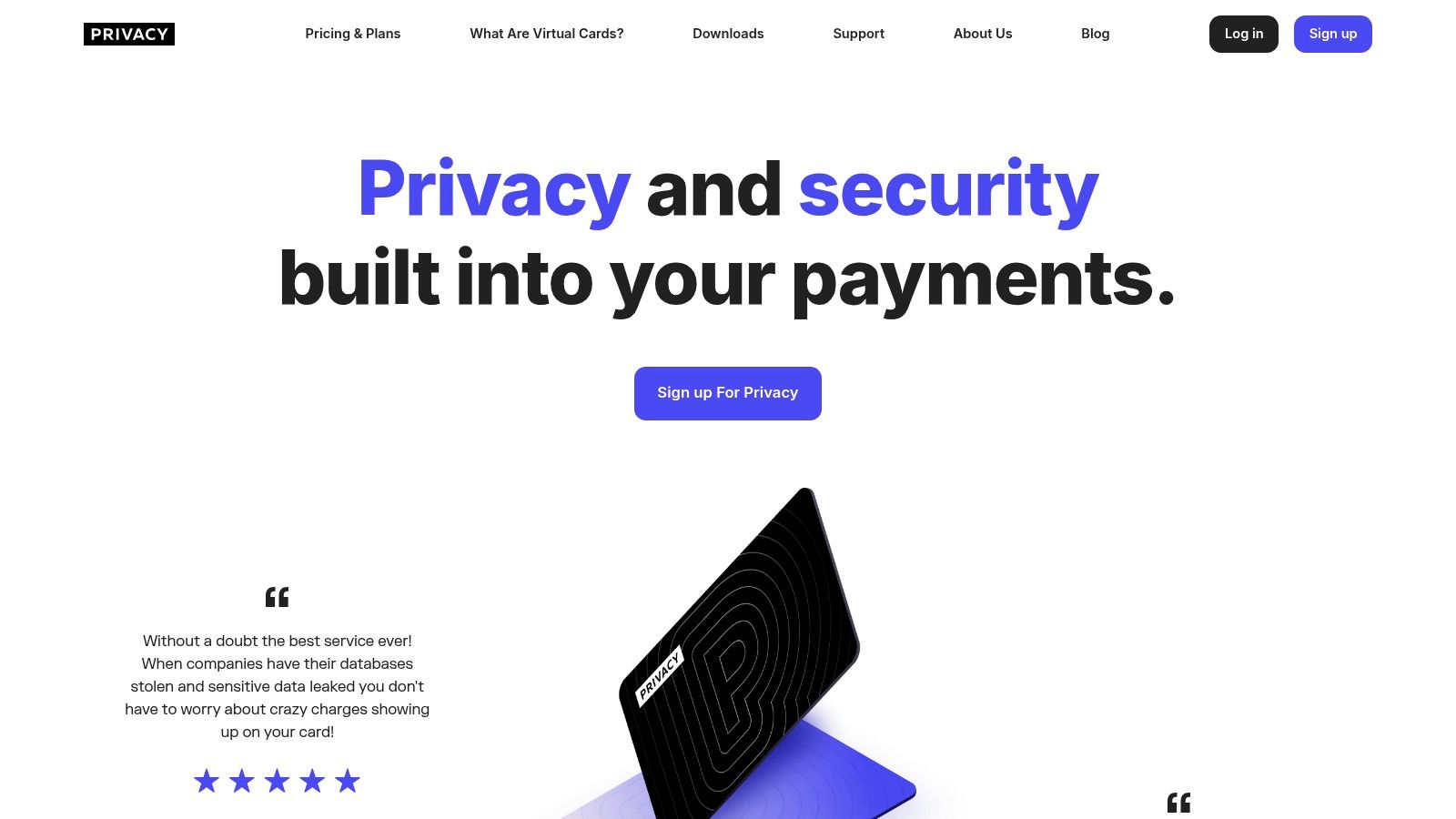
Privacy.com offers a powerful solution for those seeking to protect their financial data during online purchases. It's not a cryptocurrency but a service that generates virtual payment cards, acting as a protective layer between your bank account and the merchants you pay. This approach provides a practical balance between security and convenience, making it one of the most accessible anonymous payment options for everyday online shopping.
Each virtual card you create can be unique. You can generate a "single-use" card that automatically closes after one transaction or a "merchant-locked" card that only works with a specific vendor. This prevents your real debit or credit card number from ever being exposed to potential data breaches.
Key Features and User Experience
The platform is known for its exceptionally user-friendly interface. Signing up requires linking a US-based bank account or debit card, a necessary step for funding the virtual cards. Once set up, generating a new card takes only a few clicks.
- Spending Controls: Set custom spending limits on each card (daily, monthly, or total) to prevent overcharging and manage subscriptions effectively.
- Browser Integration: A seamless browser extension for Chrome and Firefox autofills virtual card details at checkout, making the process frictionless.
- Instant Control: Pause or permanently close any virtual card with a single click, providing immediate protection against unauthorized charges.
Expert Tip: Use merchant-locked cards for recurring subscriptions. If you decide to cancel a service but the merchant makes it difficult, you can simply close the virtual card to stop all future payments instantly.
Pricing and Accessibility
Privacy.com operates on a freemium model, making it highly accessible.
| Plan | Price | Key Features |
|---|---|---|
| Personal | Free | Up to 12 virtual cards per month, spending limits, browser extension. |
| Pro | $10/month | Up to 36 cards/month, 1% cashback (up to $5), priority support. |
| Premium | $25/month | Up to 60 cards/month, higher cashback limits, dedicated support. |
While it requires a linked bank account and is currently limited to US residents, it excels at providing transactional anonymity and robust financial security for online purchases.
Website: https://privacy.com
3. Cash App
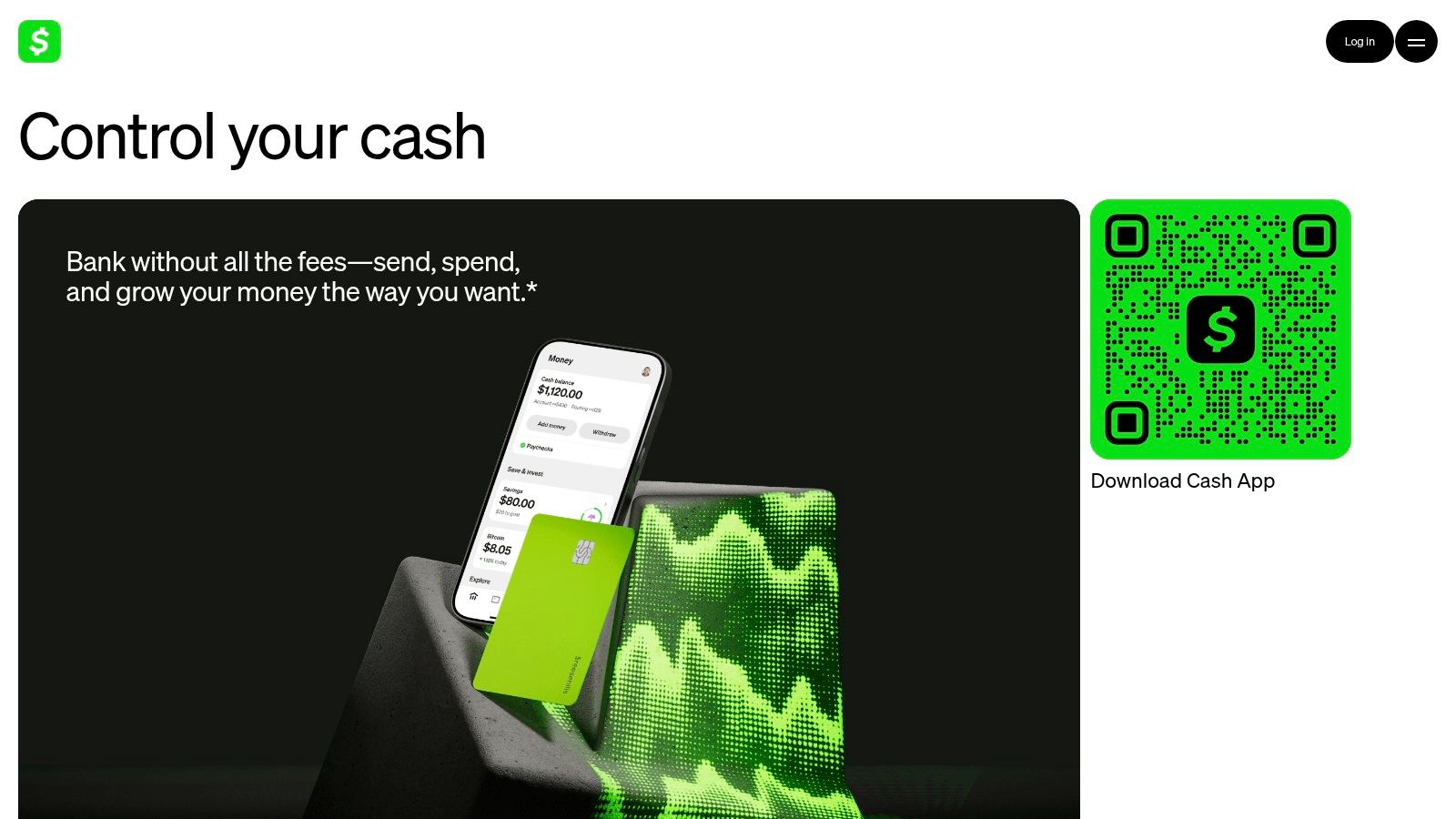
Cash App has evolved from a simple peer-to-peer payment service into a versatile financial tool that offers a significant degree of transactional privacy. It enables users to send and receive money using unique usernames called "$Cashtags," which means you can complete transactions without sharing personal details like your name or bank information. This functionality makes it a popular choice for those seeking practical, semi-anonymous anonymous payment options for everyday use.
The platform provides a middle ground between traditional banking and fully anonymous systems. While you must link a bank account to fund your balance, the actual transactions can be conducted using just your $Cashtag, shielding your identity from the other party.
Key Features and User Experience
Cash App is renowned for its straightforward and highly intuitive mobile interface, making money transfers exceptionally fast. Beyond simple payments, it integrates features that expand its utility for privacy-conscious users.
- $Cashtag Payments: Your unique $Cashtag is your public identifier for payments, keeping your legal name and contact information private during transactions.
- Bitcoin Integration: Users can easily buy, sell, and transfer Bitcoin directly within the app, offering a gateway to a more decentralized payment method.
- Cash Card: An optional and customizable Visa debit card linked to your Cash App balance allows you to spend your funds at physical and online stores without connecting to your primary bank account.
Expert Tip: For enhanced privacy, use a separate email address for your Cash App account and fund it only with the specific amount needed for a transaction. This compartmentalizes your financial activity and minimizes the data trail.
Pricing and Accessibility
Cash App is largely free for its core services, though certain actions have limits or fees.
| Feature | Cost | Details |
|---|---|---|
| Standard P2P Payments | Free | Sending and receiving money via your Cash App balance or linked debit card is free. |
| Bitcoin Transactions | Varies | A service fee is charged for buying/selling Bitcoin, which is disclosed before you confirm the transaction. |
| Instant Deposits | 0.5%–1.75% fee | A small fee applies for instantly transferring funds from your Cash App to your bank account; standard deposits (1-3 days) are free. |
Availability is currently restricted to users in the United States and the United Kingdom. Unverified accounts have sending limits ($250 per week), which can be increased by providing identity verification. While funds are not FDIC-insured, its ease of use and $Cashtag system provide a powerful layer of privacy for many users.
Website: https://cash.app
4. Paysafecard
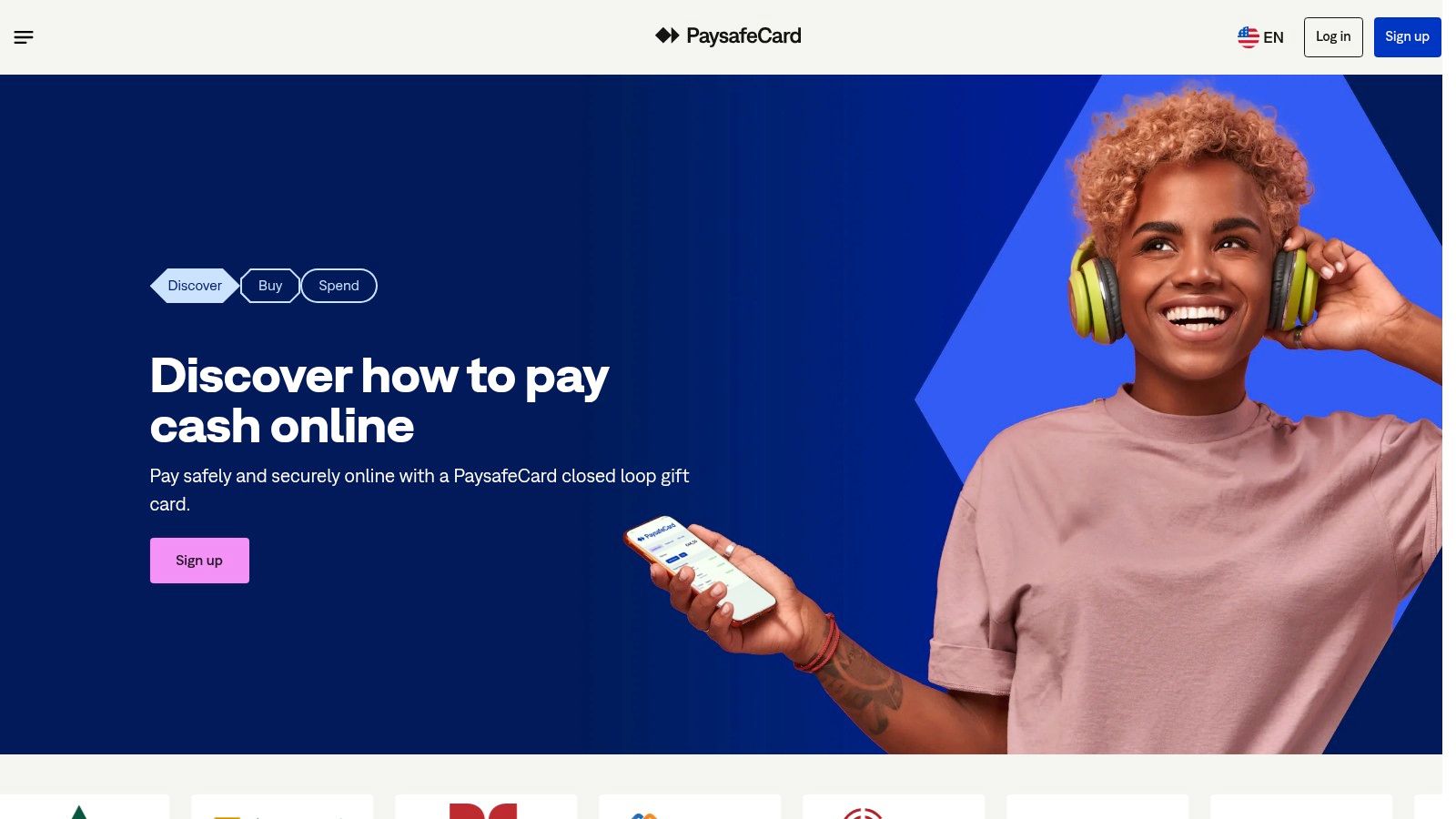
Paysafecard provides a powerful and straightforward way to pay online without linking a bank account or credit card. It operates on a prepaid voucher system, where users buy physical or digital vouchers with a 16-digit PIN. This method is a top choice for those prioritizing true transactional privacy, as the vouchers can be purchased with cash at physical retail locations, completely disconnecting the online payment from any personal identity. This makes it one of the most effective anonymous payment options for users wary of sharing financial data.
The core principle is simple: convert cash into a digital payment code. This voucher-based system is especially popular in the online gaming, social media, and entertainment sectors, where users often prefer not to use traditional banking methods for smaller, frequent transactions.
Key Features and User Experience
Using Paysafecard is incredibly simple. After purchasing a voucher, you just select it as a payment method on a supported website and enter the 16-digit PIN. The payment is processed instantly without any sign-up or data entry, offering a frictionless checkout experience.
- No Bank Account Needed: The primary benefit is the ability to pay online without ever revealing personal financial details.
- Fixed Denominations: Vouchers are typically available in set amounts like $10, $25, $50, and $100, which helps control spending.
- Combine PINs: For larger purchases, users can combine up to 10 Paysafecard PINs during a single transaction, offering flexibility.
- Wide Acceptance: It is accepted by thousands of online vendors, particularly in digital entertainment and gaming ecosystems.
Expert Tip: Check the Paysafecard website for local sales outlets before you head out. For merchants, integrating it can capture customers who are unbanked or prefer not to use cards online, expanding your potential customer base significantly.
Pricing and Accessibility
Paysafecard is free to use for making payments, but certain fees apply for inactivity or currency conversions. Its accessibility is its main strength, but it has regional limitations.
| Fee Type | Cost | Details |
|---|---|---|
| Payment Fee | Free | No charge for using a PIN to make a purchase. |
| Maintenance Fee | ~$3/month | Applied after 2 months of inactivity on a PIN's balance. |
| Currency Conversion | Varies | A fee is charged when paying in a currency different from the one the PIN was issued in. |
While widely available in Europe and other regions, its presence in the U.S. is more limited. The vouchers are also non-reloadable, so new ones must be purchased once the balance is depleted. Despite these points, it remains a premier choice for achieving payment anonymity.
Website: https://www.paysafecard.com
5. Venmo
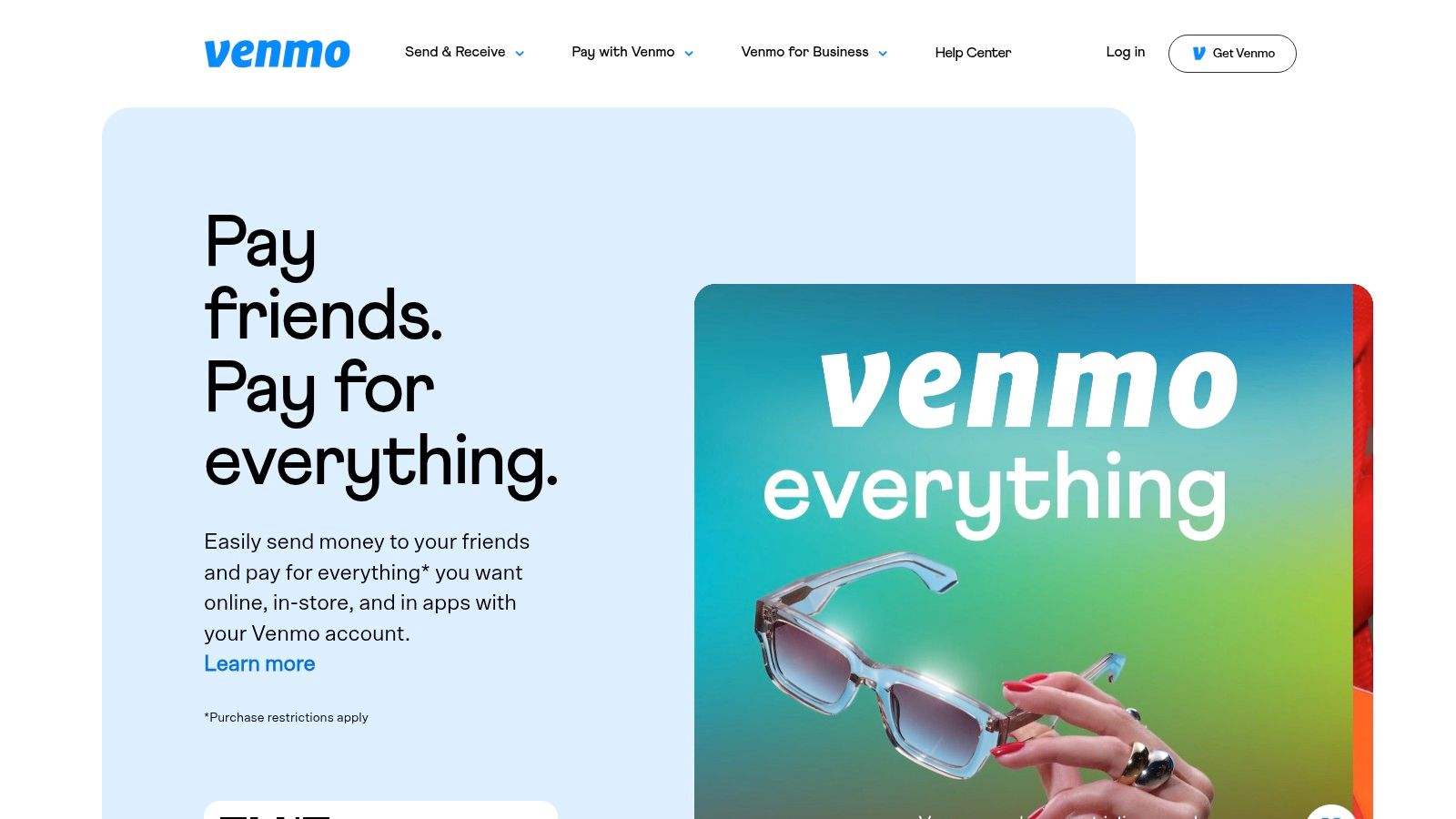
Venmo is a widely popular peer-to-peer (P2P) payment service that, while not inherently anonymous, offers robust privacy controls that allow users to shield their transaction details from the public. Primarily designed for sending money between friends and family, its widespread adoption and integration with merchants make it a convenient, if not completely private, tool for managing payments. It provides a layer of social privacy, separating financial activity from a public feed if users choose to do so.
While it requires linking a bank account or card, Venmo’s strength lies in its ability to control who sees your payment activity. This makes it a practical choice among anonymous payment options for users who prioritize social privacy over complete financial untraceability. The optional Venmo Debit Card further extends its utility to in-store purchases.
Key Features and User Experience
Venmo is renowned for its simple and fast user interface, which makes sending and receiving money almost instantaneous. The platform’s default setting is a public social feed, but this can be changed for every transaction or adjusted in the main privacy settings.
- Adjustable Privacy Settings: Users can set their transactions to "Public," "Friends," or "Private." The private setting ensures that only the sender and recipient can view the payment details.
- Venmo Debit Card: This card, linked to your Venmo balance, allows you to make purchases in-store and online wherever Mastercard is accepted, without directly exposing your bank account to merchants.
- No Standard Fees: Sending money from a linked bank account, debit card, or Venmo balance is free. A 3% fee applies to payments sent using a credit card.
- Broad Integration: Venmo is accepted as a payment method at millions of online stores and within various apps, offering a familiar checkout experience.
Expert Tip: Before making your first transaction, go directly into your settings and change your default privacy preference to "Private." This ensures all future payments automatically default to the most secure option, preventing accidental public sharing of your financial activities.
Pros and Cons
Venmo's model offers a blend of convenience and controllable privacy, but it's important to understand its limitations.
| Pros | Cons |
|---|---|
| Widely accepted and easy to use | Requires linking a bank account or card |
| Fast, instant transactions | Not fully anonymous; Venmo has access to all data |
| Free for most standard P2P transfers | Privacy settings must be manually adjusted |
| Social features can be disabled | Account can be frozen for security reviews |
Ultimately, Venmo serves as a tool for transactional privacy from the public eye, not from the platform itself or regulatory bodies. It’s an accessible option for those seeking to keep their spending habits out of social feeds.
Website: https://venmo.com
6. Mercury
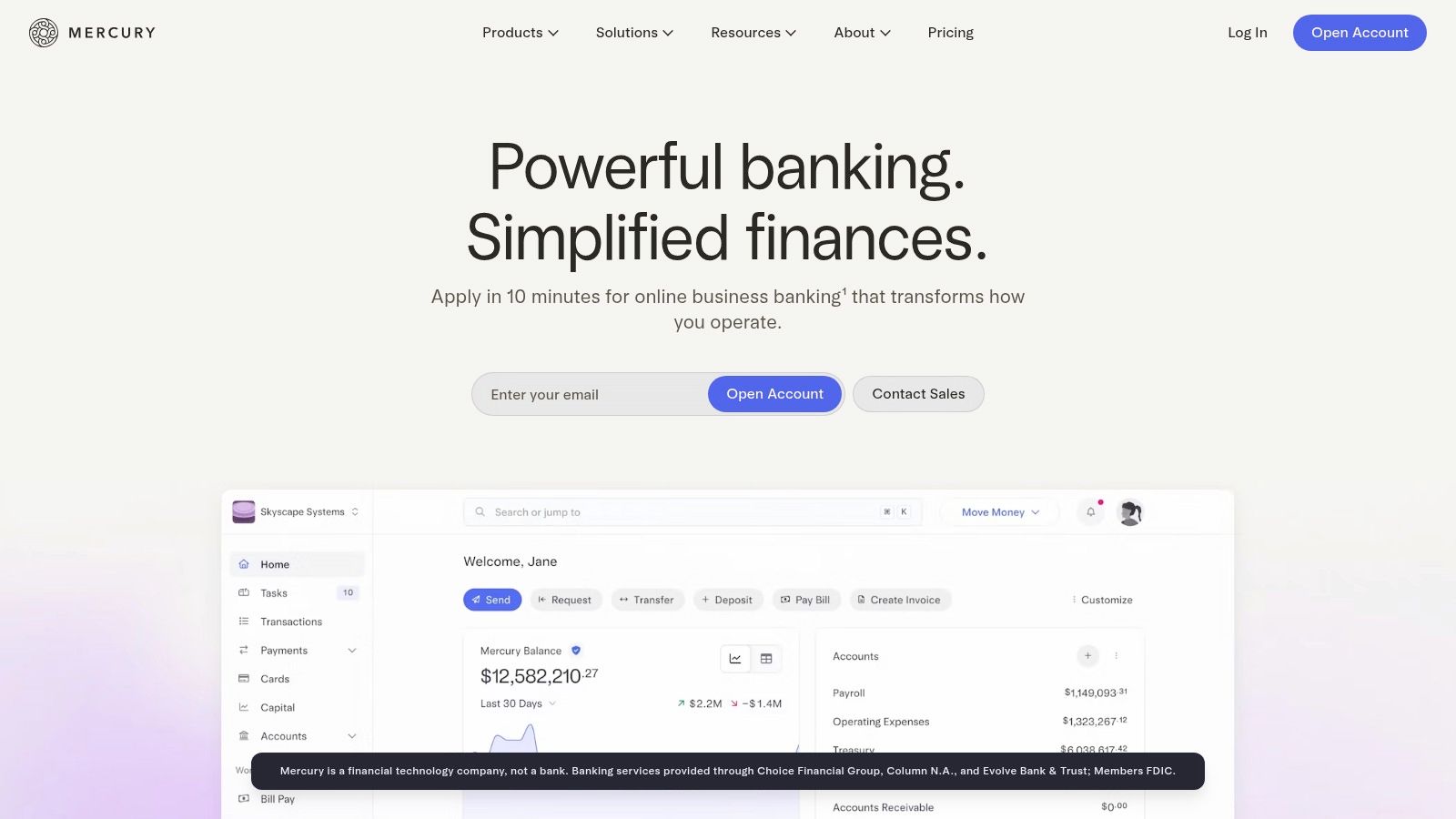
Mercury offers a robust financial technology platform designed primarily for startups and online businesses, but its features provide significant benefits for those seeking transactional privacy. While it's a business banking service, its core offering of unlimited virtual debit cards makes it a powerful tool for controlling how and where financial information is shared. It serves as an excellent layer of abstraction between a company's primary funds and individual online payments, making it a noteworthy addition to the list of anonymous payment options.
The platform allows businesses to generate unique virtual debit cards for specific vendors, employees, or subscriptions. This compartmentalizes spending and ensures that a company's main account details are never exposed to third-party merchants. If a vendor's system is compromised, only the information on that specific virtual card is at risk, and it can be closed instantly.
Key Features and User Experience
Mercury is celebrated for its clean, modern interface and streamlined user experience, which makes managing business finances remarkably simple. Account setup is entirely online and designed to be fast for incorporated US businesses. Once active, creating and managing virtual cards is an intuitive process.
- Unlimited Virtual Cards: Create as many virtual cards as needed at no extra cost, each with its own customizable spending limits.
- User Permissions: Assign cards to team members with specific roles and permissions, ensuring tight control over company spending.
- FDIC Insurance: All accounts are FDIC-insured up to $5 million, providing a high level of security for business funds.
- International Capabilities: Supports international wires and multi-currency transactions, making it ideal for global businesses.
Expert Tip: Assign a unique virtual card for each software subscription your business uses. This not only protects your primary account but also simplifies expense tracking and makes it easy to cut off payments for unused services by simply closing the card.
Pricing and Accessibility
Mercury's pricing is highly competitive and tailored for startups and small businesses.
| Plan | Price | Key Features |
|---|---|---|
| Standard | Free | FDIC-insured checking/savings, unlimited virtual cards, free domestic/international wires. |
| IO | $10/month | All Standard features plus 1.5% cashback on domestic spending and premium support. |
The main requirement for opening an account is having a registered US business with a federal EIN. While this excludes individuals and non-US companies, it stands out as a premier choice for American entrepreneurs looking to integrate financial privacy into their business operations from day one.
Website: https://mercury.com
7. US Unlocked
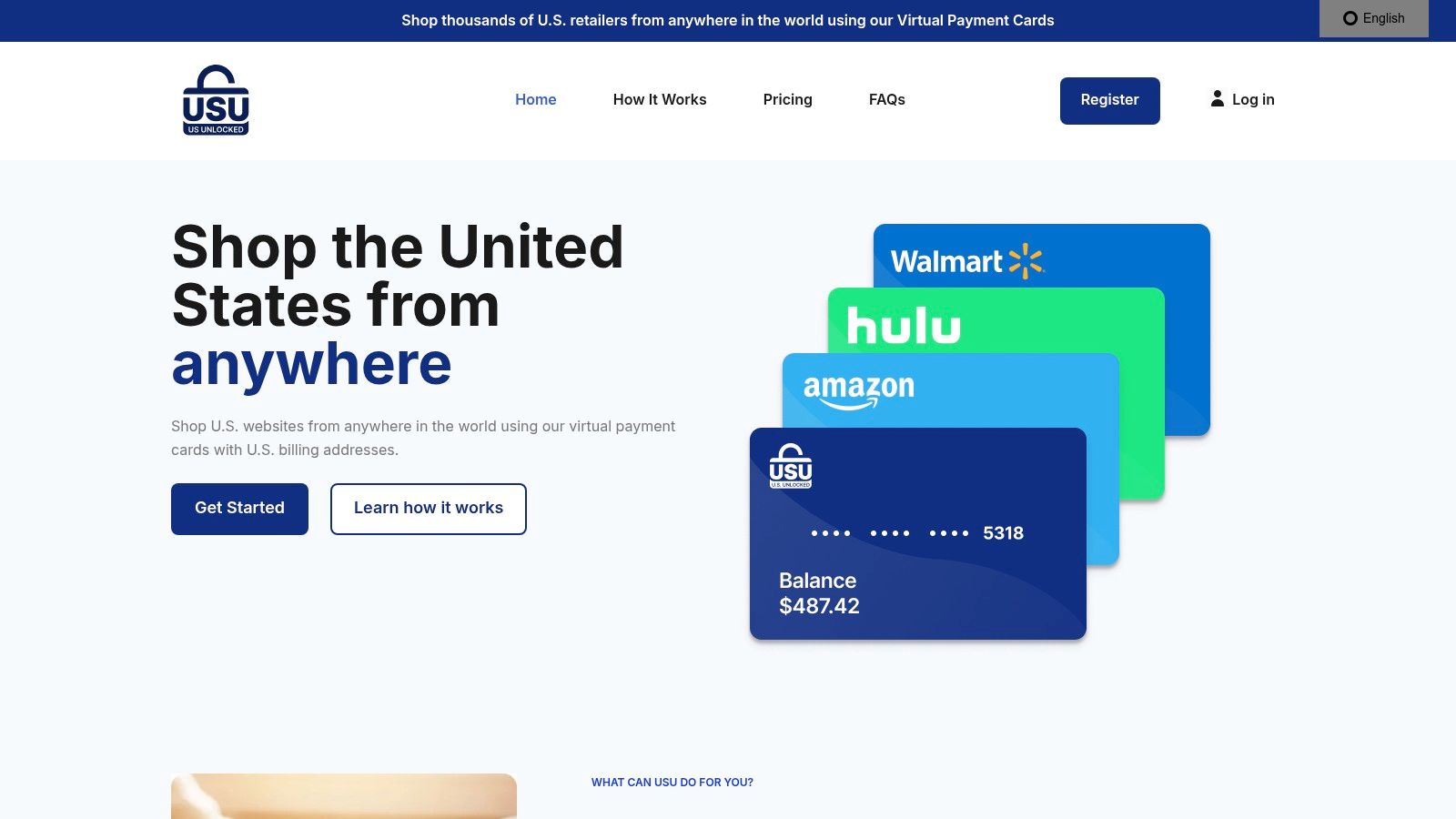
US Unlocked addresses a specific yet significant gap in online commerce by providing virtual debit cards for international shoppers who want to purchase from U.S.-based websites. It functions as a virtual card service, creating a financial bridge for users outside the United States and offering a layer of privacy by not exposing their primary local bank details to U.S. merchants. This makes it a unique and valuable tool among anonymous payment options for a global audience.
The service provides users with a U.S. billing address and a virtual debit card denominated in U.S. dollars, which are often requirements for completing transactions on American e-commerce platforms. This effectively circumvents geo-restrictions on payments, while features like single-use cards enhance transactional security.
Key Features and User Experience
Designed for international users, the platform focuses on accessibility and security. The sign-up process involves creating an account and loading funds onto your virtual card via methods like bank transfers or other regional payment processors.
- Global Access: Available to users in over 180 countries, it opens up the U.S. e-commerce market to a worldwide customer base.
- Security Controls: Generate single-use cards that expire after one purchase, protecting against data breaches and unauthorized charges.
- Subscription Management: Create separate, dedicated cards for each subscription, making it easy to track spending and cancel services by simply deactivating the card.
Expert Tip: When loading your account via bank transfer, plan ahead. Transfers can sometimes take a few business days to process, so fund your account well before you intend to make time-sensitive purchases.
Pricing and Accessibility
US Unlocked uses a fee-based model. While there is no free tier, its pricing is structured around account maintenance and transactions.
| Fee Type | Cost | Details |
|---|---|---|
| Transaction Fee | $0.50 | Charged for each successful purchase made with a virtual card. |
| Monthly Fee | $6.50 | A maintenance fee for keeping the account active. |
| Loading Fee | Varies | Depends on the method used to add funds to your account. |
Although it comes with transaction and maintenance fees, US Unlocked is a powerful enabler for non-U.S. residents. It provides essential tools for accessing American online stores securely, separating it from other virtual card providers that are often restricted to U.S. citizens.
Website: https://www.usunlocked.com
Anonymous Payment Options Comparison of 7 Platforms
| Product | Implementation Complexity 🔄 | Resource Requirements ⚡ | Expected Outcomes 📊 | Ideal Use Cases 💡 | Key Advantages ⭐ |
|---|---|---|---|---|---|
| Flash | Low (no or low-code setup, under 1 minute) | Requires Bitcoin wallet knowledge and Lightning Network access | Instant, low-fee decentralized Bitcoin payments | eCommerce, retail, subscriptions, digital content, NGOs, Bitcoin users | Full decentralization, privacy-focused, scalable network |
| Privacy.com | Low (browser extension, easy card creation) | Bank account or debit card linked | Enhanced online transaction security via virtual cards | Online purchases needing card detail masking | Disposable cards, spending control, free domestic plan |
| Cash App | Low (mobile app with simple setup) | Mobile device, linked bank or card | Peer-to-peer transactions, Bitcoin trading, investments | US/UK users sending money, Bitcoin trading, investing | $Cashtag anonymity, no fees on standard tx, investment options |
| Paysafecard | Very low (purchase vouchers physically) | Cash for vouchers | Anonymous online payments without personal financial data | Users needing cash-based anonymous online payments | Full anonymity, no bank/card needed, widespread merchant acceptance |
| Venmo | Low (app-based with bank/card link) | Bank account or card linked | Fast P2P payments with optional transaction privacy | Social payments, in-store purchases, app integrations | Wide acceptance, social features, free standard transactions |
| Mercury | Moderate (online business banking setup) | Business documentation, internet | Business banking with virtual cards, multi-currency, cashback | Startups, SMBs needing flexible online banking solutions | No fees, FDIC-insured, unlimited virtual cards, cashback |
| US Unlocked | Moderate (account setup, virtual card issuance) | Fees per transaction and monthly maintenance | Access to US e-commerce with virtual debit cards | International shoppers wanting US-based e-commerce access | Single-use cards, subscription management, global reach |
Choosing the Right Path to Financial Privacy
Navigating the landscape of anonymous payment options reveals a spectrum of powerful tools, each designed to meet distinct needs for privacy, security, and operational efficiency. We've explored everything from decentralized, non-custodial solutions like Flash to user-friendly virtual card generators and cash-based prepaid vouchers. The core takeaway is that achieving financial privacy is not a one-size-fits-all endeavor; it requires a strategic choice based on your specific context, whether you're an individual consumer or a forward-thinking merchant.
The journey begins with a clear assessment of your goals. For merchants, particularly those in the Bitcoin community or serving a global audience, embracing a solution like Flash can be transformative. It eliminates the friction of traditional banking, slashes transaction fees, and crucially, removes the need for invasive KYC procedures, thereby protecting both your business and your customers. This direct approach to accepting Bitcoin empowers you to operate with greater autonomy and financial sovereignty.
A Framework for Selecting Your Solution
To make an informed decision, consider these critical factors:
- Your Role: Are you a consumer looking to protect your personal data during online shopping, or a business aiming to streamline payments and enhance customer privacy? Your answer will immediately narrow the field. Consumers might gravitate towards Privacy.com or Paysafecard, while merchants will find more value in systems like Flash.
- Level of Anonymity Required: Do you need pseudonymity, where your identity is masked but transactions are still traceable (like with Cash App or Venmo under certain conditions), or do you require true, unlinkable anonymity, as offered by cash-funded options like Paysafecard?
- Technical Comfort: Evaluate your willingness to engage with new technologies. Integrating a decentralized Bitcoin payment gateway is different from using a simple prepaid card. Choose a tool that aligns with your or your team's technical capabilities to ensure smooth implementation and use.
- Business Integration: For business owners, the choice extends beyond simple payments. You must consider how a new system integrates with your existing operations. While exploring individual anonymous payment options, it's also wise to review comprehensive guides on the best payment processing for small businesses to see how these privacy-focused tools fit into a broader, secure financial strategy.
Final Thoughts: Embracing a Secure Financial Future
The move towards anonymous payments is more than a trend; it's a fundamental shift in how we value and protect our financial data. By adopting the right tools, you are not just conducting a transaction; you are making a statement about your commitment to privacy and security in an increasingly interconnected world. The options are available, the technology is robust, and the benefits are clear. The next step is yours to take.
Ready to offer your customers true financial freedom and privacy? Integrate Flash today to accept Bitcoin payments instantly, with no intermediaries, no KYC, and minimal fees. Visit Flash to learn how you can join the decentralized payment revolution.