Choosing the best crypto payment gateway is a critical decision for any business looking to integrate Bitcoin payments into their operations. This integration is no longer a niche consideration; it's a strategic move to tap into a growing global user base, reduce transaction fees associated with traditional banking, and offer customers more payment flexibility. However, the market is filled with options, each with distinct features, fee structures, and levels of technical complexity. Navigating these choices to find the right fit for your specific business model, whether you're a small eCommerce shop, a large SaaS provider, or a brick-and-mortar retailer, can be a significant challenge.
This guide is designed to simplify that process. We provide a comprehensive, head-to-head comparison of the leading crypto payment gateways available today. We move beyond marketing claims to offer a detailed analysis of what each platform truly offers. Inside, you'll find an honest assessment of their strengths and limitations, practical use-case scenarios, and critical insights into their implementation processes. We will focus primarily on platforms that offer robust support for Bitcoin, including the Lightning Network, to ensure merchants can serve this core community effectively. For those new to the concept, understanding the foundational steps is key. For a comprehensive overview of the process, explore this ultimate guide to accepting cryptocurrency payments for your business.
Each review in our list includes screenshots for a clear visual reference and direct links to get you started quickly. Our goal is to equip you with the specific, practical information needed to make an informed decision, saving you time and helping you select the ideal gateway to seamlessly accept Bitcoin payments.
1. Flash
Flash distinguishes itself as the premier Bitcoin payment gateway by focusing exclusively on a decentralized, non-custodial architecture. It provides merchants with a powerful suite of tools to accept Bitcoin directly, wallet-to-wallet, completely bypassing intermediaries. This model is a significant departure from custodial services that hold merchant funds, thereby enhancing security, preserving privacy, and reducing counterparty risk. Its streamlined design allows businesses to integrate Bitcoin payments in under a minute, making it an exceptionally efficient and secure choice.

The platform is engineered for speed and accessibility, leveraging the Lightning Network for near-instantaneous transaction confirmations and negligible fees. This makes it a practical solution not just for large online purchases but also for small, everyday transactions typical of brick-and-mortar retailers or digital content creators.
Key Features and Use Cases
Flash is built to serve a diverse range of business models with its versatile, no-code and low-code implementation options:
- Point-of-Sale (POS) App: Ideal for physical retailers, cafes, and service providers, allowing them to accept in-person Bitcoin payments seamlessly from a tablet or smartphone.
- Subscription Billing: SaaS companies and membership-based services can set up recurring Bitcoin payments, automating their revenue collection with ease.
- Customizable Payment Widgets & Links: E-commerce stores and digital creators can embed payment buttons directly onto their websites or share simple payment links for one-off sales, donations, or invoices.
- Non-Custodial Security: By never taking custody of your funds, Flash eliminates the risk of platform-related asset freezes or theft. All payments go directly from the customer's wallet to the merchant's wallet.
- KYC-Free Onboarding: The absence of Know Your Customer (KYC) requirements simplifies the setup process for merchants and protects customer privacy, fostering a smoother transaction experience.
Pricing and Limitations
While Flash excels in its specialized focus, potential users should note that specific pricing details are not publicly listed on its website and require direct contact for a quote. Additionally, its strength is its Bitcoin-only focus. Businesses that require fiat currency support will need to look elsewhere.
2. Coinbase Commerce
Coinbase Commerce leverages the powerful brand recognition and regulatory footing of its parent company, Coinbase, to offer a streamlined crypto payment solution. It is designed for merchants who prioritize trust, simplicity, and volatility protection. The platform allows businesses to easily accept onchain payments, with a system built to convert received cryptocurrency into USDC automatically. This feature is a significant advantage for businesses wanting to avoid the price fluctuations inherent in holding cryptocurrencies like Bitcoin.
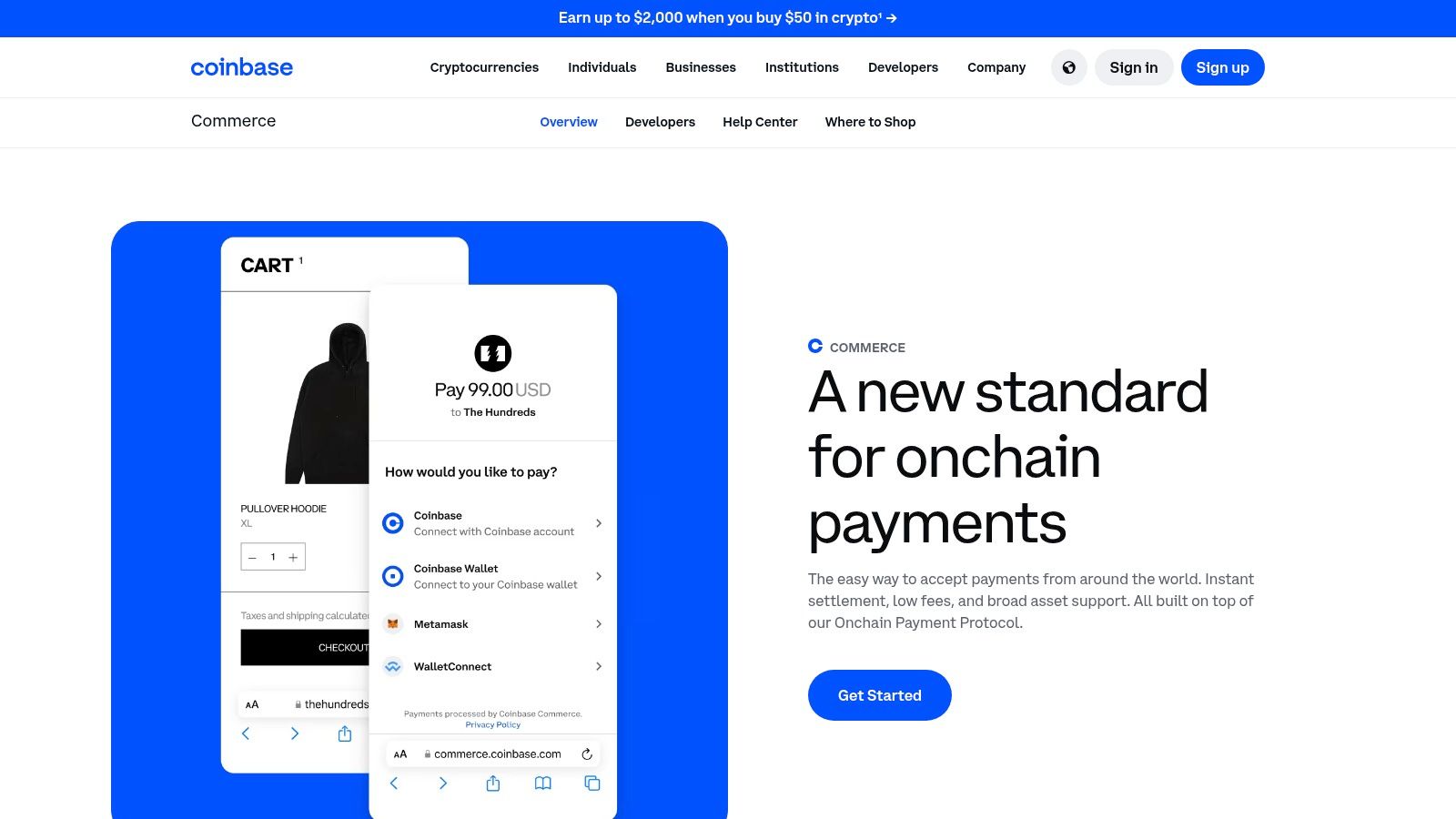
The service is particularly well-suited for US-based small to medium-sized businesses and enterprises that require a compliant and straightforward gateway. By focusing on instant settlement into a stablecoin, Coinbase Commerce effectively removes a major barrier to crypto adoption for merchants.
Core Features & Implementation
Integration is a key strength. Coinbase Commerce provides ready-made plugins for popular eCommerce platforms like WooCommerce and also offers a flexible API for custom integrations.
- Fee Structure: A flat 1% transaction fee is charged on all payments, with no setup costs or monthly fees.
- Settlement: Payments are automatically converted and settled in USDC to the merchant's Coinbase account, protecting against market volatility.
- Chargeback Protection: As transactions are settled onchain, they are final, eliminating the risk of traditional credit card chargebacks.
Coinbase Commerce stands out as one of the best crypto payment gateway options for merchants who value the security of a major US brand and need a "set it and forget it" solution for volatility-free settlement.
Pros and Cons
While its simplicity is a major draw, there are trade-offs to consider. The automatic conversion to USDC is ideal for many but may not suit merchants who wish to hold the Bitcoin they receive directly. Some legacy users have also reported occasional issues with customer support response times.
Website: https://www.coinbase.com/commerce
3. BitPay
BitPay is one of the original and most established crypto payment processors, founded in 2011. It provides a mature, enterprise-grade solution for businesses that require robust tooling, extensive compliance, and the flexibility of settling in either fiat currency or cryptocurrency. The platform is particularly well-suited for larger businesses and those in regulated industries seeking a battle-tested gateway with a long track record.
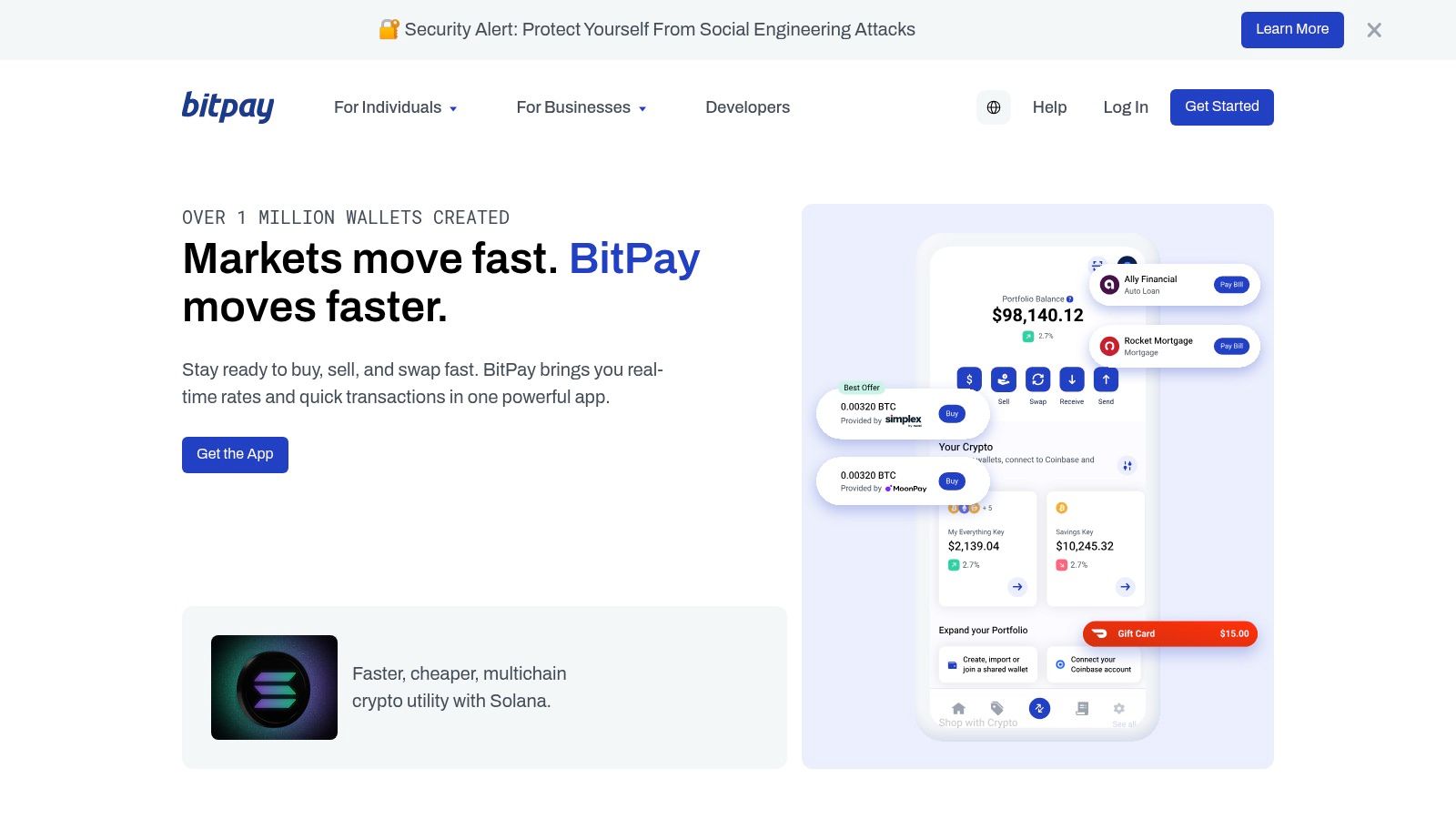
The service excels at bridging the gap between Bitcoin payments and traditional finance. Its ability to settle directly to a US bank account in dollars removes significant operational hurdles for merchants. This makes it an ideal choice for companies wanting to accept Bitcoin without managing the complexities of holding and converting digital assets themselves.
Core Features & Implementation
BitPay offers a comprehensive suite of tools, including ready-made eCommerce plugins, invoicing, point-of-sale solutions, and a well-documented API for custom development. It supports a wide range of wallets, ensuring a smooth checkout experience for customers.
- Fee Structure: A standard 1% transaction fee applies, with volume discounts available for larger merchants.
- Settlement: Offers daily settlements directly to a bank account in USD or other fiat currencies, or settlement in Bitcoin.
- Chargeback Protection: Onchain Bitcoin transactions are final, providing complete protection against traditional fraud-related chargebacks.
As one of the most tenured players in the space, BitPay stands out as a best crypto payment gateway for enterprises needing reliable fiat settlement and deep accounting integrations like QuickBooks.
Pros and Cons
BitPay’s extensive feature set and established reputation are its main advantages. Its mature documentation and broad wallet compatibility streamline both integration and the end-user payment process. However, the fee structure can be less competitive for low-volume merchants, and the process for handling payment exceptions or refunds can sometimes introduce friction for customers.
Website: https://www.bitpay.com/
4. CoinGate
CoinGate is a versatile crypto payment gateway known for its broad accessibility and simple, transparent pricing. It caters to a global merchant base with extensive coin support and a wide array of integration options, from simple payment buttons to robust eCommerce plugins. This makes it an excellent choice for businesses looking for a straightforward, all-in-one solution to begin accepting Bitcoin payments without a complex setup process.
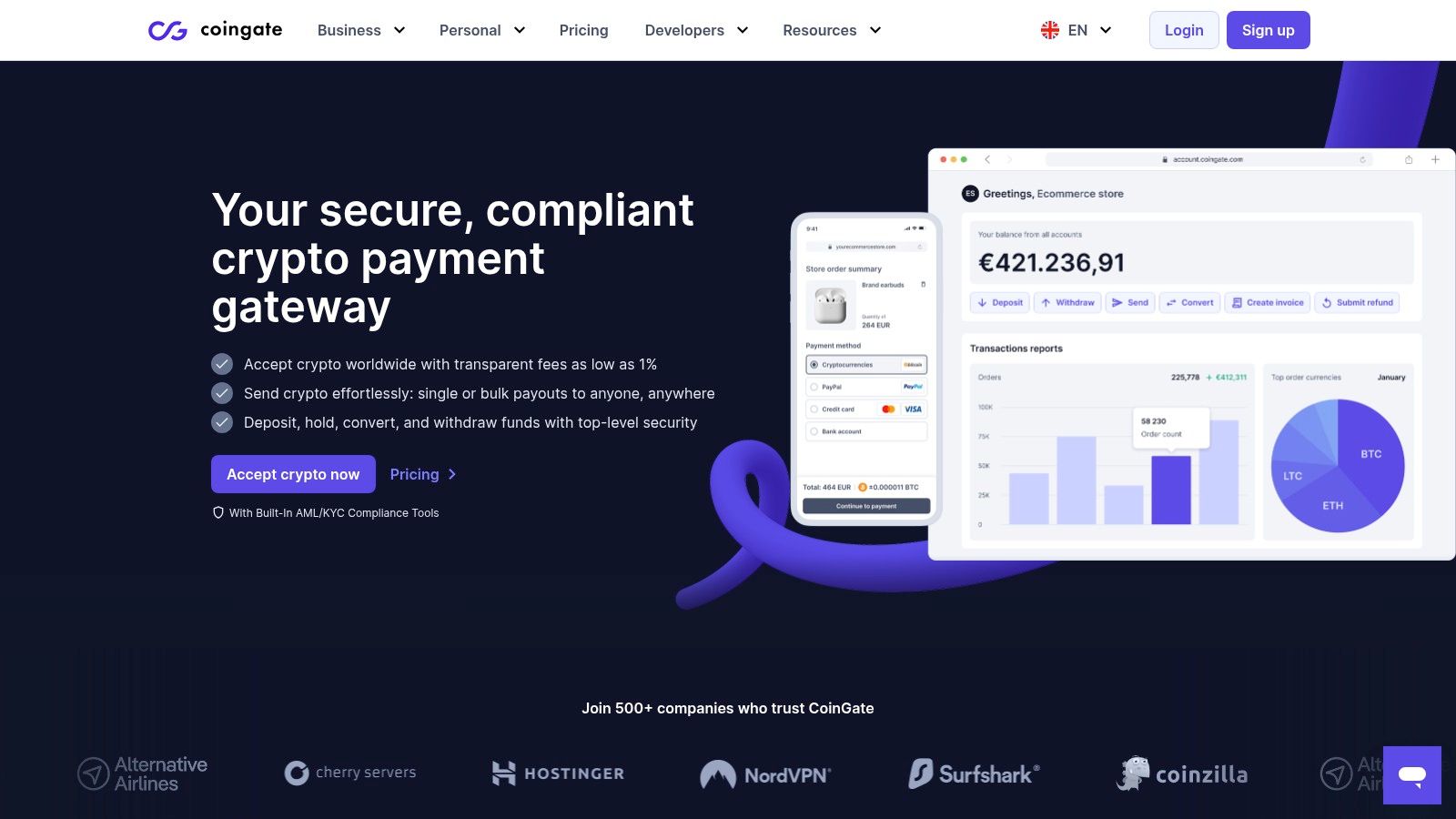
The platform is particularly well-suited for international eCommerce stores, including those on popular platforms like Shopify and WooCommerce. Its flexibility allows merchants to choose between holding received Bitcoin or converting it to fiat, providing options for both crypto enthusiasts and businesses seeking to mitigate volatility. The documentation is clear, enabling a fast and relatively easy implementation.
Core Features & Implementation
CoinGate provides solutions for nearly every type of online business, offering payment buttons, email billing, and plugins for major eCommerce systems alongside a full-featured API for custom development.
- Fee Structure: A competitive, flat 1% transaction fee applies to all payments, with no setup or recurring monthly costs.
- Settlement: Merchants can choose to settle in Bitcoin or fiat currency. US-based merchants can receive fiat payouts via SWIFT transfers.
- Tools & Invoicing: The platform includes built-in reporting tools, refund management, and the ability to send invoices directly to customers.
CoinGate distinguishes itself as one of the best crypto payment gateway options due to its uncomplicated 1% fee, extensive integration support, and global reach, making it highly adaptable for businesses worldwide.
Pros and Cons
While the straightforward pricing and broad feature set are significant advantages, some factors require consideration. The default weekly settlement might not be ideal for businesses requiring faster access to funds, although enterprise plans offer more flexible schedules. Additionally, fiat settlements for US merchants via SWIFT come with a separate fee.
Website: https://coingate.com/
5. NOWPayments
NOWPayments is a non-custodial gateway that prioritizes flexibility and low transaction costs. It is designed for merchants who want to minimize fees and have granular control over their payment flows, from donations to mass payouts. The platform's core appeal lies in its semi-automated system that allows for instant payment confirmation while giving merchants the choice of self-custody or conversion options. This makes it a strong contender for cost-conscious businesses and non-profits.
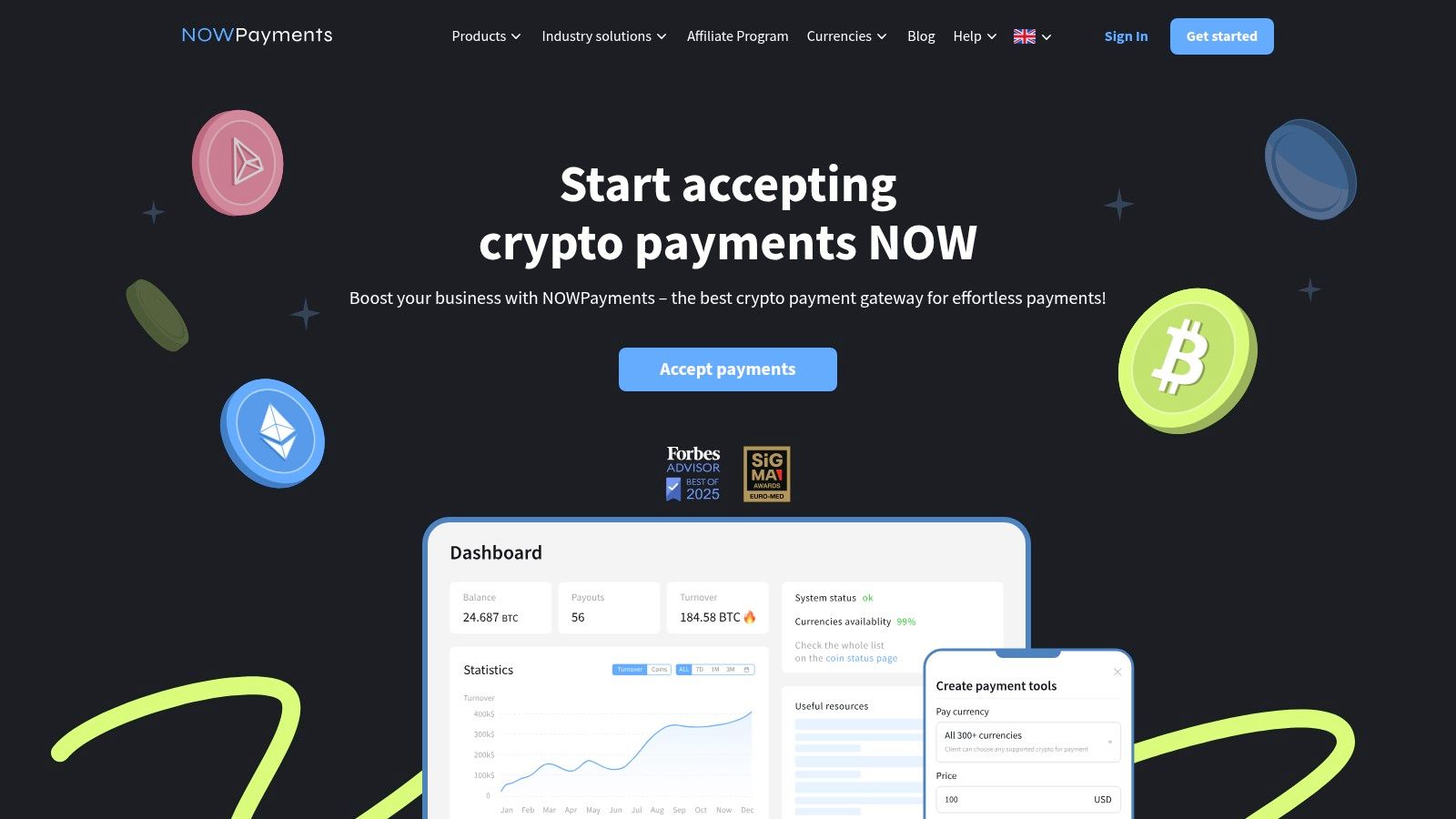
The service is particularly well-suited for online stores, content creators, and charitable organizations that need a versatile and affordable way to accept digital asset payments. Its fixed-rate option is also a key feature, allowing merchants to lock in an exchange rate for a set period to avoid price volatility during the payment window.
Core Features & Implementation
NOWPayments offers a fast setup with a range of integrations, including plugins for major eCommerce platforms like WooCommerce and Shopify, alongside a simple API for custom development.
- Fee Structure: Fees start at 0.5% for same-coin transactions. If automatic conversion is used, an additional 0.5% exchange fee applies for a total of 1%.
- Settlement: As a primarily non-custodial service, funds are sent directly to the merchant's wallet. Custodial and auto-conversion features are available for those who need them.
- Mass Payouts: The platform includes a feature for processing multiple payments simultaneously, useful for affiliate programs, payroll, or rewards distribution.
With its competitive fee model and non-custodial approach, NOWPayments emerges as one of the best crypto payment gateway choices for merchants seeking maximum control and minimal overhead.
Pros and Cons
The platform’s major advantage is its low-cost structure and flexibility, including quick API and plugin options. However, its reliance on third-party partners for fiat off-ramps can lead to a variable support experience depending on the region. The added exchange fee for cross-asset payments is another point to consider.
Website: https://nowpayments.io/
6. BTCPay Server
BTCPay Server is the antithesis of custodial solutions, offering a free, open-source, and self-hosted Bitcoin payment processor. It grants merchants ultimate sovereignty over their funds and payment infrastructure. This gateway is designed for technically proficient users and businesses who prioritize censorship resistance, privacy, and the elimination of intermediary fees, accepting the trade-off of managing their own server and Bitcoin node. It allows for direct, peer-to-peer transactions from customer to merchant.
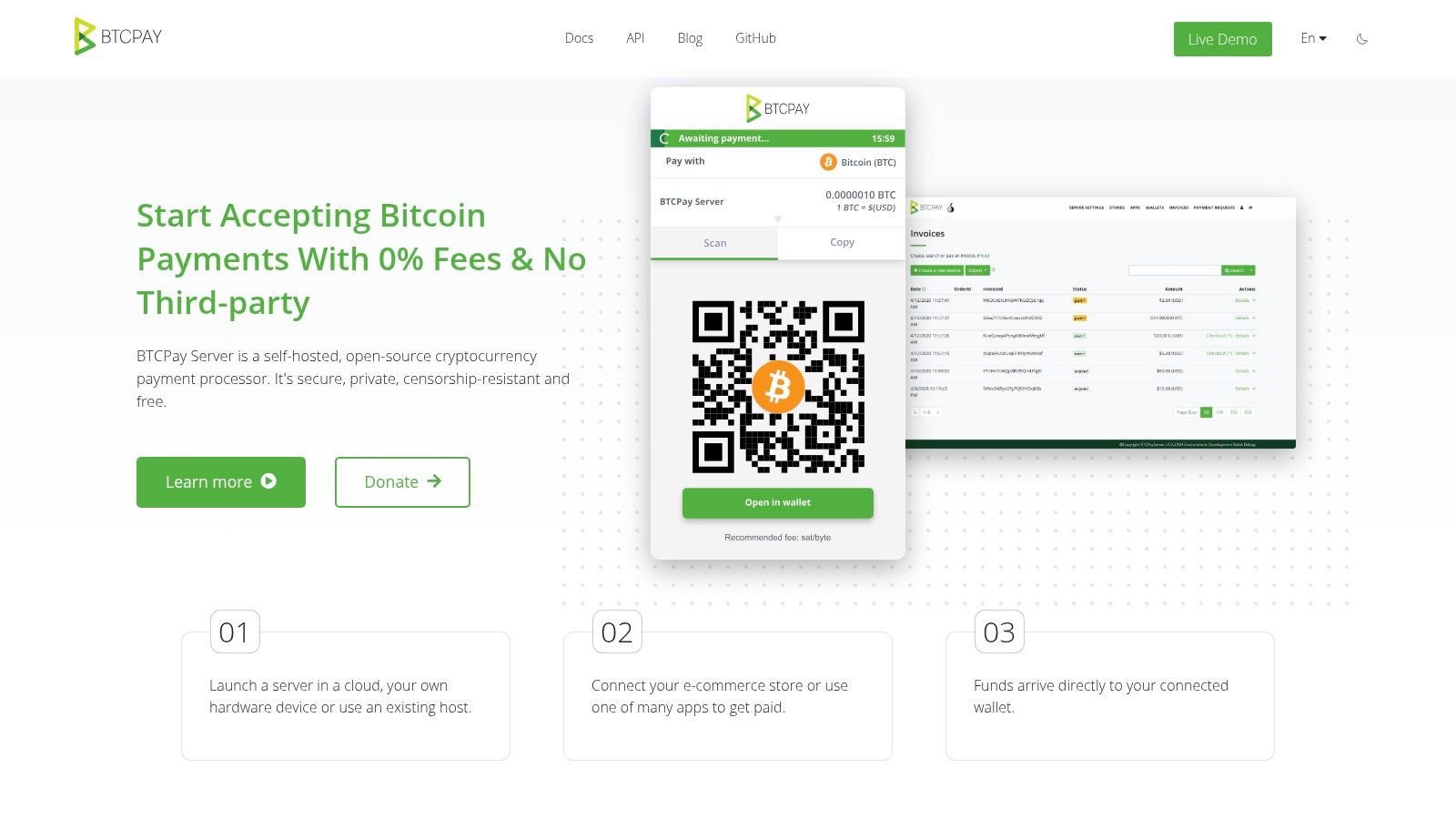
The platform is ideal for US merchants and global users who are deeply aligned with the ethos of Bitcoin and wish to avoid KYC requirements and potential platform risk. By running your own instance, you become your own payment processor, ensuring that no third party can freeze your funds or block payments.
Core Features & Implementation
BTCPay Server can be deployed on your own hardware, a cloud server, or via third-party hosts. It integrates with major eCommerce platforms and supports hardware wallets for enhanced security.
- Fee Structure: 0% processor fees. Merchants only pay the standard Bitcoin or Lightning Network fees required for the transaction.
- Settlement: Payments settle directly to the merchant's connected wallet. There is no automatic fiat conversion; this must be handled separately through an exchange.
- Chargeback Protection: All Bitcoin transactions are final and immutable, providing complete protection against chargeback fraud.
For merchants demanding full control and zero processing fees, BTCPay Server stands out as the best crypto payment gateway, offering a powerful, privacy-focused, and censorship-resistant solution.
Pros and Cons
The primary advantage of BTCPay Server is its sovereign nature, but this comes with significant operational responsibility. The lack of a central support team means users rely on community documentation and forums for help.
Website: https://btcpayserver.org/
7. OpenNode
OpenNode specializes in providing a robust, Bitcoin-only payment infrastructure, focusing heavily on the speed and efficiency of the Lightning Network. It is designed for businesses that want to leverage Bitcoin's power while having the flexibility to settle in traditional fiat currencies. By offering instant transactions via Lightning and automatic conversion to USD, OpenNode provides a solution that balances crypto innovation with practical business needs, making it a compelling choice for US-focused merchants.
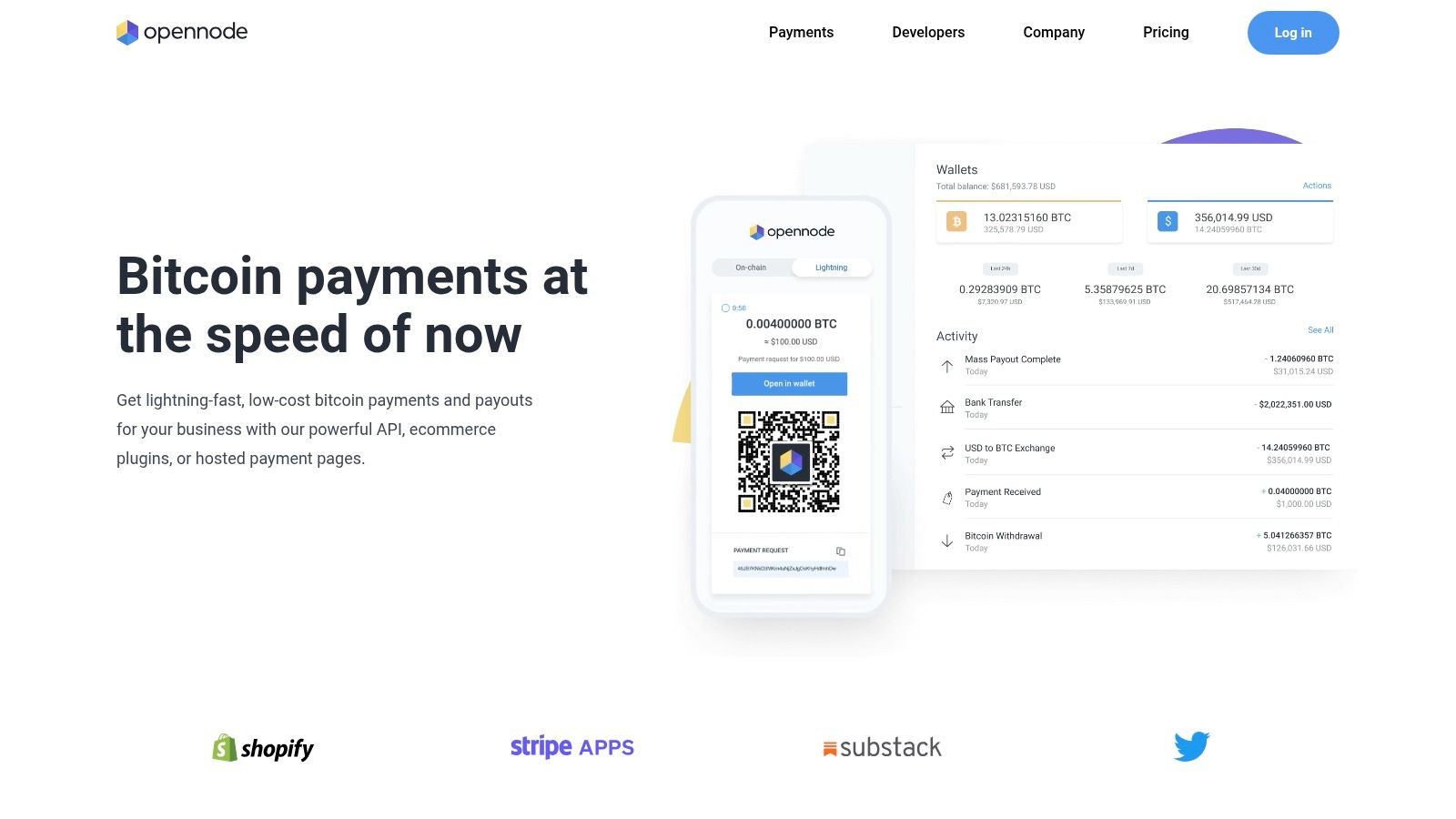
The platform is particularly well-suited for businesses seeking near-instant settlement and low transaction costs. Its developer-friendly tools and simple e-commerce plugins cater to a wide range of users, from small online stores to larger enterprises requiring custom payment flow integrations.
Core Features & Implementation
OpenNode offers a streamlined integration experience with well-documented APIs and plugins for major platforms like Shopify and WooCommerce. The system is built for performance, ensuring transactions are fast and reliable.
- Fee Structure: A competitive 1% transaction fee is standard, with no setup or recurring monthly charges.
- Settlement: Merchants can choose to auto-convert Bitcoin to several fiat currencies (including USD, EUR, GBP) for direct bank payouts, protecting against price volatility.
- Lightning-Native: The platform prioritizes the Lightning Network for minimal fees and instant confirmation. On-chain Bitcoin payments are also supported.
As one of the best crypto payment gateway providers focused exclusively on Bitcoin, OpenNode excels by offering unparalleled Lightning Network support combined with seamless fiat settlement options for merchants.
Pros and Cons
OpenNode's specialization in Bitcoin is both its greatest strength and its primary limitation. While it offers a best-in-class experience for Lightning payments, it does not support any other cryptocurrencies. Fees can also apply for on-chain withdrawals and bank transfers, which merchants should factor into their cost analysis.
Website: https://opennode.com/
8. Stripe Stablecoin Payments (Pay with Crypto)
Global payment leader Stripe has re-entered the crypto space with a solution tailored for businesses seeking stability and simplicity. Currently in public preview for US-based businesses, Stripe Stablecoin Payments enables merchants to accept USDC on several networks. This service is designed for the massive existing user base of Stripe who want to add a crypto payment option with minimal disruption to their current financial workflows, as all funds settle directly to their standard Stripe balance in fiat.
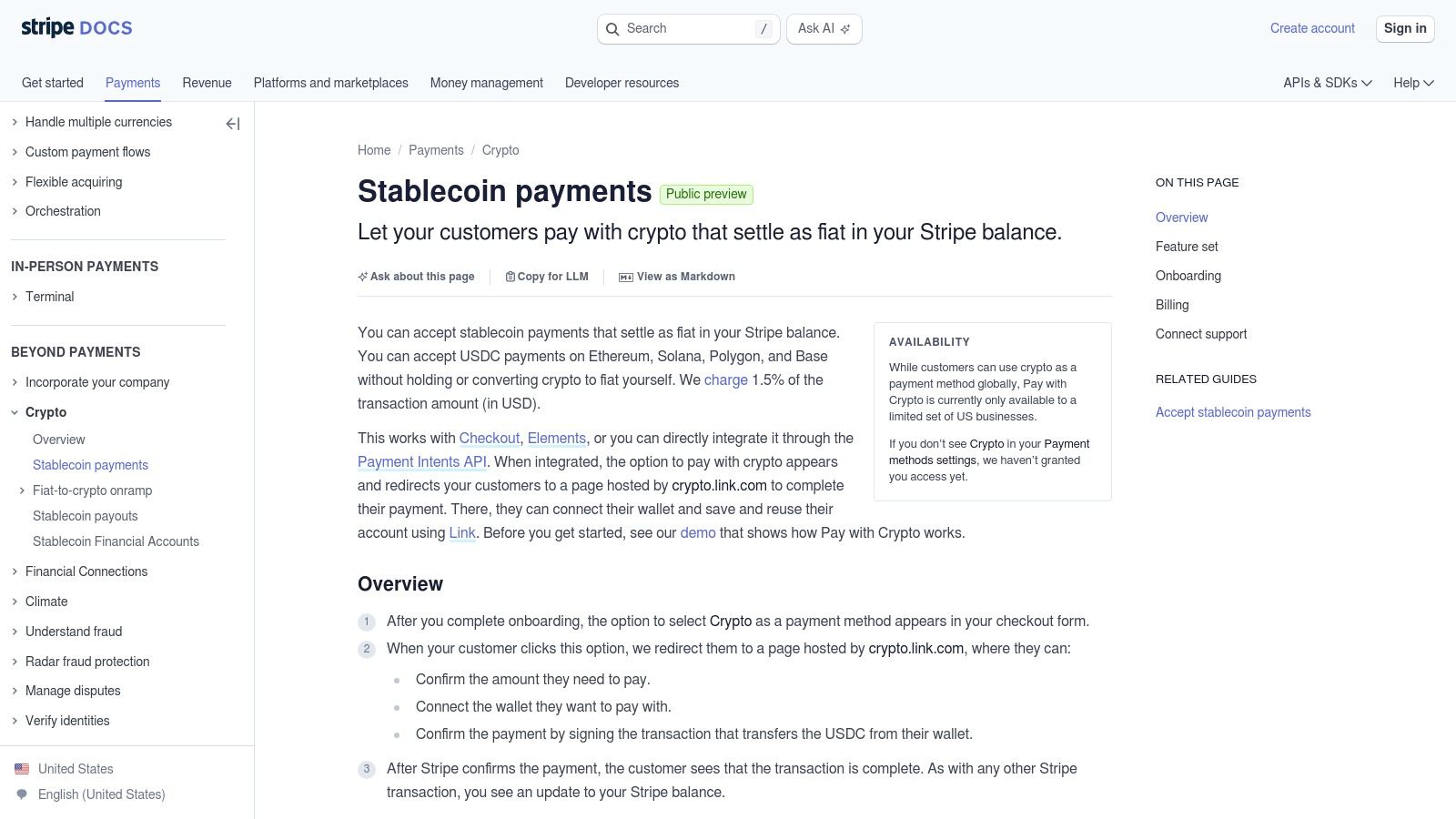
This approach makes it an incredibly low-lift entry point for established businesses. By focusing exclusively on stablecoins, Stripe sidesteps the volatility and complex accounting associated with accepting assets like Bitcoin, offering a pragmatic path to crypto acceptance within a familiar, trusted ecosystem.
Core Features & Implementation
Integration leverages the existing Stripe infrastructure, allowing businesses to enable crypto payments via Checkout, Payment Links, Elements, or the Payment Intents API. This ensures a consistent developer experience and consolidated reporting.
- Fee Structure: A transaction fee of 1.5% applies to each successful payment, with no setup or monthly costs.
- Settlement: All incoming USDC payments are automatically converted to fiat and settled into the merchant's Stripe balance, just like a credit card payment.
- Chargeback Protection: Crypto payments are final and not subject to disputes or chargebacks, removing this liability from the merchant.
For the millions of businesses already on Stripe, this is arguably the most seamless path to accepting digital currency, making it one of the best crypto payment gateway options for those prioritizing ease of use over holding crypto assets.
Pros and Cons
The main advantage is its effortless integration into existing Stripe stacks, which unifies reporting and payouts. However, its current availability is limited to US businesses and it intentionally avoids supporting volatile assets like Bitcoin, which may not appeal to merchants looking to accumulate specific cryptocurrencies.
Website: https://docs.stripe.com/crypto/stablecoin-payments
9. Shopify (USDC crypto payments via Shopify Payments)
Shopify, a giant in the eCommerce space, now offers a native solution for accepting cryptocurrency directly through its own payment processor, Shopify Payments. This feature allows merchants in eligible US states to accept USDC payments seamlessly at checkout. By integrating crypto acceptance into its core platform, Shopify removes the need for merchants to manage a separate gateway, streamlining operations significantly.
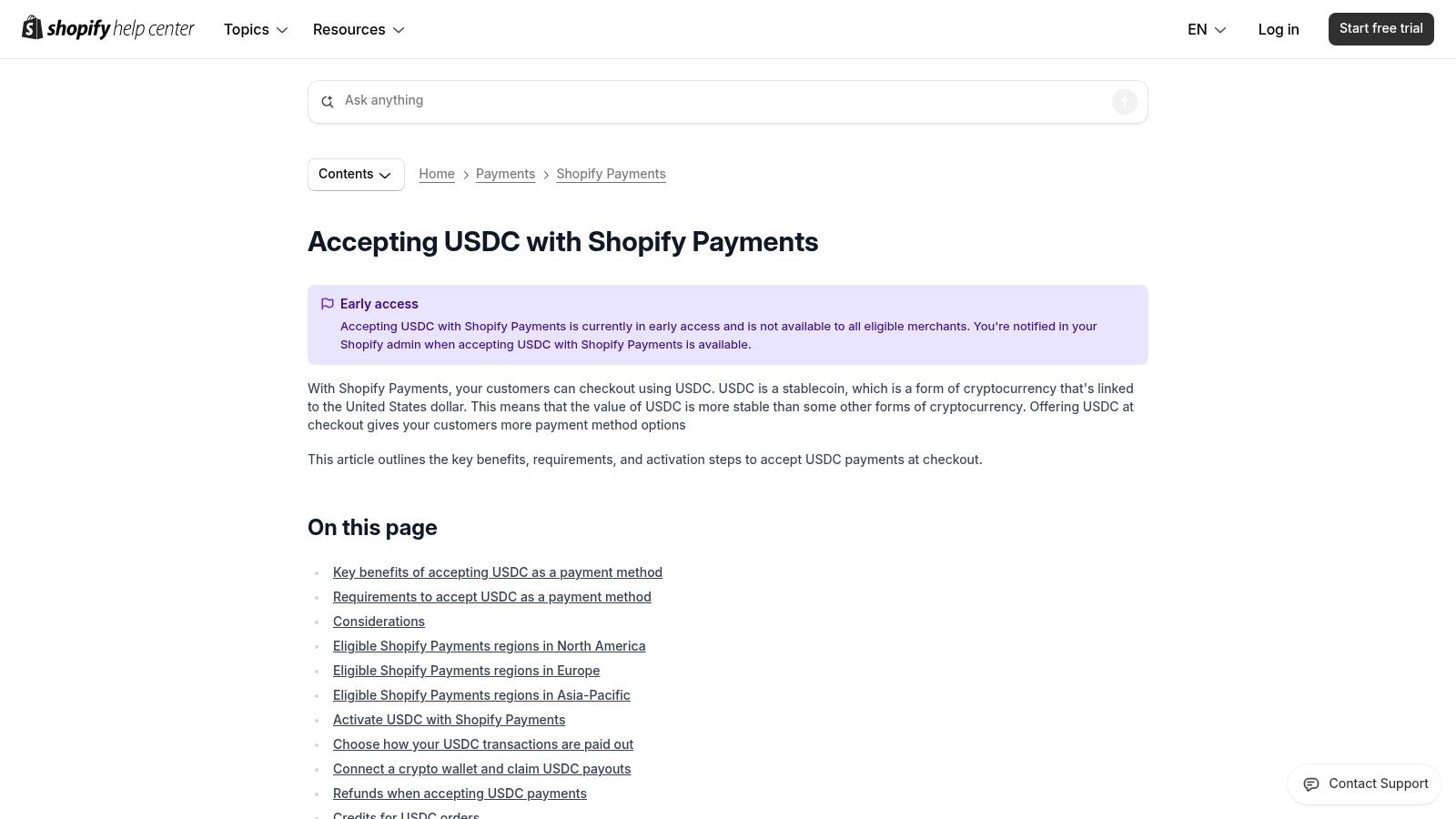
This native integration is a game-changer for businesses already embedded in the Shopify ecosystem. It provides a familiar, unified dashboard for reconciling both traditional card payments and USDC transactions. The focus on a stablecoin like USDC simplifies accounting and protects merchants from the price volatility associated with cryptocurrencies like Bitcoin.
Core Features & Implementation
Activating this feature is straightforward for eligible stores using Shopify Payments, requiring no complex API keys or plugins. Merchants can manage everything within their existing Shopify admin panel.
- Fee Structure: Transactions are subject to a 1.9% fee, with no setup or monthly costs for the feature itself.
- Settlement: Merchants can choose to receive payouts directly as USDC to a compatible wallet or have funds automatically converted and settled in US dollars.
- Chargeback Protection: Similar to other onchain transactions, USDC payments are final, providing inherent protection against fraudulent chargebacks.
For US-based Shopify merchants seeking the simplest path to crypto acceptance, the native USDC integration within Shopify Payments is an unbeatable option, offering unified reporting and settlement without third-party apps.
Pros and Cons
The primary advantage is its seamless integration into the existing Shopify workflow, which is a massive benefit for existing users. However, the service has clear limitations. It is currently restricted to USDC and is not available in all US states, excluding key markets like New York and Texas. Merchants wanting to accept Bitcoin must still rely on third-party gateway apps.
Website: https://help.shopify.com/en/manual/payments/shopify-payments/usdc-payments
10. CoinPayments
CoinPayments is one of the most established players in the crypto payments space, offering a mature gateway that supports a vast array of digital assets. Its longevity and extensive features make it a reliable choice for merchants looking for flexibility and low base transaction fees. The platform provides an integrated wallet and a comprehensive suite of tools designed to accommodate a diverse range of business models, from small online stores to larger enterprises.
This gateway is particularly well-suited for businesses that want broad asset support without sacrificing affordability. Its plugin ecosystem and developer-friendly API ensure that it can be integrated into nearly any existing commerce setup, making it a versatile option for merchants globally.
Core Features & Implementation
CoinPayments excels in offering extensive integration options, including pre-built plugins for major eCommerce platforms like WooCommerce, Shopify, and Magento. This simplifies the setup process for merchants who are not technically inclined.
- Fee Structure: A competitive 0.5% processing fee.
- Settlement: Offers flexible settlement options, allowing merchants to either hold the received Bitcoin or configure auto-conversions. It provides tools for managing network fees.
- Broad Support: It supports many digital assets, providing merchants with payment flexibility for their customers.
CoinPayments distinguishes itself as a top crypto payment gateway by offering some of the lowest processing fees in the market, combined with an unparalleled range of supported assets and robust integration tools.
Pros and Cons
The primary advantage of CoinPayments is its low-cost structure and extensive coin support. Its wide range of plugins and tutorials simplifies onboarding for many users. However, the user experience can sometimes feel divided between its legacy and newer platform versions. Additionally, while the base fee is low, network fees for withdrawals are a separate cost to consider.
Website: https://www.coinpayments.net/
11. Strike (Lightning for business)
Strike harnesses the power of the Bitcoin Lightning Network to offer instant, low-cost global payments. It is specifically designed for businesses that want to leverage Bitcoin for its speed and efficiency, particularly for micro-transactions and cross-border commerce. The platform provides a robust API for invoicing and allows merchants to receive payments in Bitcoin, with the option to instantly convert to and settle in cash. This dual capability makes it highly attractive for US-based businesses seeking the benefits of Bitcoin without holding a volatile asset.
The service is an excellent fit for merchants prioritizing speed and minimal fees over multi-asset support. By focusing exclusively on the Bitcoin and Lightning ecosystem, Strike delivers a highly optimized and compliant payment experience for micropayments, international remittances, and everyday retail transactions where speed is critical.
Core Features & Implementation
Strike’s developer-focused API is its core strength, enabling custom payment flows for web and mobile applications. It allows for the creation of invoices, payment requests, and seamless conversions between Bitcoin and fiat currency.
- Fee Structure: Offers tiered trading fees that decrease with higher monthly volumes. Lightning routing fees are estimated and passed through, with some free on-chain withdrawals included.
- Settlement: Merchants can choose to hold received funds as Bitcoin or automatically convert and settle them as cash, providing flexibility and protection from volatility.
- Chargeback Protection: All transactions are final and settled on the Bitcoin network, completely eliminating the risk of fraudulent chargebacks common with traditional card payments.
Strike positions itself as a premier Bitcoin-native payment gateway, making it one of the best crypto payment gateway choices for businesses focused on leveraging the Lightning Network for unparalleled speed and cost-efficiency.
Pros and Cons
Strike's specialization in the Lightning Network is both its greatest advantage and its main limitation. While it offers extremely fast and cheap payments, it does not support other cryptocurrencies. Fees for cash conversions and prioritized on-chain transactions are also a factor for merchants to consider.
Website: https://developer.strike.me/
12. Crypto.com Pay (for Business)
Crypto.com Pay enters the market with an aggressive, fee-conscious proposition backed by the extensive user base of its parent ecosystem. It is designed for merchants aiming to eliminate transaction costs and tap into a large, crypto-native customer base. The gateway provides notable flexibility, allowing businesses to settle payments in their preferred cryptocurrency, including Bitcoin, or convert them directly to fiat currency. This choice makes it a versatile tool for both crypto purists and traditional businesses.
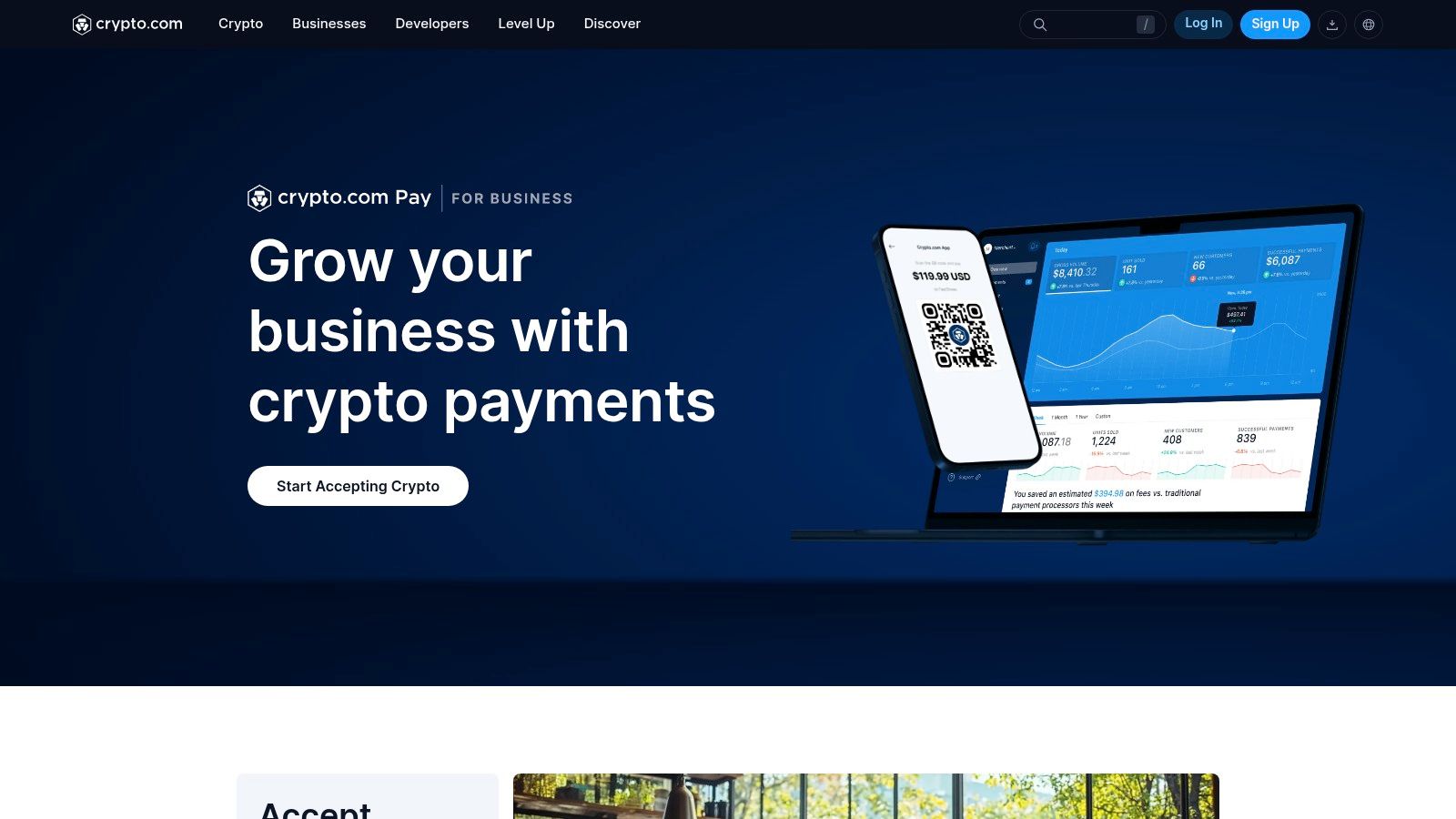
The platform is particularly appealing to eCommerce stores, especially those on Shopify, due to its seamless integration and co-marketing opportunities. With dedicated apps for point-of-sale transactions, it also serves brick-and-mortar retailers looking to accept Bitcoin and other digital assets in-store, positioning it as a strong contender for the best crypto payment gateway for omnichannel retail.
Core Features & Implementation
Crypto.com Pay offers simple integration through plugins for major platforms like Shopify and WooCommerce, as well as an API for custom solutions. Its dedicated iOS POS app simplifies in-person payments.
- Fee Structure: A major highlight is its 0% transaction fee. Merchants only pay network fees, which are covered by the customer during checkout.
- Settlement: Offers flexibility with settlement in supported cryptocurrencies like Bitcoin or in major fiat currencies (USD, EUR, etc.).
- Broad Acceptance: Supports payments in many cryptocurrencies, providing customers with extensive choice at checkout.
For merchants seeking a zero-fee structure and the ability to choose between holding Bitcoin or receiving fiat, Crypto.com Pay provides an exceptionally competitive and flexible gateway.
Pros and Cons
The zero-fee model is a powerful advantage, and the choice of settlement is a key differentiator. However, merchants should be aware of the conditions for fiat payouts. Minimum settlement amounts apply, and while Crypto.com doesn't charge for the fiat wire, intermediary bank fees may be deducted, which can impact smaller businesses. Additionally, the availability of certain features can vary based on the merchant's jurisdiction.
Website: https://crypto.com/pay-merchant/
Top 12 Crypto Payment Gateways Comparison
| Provider | Core Features & Payment Options | User Experience & Quality ★ | Value Proposition 💰 | Target Audience 👥 | Unique Selling Points ✨ | Price Points 💰 |
|---|---|---|---|---|---|---|
| 🏆 Flash | Bitcoin-only, wallet-to-wallet, POS app, widgets | Instant payments, no KYC, robust docs ★★★★ | Secure, decentralized, minimal fees | Merchants, eCommerce, SaaS, nonprofits | Non-custodial, low-code tools, instant onboarding ✨ | Not publicly disclosed |
| Coinbase Commerce | Multi-crypto, automatic USDC conversion | Strong US compliance, instant settlement ★★★ | Trusted US brand, simple onboarding | SMBs, enterprises needing US compliance | Automatic rate-lock, no chargebacks | 1% transaction fee |
| BitPay | Bitcoin support, fiat & crypto settlement, invoicing | Mature tooling, extensive wallet support ★★★ | Enterprise-grade compliance | Businesses needing compliance & fiat payout | Wide wallet support, QuickBooks integration | Tiered pricing, from ~$0.25/op |
| CoinGate | Bitcoin support, plugins, fiat & crypto settlements | Straightforward setup, good docs ★★★ | Simple pricing & broad support | Global merchants | 1% flat fee, multi-currency | 1% processing fee |
| NOWPayments | Bitcoin support, auto-conversion, mass payouts | Low fees, flexible API ★★★ | Cost-effective, multi-asset acceptance | Cost-conscious merchants, donations | Non-custodial, fixed-rate options | 0.5%-1% fees |
| BTCPay Server | Self-hosted Bitcoin/Lightning gateway | Privacy-focused, no fees ★★★★ | Full control, zero processor fees | Tech-savvy merchants preferring self-hosting | Open-source, zero fee processor | 0% processor fee |
| OpenNode | Bitcoin/Lightning, USD payouts | Developer-friendly, fast settlements ★★★ | Lightning speed with optional fiat | US merchants preferring Bitcoin-only | Free Lightning withdrawals, fiat payouts | ~1% processing fee |
| Stripe Stablecoin Payments | USDC & select stablecoins, fiat settlement | Integrated with Stripe, consolidated reporting ★★ | Low-lift crypto acceptance | US businesses using Stripe | Stablecoin-only, no dispute liability | 1.5% transaction fee |
| Shopify (USDC Payments) | USDC acceptance via Shopify Payments | Unified dashboard, Shopify native ★★★ | Easy crypto acceptance for Shopify stores | Shopify US stores | Native support, no extra plugins required | Varies, no extra gateway fee |
| CoinPayments | Broad coin support, integrated wallet | Large plugin ecosystem ★★★ | Balanced feature set & cost | Diverse merchants | Low base fees, broad asset support | 0.5% processing fee |
| Strike | Lightning payments, business API | Very fast, low fees ★★★ | Micro & cross-border payments | US businesses needing fast Bitcoin payments | Lightning-powered global transfers | Tiered fees, volume discounts |
| Crypto.com Pay (Business) | Zero tx fees, broad support, fiat & crypto settlement | Competitive fees, Shopify integration ★★★ | Low-cost gateway with rewards | Merchants wanting zero fees & co-marketing | Merchant POS app, broad coin support | Zero tx fees (with limits) |
Final Thoughts
Navigating the landscape of cryptocurrency payment gateways can feel complex, but the journey to accepting Bitcoin is more accessible than ever. Throughout this guide, we've explored a diverse range of platforms, from fully-managed, feature-rich services like BitPay and Coinbase Commerce to self-sovereign, open-source solutions like BTCPay Server. Each option presents a unique combination of features, fee structures, and operational models tailored to different business needs. The key takeaway is that there is no single "best crypto payment gateway" that fits every merchant perfectly. Instead, the ideal choice is the one that aligns with your specific business goals, technical capabilities, and philosophical approach to cryptocurrency.
Your decision should be a strategic one, balancing convenience with control, and fees with features. A high-volume e-commerce store might prioritize a gateway with robust API support and seamless integration into existing platforms like Shopify or WooCommerce. In contrast, a small business owner or a non-profit organization might value the cost-effectiveness and censorship resistance of a self-hosted solution, even if it requires a bit more technical setup.
How to Choose the Right Gateway for Your Business
To make an informed decision, move beyond a simple feature comparison and consider the core operational needs of your business. This critical evaluation will guide you toward the right solution.
Here are the essential factors to weigh:
- Custody and Control: Do you want a third party to manage your Bitcoin and handle conversions (custodial), or do you prefer to maintain full control over your private keys and funds (non-custodial)? This is often the most significant philosophical and security-related decision you'll make.
- Technical Expertise: Honestly assess your team's technical skills. Are you comfortable setting up and maintaining your own server, as required by BTCPay Server? Or does a plug-and-play solution with dedicated customer support, like Flash or OpenNode, better suit your resources?
- Fee Structure and Cost: Transaction fees, settlement fees, and potential monthly subscriptions can impact your bottom line. Carefully analyze the total cost of ownership. When making your final decision, remember to compare the various costs associated with different platforms and services, such as those detailed on this ecommerce solution pricing guide. A 1% fee might seem small, but it adds up significantly over thousands of transactions.
- Settlement Options: Do you want to receive final payment in Bitcoin, or do you need automatic conversion to your local fiat currency to manage cash flow and avoid price volatility? Some gateways offer flexible, hybrid models, while others are strictly crypto-in, crypto-out.
- User Experience (UX): Consider both the merchant dashboard experience and the customer checkout process. A smooth, intuitive, and fast payment flow for your customers is crucial for minimizing cart abandonment and encouraging adoption.
Implementing Your Chosen Solution
Once you've selected a gateway, the implementation phase begins. For most hosted solutions, this is a straightforward process involving API key generation and plugin installation. For self-hosted options, it requires more hands-on server configuration. Regardless of the path you choose, thorough testing is non-negotiable. Run multiple test transactions to ensure the entire process, from payment to settlement, functions exactly as expected before going live.
Embracing Bitcoin payments is more than just a technical upgrade; it's a strategic move that opens your business to a global, censorship-resistant, and rapidly growing financial network. By carefully selecting and implementing the right crypto payment gateway, you are not just adding another payment option. You are future-proofing your business and signaling to a tech-savvy audience that you are ready for the next evolution of commerce.
Ready to experience the future of Bitcoin payments firsthand? For a solution that masterfully combines the speed of the Lightning Network with a simple, non-custodial framework, consider Flash. Flash empowers merchants to accept Bitcoin directly, offering instant settlement and a user-friendly experience without ever taking control of your funds.