For any subscription-based business, from SaaS platforms and digital creators to eCommerce stores and non-profits, the recurring billing system is more than just a tool; it's the operational core. Choosing the right platform dictates your ability to manage revenue, reduce churn, and scale effectively. A poor choice leads to revenue leakage, frustrating manual work, and a disjointed customer experience. The best recurring billing software acts as a silent, efficient engine, ensuring consistent cash flow and customer satisfaction.
This guide moves beyond generic feature lists to provide a comprehensive analysis of the top solutions available. We'll explore established players like Recurly, Chargebee, and Zuora alongside accounting-centric options like QuickBooks and FreshBooks. We will also examine how a Bitcoin-native solution like Flash presents a unique alternative for merchants in the Bitcoin economy.
Each profile includes a detailed breakdown of its ideal use case, key features, pricing structures, and a transparent look at both its strengths and limitations. You'll find direct links and screenshots to help you visualize how each platform works. Investing in the right recurring billing software can significantly streamline your financial operations, helping you to efficiently automate your bookkeeping processes and reduce manual errors. Our goal is to equip you with the detailed, practical insights needed to select a platform that not only manages payments but also supports your long-term growth.
1. Flash
Flash emerges as a powerful and forward-thinking platform, fundamentally redefining how businesses manage payments by specializing in Bitcoin transactions. Its architecture is built on the core principles of decentralization and security, facilitating direct wallet-to-wallet transfers without ever taking custody of merchant funds. This non-custodial approach not only enhances privacy but also significantly reduces the compliance burdens typically associated with traditional payment processors, making it a standout solution in the market.
For businesses looking to implement a modern, global payment rail, Flash provides an incredibly accessible entry point. It's particularly well-suited for SaaS companies, digital content creators, and subscription-based services that need a reliable system for ongoing revenue. The platform's subscription and paywall modules automate the entire recurring billing cycle in Bitcoin, from customer sign-up and payment collection to content access control, positioning it as one of the best recurring billing software options for the cryptocurrency economy.

Key Features & Analysis
Flash’s strength lies in its comprehensive and practical toolset designed for immediate implementation.
- Lightning Network Integration: By leveraging the Bitcoin Lightning Network, Flash ensures that recurring payments are settled instantly and with minimal transaction fees. This dramatically improves cash flow for merchants and provides a frictionless payment experience for subscribers.
- Automated Subscriptions & Paywalls: This is the core functionality for recurring revenue. You can set up subscription tiers, manage customer access to premium content, and automate billing cycles entirely in Bitcoin. This is ideal for newsletters, streaming services, and membership sites.
- No-Code/Low-Code Implementation: A major advantage is its ease of use. Businesses can integrate Flash’s payment widgets and links onto their websites in minutes, without needing a dedicated development team. This accelerates the timeline for accepting Bitcoin and tapping into a global user base.
- Point-of-Sale (POS) App: For businesses with both online and physical footprints, the mobile POS app transforms any smartphone or tablet into a Bitcoin payment terminal, unifying sales channels under one system.
- No KYC Requirement: Eliminating mandatory Know Your Customer (KYC) checks streamlines the onboarding process for customers and protects their privacy, which is a significant draw for the crypto-native community.
Practical Use & Implementation
Getting started with Flash is designed to be straightforward. For a SaaS business, you could use a customizable payment widget on your pricing page to offer a Bitcoin payment option for monthly or annual plans. Once a customer subscribes, Flash’s backend handles the recurring invoices and verifies payments on the blockchain, granting or revoking access automatically.
Expert Insight: The true value of Flash is its non-custodial nature. Since funds move directly from your customer’s wallet to yours, you eliminate intermediary risk, chargeback fraud, and the high fees associated with traditional card networks. This direct-to-wallet model gives you ultimate control over your revenue.
Pros and Cons
| Strengths | Limitations |
|---|---|
| Complete Decentralization: Non-custodial, wallet-to-wallet transactions ensure maximum security. | Opaque Pricing: Pricing details are not public and require a direct inquiry. |
| Instant, Low-Fee Payments: Utilizes the Lightning Network for efficient transactions. | Beta Business Wallet: The business wallet is still in beta, which may imply |
| Rapid Setup: No-code tools allow for integration in under a minute. | evolving features. |
| No KYC: Simplifies onboarding and enhances customer privacy. | |
| Versatile Toolset: Includes subscriptions, paywalls, POS, and customizable payment links. |
2. Recurly
Recurly stands out in the crowded market of recurring billing software by focusing intently on subscriber retention and lifetime value. It's an enterprise-grade platform trusted by major brands like Twitch, TIME, and FabFitFun, designed to handle complex subscription models at scale. The platform excels at automating the entire subscriber lifecycle, from acquisition and billing to retention and analytics.
Recurly's most significant differentiator is its sophisticated revenue recovery engine. It uses advanced machine learning, dubbed "Revenue Optimization Engine," to intelligently retry failed payments at the most opportune times, significantly reducing involuntary churn. This goes beyond simple dunning management, actively working to keep your paying customers.

Key Features & User Experience
The user interface is known for being clean and intuitive, making it relatively easy to navigate complex subscriber data. You can quickly set up a variety of billing models, including fixed, quantity-based, and hybrid plans. Its robust analytics provide deep insights into subscriber behavior, churn rates, and LTV.
- Pricing: Recurly’s pricing is quote-based and tailored to your business needs, starting with its Core plan. It typically involves a monthly platform fee plus a percentage of revenue, making it a better fit for established businesses with significant transaction volume rather than early-stage startups.
- Pros:
- Powerful, best-in-class tools for reducing involuntary churn.
- Highly scalable architecture supports global enterprises.
- Deep analytics provide actionable subscriber insights.
- Cons:
- Pricing can be a significant investment for small businesses.
- Some advanced configurations may require developer assistance to implement.
Practical Tip: Leverage Recurly’s A/B testing for plans and pricing directly within the platform. This allows you to scientifically determine which offers resonate most with your audience without needing separate tools.
Website: https://recurly.com/
3. Chargebee
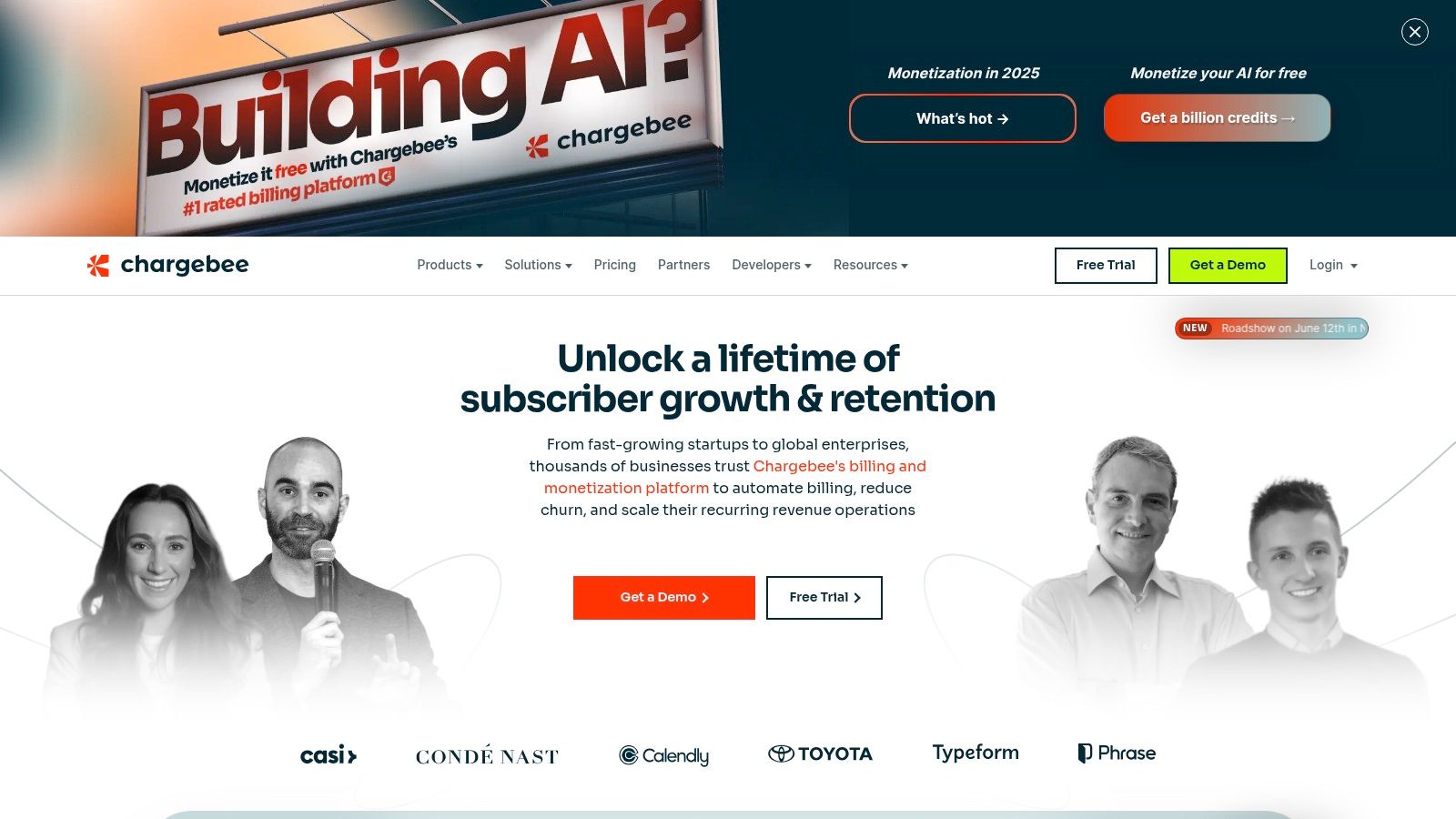
Chargebee positions itself as a comprehensive subscription management and recurring billing platform, designed to scale with a business from its early stages to enterprise-level complexity. It's particularly well-regarded for its flexibility, allowing companies to easily manage various billing models, from simple fixed-price subscriptions to complex usage-based and hybrid scenarios. This adaptability makes it a strong contender for SaaS and subscription e-commerce businesses that anticipate evolving their pricing strategies over time.
Where Chargebee truly shines is in its ability to automate the entire order-to-revenue lifecycle. It handles everything from checkout and invoicing to tax compliance and revenue recognition, integrating seamlessly with a wide array of payment gateways and accounting tools. This end-to-end automation frees up internal resources, making it one of the best recurring billing software options for teams focused on growth rather than administrative overhead.
Key Features & User Experience
The platform offers a clean user interface with a central dashboard that provides a clear overview of key metrics like MRR, churn, and subscriber growth. While its extensive feature set can present a slight learning curve, the system is logically laid out. Features like dunning management are robust, helping to proactively manage and reduce involuntary churn from failed payments.
- Pricing: Chargebee offers several tiers, including a free plan for startups under a certain revenue threshold. Paid plans start at a monthly fee and may include a percentage of overage revenue, making it accessible for growing businesses but a more significant investment at higher tiers.
- Pros:
- Highly customizable and flexible to support complex billing logic.
- Extensive integration library with popular CRMs, accounting, and analytics tools.
- Strong dunning management and revenue recovery features.
- Cons:
- Can be complex to set up initially due to its vast feature set.
- Pricing can become costly as your business scales and revenue grows.
Practical Tip: Use Chargebee's "Time Machine" feature to test future-dated subscription events, like renewals, cancellations, or plan changes. This allows you to verify billing logic and customer communications in a sandbox environment before they impact real subscribers.
Website: https://www.chargebee.com/
4. Zoho Billing
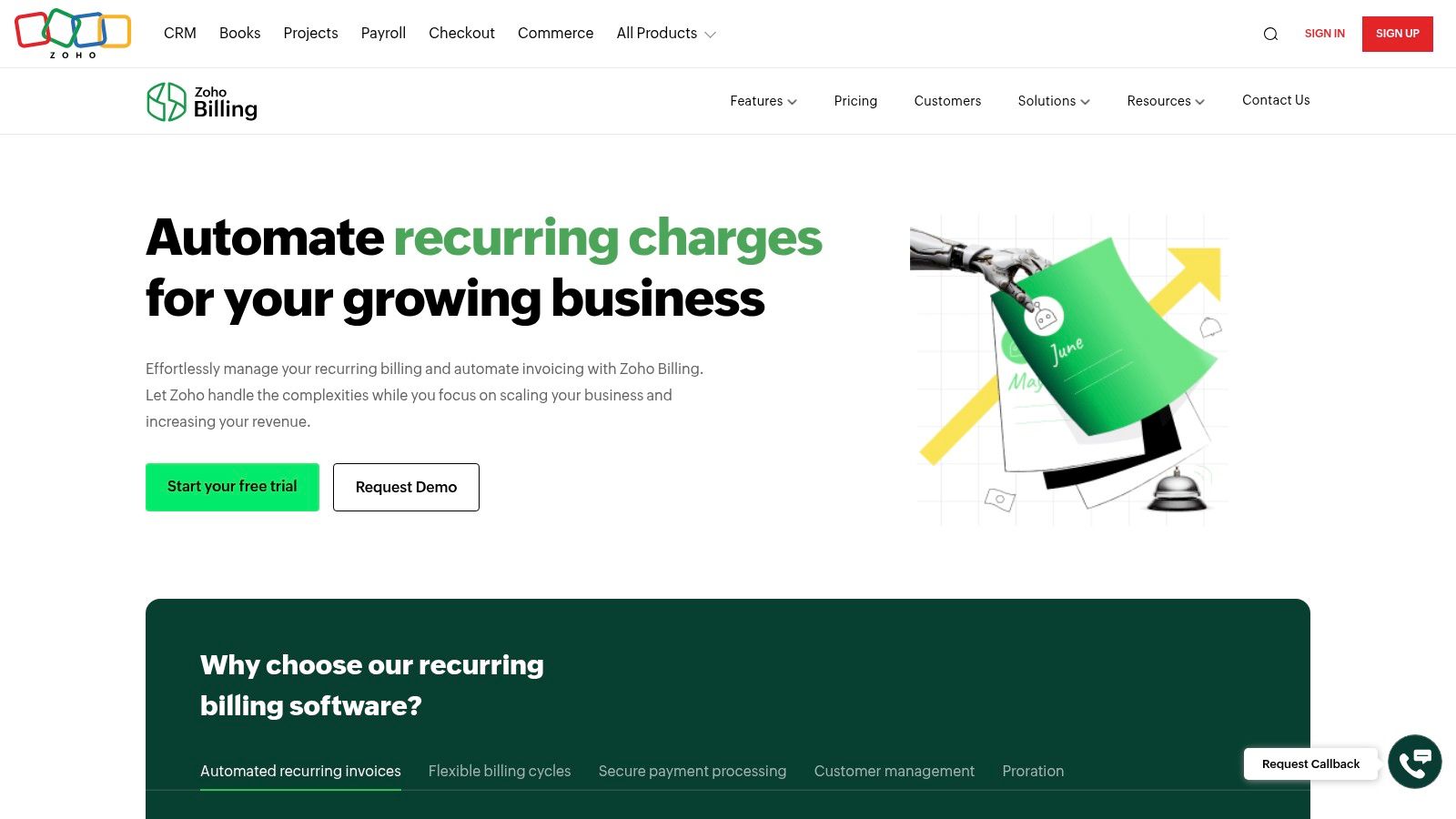
Zoho Billing secures its spot by offering one of the most accessible and integrated solutions on the market, making it a top contender for small to medium-sized businesses already invested in or considering the Zoho ecosystem. It’s designed to handle the entire subscription lifecycle, from quote to cash, without the enterprise-level price tag. The platform provides a straightforward way to manage recurring revenue streams, automate invoicing, and process payments.
What sets Zoho Billing apart is its seamless integration within the extensive Zoho suite of business applications. If you’re using Zoho CRM, Books, or Analytics, this platform becomes a natural extension, creating a unified system for managing customer relationships and financials. This built-in connectivity eliminates the data silos and integration headaches common with standalone tools, offering a holistic view of your business operations.
Key Features & User Experience
The platform is praised for its clean and user-friendly interface, which simplifies the process of setting up complex billing cycles and subscription plans. Key functions like proration, trial management, and a customer self-service portal are included out of the box. As a piece of recurring billing software, it focuses on core functionalities that get the job done efficiently for growing businesses.
- Pricing: Zoho Billing offers a very competitive pricing structure, including a generous free plan for businesses with fewer than 25 customers. Paid plans are tiered and affordably priced, based on the number of customers and features, making it highly scalable for startups.
- Pros:
- Extremely cost-effective, with a robust free tier.
- Seamless, native integration with the broader Zoho application suite.
- Intuitive and user-friendly interface ideal for non-technical users.
- Cons:
- Lacks some of the advanced dunning and churn-reduction features of enterprise-focused competitors.
- While it integrates well with Zoho apps, third-party integrations can be less extensive.
Practical Tip: Maximize efficiency by creating automation workflows between Zoho Billing and Zoho CRM. For example, automatically create a subscription plan in Billing when a deal is marked as "won" in the CRM, saving significant manual entry time.
Website: https://www.zoho.com/us/billing/recurring-billing/
5. Zuora
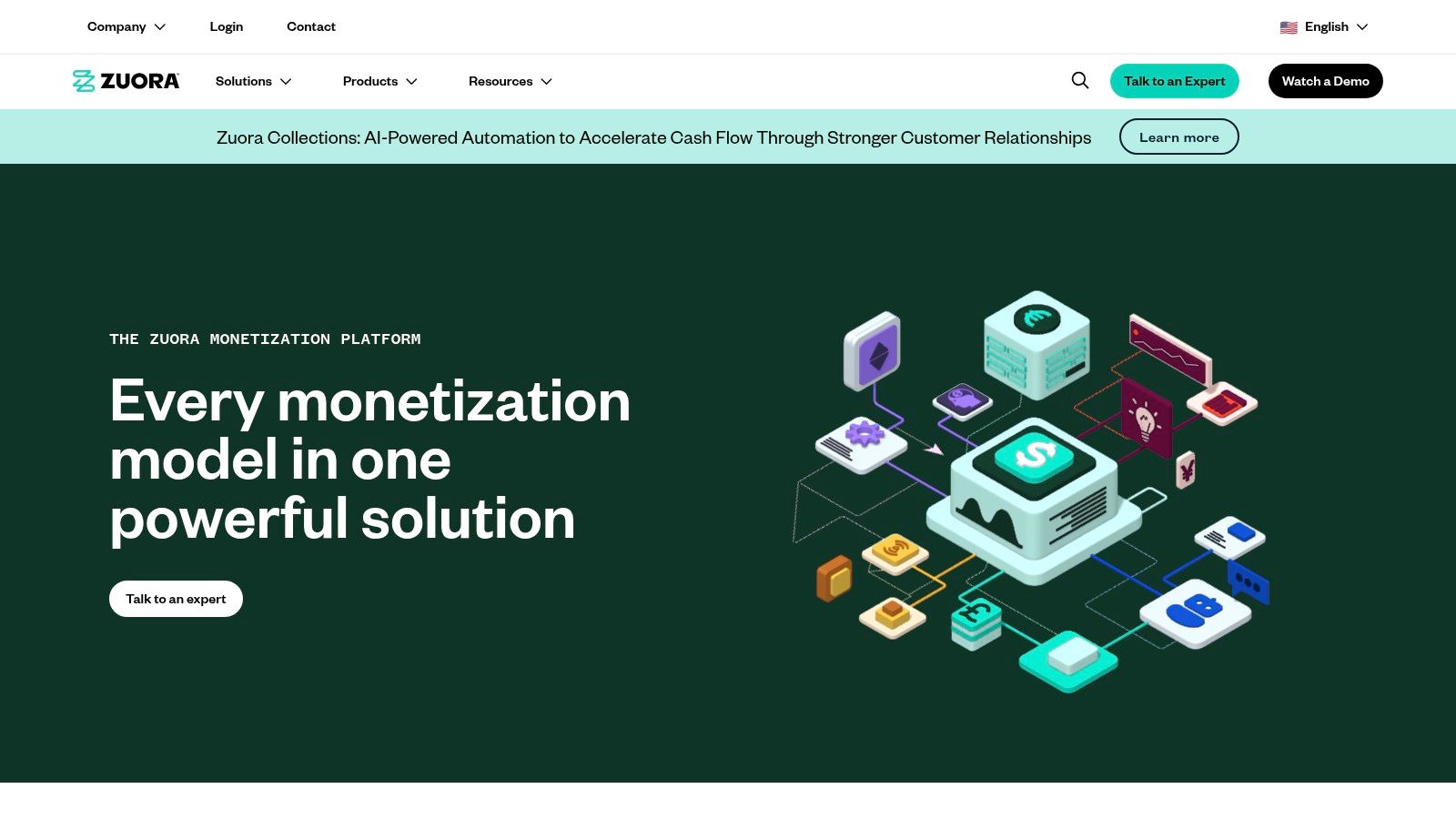
Zuora positions itself as a leader in the "subscription economy," targeting large, complex enterprises that need more than just simple recurring billing software. It's an end-to-end subscription management platform designed to handle intricate billing logic, global payments, and sophisticated revenue recognition, making it a go-to for companies like Ford, Zoom, and Caterpillar. Zuora’s core strength lies in its ability to manage the entire quote-to-revenue process for any type of subscription or usage-based model.
The platform is built around its Central Platform, which orchestrates billing, collections, and revenue recognition. This architecture allows businesses to rapidly launch and iterate on new pricing models without rewriting backend code. Its robust compliance and finance automation features, particularly for standards like ASC 606, make it invaluable for public or late-stage private companies that face stringent financial reporting requirements.
Key Features & User Experience
Zuora's interface is comprehensive, though its complexity can present a steep learning curve for new users. The platform is highly customizable and integrates deeply with major ERP and CRM systems like Salesforce and NetSuite, creating a unified data flow across the organization. This allows for deep analytics on customer lifecycle events and financial performance.
- Pricing: Zuora uses a quote-based pricing model tailored to specific business needs, including transaction volume and feature requirements. It is a premium solution, making it best suited for established enterprises rather than startups or small businesses.
- Pros:
- Extremely scalable architecture built for global enterprise needs.
- Advanced revenue recognition and finance automation tools.
- Highly flexible for creating complex, hybrid, or usage-based billing models.
- Cons:
- Implementation is complex and often requires significant time and resources.
- The high cost can be prohibitive for smaller companies.
Practical Tip: Before full implementation, use Zuora's sandbox environment to thoroughly model your most complex billing scenarios. This helps identify potential integration challenges and ensures the platform is configured correctly to handle your specific use cases from day one.
Website: https://www.zuora.com/
6. Paddle
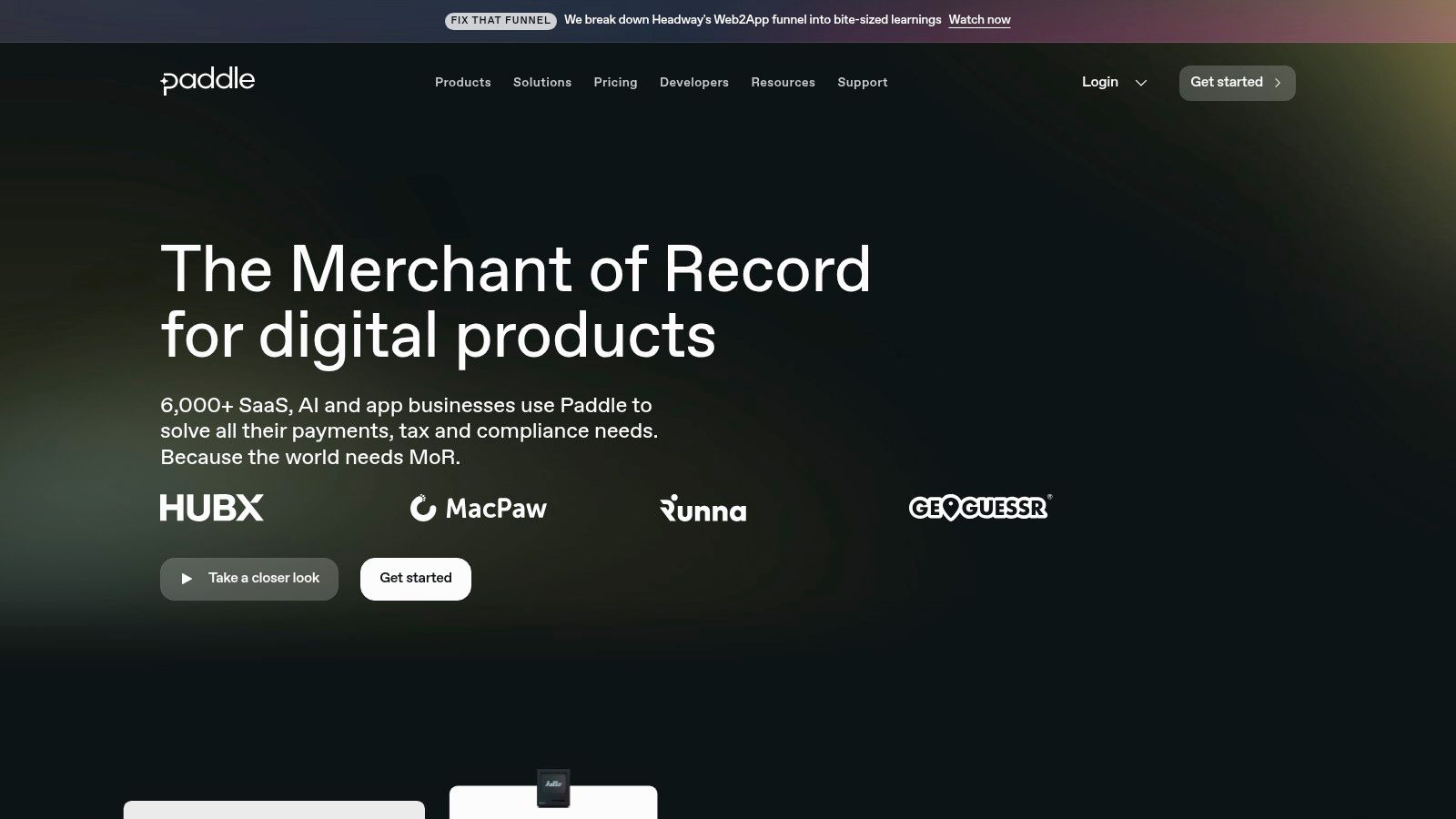
Paddle distinguishes itself by operating as a Merchant of Record (MoR), a model that significantly simplifies global commerce for SaaS and software companies. Instead of just processing payments, Paddle legally sells your product to the end customer, assuming full responsibility for all aspects of the transaction. This includes managing sales tax, VAT, and global compliance, which is a massive offload for businesses wanting to sell internationally without navigating complex local regulations.
This MoR model makes Paddle one of the best recurring billing software options for founders who want to focus entirely on their product, not on financial and legal overhead. It handles payment processing, invoicing, subscription management, and tax compliance under one unified platform, essentially acting as a reseller for your digital goods.
Key Features & User Experience
Paddle’s platform is designed for simplicity, allowing users to embed a customizable checkout directly on their site. It supports a wide array of global payment methods and currencies automatically. The user interface is clean, making it easy to manage subscriptions, view revenue data, and handle customer support inquiries without a steep learning curve. The built-in fraud prevention and compliance tools add a crucial layer of security.
- Pricing: Paddle uses a straightforward, all-inclusive pricing model. It charges a single fee per transaction (e.g., 5% + $0.50), which covers payment processing, currency conversion, tax remittance, and all platform features. There are no monthly fees on the standard plan.
- Pros:
- Completely removes the burden of calculating, filing, and remitting global sales taxes.
- Acts as a Merchant of Record, simplifying legal and financial compliance.
- Transparent, all-in-one pricing model.
- Cons:
- Transaction fees can become expensive for businesses with high volume or low-priced products.
- Less customization available compared to more modular gateway/billing combinations.
Practical Tip: Use Paddle's localized checkout feature to automatically present pricing in the customer's local currency and offer familiar payment methods. This can significantly boost conversion rates in international markets with minimal effort.
Website: https://www.paddle.com/
7. Braintree (by PayPal)
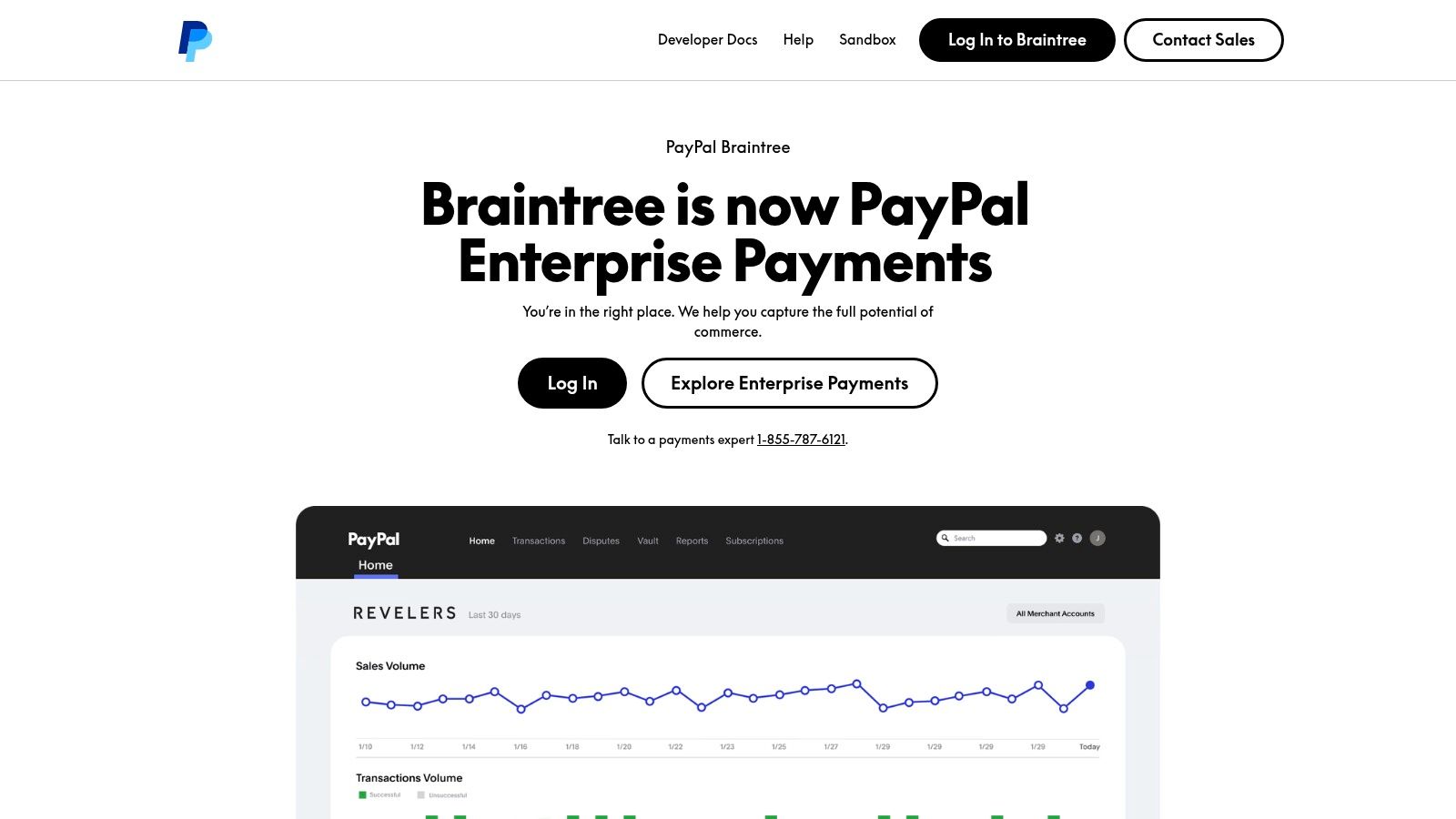
Braintree, a PayPal service, offers a powerful and flexible payment gateway that includes robust recurring billing capabilities. It stands out by providing a comprehensive, all-in-one solution that natively integrates with PayPal and Venmo, giving subscribers more ways to pay. This makes it an excellent choice for businesses aiming to maximize payment method acceptance and cater to a younger, mobile-first demographic.
The platform is designed to be highly developer-centric, offering extensive APIs and SDKs for deep customization. This allows businesses to build a subscription experience that is perfectly tailored to their unique model, from simple monthly plans to complex, usage-based billing. Its strength lies in combining a traditional payment gateway with advanced subscription management features.
Key Features & User Experience
While its interface is clean, Braintree's true power is unlocked through its developer tools. Businesses can create custom recurring billing schedules, manage prorated charges, and implement promotional periods. The platform also provides advanced fraud protection tools and a secure vault for storing customer payment information, making it a reliable piece of recurring billing software.
- Pricing: Braintree offers a standard pricing model of 2.59% + $0.49 per card or digital wallet transaction. Custom pricing is available for businesses with large processing volumes, making it scalable as you grow. There are no monthly fees for the standard plan.
- Pros:
- Seamless integration with PayPal and Venmo expands payment options.
- Strong security features and PCI compliance are built-in.
- Highly scalable for businesses of all sizes, from startups to enterprises.
- Cons:
- Transaction fees can become costly for high-volume, low-ticket businesses.
- Leveraging its most advanced features often requires technical expertise or developer resources.
Practical Tip: Use Braintree's "third-party vaulting" feature. This allows you to work with other gateways or services while keeping customer payment data securely stored in Braintree's vault, providing flexibility without compromising security.
Website: https://www.braintreepayments.com/
8. Invoicera
Invoicera positions itself as a highly flexible and comprehensive online invoicing platform with strong recurring billing capabilities. It’s designed for freelancers, small businesses, and enterprises that require deep customization in their billing processes. The platform excels at managing multiple business profiles under a single account, making it a solid choice for agencies or entrepreneurs juggling various projects or brands.
Where Invoicera distinguishes itself is in its granular control over invoice templates and approval workflows. This allows businesses to maintain strict brand consistency and internal financial controls, a feature not always prioritized in more streamlined, modern billing systems. It serves as a robust solution when the invoice itself is a critical touchpoint in the client relationship.
Key Features & User Experience
The user interface provides a wide array of options, which can feel slightly less modern but offers significant power to those who need it. Users can automate recurring invoices, track project time and expenses, and offer clients a dedicated portal to view and pay their bills. Its support for multiple currencies and languages makes it a versatile tool for global operations. As one of the best recurring billing software options for service-based businesses, it integrates billing directly with project management.
- Pricing: Invoicera offers several tiers, including a free plan for very small businesses. Paid plans like "Pro" and "Business" are priced based on the number of clients and staff users, making it scalable but potentially costly for larger teams.
- Pros:
- Extensive invoice customization and branding control.
- Supports managing multiple businesses from one dashboard.
- Integrated time and expense tracking for project-based billing.
- Cons:
- The interface can be less intuitive than some competitors.
- It's primarily an invoicing tool with recurring features, not a full-suite subscription management platform.
Practical Tip: Utilize the invoice approval workflow feature if you have a team. You can set rules requiring a manager to approve invoices created by staff before they are sent to the client, preventing errors and ensuring consistency.
Website: https://www.invoicera.com/
9. FreshBooks
FreshBooks carves out its niche by integrating recurring billing directly into a comprehensive accounting suite tailored for small businesses and freelancers. Unlike platforms focused solely on subscriptions, FreshBooks positions recurring invoices as a core component of a broader financial management ecosystem. This makes it an ideal solution for service-based businesses, consultants, and agencies that need to automate billing alongside expense tracking, time logging, and project management.
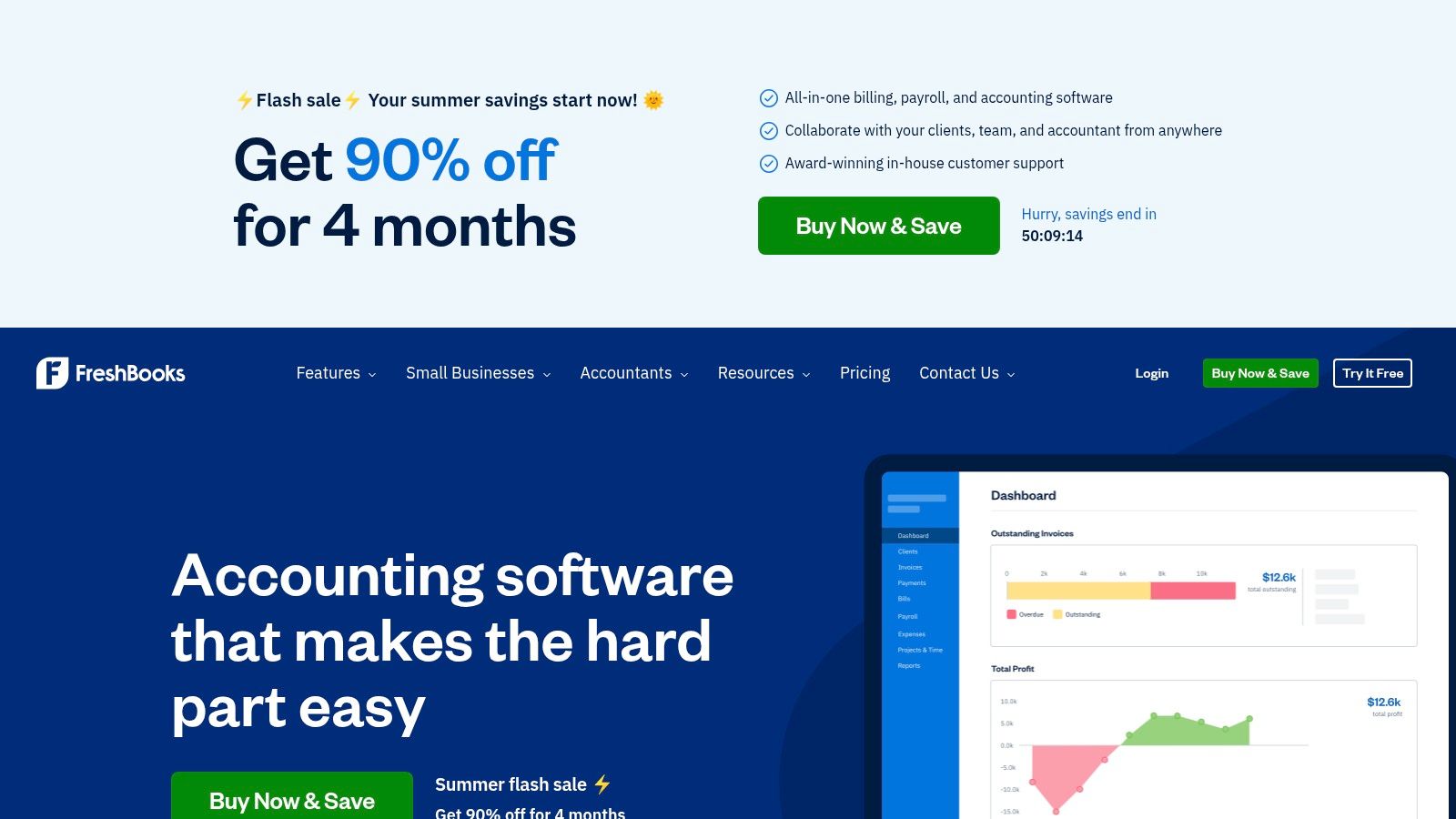
The platform's main advantage is its all-in-one nature. Instead of piecing together separate tools for invoicing, payments, and accounting, FreshBooks provides a single, unified dashboard. It excels at simplifying financial tasks for non-accountants, making it one of the best recurring billing software options for those who want simplicity and robust accounting features in one package.
Key Features & User Experience
FreshBooks is renowned for its award-winning, user-friendly interface that significantly lowers the learning curve for managing business finances. Setting up a recurring invoice is straightforward, allowing you to schedule payments, send automatic reminders, and apply late fees effortlessly. The platform also includes robust mobile apps for managing your business on the go.
- Pricing: FreshBooks offers tiered pricing, starting with the Lite plan at $19/month for up to 5 billable clients. The Plus plan ($33/month) and Premium plan ($60/month) support more clients and add features. Each plan adds a per-user fee for team members.
- Pros:
- Exceptionally user-friendly interface designed for non-accountants.
- Combines billing with comprehensive time tracking and expense management.
- Excellent customer support is highly praised by users.
- Cons:
- Lower-tier plans have strict limits on the number of billable clients.
- Lacks the advanced dunning and churn-reduction tools of specialized platforms.
Practical Tip: Use the time tracking feature to log hours against specific clients and projects. You can then automatically pull these billable hours directly onto your recurring or one-time invoices, ensuring accurate and transparent billing without manual data entry.
Website: https://www.freshbooks.com/
10. QuickBooks Online
QuickBooks Online is a household name in accounting, but its strength as a recurring billing software is often underestimated. It's an ideal all-in-one solution for small to medium-sized businesses that need to manage subscriptions alongside their core financial operations like expense tracking, payroll, and tax preparation. Rather than being a specialized subscription tool, it integrates recurring invoicing directly into a comprehensive accounting ecosystem.
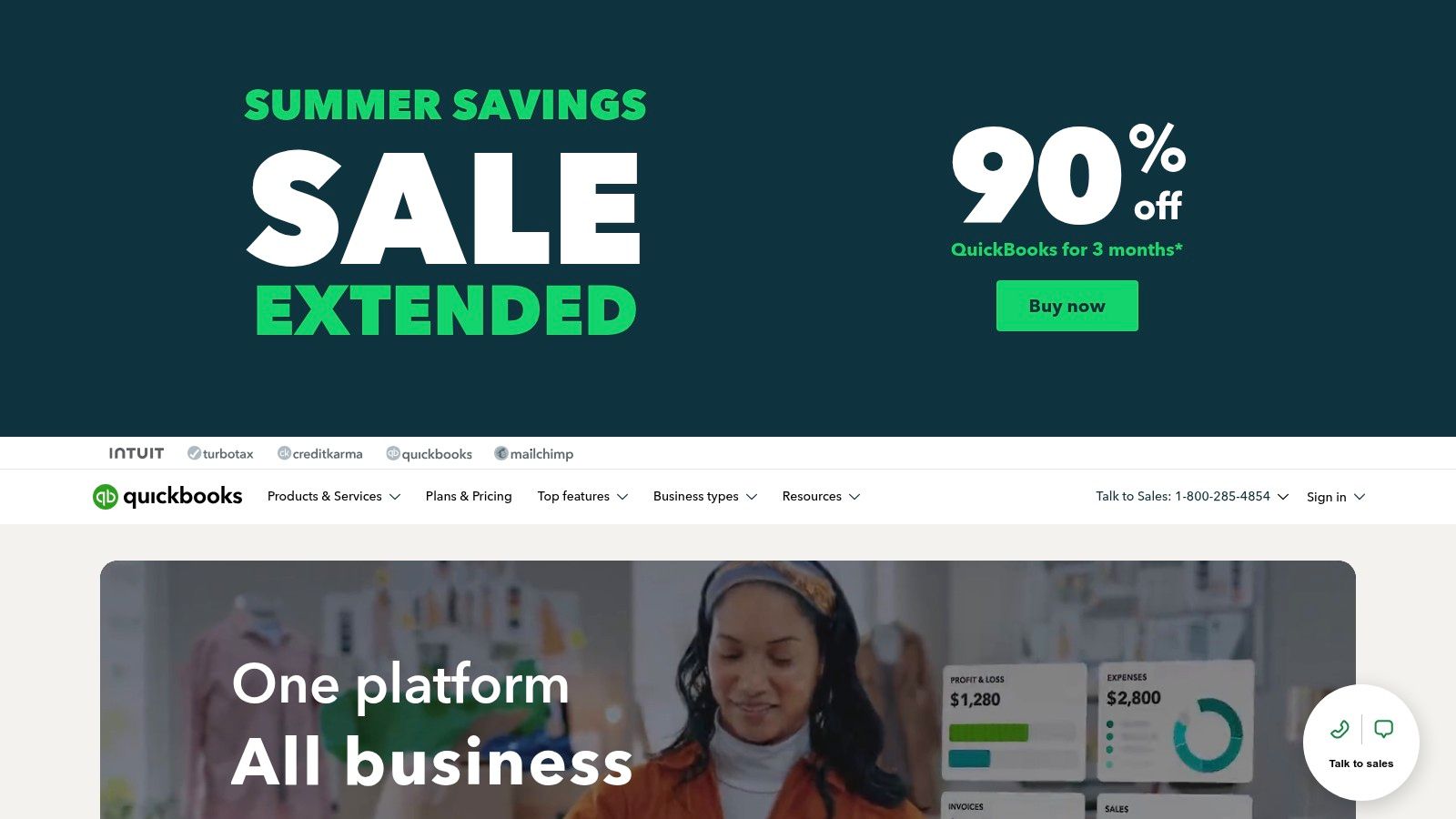
The platform's primary advantage is this consolidation. For businesses already using QuickBooks for bookkeeping, adding recurring billing is a natural and seamless extension. It eliminates the need to sync data between a separate billing platform and your accounting software, reducing complexity and potential for error. This makes it perfect for service-based businesses, small agencies, and consultants who invoice clients on a regular schedule.
Key Features & User Experience
QuickBooks Online provides a familiar interface for anyone who has touched small business accounting. Setting up recurring invoices is straightforward, allowing you to automate billing cycles, send automatic reminders, and track payment statuses. The platform also automates sales tax calculations based on location, a crucial feature for businesses operating across different jurisdictions.
- Pricing: QuickBooks offers several tiered plans, starting with Simple Start (around $30/month) up to the Advanced plan (around $200/month). Recurring billing features are available in most plans, but more advanced capabilities and user seats come with higher-tier packages.
- Pros:
- Fully integrated accounting and billing saves time and reduces errors.
- Strong automation for sales tax and financial reporting.
- Extensive ecosystem of third-party app integrations.
- Cons:
- Lacks advanced subscription management features like dunning or churn analytics.
- The user interface can feel cluttered and has a learning curve for new users.
Practical Tip: Use the "Projects" feature within QuickBooks Online to track profitability for specific subscription services or client retainers. You can link recurring invoices and expenses to a project to get a clear view of its financial performance over time.
Website: https://quickbooks.intuit.com/
11. Wave
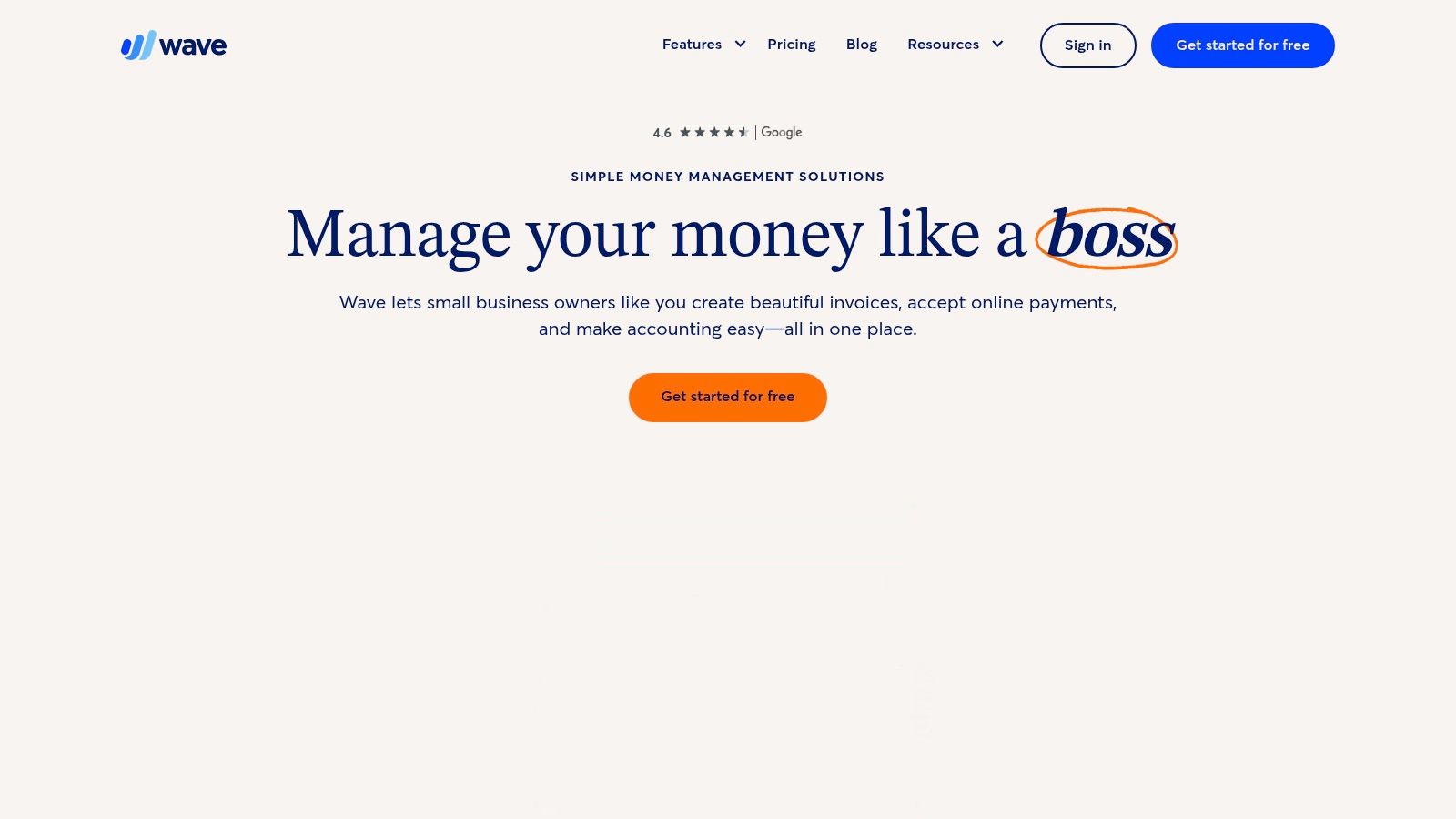
Wave positions itself uniquely in the recurring billing software landscape by offering a completely free accounting and invoicing platform. It’s built specifically for freelancers, consultants, and very small businesses that need fundamental billing capabilities without the cost and complexity of enterprise-level systems. Rather than a dedicated subscription management tool, Wave integrates recurring billing directly into its core accounting suite, making it a powerful all-in-one financial tool for sole proprietors.
The platform's main appeal is its unbeatable price point: free. It allows users to set up and automate recurring invoices for regular clients, a critical feature for service-based businesses seeking predictable cash flow. While it doesn't handle complex subscription logic like metered usage or prorated billing, it excels at its core function of sending consistent, professional invoices automatically.
Key Features & User Experience
The user experience is designed for non-accountants, featuring a clean, straightforward interface that simplifies financial management. Setting up recurring invoices is intuitive, allowing you to define the schedule, payment terms, and item details. The system integrates directly with Wave Payments (a pay-per-use service), enabling clients to pay online via credit card or bank transfer.
- Pricing: The core accounting, invoicing, and recurring billing software is completely free. Wave makes money through its optional payment processing service, which charges standard per-transaction fees (e.g., 2.9% + 60¢ per credit card transaction).
- Pros:
- Completely free for invoicing and accounting features.
- Extremely user-friendly, ideal for those without a finance background.
- Integrated accounting provides a holistic view of business finances.
- Cons:
- Lacks advanced subscription features like dunning management or automated prorations.
- Customer support is primarily self-serve for free users.
- Not scalable for businesses with complex billing needs or high transaction volumes.
Practical Tip: Use Wave’s invoice customization options to add your logo and brand colors. This maintains a professional appearance for all your client communications, including the automated recurring bills sent on your behalf.
Website: https://www.waveapps.com/
12. Square
Square expands beyond its well-known point-of-sale (POS) hardware to offer a robust and highly accessible recurring billing software solution. It’s uniquely positioned for businesses that operate both online and in-person, bridging the gap between physical retail and digital subscriptions. This makes it an ideal choice for gyms, salons, local service providers, and retailers looking to add a membership or subscription box component to their existing operations.
The platform's primary appeal lies in its simplicity and integration within the broader Square ecosystem. If you're already using Square for in-store payments, adding recurring billing is a seamless transition. It automates invoicing and payment collection, allowing businesses to set up subscription plans or installment payments directly from their main dashboard without needing a separate, dedicated system.
Key Features & User Experience
The user interface is clean, straightforward, and designed for business owners who may not be tech experts. Setting up a recurring payment series is intuitive, requiring just a few clicks. The system handles automated card updates and provides basic reporting, giving you a clear view of your recurring revenue stream alongside your one-time sales.
- Pricing: Square stands out with its pay-as-you-go pricing. There are no monthly fees for its standard recurring billing features. Instead, you pay a transaction fee, which is typically 2.9% + 30¢ for online payments. This model is highly attractive for small businesses or those just starting with subscriptions.
- Pros:
- No monthly fees, making it very low-risk to start.
- Excellent integration with Square's POS and other business tools.
- Extremely easy to set up and manage, even for non-technical users.
- Cons:
- Transaction fees can become costly for high-volume businesses.
- Lacks the advanced dunning and churn-reduction features of specialized platforms.
Practical Tip: Use Square’s customer directory to your advantage. Tag customers based on their subscription plan to easily segment them for targeted marketing campaigns or special offers directly through Square’s marketing tools.
Website: https://squareup.com/
Recurring Billing Software Feature Comparison
| Software | Core Features/Integration ✨ | User Experience/Quality ★ | Value & Pricing 💰 | Target Audience 👥 | Unique Selling Points 🏆 |
|---|---|---|---|---|---|
| Flash 🏆 | Wallet-to-wallet Bitcoin payments, POS app, paywalls, widgets | Instant Lightning payments, low fees ★ | Pricing on request 💰 | Merchants, eCommerce, SaaS, creators 👥 | Non-custodial, no KYC, global reach ✨ |
| Recurly | Automated billing, multi-gateway integration | User-friendly, scalable ★ | Mid to high pricing 💰 | Subscription businesses 👥 | Revenue recovery, retention focus ✨ |
| Chargebee | Complex billing, multicurrency, AI revenue intelligence | Customizable, strong integrations ★ | Higher price point 💰 | Growing businesses, SaaS 👥 | AI-powered insights, dunning tools ✨ |
| Zoho Billing | Recurring invoices, flexible cycles, multiple gateways | Cost-effective, intuitive ★ | Affordable, free tier available 💰 | Small to medium businesses 👥 | Integrates with Zoho suite, proration ✨ |
| Zuora | Enterprise billing, revenue recognition, tax compliance | Comprehensive, enterprise-grade ★ | Custom, often expensive 💰 | Large enterprises 👥 | Advanced compliance, CRM/ERP integrations✨ |
| Paddle | Billing, global tax compliance, fraud prevention | User-friendly, optimized checkout ★ | Transaction-based, can be costly 💰 | SaaS, international sales 👥 | Built-in tax management, fraud tools ✨ |
| Braintree (by PayPal) | Custom billing, multi-currency, PayPal & Venmo support | Secure, scalable ★ | Transaction fees 💰 | Businesses needing flexible payments 👥 | Wide payment method support ✨ |
| Invoicera | Automated invoicing, multilingual, client portal | Highly customizable ★ | Higher for multiple users 💰 | Businesses needing detailed invoicing 👥 | Project tracking, multi-business support✨ |
| FreshBooks | Recurring billing, expense & time tracking | User-friendly, strong support ★ | Mid-tier pricing 💰 | Small businesses 👥 | All-in-one accounting + billing ✨ |
| QuickBooks Online | Recurring invoices, tax automation, bank reconciliation | Scalable, feature-rich ★ | Mid to high pricing 💰 | SMBs growing in scale 👥 | Strong integrations, reporting ✨ |
| Wave | Recurring invoices, expense tracking, financial reporting | Easy to use, free tier ★ | Free plan available 💰 | Freelancers, small businesses 👥 | Completely free for basics ✨ |
| Square | Recurring billing, POS integration, real-time analytics | Easy setup, no monthly fees ★ | Pay per transaction 💰 | Small to large businesses 👥 | No monthly fees, POS ecosystem ✨ |
How to Choose the Right Billing Software for Your Business
Navigating the landscape of recurring billing software can feel overwhelming, but making an informed decision is crucial for your business's financial health and scalability. We've explored a wide spectrum of tools, from established giants like Zuora and Chargebee to specialized platforms like Paddle and innovative Bitcoin-native solutions like Flash. The key takeaway is that there is no single "best" platform for everyone; the ideal choice hinges entirely on your specific business model, technical resources, and growth trajectory.
Your journey to selecting the perfect software starts with a deep internal audit of your needs. Don't get distracted by the platform with the most features; instead, focus on the features that will solve your most pressing problems today and support your goals for tomorrow.
Synthesizing Your Decision: A Final Checklist
To distill the information from this guide into a concrete decision, ask yourself these critical questions. Your answers will illuminate which platform, or combination of platforms, is the right fit.
- What is my core business model? Are you a SaaS company needing complex usage-based billing like Zuora handles, or an eCommerce store requiring simple subscription box management that tools like Recurly or Square excel at? Your model dictates the required feature set.
- What is my technical comfort level? If you have a dedicated development team, a highly customizable, API-first solution like Braintree or Chargebee offers immense power. If you need an out-of-the-box system that works with minimal setup, platforms like FreshBooks, Wave, or Zoho Billing are designed for ease of use.
- How important are global payments and currency conversion? For businesses with an international customer base, platforms with robust multi-currency support and localized payment methods are non-negotiable. Paddle and Braintree are strong contenders here, offering a merchant of record model or extensive global gateways.
- Do I want to embrace the future of payments? If you're looking to reduce transaction fees, eliminate chargebacks, and access a global, censorship-resistant payment network, integrating a Bitcoin-based solution is a strategic move. Flash stands out by providing instant settlement and true financial sovereignty, a stark contrast to the multi-day holds and high fees of traditional systems.
- What is my budget, and how do I expect it to scale? Analyze pricing models carefully. A platform with a low entry fee might become expensive as your revenue grows due to percentage-based fees. Conversely, a higher-tiered plan on a platform like Zuora might be cost-prohibitive now but essential for future enterprise-level needs.
From Selection to Successful Implementation
Choosing the software is only the first step. Successful implementation requires careful planning. Start by mapping out your customer billing journeys, from sign-up and trial periods to upgrades, downgrades, and dunning management for failed payments. Document these workflows before you even begin the technical setup.
When you're ready to migrate, run the new system in parallel with your old one for a short period if possible. This allows you to catch any discrepancies without interrupting your revenue stream. Most importantly, communicate clearly with your customers about any changes to their billing experience.
Ultimately, the best recurring billing software is the one that empowers your business to grow without friction. It should feel like a seamless extension of your operations, automating complex financial tasks so you can focus on what you do best: delivering value to your customers. By carefully evaluating your needs against the capabilities of the tools we've detailed, you can confidently select a partner for your financial success.
Ready to escape the high fees and slow settlements of traditional payment systems? Flash offers a powerful recurring billing solution built on the Bitcoin Lightning Network, giving you instant access to your revenue without the risk of chargebacks. Explore how you can future-proof your business and take control of your payments at Flash.