Securing your Bitcoin is the most critical responsibility of any owner. In a world of digital threats, simply holding Bitcoin isn't enough; you must become its guardian. This guide moves beyond generic advice to explore the best ways to store crypto, focusing on robust, time-tested methods specifically for Bitcoin. We will dissect eight distinct storage strategies, from the impenetrable security of hardware wallets to sophisticated multi-signature setups and advanced techniques like Shamir's Secret Sharing. This isn't just a list; it's a practical blueprint for building a resilient security model tailored to your specific situation.
Our goal is to equip you with the actionable knowledge to choose and correctly implement the right method for your needs. We will cover the specific implementation details for each option, highlighting their unique strengths, potential weaknesses, and ideal use cases. Understanding these nuances is fundamental to achieving genuine financial sovereignty and protecting your assets from both external attacks and accidental loss. This level of self-custody requires a deep understanding of security principles that extend beyond just the Bitcoin network itself. For a more holistic understanding of digital defense, you might find comprehensive insights into tech and cybersecurity for businesses valuable.
Whether you're safeguarding your first purchase, managing a substantial portfolio for your business, or looking to establish a multi-generational inheritance plan, the strategies outlined here provide the foundation for long-term security. By mastering these concepts, you ensure your digital wealth remains yours, and yours alone. Let's explore the methods that transform a simple holding into a fortress.
1. Hardware Wallets
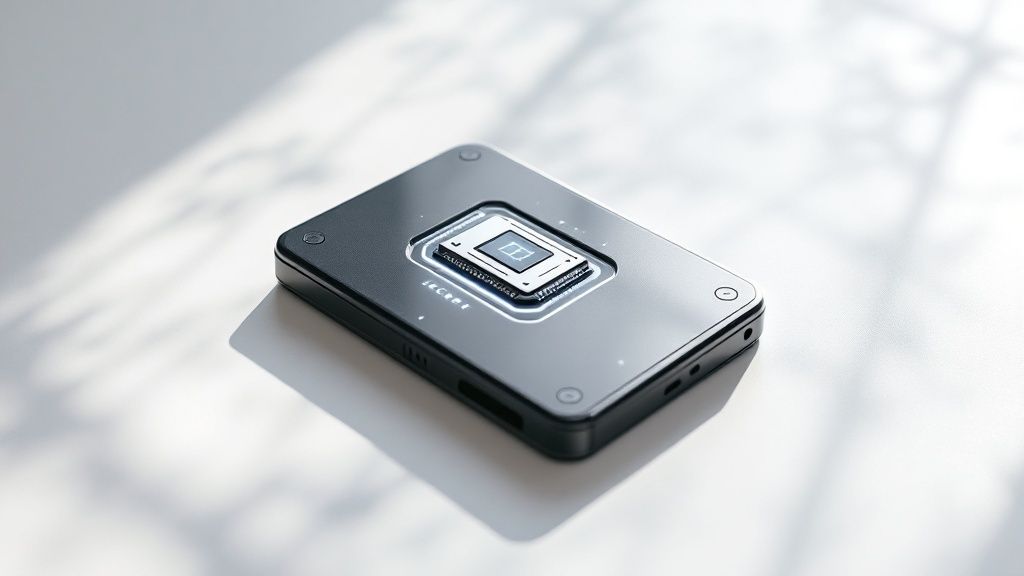
Hardware wallets are widely considered one of the best ways to store crypto, especially for significant amounts or long-term holdings. These are specialized physical devices designed with a single purpose: to secure your private keys in a completely offline environment. By isolating your keys from internet-connected devices like your computer or smartphone, they create a formidable barrier against online threats such as malware, phishing scams, and remote hacking attempts.
When you want to authorize a transaction, you connect the hardware wallet to your device. The transaction details are sent to the wallet, which then uses your private key to sign it internally on its secure chip. The signed transaction is then sent back to the computer, but the private keys themselves never leave the hardware wallet. This process requires you to physically press buttons on the device to confirm the transaction, ensuring that no one can move your Bitcoin without having physical access to your wallet and knowing its PIN.
Why Use a Hardware Wallet?
This method is the gold standard for individuals and businesses holding a substantial amount of Bitcoin. If your holdings represent a value you cannot afford to lose, a hardware wallet provides a level of security that software-based "hot wallets" simply cannot match. It strikes an excellent balance between high-level security and practical usability, making it ideal for securing your main Bitcoin savings while still allowing for safe, occasional transactions. Companies like Trezor have popularized these devices, making top-tier security accessible to everyone.
Actionable Security Tips
To maximize the security of your hardware wallet, follow these critical best practices:
- Purchase Directly: Always buy your device directly from the manufacturer (e.g., Trezor). This minimizes the risk of receiving a tampered-with device from a third-party reseller.
- Secure Your Seed Phrase: When you set up your wallet, it will generate a 12 or 24-word recovery seed phrase. Write this down on paper or stamp it into metal and store it in a secure, fireproof, and waterproof location. Never store it digitally (no photos, no text files, no password managers).
- Use a Strong PIN & Passphrase: Set a strong, non-obvious PIN for daily use. For an even higher level of security, enable the passphrase feature (often called the "25th word"). This adds a custom word or phrase to your seed, creating an entirely new set of wallets.
- Test and Verify: Before transferring your main holdings, send a small amount of Bitcoin to your new hardware wallet. Then, practice a full recovery using your seed phrase to ensure you have recorded it correctly and understand the process.
2. Cold Storage (Air-Gapped Systems)
Cold storage refers to the practice of keeping your private keys on a device or medium that is completely disconnected from the internet. This "air gap" creates total isolation from online networks, making it one of the best ways to store crypto by eliminating vectors for remote attacks like hacking, malware, and phishing. Unlike hardware wallets, which connect to online devices to sign transactions, a true air-gapped system never touches the internet, offering an unparalleled level of security.
This method involves generating your Bitcoin private keys on a dedicated offline computer that will never be connected to any network again. The keys are then stored on durable physical media, such as a USB drive, a printed paper wallet, or stamped into metal plates. Transactions are prepared on an online computer, transferred to the offline system via a physical medium (like a USB stick), signed offline using the private key, and then the signed transaction is brought back to the online computer for broadcasting to the network. The private keys remain securely isolated throughout the entire process.

Why Use an Air-Gapped System?
This approach provides maximum security for substantial, long-term Bitcoin holdings that are not intended for frequent access. It is the preferred method for institutional custodians, exchanges securing customer funds, and individuals with a deep understanding of operational security who want to eliminate all online counterparty risk. While more complex to set up and use than a hardware wallet, it is the ultimate solution for "deep cold storage," ensuring your assets are protected against every conceivable online threat. Durable metal solutions are a popular way to back up the seed phrases generated in these systems.
Actionable Security Tips
To properly implement an air-gapped cold storage system, follow these essential steps:
- Use a Dedicated Offline Machine: Acquire a new or freshly wiped computer (like a cheap laptop) that will be used exclusively for key generation and transaction signing. Once you use it for this purpose, never connect it to the internet or any untrusted network again.
- Store Backups Securely: Create multiple physical backups of your private key or seed phrase. Use durable materials like stainless steel plates instead of paper, which is vulnerable to fire and water damage. Distribute these backups in different, secure physical locations.
- Verify Software Authenticity: When loading wallet software onto your offline machine, ensure you verify its cryptographic signatures on a separate, trusted online computer before transferring it via USB. This confirms the software has not been compromised.
- Practice Recovery: The process is more complex than with consumer devices. Before committing your main funds, conduct a full test run: generate a wallet, send a small amount of Bitcoin to it, and then practice the complete recovery process on a separate, clean air-gapped machine to ensure your backups and procedure work perfectly.
3. Multi-Signature Wallets
Multi-signature (or "multi-sig") wallets elevate security by requiring more than one private key to authorize a transaction. This method is one of the best ways to store crypto for those seeking to eliminate single points of failure. Instead of a single key controlling your funds, a multi-sig setup distributes control across multiple keys, often configured in arrangements like "2-of-3" or "3-of-5." In a 2-of-3 setup, for instance, three keys are created, but only two of them are needed to sign and send a transaction.
This structure creates a robust security model that protects against theft, loss, and even internal collusion. If one of your keys is compromised or lost, your funds remain secure because the attacker does not have the required number of keys to move them. This approach is used extensively by corporate treasuries for governance and by individuals looking for advanced protection. Several Bitcoin-focused services have made this enterprise-grade security accessible for personal use, providing guided setups for arrangements like a 3-of-5 vault.

Why Use a Multi-Signature Wallet?
This method is ideal for businesses that require multiple stakeholders to approve transactions, or for individuals who want an exceptionally high level of personal security and redundancy. A multi-sig setup ensures that no single person or compromised device can act as a single point of failure. It provides peace of mind against a wide range of threats, from a targeted hacking attempt to the simple misplacement of a hardware wallet. For significant Bitcoin holdings, multi-sig offers a defense-in-depth strategy that is difficult to surpass.
Actionable Security Tips
To correctly implement a multi-signature wallet, meticulous planning is crucial:
- Distribute Keys Geographically: Store each key (and its corresponding seed phrase) in a separate, secure, and geographically distinct location. This prevents a single event like a fire or theft from compromising multiple keys.
- Use Diverse Hardware: For maximum security, create your keys using a mix of hardware wallets from different manufacturers. This mitigates the risk of a vulnerability affecting a single brand's device.
- Document Everything: Create a clear, detailed map of your multi-sig setup, including key locations and instructions for recovery. Store this documentation securely and ensure a trusted heir or lawyer can access it if necessary.
- Test Your Recovery Process: Before funding the wallet with a large amount, perform a full test cycle. Send a small amount of Bitcoin, then practice spending it using the required number of keys. Also, simulate a key loss and practice the recovery procedure to ensure it works as expected.
4. Software Wallets (Desktop/Mobile)
Software wallets, often called "hot wallets," are applications you install directly on your computer or mobile device. They offer a highly convenient way to store your Bitcoin by keeping your private keys on the device itself, providing quick and easy access for frequent transactions. This direct access makes them a practical choice for day-to-day spending or managing smaller amounts of Bitcoin, bridging the gap between the high security of cold storage and the need for liquidity.
Unlike web wallets that store keys on a third-party server, software wallets give you sole control over your private keys, which are encrypted and stored locally in a wallet file. When you need to send Bitcoin, the wallet software uses the stored key to sign the transaction right on your device before broadcasting it to the network. This provides a significant security advantage over custodial services, as you retain full ownership of your funds.

Why Use a Software Wallet?
This method is ideal for users who need regular access to their Bitcoin for payments or other frequent activities. If you are new to Bitcoin, a software wallet provides a user-friendly and free entry point to self-custody. While not as secure as a hardware wallet for storing large sums due to their internet connection, they are one of the best ways to store crypto for active use. Wallets like Electrum have been a long-standing choice in the Bitcoin community for their lightweight and feature-rich implementation.
Actionable Security Tips
Since software wallets are only as secure as the device they are on, follow these best practices to protect your funds:
- Download from Official Sources: Only download wallet software from the official developer’s website or your device’s official app store. This prevents you from installing malicious, counterfeit versions designed to steal your Bitcoin.
- Keep Everything Updated: Regularly update both the wallet application and your device’s operating system. These updates often contain critical security patches that protect you from newly discovered vulnerabilities.
- Enable All Security Features: Use a strong password to encrypt your wallet file. Additionally, enable two-factor authentication (2FA) if offered and utilize your device’s biometric security (fingerprint or face ID) for an extra layer of protection.
- Create and Secure Backups: Just like a hardware wallet, you will be given a recovery seed phrase during setup. Write this down and store it securely offline. Never save it as a digital file on the same device as the wallet.
5. Institutional Custody Services
For high-net-worth individuals, family offices, and institutions holding significant Bitcoin assets, institutional custody services represent one of the best ways to store crypto. These are professional, third-party companies that specialize in securing large quantities of digital assets. They offer a comprehensive suite of services that go beyond simple storage, including enterprise-grade security protocols, robust insurance policies, and full regulatory compliance. By leveraging advanced cold storage techniques, multi-party computation (MPC), and audited security procedures, they provide a level of protection that is difficult for an individual or a typical business to replicate.
The core function of an institutional custodian is to safeguard clients' private keys in highly secure, geographically distributed environments. These services often provide features like regular security audits by top-tier firms, segregated accounts to ensure client funds are never commingled, and governance controls such as multi-user access policies and withdrawal whitelisting. Several firms have brought institutional-grade rigor from traditional finance into the Bitcoin space, providing a trusted solution for those who prefer to delegate the technical complexities of security to a regulated expert.
Why Use an Institutional Custody Service?
This method is designed for entities whose primary concern is capital preservation at scale and regulatory peace of mind. If you are managing corporate treasury funds, a family office portfolio, or a hedge fund's Bitcoin allocation, the operational burden and risk of self-custody can be immense. Institutional custodians remove this burden by providing audited, insured, and compliant storage, which is often a requirement for fiduciaries. They offer a way to gain exposure to Bitcoin while adhering to the stringent risk management and reporting standards expected in the traditional financial world.
Actionable Security Tips
When selecting and using an institutional custodian, rigorous due diligence is paramount:
- Verify Insurance Coverage: Thoroughly review the custodian's insurance policy. Understand what is covered (e.g., theft, internal collusion), the coverage limits per incident and per client, and any exclusions.
- Understand the Fee Structure: Custody fees can be complex, often based on a percentage of assets under management (AUM) plus transaction and withdrawal fees. Ensure you have complete clarity on all potential costs.
- Review Security Audit Reports: Request and examine third-party security audit reports, such as SOC 1 or SOC 2 attestations. These documents provide an independent assessment of the custodian's security controls and operational integrity.
- Confirm Regulatory Compliance: Ensure the custodian is a qualified and regulated entity within your jurisdiction, such as a trust company or a federally chartered bank. This is critical for meeting legal and fiduciary obligations.
6. Brain Wallets (Memorized Seeds)
A brain wallet is a method where a recovery seed phrase is stored entirely within a person's memory. This approach eliminates all physical and digital records, making it a theoretically "unconfiscatable" way to store Bitcoin. By relying solely on human memory, the owner can travel anywhere in the world and access their funds without carrying any physical device or piece of paper, offering a unique level of portability and plausible deniability.
The process involves generating a standard 12 or 24-word BIP39 seed phrase and then using mnemonic techniques to commit it to memory perfectly. To access the funds, the user recalls the seed phrase from memory and enters it into a software or hardware wallet. The security of this method is absolute if the memory is perfect and the phrase is never spoken or written down. However, the private keys never exist anywhere outside the owner's mind, making it one of the most extreme and high-risk storage solutions.
Why Use a Brain Wallet?
This method is an outlier and is generally not recommended for most users due to the high risk of memory loss. However, it can be one of the best ways to store crypto for specific, high-stakes situations. This includes individuals like journalists, activists, or refugees in oppressive regimes who need to cross borders without any incriminating physical evidence of their wealth. It provides a way to secure funds against physical search, seizure, and theft, as there is nothing to find. It is a tool for ultimate sovereignty, but one that demands perfect execution and carries immense personal responsibility.
Actionable Security Tips
If you are considering this advanced and risky method, implementing it safely is paramount:
- Use Standard BIP39 Phrases: Only attempt to memorize standard, randomly generated 12 or 24-word seed phrases. Never create your own "custom" phrase or sentence, as these are trivial for computers to crack.
- Create Powerful Mnemonics: Do not rely on rote memorization. Instead, build a detailed story, a "memory palace," or a song that incorporates your seed words in the correct order. The more vivid and personal the mnemonic, the better.
- Practice Recall Regularly: Memory fades over time. Set a recurring schedule (e.g., weekly or monthly) to practice reciting your seed phrase. This reinforces the neural pathways and ensures you have not forgotten any part of it.
- Have a Contingency Plan: Consider the possibility of incapacitation or death. If you want your Bitcoin to be passed on, you must have a secure and reliable system for your heirs to access the seed phrase, which somewhat contradicts the core principle of a pure brain wallet.
7. Shamir's Secret Sharing
Shamir's Secret Sharing (SSS) is an advanced cryptographic technique that offers one of the best ways to store crypto by eliminating a single point of failure. Instead of relying on a single recovery seed phrase, SSS splits your secret (your seed phrase) into multiple unique parts called "shares." To reconstruct the original secret and access your Bitcoin, you only need a specific number of these shares, known as a threshold. For example, a "3-of-5" setup creates five shares, and any three of them can be used to recover your wallet.
This method provides powerful security and redundancy. If one or two shares are lost, stolen, or destroyed, your funds are still safe and recoverable. An attacker would need to find and compromise the threshold number of shares, which is significantly harder than finding a single seed phrase. This distribution protects against theft, accidental loss, and coercion, as no single share holds any value on its own. The Trezor Model T was one of the first hardware wallets to popularize this feature for consumers using the SLIP-0039 standard.
Why Use Shamir's Secret Sharing?
This approach is ideal for individuals, families, or businesses seeking high-level disaster recovery and security for significant Bitcoin holdings. It's a step beyond the standard single seed phrase backup, providing resilience against multiple potential failure scenarios. If you are concerned about fire, flood, theft, or even simply misplacing a backup, SSS offers a distributed solution that ensures you can always regain access to your funds as long as the threshold of shares is met. It transforms key management from a single-point-of-failure problem into a robust, distributed security system.
Actionable Security Tips
To correctly implement Shamir's Secret Sharing, follow these best practices:
- Choose an Appropriate Threshold: A 3-of-5 or 2-of-3 setup is common. The more shares required, the more secure it is against theft, but the less redundant it is against loss. Select a balance that fits your personal risk tolerance.
- Store Shares in Separate Locations: The core benefit of SSS is geographic distribution. Store each share in a genuinely separate and secure location, ideally with different custodians (e.g., a home safe, a bank deposit box, with a trusted lawyer, with a family member in another city).
- Document Everything Privately: Create a sealed, offline document that details the location of each share and the recovery process. Do not store this information digitally. Ensure your heirs or business partners can understand and execute the recovery if needed.
- Perform a Dry Run: Before moving your primary Bitcoin savings, generate a Shamir backup for a test wallet. Transfer a small amount of Bitcoin, then wipe the device and practice recovering it using the threshold number of shares. This verifies that your backups work and you understand the process.
8. Time-Locked Contracts and Vaults
Time-locked contracts and vaults introduce a temporal layer of security, making them one of the more advanced yet best ways to store crypto for long-term holders. This method uses Bitcoin script functionality to enforce a mandatory waiting period before funds can be moved. If an unauthorized withdrawal is initiated, this "cooling-off" period provides a critical window of opportunity for the owner to detect the attempt and take action to block it.
The core principle is simple: a transaction to spend the funds is broadcast, but it cannot be confirmed by the network until a predefined time or block height has passed. During this delay, the owner can use a separate, pre-signed "cancellation" or "clawback" transaction to move the funds to a different secure address, effectively nullifying the theft. This approach transforms the security model from preventing a breach to having a guaranteed chance to recover from one.
Why Use Time-Locked Contracts and Vaults?
This method is ideal for substantial, long-term Bitcoin holdings where immediate liquidity is not a priority. It provides a powerful defense against sophisticated attacks that might otherwise compromise private keys, such as physical coercion, "wrench attacks," or stealthy malware. By creating a forced delay, it removes the attacker's ability to instantly drain an account. Bitcoin has built-in timelock functionality (like CheckLockTimeVerify), and specialized vault designs built on this concept offer a robust security framework for high-net-worth individuals and institutions.
Actionable Security Tips
To correctly implement a time-locked vault, consider these essential practices:
- Start with Shorter Delays: When first setting up a vault, test the entire process with a small amount of Bitcoin and a short time lock (e.g., a few hours or a day). This ensures you fully understand the mechanics of both spending and cancellation transactions.
- Secure Your Clawback Key: The private key used to cancel a fraudulent transaction is paramount. It must be stored in a separate, highly secure location from your primary spending key. If an attacker gains access to both, the vault's protection is voided.
- Set Up Reliable Notifications: The time delay is only useful if you are aware that a transaction has been initiated. Configure a reliable alert system, such as a private mempool monitoring service, to notify you the moment a transaction from your vault is broadcast.
- Plan for Emergency Access: While the time lock is a security feature, consider scenarios where you might need legitimate but faster access. Some advanced vault designs incorporate multiple withdrawal paths with varying time delays.
Top 8 Bitcoin Storage Methods Compared
| Method | Implementation Complexity 🔄 | Resource Requirements ⚡ | Expected Outcomes 📊 | Ideal Use Cases 💡 | Key Advantages ⭐ |
|---|---|---|---|---|---|
| Hardware Wallets | Moderate (device setup, firmware) | Medium (purchase cost, device care) | Highest security for key storage | Long-term storage, offline key safety | Maximum online threat protection |
| Cold Storage (Air-Gapped) | High (offline setup, manual tx) | Low to medium (paper/metal/devices) | Full isolation from network attacks | Long-term, offline storage without network exposure | Immune to remote hacking, no ongoing maintenance |
| Multi-Signature Wallets | High (setup, management, coordination) | Medium to high (multiple keys/devices) | Distributed control, enhanced security | Organizational custody, shared control, inheritance | Eliminates single points of failure, flexible m-of-n |
| Software Wallets | Low to moderate (install & update) | Low (free or low-cost apps) | Convenient daily use, local control | Frequent transactions, quick access needs | User-friendly, quick processing |
| Institutional Custody | Very High (enterprise infrastructure) | Very high (fees, compliance, audits) | Professional security, insurance, compliance | High-net-worth institutions, regulatory trusted custody | Insurance, regulatory compliance, expert support |
| Brain Wallets | Low (memorization only) | None | Ultimate portability, no physical or digital traces | Privacy-focused, border crossing, minimal footprint | Invisible, no physical/digital risk |
| Shamir's Secret Sharing | High (crypto understanding & mgmt) | Medium (multiple shares, secure storage) | Fault-tolerant distributed secret management | Inheritance, high-security redundancy | Eliminates single failure, cryptographic security |
| Time-Locked Contracts & Vaults | High (scripting knowledge) | Medium to high (blockchain fees, monitoring) | Delayed withdrawal security, theft prevention | Theft mitigation, inheritance, impulsive use reduction | Automated time-based protection, emergency options |
Crafting Your Fortress: The Future of Your Bitcoin Security
Navigating the landscape of Bitcoin storage can feel like building a digital fortress. We've explored the foundational materials and advanced architectural plans, from the robust simplicity of hardware wallets to the collaborative security of multi-signature setups and the ultimate resilience of Shamir’s Secret Sharing. The journey through these methods reveals a fundamental truth: there is no universal "best" solution, only the best solution for you.
Your personal security strategy is a dynamic blueprint, not a static one. It must evolve with your holdings, your technical confidence, and your specific use case. The best ways to store crypto are those that align with your individual circumstances, creating a layered defense that is both strong and practical.
Key Takeaway: True Bitcoin sovereignty isn't achieved by picking one tool off a list. It’s achieved by understanding the principles behind each method and thoughtfully combining them to create a personalized, multi-layered security protocol.
Synthesizing Your Bitcoin Security Strategy
As we conclude, let's distill the core principles from our exploration into actionable insights. Your goal is to move from theoretical knowledge to a concrete, implemented plan that protects your financial freedom.
1. Isolate Your Keys from the Internet:
The most critical takeaway is the principle of cold storage. Whether using a dedicated hardware wallet, an air-gapped computer system, or a paper backup, the goal is the same: ensure your private keys never touch an internet-connected device. This single practice eliminates the vast majority of remote attack vectors.
2. Eliminate Single Points of Failure:
A single seed phrase stored in a single location is a fragile defense. Methods like Multi-Signature wallets and Shamir's Secret Sharing (SSS) are designed specifically to solve this problem.
- Multi-Sig distributes authority, requiring multiple keys to authorize a transaction. This is ideal for businesses, partners, or individuals seeking protection against coercion or a single compromised device.
- SSS distributes the seed phrase itself, allowing you to recover your wallet even if a part of your backup is lost or stolen. This is a powerful tool for inheritance planning and disaster recovery.
3. Balance Security with Accessibility:
Your fortress must have a usable gate. An overly complex system that you don't fully understand can be as dangerous as a weak one. If you opt for time-locked vaults or complex air-gapped setups, ensure you document the process meticulously. For daily use or smaller amounts, a reputable mobile or desktop software wallet provides a reasonable balance, but it should never be the primary storage for your life savings.
Your Path Forward: From Learning to Doing
Mastering the best ways to store crypto is an ongoing commitment, not a one-time task. Your next steps are crucial for transforming this information into tangible security.
- Audit Your Current Setup: Where are your keys right now? Are they on an exchange? A software wallet on your primary computer? Be honest about your vulnerabilities.
- Define Your Threat Model: Are you protecting a small amount from opportunistic hackers, or are you a business securing significant treasury reserves from targeted attacks? Your strategy depends on the answer.
- Implement Incrementally: Don't try to deploy a complex multi-sig, SSS, and air-gapped system all at once. Start by moving your main holdings to a quality hardware wallet. Once you are comfortable, you can explore adding more advanced layers like a multi-sig configuration.
Ultimately, the power of the Bitcoin network is that it gives you the tools for absolute financial sovereignty. By embracing the responsibility that comes with this power and implementing these robust storage methods, you are not just protecting digital assets. You are securing your stake in a more transparent, equitable, and decentralized financial future.
For merchants and businesses ready to embrace Bitcoin without the complexities of custody, the right tools make all the difference. Flash offers a non-custodial Bitcoin payment gateway that allows you to accept payments directly to your own secure wallet. Empower your business with instant, final settlement and maintain full control of your keys by visiting Flash.