Searching for the Most Affordable Payment Processing?
Finding the cheapest payment processing solution can significantly impact your bottom line. This list examines 8 leading providers – Square, Stripe, PayPal, Payment Depot, Helcim, Stax, Dharma Merchant Services, and 2Checkout (Verifone) – to help you minimize transaction fees. We'll break down pricing structures and highlight key features for various business models, from eCommerce to nonprofits and even Bitcoin merchants seeking the cheapest payment processing. Stop overpaying and start saving.
1. Square
Square stands out as a leading contender for cheapest payment processing, particularly for small to medium-sized businesses. Its appeal lies in its transparent, flat-rate pricing structure and the wealth of free tools it offers. This makes it an excellent option for businesses looking for simplicity and predictability in their payment processing costs. Whether you're running an eCommerce store, a brick-and-mortar shop, or even a non-profit, Square's easy setup and comprehensive features can streamline your operations.

Pricing and Fees: Square's pricing is refreshingly straightforward. In-person transactions incur a fee of 2.6% + 10¢, while online and keyed-in transactions are charged at 2.9% + 30¢. This flat-rate model eliminates the complexities of interchange-plus pricing, making it easier to predict your processing expenses. Notably, Square does not charge any monthly fees, making it a cost-effective choice for businesses with lower transaction volumes. However, instant deposits do come with an additional 1.5% fee.
Features and Benefits: Beyond its competitive pricing, Square offers a robust suite of free tools. New merchants receive a free card reader, and the free point-of-sale (POS) app provides a comprehensive platform for managing sales, inventory, and even employees. This all-in-one approach simplifies business operations, especially for startups and smaller businesses that might not have the resources for multiple software solutions. The platform also integrates seamlessly with various eCommerce platforms and offers next-day deposits as standard. This quick access to funds can be crucial for managing cash flow.
Use Cases: Square's versatility makes it suitable for a wide range of businesses. Brick-and-mortar retailers can utilize the POS system and card readers for in-person sales. E-commerce merchants can integrate Square's payment gateway into their online stores. Subscription-based services and digital content creators can leverage Square's recurring billing features. Even non-profits and charities can benefit from Square's donation processing capabilities. The platform’s simplicity also makes it an accessible option for those new to accepting digital payments, including Bitcoin supporters looking to bridge the gap between traditional finance and cryptocurrency.
Pros:
- Simple, predictable pricing: The flat-rate structure eliminates guesswork and simplifies budgeting.
- No hidden fees or long-term contracts: You can cancel your service at any time without penalty.
- Comprehensive free tools: The free POS app, card reader, and business management tools offer significant value.
- Easy setup: Getting started with Square is quick and requires minimal paperwork.
Cons:
- Higher per-transaction fees than interchange-plus: For high-volume businesses, interchange-plus pricing models might be more cost-effective.
- Account stability issues reported by some high-volume merchants: While generally reliable, some users have reported issues with account holds or terminations.
- Limited customization for larger businesses: Square’s streamlined approach might not offer the flexibility required by larger enterprises with complex needs.
Implementation Tips:
- Take advantage of the free resources: Explore Square's extensive documentation and support materials.
- Consider your transaction volume: While Square is excellent for low to medium volume, assess whether interchange-plus pricing is more suitable for higher volumes.
- Test the system thoroughly: Before fully integrating Square, test the platform and its features to ensure it meets your specific requirements.
Website: https://squareup.com/
Square earns its place on this list due to its transparent pricing, free resources, and easy setup, making it an attractive option for businesses seeking the cheapest payment processing solution, especially those just starting out. While it may not be the absolute cheapest option for high-volume businesses, its simplicity and value proposition make it a strong contender.
2. Stripe
Stripe is a leading online payment processing platform known for its developer-friendly tools, extensive features, and transparent pricing. It's a strong contender for cheapest payment processing, particularly for businesses with a significant online presence. Stripe charges a flat rate of 2.9% + 30¢ per successful card charge for online transactions, making it easy to predict costs. This straightforward pricing model eliminates the complexity often associated with interchange-plus pricing, which can be beneficial for businesses new to online payments.
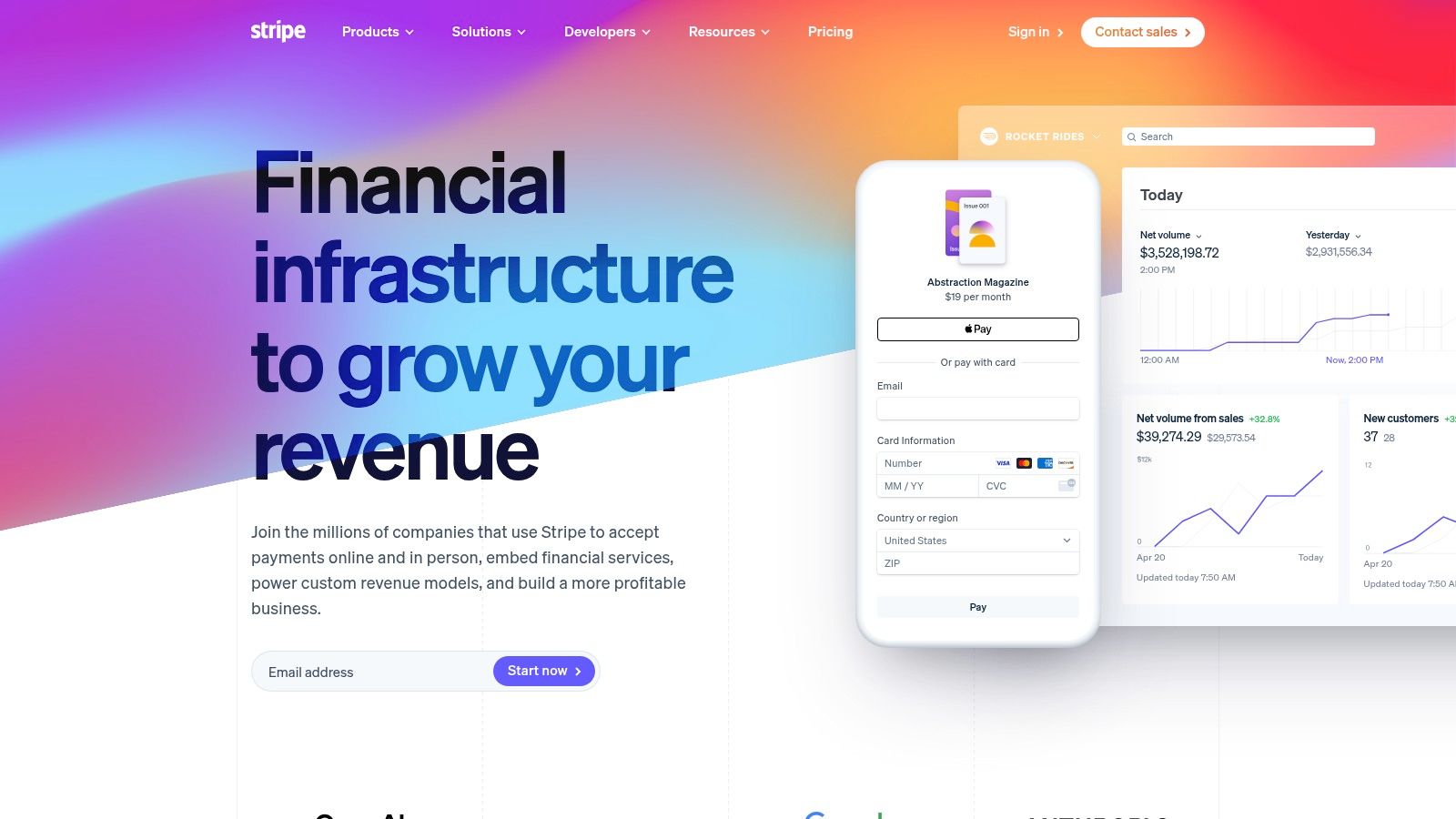
Stripe's appeal extends to various business models. Ecommerce merchants benefit from its seamless integrations with popular platforms like Shopify and WooCommerce. SaaS and subscription-based services can leverage Stripe's recurring billing and subscription management features. Digital content creators and online educators can easily accept payments for courses and digital downloads. Even non-profits, NGOs, and charities find value in Stripe's robust platform and transparent pricing.
For developers, Stripe's extensive documentation and APIs offer unparalleled flexibility and customization options. This allows for building bespoke checkout experiences tailored to specific business needs. For businesses without in-house developers, Stripe's pre-built checkout flows and integrations simplify the setup process.
Key Features and Benefits:
- Simple flat-rate pricing: 2.9% + 30¢ per transaction for all major cards simplifies cost calculation.
- Extensive developer tools: APIs and documentation enable deep customization and integration.
- Support for 135+ currencies and numerous payment methods: Facilitates international sales and caters to diverse customer preferences.
- Built-in fraud prevention tools: Enhance security and minimize chargebacks.
- Recurring billing and subscription management: Streamlines recurring payments for subscription businesses.
- No monthly fees, setup fees, or hidden charges: Provides transparent and predictable pricing.
Pros:
- Excellent developer resources and customization options.
- No monthly minimums or hidden fees.
- Advanced security features included at no extra cost.
- Seamless international payment processing.
Cons:
- Higher per-transaction fees than some interchange-plus providers, making it potentially less cost-effective for high-volume businesses.
- Technical setup may be challenging for non-developers, although pre-built solutions mitigate this somewhat.
- Limited phone support can be a drawback for those who prefer direct assistance.
- Account stability concerns exist for high-risk industries, which might face account closures or stricter scrutiny.
Implementation Tips:
- For basic needs, utilize Stripe's pre-built checkout solutions and integrations.
- Leverage the extensive documentation and API resources for custom integrations and functionalities.
- Carefully consider the transaction fees, especially if you process a high volume of transactions.
Website: https://stripe.com/
While Stripe might not be the absolute cheapest payment processing solution for every business, especially high-volume ones, its combination of transparent pricing, powerful features, and developer-friendly tools makes it a compelling option for a wide range of businesses seeking efficient and reliable online payment processing. It earns its place on this list due to its predictable cost structure, robust security, and global reach, making it an excellent choice for businesses looking to scale and expand. This is particularly relevant for the Bitcoin community, as Stripe is increasingly incorporating Bitcoin and other cryptocurrencies into its platform, providing a valuable bridge between traditional finance and the digital currency landscape.
3. PayPal
When searching for the cheapest payment processing, PayPal often comes up as a leading contender, especially for businesses just starting out. Its pay-as-you-go model, with no setup or monthly fees, makes it incredibly accessible. The standard pricing for online transactions is 2.99% + 49¢ per transaction, which can be competitive for low-volume sellers. One of PayPal's greatest strengths lies in its widespread recognition and consumer trust. With over 400 million active users globally, offering PayPal at checkout can significantly increase conversion rates, as customers feel secure using a familiar and trusted platform. This can be a considerable advantage when considering overall profitability, potentially offsetting slightly higher transaction fees.
For eCommerce merchants, integrating PayPal is usually seamless with most platforms, offering a quick and easy way to start accepting payments. Brick-and-mortar retailers can also utilize PayPal's point-of-sale solutions and card readers. SaaS and subscription-based services benefit from recurring billing options, simplifying subscription management. Digital content creators and online educators can easily accept payments for courses and downloads. Even non-profits, NGOs, and charities find PayPal's platform user-friendly for accepting donations.
Features:
- No monthly fees or setup costs
- Instant account setup and activation
- Built-in buyer and seller protection
- Seamless integration with most eCommerce platforms
- PayPal Checkout increases conversion rates
- Multiple payment acceptance options (credit/debit cards, PayPal balance)
- Same-day access to funds with PayPal balance
Pros:
- Trusted brand that can increase conversion rates
- Easy setup without merchant account requirements
- Multiple payment acceptance options
- Same-day access to funds with PayPal balance
Cons:
- Higher transaction fees than some competitors (especially for high-volume businesses)
- Account holds and reserves are common complaints, which can impact cash flow
- Customer service issues reported by some merchants
- Additional fees for currency conversion
Implementation Tips:
- Clearly display the PayPal logo at checkout to leverage brand recognition.
- Consider offering PayPal as an express checkout option for a faster user experience.
- Familiarize yourself with PayPal's seller protection policies to avoid potential issues.
- Keep detailed records of transactions to reconcile with your other financial systems.
Why PayPal deserves its place on this list: While not the absolute cheapest in terms of per-transaction fees, PayPal offers a powerful combination of affordability, accessibility, and widespread consumer trust. This makes it a strong contender for businesses seeking a balance between cost-effectiveness and conversion optimization. The lack of monthly fees makes it particularly attractive to small businesses and startups with limited budgets. However, businesses processing high volumes of transactions should carefully compare PayPal's fees with other providers to ensure it remains the most cost-effective solution.
Website: https://www.paypal.com/
4. Payment Depot
Payment Depot offers a refreshing approach to payment processing, making it a strong contender for the title of "cheapest payment processing" for medium to high-volume businesses. Their membership-based model disrupts the traditional percentage-based markup system, potentially saving you thousands of dollars annually. Instead of paying a percentage on each transaction, you pay a fixed monthly membership fee and a small, per-transaction fee on top of the direct interchange cost. This transparent interchange-plus pricing structure eliminates the guesswork and hidden fees often associated with other processors.
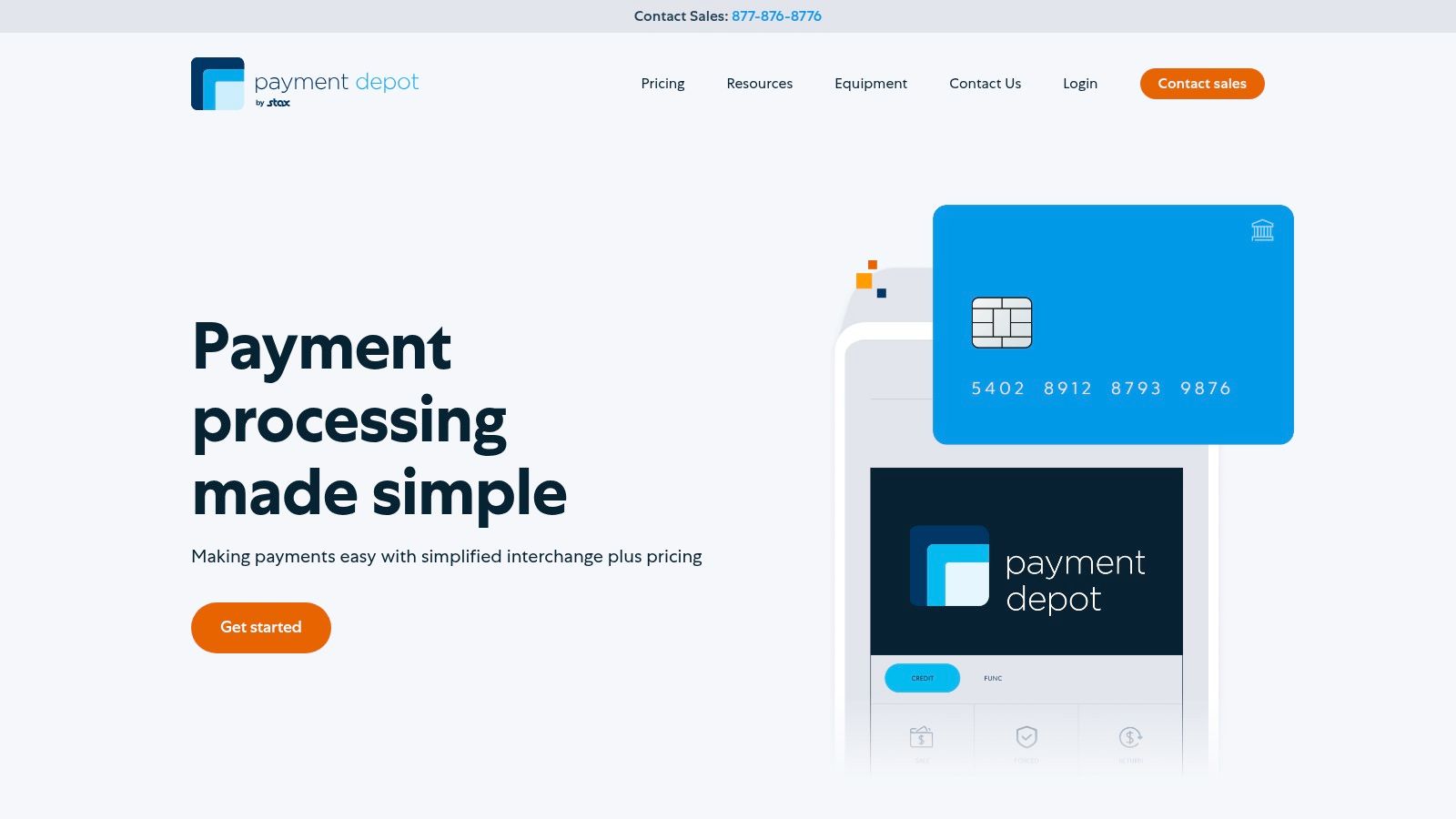
This model is particularly beneficial for businesses processing over $10,000 per month, ranging from established eCommerce merchants and brick-and-mortar retailers to SaaS companies and even non-profits. Imagine the savings for a high-volume online retailer or a bustling restaurant. While Payment Depot may not be the cheapest option for very small businesses or those with fluctuating seasonal sales due to the monthly membership fee, the savings potential for medium to high-volume businesses is substantial. This transparent pricing allows for accurate forecasting and budgeting, a crucial element for businesses of all sizes.
Payment Depot offers various membership tiers starting at $79 per month, each with different per-transaction fees as low as 7¢. This allows you to choose a plan that aligns with your transaction volume and processing needs. Furthermore, they offer month-to-month contracts with no cancellation fees, providing flexibility and avoiding long-term commitments. This is particularly appealing to Bitcoin merchants and the wider Bitcoin community, who often value flexibility and transparency in financial transactions.
Included with your membership are essential features like a virtual terminal and payment gateway, simplifying online and in-person transactions. They also offer a free equipment program with membership, eliminating upfront hardware costs. Next-day funding is available, ensuring quick access to your funds.
Technical Requirements: Payment Depot integrates with various POS systems and eCommerce platforms. Their website provides detailed information on compatible systems.
Implementation Tips:
- Calculate your current processing costs: Before switching, analyze your current statements to determine your average monthly processing volume and fees. This will help you compare apples to apples and determine if Payment Depot is the right fit.
- Contact Payment Depot for a customized quote: Their sales team can help you choose the best membership tier based on your specific needs.
- Factor in the monthly fee: While the per-transaction fees are low, remember to consider the monthly membership cost when evaluating the overall cost.
Pros:
- Significant savings for medium to high-volume merchants.
- No percentage markup on transactions, leading to predictable costs.
- Transparent pricing with no hidden fees.
- Excellent customer service and support.
Cons:
- Monthly membership fee may not be cost-effective for very small businesses or those with fluctuating sales volumes.
- Limited international payment options may restrict some businesses.
- Setup process may take longer than some instant-approval processors.
Website: https://www.paymentdepot.com/
Payment Depot's membership-based pricing structure and transparent fee schedule make it a valuable option for businesses seeking cheapest payment processing solutions, particularly those with consistent, higher transaction volumes. They provide a powerful combination of cost-effectiveness, transparency, and robust features that can significantly impact your bottom line.
5. Helcim
Helcim stands out in the crowded payment processing landscape by offering a compelling blend of transparent interchange-plus pricing and automatic volume discounts. This makes it a strong contender for businesses seeking the cheapest payment processing, especially as they scale. Unlike tiered pricing models that can obscure true costs, Helcim's interchange-plus structure reveals the exact interchange rate charged by card networks, plus a consistent markup. This clarity empowers businesses to understand their processing fees and potentially negotiate better rates as their volume grows. This positions Helcim as an excellent solution for businesses aiming for long-term cost savings.
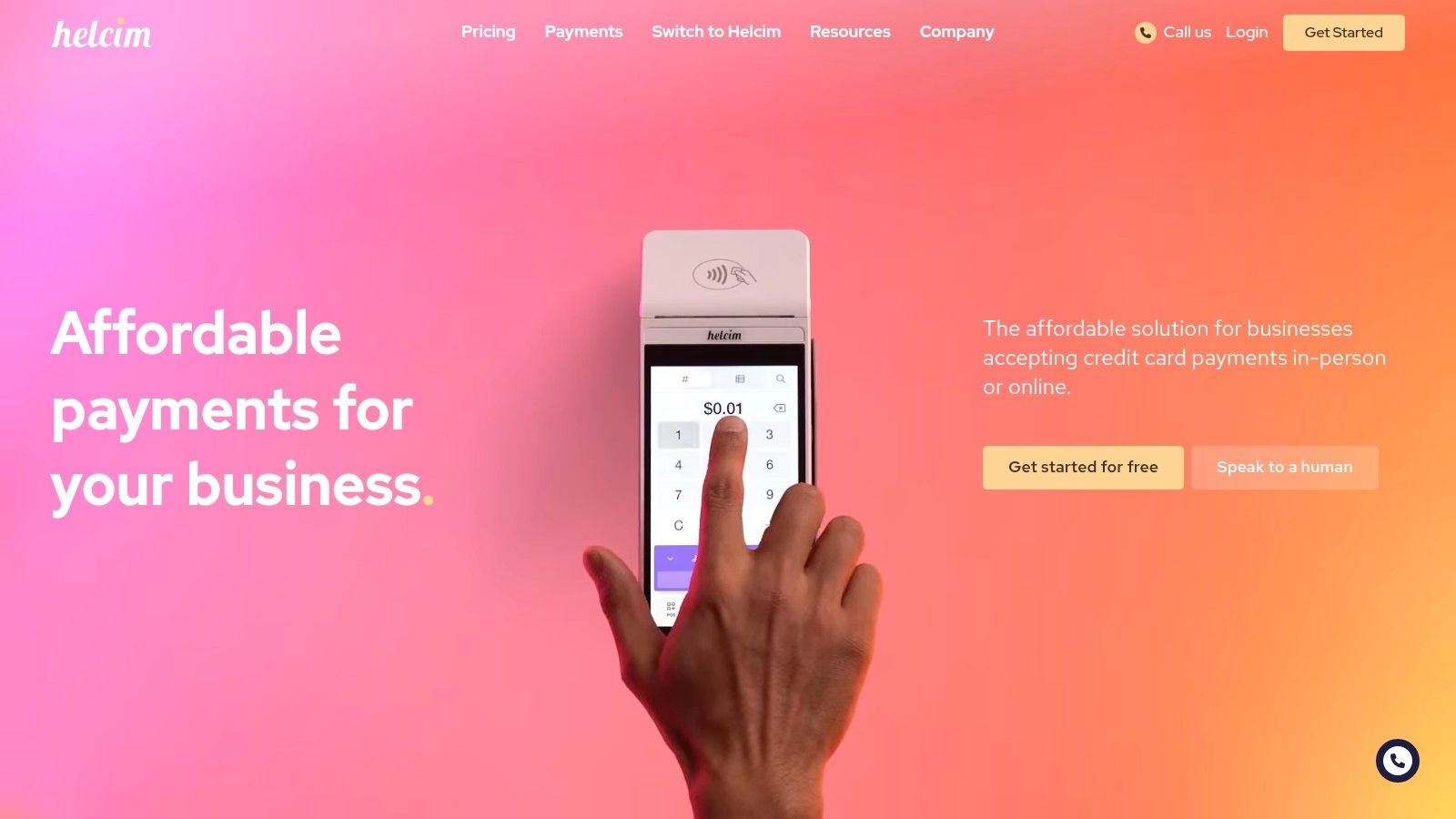
Helcim’s rates begin at interchange + 0.50% + 25¢ for both card-present transactions and online payments. As your transaction volume increases, these rates automatically decrease without requiring a plan change. This automated scaling is particularly attractive for eCommerce merchants, brick-and-mortar retailers, SaaS and subscription-based services, and even digital content creators experiencing rapid growth. The absence of monthly fees, long-term contracts, and cancellation penalties further sweetens the deal, providing flexibility and minimizing financial risk. This is particularly beneficial for non-profits, NGOs, and charities that often operate on tight budgets.
Furthermore, Helcim provides a full-featured merchant account with a virtual terminal, facilitating online transactions and remote payments. Their free Helcim Commerce platform also offers robust tools for inventory and customer management, streamlining operations for businesses of all sizes. For Bitcoin supporters and merchants within the Bitcoin community, the transparent pricing structure offers a level of control and predictability often missing in traditional payment processing.
Features:
- Automatic volume discounts without changing plans
- No monthly fees or contracts
- Full-featured merchant account with virtual terminal
- Free Helcim Commerce platform for inventory and customer management
- Transparent interchange-plus pricing
Pros:
- Decreasing rates as your business grows
- No hidden fees or surcharges
- Exceptional customer service and merchant support
- Competitive pricing for both small and medium businesses
Cons:
- Not the cheapest option for very low-volume merchants (consider other options on this list if you have minimal transactions).
- Limited hardware options compared to competitors. Research compatible hardware before committing.
- No same-day setup (typically 1-2 business days). Factor this into your launch timeline.
- Limited international currency support. Verify supported currencies if you conduct international business.
Implementation Tips:
- Prepare your business documentation in advance to expedite the application process.
- Explore the Helcim Commerce platform and its features to maximize efficiency.
- Contact Helcim's customer support for any questions regarding setup or integration.
Website: https://www.helcim.com/
While Helcim might not be the absolute cheapest for businesses processing very few transactions, the combination of interchange-plus pricing, automatic volume discounts, and lack of recurring fees makes it a highly competitive and cost-effective solution for growing businesses looking for the cheapest payment processing in the long run. Its transparent approach and robust features make it well-suited for a wide range of merchants, from online retailers and subscription services to traditional brick-and-mortar businesses.
6. Stax (formerly Fattmerchant)
Stax is a leading contender for the title of "cheapest payment processing" due to its unique subscription-based model. Unlike traditional processors that take a percentage of each transaction, Stax charges a flat monthly fee plus direct interchange costs and a small per-transaction fee. This makes it a powerful solution for businesses processing a high volume of transactions, as they avoid percentage markups that can significantly inflate processing costs. Stax's transparent pricing structure allows merchants to see exactly what they're paying for and predict their monthly expenses more accurately.

This subscription model offers significant advantages for a variety of businesses: eCommerce merchants benefit from predictable costs even during peak sales periods; brick-and-mortar retailers appreciate the transparent, flat-rate structure; SaaS and subscription-based services can easily factor processing fees into their pricing models; digital content creators and online educators can scale their businesses without worrying about escalating processing fees; and even non-profits, NGOs, and charities can maximize their donations by minimizing processing expenses. Even Bitcoin supporters, merchants, and the wider community will appreciate the focus on transparency and cost-effectiveness.
Pricing starts at $99 per month, plus the direct interchange rate (which varies depending on the card type and transaction method) and a small per-transaction fee of 8¢ for in-person transactions and 15¢ for keyed-in transactions. While the monthly fee might seem steep for low-volume businesses, the savings potential for high-volume merchants is substantial. For example, a business processing $50,000 monthly could save hundreds compared to a traditional processor charging a 2.9% + 10¢ per transaction fee. This cost-effectiveness is what earns Stax its place on this list.
Stax provides more than just competitive pricing; it's an all-in-one integrated payments platform. It offers free POS software, a payment gateway, and a virtual terminal, simplifying operations and reducing the need for multiple vendors. Merchants can access advanced reporting and analytics dashboards to track their transaction data and gain valuable business insights. Next-day funding is included at no extra cost, improving cash flow management. Stax even offers the same rate for all card types, including American Express, which is often more expensive to process with other providers.
Features:
- 0% markup on interchange with flat subscription fee
- All-in-one integrated payments platform
- Same rate for all card types including American Express
- Next-day funding at no additional cost
- Advanced reporting and analytics dashboard
- Free POS software, payment gateway, and virtual terminal
Pros:
- Potentially massive savings for high-volume merchants
- Predictable monthly cost regardless of processing volume
- Excellent customer service and technical support
Cons:
- Monthly subscription fee isn't cost-effective for low-volume businesses
- Higher upfront costs compared to no-monthly-fee processors
- Limited international payment capabilities
- Longer application and approval process
Implementation Tips:
- Calculate your current processing costs to accurately compare Stax's pricing with your existing solution.
- Prepare necessary documentation for the application process, including business information and bank statements.
- Take advantage of Stax's customer support and onboarding resources to ensure a smooth transition.
If your business processes a substantial volume of transactions, Stax is worth serious consideration. Its transparent, subscription-based pricing and comprehensive platform can deliver significant long-term cost savings and streamline your payment operations. Visit their website https://stax.com/ to learn more.
7. Dharma Merchant Services
Dharma Merchant Services is a strong contender for businesses seeking the cheapest payment processing through a transparent and ethical model. They specialize in interchange-plus pricing, which can be significantly more affordable than tiered or flat-rate pricing, particularly for businesses with higher transaction volumes. This makes them an attractive option for small to mid-sized businesses looking to minimize processing costs. Their focus on transparent, ethical operations and giving back to the community also resonates with businesses and consumers who prioritize social responsibility.
Dharma's pricing structure is refreshingly straightforward: interchange + 0.15% + 8¢ for retail transactions and interchange + 0.20% + 11¢ for online transactions. To understand the potential savings, consider a business processing $20,000 per month in online sales. With a typical flat-rate processor charging 2.9% + 30¢ per transaction, the fees would be around $610. With Dharma's interchange-plus pricing, assuming an average interchange rate of 1.5%, the fees would be closer to $410, representing a substantial saving. This transparent pricing model makes it easy for businesses to understand their costs and project future expenses. Beyond pricing, Dharma offers month-to-month agreements with no early termination fees, providing flexibility for growing businesses. Included are a virtual terminal and payment gateway, covering both online and in-person payment needs.
Dharma also caters to specific niches. Nonprofits receive discounted pricing, aligning with their charitable mission. Furthermore, their association with the Bitcoin community makes them an attractive option for businesses operating within the cryptocurrency ecosystem, offering a bridge between traditional finance and the digital currency world.
Features:
- Low-cost interchange-plus pricing
- Month-to-month agreements with no termination fees
- Virtual terminal and payment gateway included
- Discounted pricing for nonprofits
- No annual PCI compliance fees
Pros:
- Exceptionally transparent pricing and ethical practices
- Excellent customer service with dedicated account managers
- Socially responsible company that donates to charities
- No junk fees or hidden charges
Cons:
- $20 monthly fee may not be cost-effective for very small merchants processing less than $10,000 monthly.
- Limited hardware options compared to larger providers.
- No 24/7 customer support.
Implementation Tips:
Applying for an account with Dharma is straightforward through their website. Be prepared to provide standard business information and processing history. Their dedicated account managers assist with the setup and integration process, ensuring a smooth transition.
Why Dharma Deserves its Place on the List:
Dharma Merchant Services stands out in the crowded payment processing landscape by prioritizing ethical practices and transparent interchange-plus pricing. While the $20 monthly fee might deter the smallest of merchants, businesses processing over $10,000 per month can benefit significantly from their competitive rates. Their commitment to social responsibility, coupled with excellent customer service, adds substantial value for businesses seeking a payment processor aligned with their values. For eCommerce merchants, brick-and-mortar retailers, SaaS providers, online educators, nonprofits, and especially those involved in the Bitcoin community, Dharma provides a compelling and cost-effective solution for cheapest payment processing.
8. 2Checkout (now Verifone)
2Checkout, now under the Verifone umbrella, earns its spot on this list of cheapest payment processing options due to its competitive pricing, particularly for businesses with a global reach. While its per-transaction fees might appear slightly higher than some domestic-focused processors at 3.5% + $0.35 for the standard plan, the lack of monthly or setup fees makes it a compelling choice for startups and small businesses looking to minimize upfront costs. Its strength lies in facilitating international transactions, making it an excellent solution for businesses aiming to expand their customer base beyond borders. This focus on global commerce positions 2Checkout as a strong contender for those seeking the cheapest payment processing for international sales.

For eCommerce merchants, SaaS providers, digital content creators, and even non-profits operating internationally, 2Checkout simplifies accepting payments from customers across the globe. Its support for over 100 currencies and 45+ payment methods eliminates the complexities of managing multiple payment gateways and currency conversions. The platform's built-in tax calculation and compliance management for over 200 countries and territories further streamlines operations, saving businesses valuable time and resources. Recurring billing features also make it a suitable option for subscription-based businesses.
Features and Benefits:
- Global Payment Acceptance: Process transactions in over 200 countries and territories.
- Multi-Currency Support: Accept payments in over 100 currencies.
- Variety of Payment Methods: Support for 45+ payment methods, catering to diverse customer preferences.
- Tax and Compliance Management: Automated tax calculation and compliance tools simplify international sales.
- Recurring Billing: Tools for managing subscriptions and recurring payments.
- Shopping Cart Integrations: Seamless integration with major eCommerce platforms.
Pros:
- Excellent International Capabilities: A standout choice for businesses selling globally.
- Comprehensive Fraud Protection: Built-in fraud prevention measures protect both businesses and customers.
- No Recurring Fees (Standard Plan): No monthly or setup fees minimize upfront costs.
- Handles Global Compliance: Simplifies VAT, sales tax, and other international compliance issues.
Cons:
- Higher Transaction Fees (Domestic): May be less cost-effective for businesses focused solely on domestic sales.
- Longer Payout Timeframes: Initial payouts can take up to two weeks.
- Complex Setup: Account setup can be more involved compared to some simpler processors.
- Additional Fees for Advanced Features: Extra fees apply for premium features and dedicated support.
Implementation Tips:
- Evaluate your business needs: Determine if 2Checkout’s international focus aligns with your target market.
- Compare pricing plans: Consider transaction volume and international sales projections to choose the most cost-effective plan.
- Utilize the documentation: 2Checkout offers extensive documentation and resources to guide you through the setup process.
Website: https://www.2checkout.com/
While 2Checkout may not be the absolute cheapest payment processor for strictly domestic transactions, its value proposition shines through for businesses with international aspirations. By simplifying cross-border payments and handling complex tax and compliance issues, 2Checkout can be a powerful tool for global growth and potentially offer significant savings in the long run, justifying its place on this list for those targeting international markets.
Cheapest Rates Comparison of Top 8 Processors
| Provider | Core Features ✨ | User Experience ★ | Value Proposition 💰 | Target Audience 👥 | Unique Selling Points 🏆 | Price Points 💰 |
|---|---|---|---|---|---|---|
| Square | Flat-rate pricing, free POS app & card reader, inventory tools | Easy setup, comprehensive tools ★★★★ | Predictable fees, no contracts | Small businesses 👥 | Free card reader, next-day deposits | 2.6% + 10¢ (in-person), 2.9% + 30¢ (online) |
| Stripe | Developer APIs, 135+ currencies, fraud prevention, subscription | Advanced, developer-friendly ★★★★★ | Seamless online payments, global reach | Ecommerce & online 👥 | Extensive payment methods, fraud tools | 2.9% + 30¢ per transaction |
| PayPal | Instant setup, buyer/seller protection, broad platform integration | Trusted brand, easy setup ★★★★ | Large user base boosts conversions | Small to medium businesses 👥 | 400M+ users, PayPal Checkout | 2.99% + 49¢ per online transaction |
| Payment Depot | Interchange-plus pricing, virtual terminal, free equipment | Month-to-month, transparent ★★★★ | Savings for high-volume merchants | Medium to high volume 👥 | Membership model, no percentage markups | $79+/mo + interchange + flat fee |
| Helcim | Volume discounts, no contracts, virtual terminal, commerce platform | Transparent, good support ★★★★ | Decreasing rates with volume growth | Small to medium businesses 👥 | Automatic volume discounts | Interchange + 0.50% + 25¢ |
| Stax (formerly Fattmerchant) | 0% markup, subscription fee, unified rates | Advanced reporting, good support ★★★★ | Predictable costs, savings at scale | High volume businesses 👥 | No percentage markup, same rates on cards | $99+/mo + interchange + 8-15¢ |
| Dharma Merchant Services | Low interchange-plus, no contracts, ethical, virtual terminal | Transparent & ethical ★★★★ | Social responsibility & no junk fees | Small to mid businesses 👥 | Donates profits to charity | $20/mo + interchange + small flat fee |
| 2Checkout (Verifone) | Global payments, 100+ currencies, tax & compliance management | Robust for international sellers ★★★ | Excellent global reach & compliance support | International businesses 👥 | Supports 200+ countries, built-in tax handling | 3.5% + $0.35 per transaction |
Making the Right Choice for Your Business
Finding the cheapest payment processing solution for your business isn't a one-size-fits-all endeavor. Whether you're running an eCommerce store, a brick-and-mortar shop, a SaaS platform, creating digital content, managing a non-profit, or even embracing Bitcoin, the ideal payment processor depends on your unique circumstances. This article explored several leading options, including Square, Stripe, PayPal, Payment Depot, Helcim, Stax, Dharma Merchant Services, and 2Checkout (now Verifone), each with its own strengths and weaknesses.
Key takeaways include understanding the differences between flat-rate pricing, interchange-plus pricing, and tiered pricing models. Consider your average transaction size and volume. High-volume businesses might benefit from interchange-plus pricing or specialized processors like Stax, while smaller businesses might find flat-rate pricing with Square or PayPal more appealing. Don't forget to factor in features like recurring billing support for subscription services, POS integration for retail stores, and specific needs for Bitcoin merchants within the Bitcoin community. Security features, ease of integration with your existing systems, and customer support are also crucial factors.
While focusing on minimizing payment processing costs is crucial, don't neglect other aspects of running your business online. Implementing effective SEO can significantly impact your reach and customer base. Fortunately, there are many affordable SEO tools available that can help boost your rankings without breaking the bank.
By thoroughly evaluating your needs and researching the available options, you can confidently choose the cheapest payment processing solution that maximizes your profits and streamlines your operations. For a comprehensive solution that simplifies payments and empowers your business growth, consider exploring Flash. Flash offers cutting-edge technology and competitive rates, providing a tailored approach to payment processing that can help optimize your bottom line.