Bitcoin payments are transforming how businesses handle international transactions. They offer faster processing, lower fees, and global accessibility, removing barriers tied to traditional payment systems. Here's why businesses are turning to Bitcoin:
- Low Costs: Bitcoin transactions often cost less than 0.01%, compared to 1.5%-3.5% for credit cards.
- Speed: Payments settle in seconds to minutes, improving cash flow.
- Global Reach: Accept payments worldwide without managing multiple currencies.
- Security: Blockchain technology ensures secure and fraud-resistant transactions.
- Access for the Unbanked: Serve billions without traditional banking access.
Businesses can integrate Bitcoin payments easily with tools like payment links, website widgets, and point-of-sale systems. Solutions like Flash simplify the process, offering features like instant USD conversion and enhanced security.
While Bitcoin offers clear advantages, challenges like price volatility, regulatory compliance, and cybersecurity risks require careful planning. By managing these risks, businesses can reduce costs, expand their audience, and improve efficiency. Bitcoin payments aren't just a trend - they're a practical solution for global business growth.
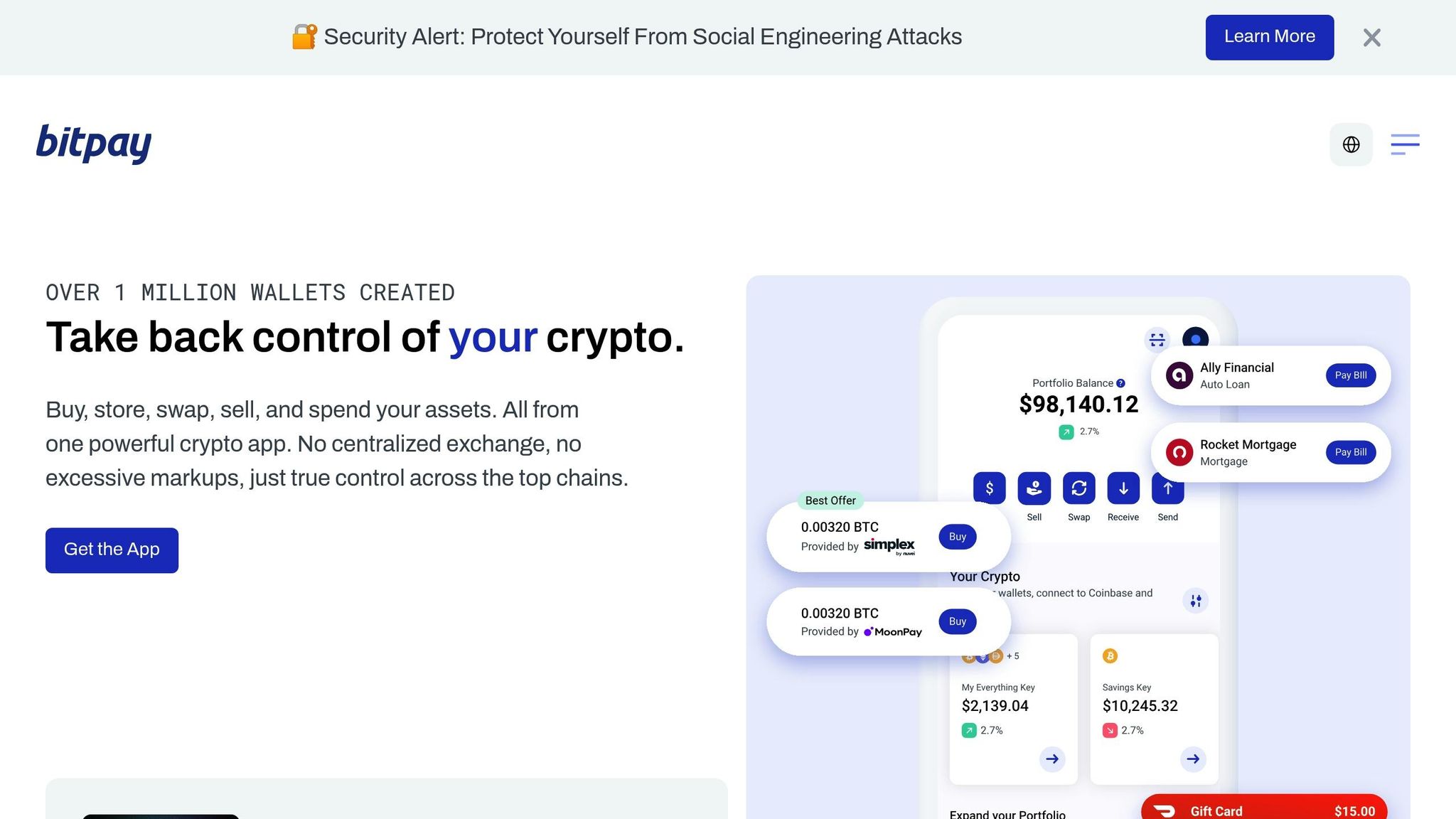
How To Accept Bitcoin and Crypto Payments with BitPay in 2024
How Bitcoin Solves Traditional Payment Problems
Legacy payment systems, while once dependable, now present obstacles for businesses aiming to expand globally. These systems often create barriers that make entering new markets more challenging.
Problems with Legacy Payment Systems
International transactions through traditional banking channels come with hefty fees that can pile up quickly. Wire transfers and card payments are notorious for taking days to complete, which disrupts cash flow and leaves customers frustrated by delays.
On top of that, businesses face issues like fluctuating exchange rates, conversion fees, and the headache of managing multiple currencies. In many developing regions, banking infrastructure is either inadequate or entirely lacking, leaving a significant portion of potential customers without access to reliable payment methods. Adding to the complexity, regulatory differences across countries make setting up payment processing a time-consuming and resource-heavy task.
Bitcoin offers a practical solution to these inefficiencies, making it an attractive option for businesses looking to streamline their payment systems.
Bitcoin Payment Advantages
Bitcoin operates on a decentralized network, which removes the need for intermediaries and their associated hurdles.
Its transaction fees are generally lower and more predictable compared to traditional systems. Faster processing times mean businesses can maintain better cash flow, with settlements occurring much more quickly.
Since Bitcoin is accessible anywhere with an internet connection, businesses can easily reach global customers without the hassle of managing multiple currencies. The blockchain technology behind Bitcoin also provides robust cryptographic security, ensuring transaction integrity and reducing risks of fraud. For businesses venturing into international markets, these advantages simplify operations, improve customer satisfaction, and enhance overall financial efficiency.
Comparison Table: Traditional vs. Bitcoin Payments
Below is a side-by-side comparison highlighting the key differences between traditional payment methods and Bitcoin:
| Feature | Traditional Payments | Bitcoin Payments |
|---|---|---|
| International Fees | High and variable | Lower and more predictable |
| Processing Time | Several business days | Much faster settlement |
| Market Access | Limited by local banking infrastructure | Accessible anywhere with internet |
| Currency Management | Requires handling multiple currencies | Operates as a single digital asset |
| Setup Complexity | Extensive regulatory requirements | Quick and straightforward implementation |
| Minimum Requirements | Requires established banking networks | Only needs internet connectivity |
Adding Bitcoin Payments to Business Operations
Integrating Bitcoin payments into your business requires choosing solutions that strike a balance between functionality and ease of use.
Features of Enterprise Bitcoin Payment Solutions
When selecting a Bitcoin payment solution, prioritize security. Non-custodial transactions, for instance, transfer funds directly from a customer’s wallet to your business wallet without involving third-party intermediaries. This reduces risks, ensures faster transactions, and gives you full control over your funds.
Another essential feature is Lightning Network support, which allows for instant Bitcoin payments with extremely low fees. This is especially useful for everyday transactions, as it eliminates delays that could frustrate customers.
Now, let’s see how Flash simplifies the integration process with its suite of tools.
How Flash Makes Bitcoin Payments Simple
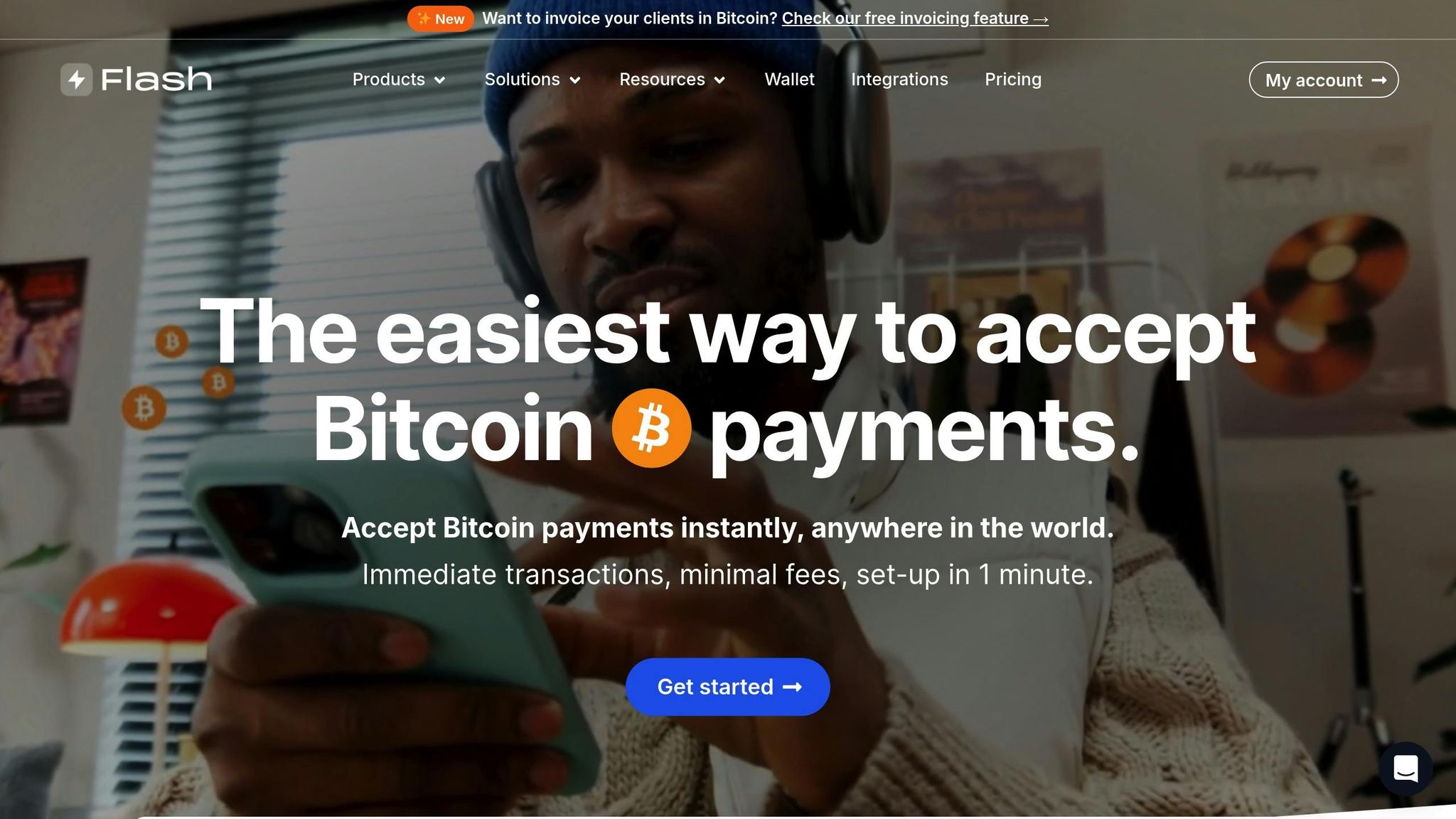
Flash provides tools designed to make accepting Bitcoin payments straightforward and efficient. Here’s how:
- Payment Links: These links let businesses start accepting Bitcoin payments immediately - no technical setup required. Just create a link, share it with your customers, and receive payments directly into your wallet.
- Paywalls and Subscriptions: Perfect for content creators or subscription-based businesses, these features enable recurring Bitcoin payments. Whether you’re selling digital products, offering online courses, or running a membership site, these tools simplify payment collection and reduce friction for your customers.
- Widgets for Websites: Flash’s widgets integrate seamlessly into your website, offering a checkout experience that feels natural and on-brand. They support both one-time and recurring payments while providing real-time analytics to track key metrics like conversion rates, payment volumes, and customer behavior.
- Point-of-Sale Solutions: For physical retail locations, Flash offers mobile-friendly solutions that work on tablets and smartphones. Staff can process Bitcoin transactions alongside traditional methods, and customers can pay by simply scanning a QR code - no need for special hardware.
- Custom Integrations via API: For larger enterprises, Flash’s API enables businesses to embed Bitcoin payments directly into their existing systems. This flexibility allows for tailored solutions that meet unique operational needs.
Methods for Bitcoin Payment Integration
There are several ways to integrate Bitcoin payments, depending on your business’s technical capabilities and goals:
- API Integration: Ideal for businesses with development resources, APIs allow for custom payment flows tailored to your specific needs. This is a great choice for e-commerce platforms, SaaS businesses, or any company with unique billing requirements.
- No-Code Tools: If you’re looking for a quick and simple setup, Flash’s no-code tools are the way to go. The widget generator, for example, lets you create embeddable payment buttons and checkout forms using a visual interface. This means marketing teams can roll out solutions without waiting on IT support.
- Hybrid Approaches: Some businesses benefit from combining multiple methods. For example, you might use payment links for B2B transactions, widgets for online sales, and API integration for app-based purchases. This approach maximizes flexibility while catering to a variety of customer preferences.
The key is to align the integration method with your business’s technical resources and your customers’ needs, whether that means deep customization via APIs or quick deployment with no-code tools.
sbb-itb-f81ab9b
Managing Risks and Meeting Compliance Requirements
While Bitcoin payments can open doors for business growth, they come with challenges that require careful management. Companies need to address specific risks and adhere to U.S. regulations. By understanding these hurdles early, businesses can develop strategies to mitigate risks while staying compliant.
Main Risks in Bitcoin Payment Adoption
One of the biggest concerns is price volatility. Bitcoin's value can swing dramatically, which makes revenue forecasting tricky. For instance, a $1,000 payment in Bitcoin might only be worth $950 - or could jump to $1,050 - by the time it’s converted to U.S. dollars. This fluctuation not only complicates accounting but can also lead to unexpected losses.
Another issue is regulatory uncertainty. Bitcoin regulations are still evolving across both federal and state levels. These changes can affect how businesses process transactions, report activity, and manage operations. Staying informed about shifting regulations is critical for long-term planning.
Cybersecurity threats also loom large. Since blockchain transactions are irreversible, businesses accepting Bitcoin become attractive targets for cybercriminals. Phishing scams, wallet breaches, and other sophisticated attacks are all risks that require robust security measures.
Then there’s the technical complexity. Managing private keys, securing wallets, and setting up proper backups demand a level of expertise that many businesses lack. Errors in implementation can lead to lost funds or vulnerabilities.
Risk Management Methods
To tackle these challenges, businesses can adopt several risk management strategies:
- Instant USD conversion: This method automatically converts Bitcoin payments into dollars upon receipt, eliminating the risk of price swings. Businesses can enjoy Bitcoin's global reach while keeping their revenue stable in dollars.
- Multi-signature wallets: These wallets require multiple approvals before funds can be accessed, making unauthorized transactions much harder. For businesses, this adds an extra layer of security by involving multiple parties in the approval process.
- Regular security audits: Comprehensive reviews of wallet systems, payment processes, and employee practices can uncover vulnerabilities before they’re exploited. Hiring cryptocurrency security specialists for these audits can provide actionable insights.
- Staff training programs: Educating employees on Bitcoin security, such as spotting phishing attempts and managing private keys, reduces human error. Regular training refreshers ensure teams stay updated as threats evolve.
- Insurance coverage: Some insurers now offer policies tailored to cryptocurrency operations, covering theft, technical issues, and other risks. However, terms and costs can vary widely depending on the business model and security measures in place.
While managing risks is essential, businesses must also navigate strict regulatory requirements.
U.S. Compliance Requirements for Businesses
Businesses handling Bitcoin payments face several compliance obligations in the U.S.:
- Know Your Customer (KYC): Companies classified as money service businesses may need to verify customer identities, keep transaction records, and report suspicious activity. These requirements depend on transaction volumes and whether the business qualifies as a money transmitter under federal and state laws.
- Anti-Money Laundering (AML): Businesses must have programs to detect and prevent money laundering. This includes creating internal policies, appointing compliance officers, training employees, and conducting independent audits. Filing Suspicious Activity Reports (SARs) for questionable transactions is also required.
- IRS reporting standards: The IRS treats Bitcoin as property, so businesses must track its fair market value at the time of each transaction. Bitcoin payments are reported as income in U.S. dollars, and companies may need to issue Form 1099-MISC for service providers paid over $600 annually.
- State-level regulations: Rules vary widely by state. For example, New York’s BitLicense requires businesses involved in virtual currency activities to obtain a license. Companies must research the specific requirements for each state where they operate or serve customers.
- Record-keeping obligations: Businesses are required to maintain detailed transaction records, including timestamps, amounts, wallet addresses, and customer details when applicable. These records typically need to be kept for at least five years and made available to regulators upon request.
Flash’s non-custodial system simplifies compliance by enabling direct wallet-to-wallet transfers, reducing the need for certain licenses. However, businesses should always consult legal experts to fully understand their compliance responsibilities.
Measuring Bitcoin Payment Business Results
Tracking the impact of Bitcoin payments means keeping a close eye on financial and competitive metrics. Having clear, actionable data helps businesses justify their investment and decide whether to expand their Bitcoin payment options.
Key Metrics for Bitcoin Payment ROI
Transaction cost savings are one of the most immediate benefits. Traditional credit card processing fees typically range from 1.5% to 3.5% per transaction. In contrast, Bitcoin transactions using Layer 2 solutions like the Lightning Network cost less than 0.01%. This difference can lead to savings of up to 80% on payment processing fees. For instance, a company handling $1 million in payments annually could save between $15,000 and $35,000.
Customer acquisition and market expansion metrics highlight Bitcoin's appeal. A 2023 survey of 12,000 e-commerce businesses found that 27% reported increased cross-border sales after enabling Bitcoin payments. This is particularly impactful given the global cryptocurrency user base of over 420 million, with 63% of users preferring to spend their digital assets directly.
Average order value increases have also been observed. Businesses like tech retailers and luxury brands report an 8%–15% boost in average order value from customers paying with Bitcoin. This suggests that Bitcoin users may have different spending habits compared to traditional payment users.
Settlement speed improvements are another advantage. Bitcoin payments can be confirmed in seconds to minutes, significantly improving cash flow. Businesses can measure this by comparing the time from payment initiation to funds availability.
Operational efficiency gains are possible thanks to tools like Flash's real-time analytics and automated reconciliation systems. These tools match payments to invoices automatically, reducing back-office workload. Tracking the reduction in staff hours spent on payment processing can provide a clear picture of these improvements.
Market penetration in emerging regions is another area where Bitcoin shines. For example, Bitcoin-based import settlements in Argentina grew by an astonishing 610% year-over-year in Q1 2023. This demonstrates how businesses can tap into markets where traditional payment methods face hurdles.
Metrics Table: Before and After Bitcoin Payments
Here’s a snapshot of key metrics comparing performance before and after adopting Bitcoin payments:
| Metric | Before Bitcoin Payments | After Bitcoin Payments | Improvement |
|---|---|---|---|
| Transaction Fees | 2.9% average (credit cards) | <0.01% (Lightning Network) | 99%+ reduction |
| Settlement Time | 2–5 business days | 3 seconds to 10 minutes | 95%+ faster |
| Cross-border Sales | Limited by banking restrictions | 27% increase in participating businesses | Significant growth |
| Average Order Value | Baseline amount | 8%–15% higher for crypto customers | 8%–15% higher |
| Customer Reach | Traditional payment users only | Access to 420M+ crypto users | Massive expansion |
| Checkout Speed | 15-second credit card authentication | 3-second Lightning Network confirmation | 80% faster |
| Geographic Coverage | Restricted by payment processor | Global, 24/7 availability | Unlimited reach |
These figures clearly demonstrate that adopting Bitcoin payments can lead to immediate cost reductions, faster transaction speeds, and improved customer engagement. To maximize these benefits, companies should establish baseline metrics before launching Bitcoin payment options and track progress monthly during the first year. This approach ensures a clear understanding of the return on investment and helps fine-tune strategies for success.
Conclusion: Using Bitcoin Payments for Competitive Advantage
Accepting Bitcoin as a payment method offers businesses a way to tap into global markets while standing out in a competitive landscape. With lower transaction fees, faster payment processing, and access to a worldwide customer base, Bitcoin payments open doors that traditional payment systems often can't.
The benefits are clear: reduced costs, increased cross-border sales, and even higher average order values. These advantages allow businesses to cater to regions where conventional payment methods struggle, breaking down barriers like currency exchange issues and geographic limitations. On top of that, Bitcoin's quick settlements and efficiency can enhance cash flow and improve the overall customer experience.
While navigating risks and compliance requires thoughtful planning, the regulatory environment in the United States is gradually becoming more defined, offering businesses clearer pathways to adopt Bitcoin responsibly. By implementing strong risk management strategies, companies can harness these benefits to strengthen their competitive position.
For businesses ready to take the leap, Flash provides a user-friendly Bitcoin payment solution. With tools like payment links, subscription options, point-of-sale systems, and real-time analytics, Flash simplifies the integration process. Its wallet-to-wallet, non-custodial approach ensures security while maintaining the speed and cost advantages that make Bitcoin so appealing.
Adopting Bitcoin payments isn't just about keeping up with trends - it's a bold step toward expanding your business's reach and streamlining operations. Start exploring new markets and boosting your efficiency today.
FAQs
What can businesses do to manage Bitcoin's price volatility when accepting it as a payment method?
Businesses can handle Bitcoin's price swings more effectively by adopting a few smart strategies. One popular method is working with payment processors that automatically convert Bitcoin payments into U.S. dollars or another stable currency. This way, businesses lock in a consistent value for transactions, no matter how the market behaves.
Another approach involves using stablecoins. These digital currencies are tied to traditional fiat currencies like the U.S. dollar, offering steadier value and reducing the impact of sudden price changes. For added protection, some companies turn to hedging tools, such as futures contracts, to guard against unexpected shifts in Bitcoin's value. By leveraging these strategies, businesses can embrace Bitcoin payments while keeping financial risks in check.
What compliance requirements should U.S. businesses be aware of when adopting Bitcoin payments?
When U.S. businesses decide to accept Bitcoin payments, they need to navigate several important regulations. One critical requirement is compliance with OFAC sanctions, which restrict transactions with certain blocked individuals or entities. To stay on the right side of these rules, companies should establish a risk-based compliance program that includes screening transactions against sanctions lists. This helps prevent any unauthorized dealings.
Another key responsibility is tax reporting. Businesses must report digital asset transactions to the IRS and keep detailed records to ensure accuracy. Staying informed about regulatory updates and maintaining proper documentation are crucial steps for reducing risks and successfully incorporating Bitcoin payments into their operations.
How can accepting Bitcoin payments enhance cash flow and improve customer satisfaction for businesses?
Accepting Bitcoin as a payment method comes with several perks that can improve both a business's cash flow and the overall customer experience. One major advantage is the speed of Bitcoin transactions. Payments are typically processed within minutes, giving businesses quicker access to their funds compared to traditional payment methods. This faster turnaround can be a game-changer for companies operating on tight financial schedules.
Another benefit is that Bitcoin transactions are final and irreversible, which eliminates the risk of chargebacks - a common headache with credit card payments. This not only helps businesses avoid financial losses but also cuts down on the time and money spent dealing with disputes.
For customers, Bitcoin offers a smooth and inclusive way to pay, especially for those in areas where access to traditional banking services is limited. This added convenience can greatly improve their overall experience and satisfaction.