Imagine a customer walks into your coffee shop and pays for their latte with crypto, just as easily as they’d tap a credit card. That’s the real-world magic of a crypto POS terminal. Don't think of it as some wildly complex technology; it’s more like a universal translator, connecting the world of digital currencies to your physical storefront.
What Is a Crypto POS Terminal
A crypto point-of-sale (POS) terminal is a system, either physical or digital, that gives brick-and-mortar businesses a way to accept cryptocurrencies like Bitcoin. While your standard card reader talks to banks, these devices chat directly with blockchain networks.
Let's break it down. A typical POS machine speaks the language of Visa and Mastercard. A crypto POS terminal, however, is fluent in Bitcoin, Ethereum, and other digital assets. It cuts through the complexity for both you and your customer.
This kind of tech is becoming more critical as our payment habits evolve. The global Point of Sale (POS) terminal market, which covers both old-school and crypto-ready systems, is on track to blow past USD 171.83 billion by 2030. That number alone signals a massive shift in how businesses are handling money. You can dig into the specifics of this market forecast on researchandmarkets.com.
Bridging Digital Currency and Physical Retail
At its heart, a crypto POS terminal's job is to take a potentially confusing digital transaction and make it feel completely normal at the checkout counter. It does this by creating a unique QR code for every purchase. The customer simply scans it with their crypto wallet app, approves the payment, and they’re done.
The real value of a crypto POS terminal is its ability to remove friction. It transforms a potentially confusing process into a quick, scan-and-pay experience that takes seconds.
Many platforms, like Coinbase Commerce, are designed with user-friendly dashboards to manage these payments. The image below gives you a peek at a merchant's dashboard, showing just how simple it is to generate payment links or buttons.
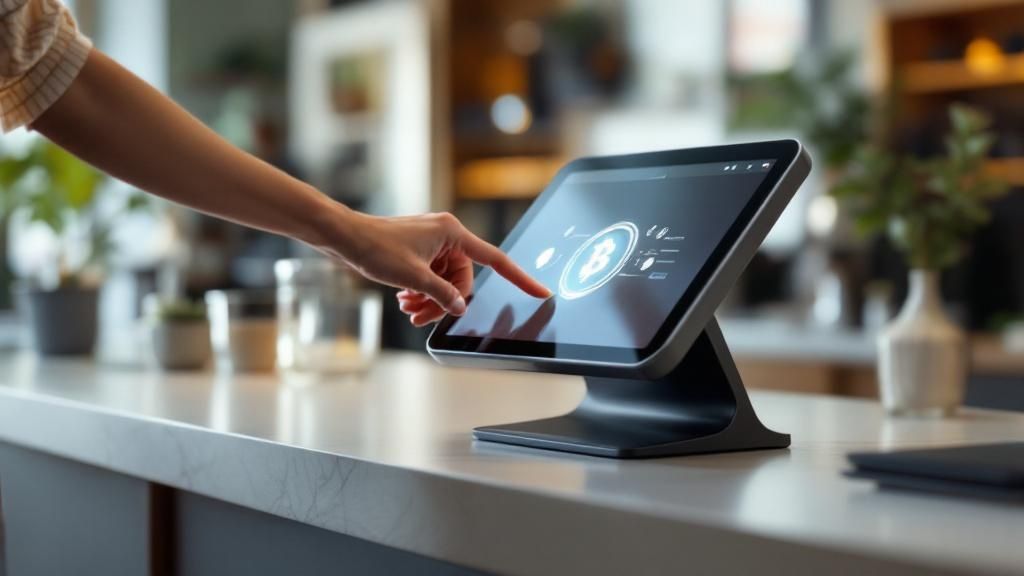
This kind of interface proves you don't need a degree in computer science to start accepting crypto. The system works its magic behind the scenes, handling everything from creating wallet addresses to confirming the transaction on the blockchain. It makes digital currency a real, practical choice for everyday business.
How Crypto Transactions Work at Checkout
So, what actually happens when a customer pays with crypto at your counter? Let's pull back the curtain on the process. It's far less complicated than you might think.
Imagine you're sending a highly secure, digitally-sealed package from the customer to your business. A payment processor like Flash acts as the trusted courier, ensuring it gets there instantly and safely. The entire exchange is surprisingly quick and unfolds in just a few taps.
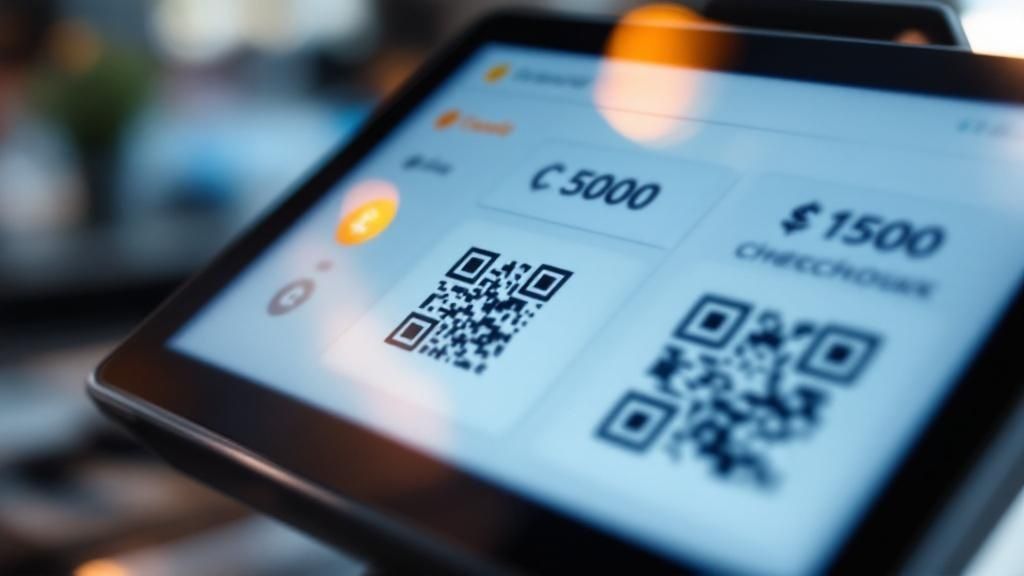
It all starts when you punch the sale amount into your terminal. This simple action instantly generates a unique QR code on the screen. Think of this code as the digital "shipping label" for that specific purchase.
Your customer then pulls out their smartphone and scans that QR code using their crypto wallet app. This scan pulls all the crucial details into their phone: the exact amount to send and your business's wallet address. They just need to glance at the details and hit confirm, much like they would for any other mobile payment.
The Journey of a Crypto Payment
Once your customer taps "send," their wallet broadcasts the transaction out to the cryptocurrency's network. This is where the real power of the blockchain kicks in. The network is essentially a global, decentralized public ledger, where thousands of computers around the world work in concert to verify and permanently record the payment.
To really get a feel for how this all works, it helps to have a basic grasp of the underlying blockchain technology. It’s this very system that makes crypto payments so incredibly secure and transparent.
Here’s a quick play-by-play of the checkout flow:
- Invoice Creation: Your crypto POS terminal creates a one-time payment request—the QR code—for the exact sale amount.
- Customer Authorization: The customer scans the code and approves the payment from their personal crypto wallet.
- Network Broadcast: The transaction is sent out to the blockchain network to be checked and validated.
- Confirmation and Settlement: The network gives the green light, confirming the transaction is valid, and the funds are officially transferred. A good crypto POS system will show this confirmation almost instantly.
The real beauty of this process is its directness. The payment travels straight from the customer's wallet to the merchant's. By cutting out the traditional banking middlemen, the fees are often dramatically lower.
From Crypto to Cash
One of the first questions merchants ask is, "Do I really have to hold on to a volatile cryptocurrency?" With modern systems, the answer is a resounding no. Most crypto POS solutions, Flash included, handle automatic settlement for you.
This means the moment a crypto payment is confirmed on the blockchain, the system instantly converts it into your local currency, whether that's dollars, euros, or pesos.
Those funds are then deposited right into your business bank account, just like a standard credit card transaction. You get the best of both worlds: you open your doors to a new wave of crypto-savvy customers while being completely shielded from price swings. You get paid the exact amount you charged, every single time.
The Business Case for Accepting Crypto Payments
Let's cut through the hype. Adopting new tech has to make sense for your bottom line. Integrating a crypto POS terminal isn't about looking trendy; it’s a strategic move to fix some of the biggest financial headaches modern businesses face.
The most powerful argument? You'll immediately slash your transaction fees. Traditional credit card processors quietly skim a significant chunk off every single sale you make, usually somewhere between 2.5% and 3.5%. For any business, but especially those with tight margins, that's a massive, slow bleed of your hard-earned revenue.
Crypto payments flip that model on its head. Most providers, like Flash, operate with a simple, flat fee that's often just 1% or even lower. This isn't just shaving off a few pennies. Across thousands of transactions, those saved percentage points flow directly back into your business as pure profit.
Crypto Payments vs. Traditional Card Payments
To really see the difference, it helps to put them side-by-side. The contrast between a crypto POS terminal and a standard card reader goes far beyond just the fees. It fundamentally changes the flow of money and the risks you have to carry as a business owner.
Here's a direct comparison:
| Feature | Crypto POS Terminal | Traditional Card Terminal |
|---|---|---|
| Transaction Fees | Typically 1% or less, flat rate | 2.5% - 3.5% + per-transaction fees |
| Chargeback Risk | None. Transactions are final and irreversible. | High. Customers can dispute charges, leading to lost revenue and penalty fees. |
| Settlement Speed | Near-instant to minutes | 2-3 business days or longer |
| Global Access | Borderless. Anyone with a crypto wallet can pay. | Often restricted by country, with high foreign exchange fees. |
| Data Security | No sensitive customer data is shared with the merchant. | Requires handling sensitive cardholder data (PCI compliance). |
| Customer Base | Attracts a global, tech-savvy, and often affluent audience. | Limited to customers with compatible bank cards. |
This isn't just a minor upgrade. For many businesses, it’s a complete overhaul of their financial operations, giving them more control, less risk, and better margins.
Erasing Chargebacks and Fraud
Another huge financial drain for merchants is the dreaded chargeback. With credit cards, a customer can dispute a transaction long after they've walked out your door. This not only forces a refund but often slaps you with an extra penalty fee. It’s a system that creates constant uncertainty and financial exposure.
Crypto payments solve this problem at its root. Because blockchain transactions are irreversible, the entire concept of a fraudulent chargeback is eliminated. Once a payment is confirmed on the network, it’s final.
For a merchant, this is a game-changer. It provides payment finality, meaning the money you receive is yours to keep, free from the threat of disputes weeks or months down the line.
This security extends to customer data, too. Since the customer pays directly from their personal wallet, they never expose sensitive details like card numbers. This drastically reduces your PCI compliance burden and gives your customers peace of mind.
Attracting a New Global Audience
When you accept cryptocurrency, you're hanging a welcome sign for a growing and often affluent community. Crypto holders are a global, tech-forward group actively looking for businesses that speak their language. By adding a crypto POS terminal, you instantly stand out from the competition.
This is especially powerful for businesses in tourist hubs or those with an international customer base. A visitor from another country can pay you without fumbling with foreign exchange rates or worrying about their card getting blocked. It's a truly borderless payment system built for a global market.
Think about the new customers you could reach:
- International Tourists: They can pay in seconds without the hassle and cost of currency conversion.
- Tech-Forward Consumers: This group prizes privacy and innovation, and they actively support merchants who share their values.
- High-Value Purchasers: For big-ticket items, the low fees and robust security of crypto are incredibly appealing.
Ultimately, integrating a crypto payment solution like Flash is more than adding another button at checkout. It's a calculated decision to lower your costs, eliminate a major source of financial risk, and unlock a new, worldwide customer base that's ready and willing to do business with you.
Choosing the Right Crypto POS Solution
Stepping into the world of crypto payments means you have choices. Not all crypto POS terminal solutions are created equal, and what works for a bustling coffee shop is worlds away from what a high-end art gallery needs. The right decision hinges on a balance of cost, features, and how seamlessly it plugs into your daily operations.
Think of your options as falling into three main buckets. Each one is designed for a different kind of business, from simple software you can run on a tablet to dedicated hardware for your checkout counter. Getting a handle on these paths is the first step to making a smart move for your business.
Hardware vs. Software Solutions
The first big debate is whether to get a physical hardware device or just use a software-based crypto POS.
- Dedicated Hardware Terminals: These are the physical gadgets that look and feel just like the credit card readers you see everywhere. Built specifically for one job—processing payments—they offer rock-solid reliability and a familiar checkout experience. They're a fantastic choice for high-volume retail spots where speed and durability are king.
- Software-Based POS Apps: This route turns a device you already own—like a tablet or even a smartphone—into a powerful crypto terminal. Providers like Flash offer apps you can install in seconds, making it an incredibly cheap way for small businesses, pop-up shops, or service providers to get started.
The core difference really boils down to investment versus flexibility. Hardware is a dedicated, robust tool for your counter. Software gives you a versatile, low-cost way to start accepting crypto right now.
Key Factors to Compare
Once you've decided whether hardware or software is a better fit, it's time to get into the nitty-gritty of what each provider offers. Transaction fees are a huge one. While most crypto processors hover around 1%, you have to watch out for hidden costs. Look for simple, transparent pricing.
When weighing your options, keeping overall website security best practices in mind is non-negotiable. This is crucial for protecting your business and your customers' data, especially if you're linking the POS to an online store.
You'll also want to check which cryptocurrencies they support. Bitcoin is a given, but accepting other popular coins can open your doors to a much wider audience. Finally, look at the settlement process. A top-tier provider will offer automatic conversion to your local currency. This protects you from crypto's price swings and makes your bookkeeping a whole lot simpler. Your choice should make accepting crypto feel just as easy as taking a credit card.
How Businesses Are Using Crypto POS Terminals Today
The idea of a crypto POS terminal might sound like something out of a sci-fi movie, but it’s far from a futuristic concept. Right now, businesses are putting this technology to work to solve very real problems and open up new avenues for growth. From busy city cafes to high-end art galleries, merchants are finding practical, compelling reasons to welcome digital currencies at the checkout.
This isn't just a niche trend for a handful of tech enthusiasts. The global crypto payment gateway market—the engine powering these terminals—was already worth around $1.4 billion in 2023. Forecasts show it doubling to $2.8 billion by 2025, driven by businesses racing to meet new customer demands. You can dig into more of the numbers with these crypto payment gateway growth statistics on CoinLaw.io.
Practical Use Cases Across Industries
The applications are as diverse as the businesses themselves. It turns out that when you offer crypto as a payment option, different industries find their own unique advantages, showing just how flexible these systems can be.
Take a local coffee shop in a tourist hotspot. By using a simple software POS like Flash, they can easily accept payments from international visitors. Nobody has to worry about steep foreign exchange fees or the frustration of a declined bank card. The transaction is over in a flash, and it costs a tiny fraction of what traditional card networks would skim off the top.
Luxury goods dealers, like fine art galleries or exclusive watch sellers, are another perfect example. They’re turning to crypto for two huge reasons:
- Rock-Solid Security: When you're dealing with high-value sales, the irreversible nature of a blockchain payment is a game-changer. It completely wipes out the risk of a six-figure chargeback scam.
- Massively Lower Fees: A standard 1% crypto transaction fee on a $50,000 sale is a whole lot easier to swallow than the 3% or more charged by credit card companies. That's a saving of over $1,000 on a single sale.
The common thread is simple: businesses are using crypto POS terminals to solve specific financial pain points—whether it's high fees, fraud risk, or barriers to international commerce.
Attracting a New Kind of Customer
But it's not just about solving problems. Accepting crypto is also a powerful marketing move. It sends a clear signal that a business is modern, tech-savvy, and forward-thinking. That message resonates loud and clear with a global community of consumers who live and breathe digital innovation.
Think about online service providers or digital artists. They use crypto payment links and terminals to serve a worldwide audience. Suddenly, they can sell courses, software, or digital art to anyone, anywhere, without the frustrating red tape of old-school banking.
It’s about flinging the doors open to a borderless economy and tapping into a customer base that actively looks for merchants who speak their language. This isn't just about adding another payment button at checkout; it's a strategic play to connect with the future of commerce.
A Step-by-Step Integration Guide for Merchants
So, you're ready to bring a crypto POS terminal into your business? Awesome. It’s a lot more straightforward than you might think. This guide breaks down the whole process into a simple, manageable checklist so you can start accepting digital currency payments without a headache.
The first move is picking a payment provider that actually fits your business. As we've seen, you've got options—from dedicated hardware devices to slick software apps like Flash, which can turn any smartphone or tablet you already own into a Bitcoin terminal. The path you choose here will shape the rest of the setup.
Once you’ve settled on a provider, it’s time to create your merchant account. This is usually a quick online affair. For most modern providers, you just sign up and link the crypto wallet where you want to receive your funds. It's that simple. Platforms like Flash really shine here because they skip the tedious Know Your Customer (KYC) paperwork, making the entire onboarding process incredibly fast.
Configuring Your Payment and Settlement Options
With your account active, the next step is a crucial one: configuring your settlement preferences. This is where you decide how you want to get paid. Are you comfortable holding the cryptocurrency you accept, or would you rather have the stability of your local currency?
Most top-tier crypto POS solutions offer automatic conversion. This feature is a game-changer. It instantly swaps the customer's crypto payment into fiat (like USD or EUR) the moment the transaction happens, protecting your business from price swings. You just set this preference in your dashboard, and the system does the rest, depositing the funds right into your bank account.
The ability to auto-convert crypto to fiat is a key feature for risk management. It gives you all the benefits of accepting crypto—like low fees and no chargebacks—without the financial exposure of holding a volatile asset.
Preparing Your Team and Your Storefront
Now that the tech is handled, the last steps are all about operations. Getting your staff ready is absolutely essential for a smooth customer experience. Don't worry, the training doesn't need to be some epic, multi-day workshop. A quick walkthrough on how to generate a QR code and confirm a payment is usually all it takes. The goal is to make it feel just as normal as taking a credit card.
Finally, you need to let people know you’re crypto-ready! A simple sign at your checkout counter or a small note on your menu is often enough to attract a new, tech-savvy crowd that loves to support forward-thinking businesses. If you want to get into the nitty-gritty of the technical side, learning about integrating a POS system with other merchant tools can offer a valuable framework for understanding how all the pieces fit together.
Got it. Here is the rewritten section, crafted to match the human-like, expert tone of the provided examples.
A Few Common Questions About Crypto POS
Jumping into new tech always brings up a few questions. And when it's about how you get paid, you need clear answers, not jargon. Let's tackle the most common things merchants wonder about before getting a crypto POS terminal.
Do I Have to Hold Crypto to Accept It?
Not at all. This is probably the biggest myth holding businesses back.
Most modern crypto POS systems, including Flash, are built for business owners, not crypto traders. They offer instant, automatic conversion from crypto into your local currency.
Think of it like this:
- A customer pays you in Bitcoin.
- Behind the scenes, the system immediately sells that Bitcoin for US Dollars, Euros, or whatever your home currency is.
- That exact fiat amount lands in your business bank account.
This process completely shields you from crypto's price swings. You get all the good stuff—lower fees, new customers—without having to worry about holding an asset that goes up and down.
The Bottom Line: You can let customers pay with crypto without ever touching it yourself. The system does the heavy lifting, so you always get the exact amount you charged, in the currency you actually use.
Are Crypto Payments Secure for My Business?
Yes, and in many ways, they're much safer than traditional card payments. The blockchain technology that powers these payments fundamentally changes the game for merchants.
Because blockchain transactions are encrypted and can't be reversed, they pretty much eliminate the risk of fraudulent chargebacks. That's a huge, costly headache for anyone who accepts credit cards. Once a crypto payment is confirmed, it’s final.
There’s another big win for security. When a customer pays with crypto, they send it directly from their personal digital wallet. They aren't sharing sensitive card numbers or personal details with your system. This dramatically lowers your data security risks and simplifies PCI compliance.
Ready to give your customers a secure, modern, and cheaper way to pay? With Flash, you can start accepting Bitcoin payments in less than a minute with no KYC needed. Turn your phone into a crypto POS terminal and step into the future of commerce. Explore Flash now.