Choosing between a custodial and non-custodial wallet really boils down to one critical question: are you looking for convenience or total control?
A custodial wallet works a lot like a traditional bank account. You're trusting a third party to hold and manage your assets for you. On the flip side, a non-custodial wallet is like a digital safe you keep at home—you're the only one with the key, giving you absolute ownership over your Bitcoin.
Understanding the Core Wallet Choice
The decision between custodial and non-custodial wallets is the first major fork in the road for anyone getting serious about Bitcoin. It’s not about which one is "better" in some universal sense, but about which one fits your personal goals, technical comfort level, and what keeps you up at night. This single choice fundamentally shapes your relationship with your digital assets.
A good analogy is the difference between keeping your cash in a bank versus in a safe at home. The bank (custodial) is convenient, insured, and gives you a debit card for easy access, but you have to play by its rules and operate on its hours. The safe at home (non-custodial) gives you 24/7 access and complete control, but you alone are responsible for keeping it secure. If you lose the key, that money is gone for good.
At a Glance: Custodial vs. Non-Custodial Wallets
To cut right to the chase, this table lays out the fundamental differences between the two wallet types. Think of it as your quick reference guide.
| Feature | Custodial Wallet (Third-Party Control) | Non-Custodial Wallet (Self-Custody) |
|---|---|---|
| Private Key Control | Held by a third party (e.g., an exchange) | Held by you, the user |
| Ease of Use | High; feels like online banking with password recovery | Moderate; requires you to manage a seed phrase |
| Security Responsibility | Relies on the provider's security measures | Falls entirely on you |
| Access to DeFi/Web3 | Limited; often restricted to the platform's ecosystem | Direct and unrestricted |
| Account Recovery | Possible through customer support (e.g., password reset) | Impossible if you lose your seed phrase |
| Example | A wallet on a major crypto exchange | A hardware wallet or a mobile app like MetaMask |
This quick comparison really frames the entire debate. Your preference for one column over the other depends entirely on how you weigh these trade-offs.
Market data shows a pretty clear split in user preference based on these exact factors. As of the early 2020s, studies suggested that around 60% of crypto users leaned towards custodial wallets for their sheer simplicity. The other 40% opted for non-custodial solutions to maintain full, sovereign control over their assets.
The core idea behind cryptocurrency is self-sovereignty. A non-custodial wallet is the purest expression of this principle, echoing the popular maxim: "Not your keys, not your coins." It places all the power—and all the responsibility—squarely in your hands.
Ultimately, getting your head around this distinction is foundational to your entire crypto journey. If you're looking to dig deeper into the core concepts of cryptocurrency, including the nuts and bolts of different wallet types, you can find some comprehensive guides in their Academy. For now, let's dive into the specifics of each model to help you make an informed choice.
How Custodial Wallets Prioritize Simplicity
For anyone just dipping their toes into the world of Bitcoin, custodial wallets are often the most welcoming entry point. They're designed to feel familiar, removing the friction and technical jargon that can often intimidate newcomers.
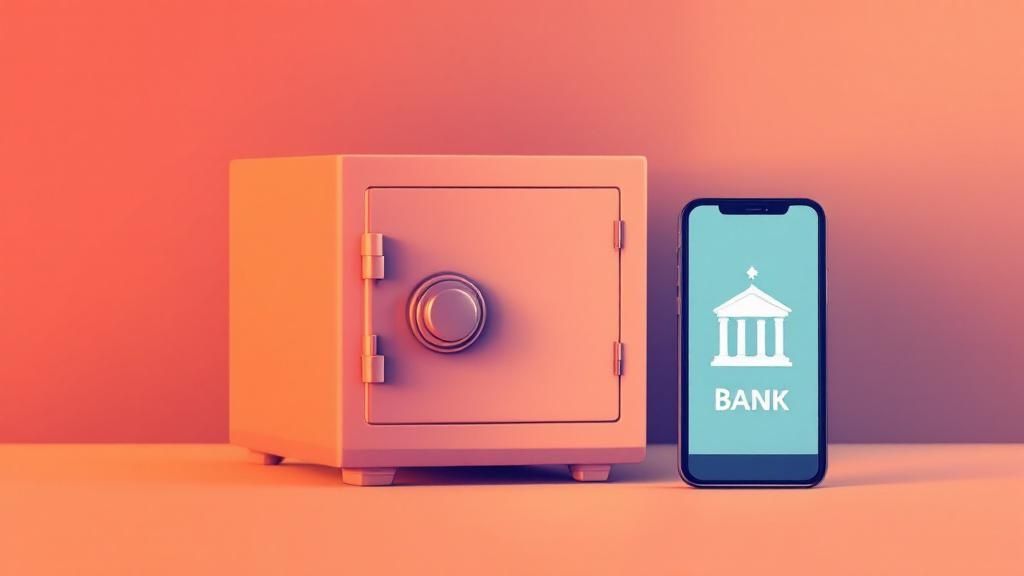
If you've ever used an online banking portal, you already know how to use a custodial wallet. The sign-in process, with a simple username and password, is instantly recognizable. Major exchanges build these wallets directly into their trading platforms, which makes depositing, withdrawing, and tracking your portfolio feel like a single, unified experience.
A Traditional Banking Experience
The core design philosophy here is to abstract away the complexity. You won't have to worry about managing long, intimidating cryptographic keys or meticulously backing up seed phrases. This approach gives new users a sense of confidence right from the start.
And what happens if you forget your password? Custodial wallets have a crucial safety net: account recovery. Just like with any other online service, you can typically regain access through your email or phone, preventing the catastrophic loss of funds that can happen if you lose the keys to a self-managed wallet.
- Simple Credentials: Log in with a standard email or username and password.
- Password Reset: Easily recover your account through verified channels you already use.
- No Private Key Management: The platform handles the heavy lifting of securing your private keys for you.
Core Convenience Benefits
Key Insight: Custodial wallets make a clear trade-off: they exchange granular, personal control for a much easier user experience, making them a fantastic starting point for anyone new to Bitcoin.
This focus on simplicity doesn't mean security is an afterthought. In fact, these platforms pour massive resources into institutional-grade security measures that would be out of reach for most individuals.
It's standard practice for major custodial services to keep over 90% of user assets in cold storage—completely offline and insulated from online hacking attempts. Many also layer on multi-million dollar insurance policies to protect users in the rare event of a platform-level breach.
| Security Measure | Purpose |
|---|---|
| Cold Storage | Protects the vast majority of funds by keeping them offline. |
| Multi-Sig Authentication | Requires multiple keys to authorize a transaction, preventing a single point of failure. |
| Insurance Coverage | Provides a financial backstop to help recover user funds after a major security incident. |
The custodial wallet market is a testament to this appeal, reaching USD 3.5 billion in 2023. Projections show it rocketing to USD 11.5 billion by 2032, growing at a brisk 15.2% annually between 2024 and 2032. You can dig into more custodial wallet market findings for a deeper look.
Scaling With User Trust
By handling the complex security layers, these platforms can offer sophisticated services like fraud detection and instant transaction notifications. For both casual users and businesses, this creates a smooth, frictionless experience.
Merchants, in particular, benefit immensely. Integrating a custodial payment option is often straightforward, as it connects directly to existing payment infrastructure without ever needing to touch a user's private keys.
Security and convenience often exist on a spectrum. Custodial wallets lean heavily toward a managed environment where you delegate key responsibilities to a trusted third party.
This means businesses can onboard customers in seconds, sidestepping the technical hurdles that come with more complex, self-managed payment systems.
Cost and Fee Transparency
Another major draw is the clarity around costs. Custodial wallet providers set clear, predictable fee structures. While trading fees on an exchange might apply, depositing funds is often free.
This allows users to budget effectively without worrying about the sometimes-volatile network fees associated with on-chain transactions.
- Flat trading fees: Often around 0.1% per transaction on major exchanges.
- Zero deposit fees: You can add funds to your account at no cost.
- Withdrawal fees: Set by the provider based on the blockchain, and always shown upfront.
Getting Started Quickly
Setting up a custodial wallet is incredibly fast. In less than two minutes, you can have a functional account ready to go. There’s no special hardware to buy or software to install.
- Sign up with your email and create a password.
- Complete the required identity verification (KYC) steps.
- Connect a funding source, like a bank account or card.
- Start sending and receiving Bitcoin instantly.
For both newcomers and merchants looking for a simple payment solution, the low barrier to entry makes custodial wallets an attractive first step. They offer a safe and easy way to get started before you decide to explore options that give you more direct control.
Why Non-Custodial Wallets Deliver True Ownership
While custodial wallets provide managed convenience, non-custodial wallets offer something far more fundamental: true digital ownership. This approach gets back to the original spirit of cryptocurrency, placing you—and only you—in complete control of your assets.
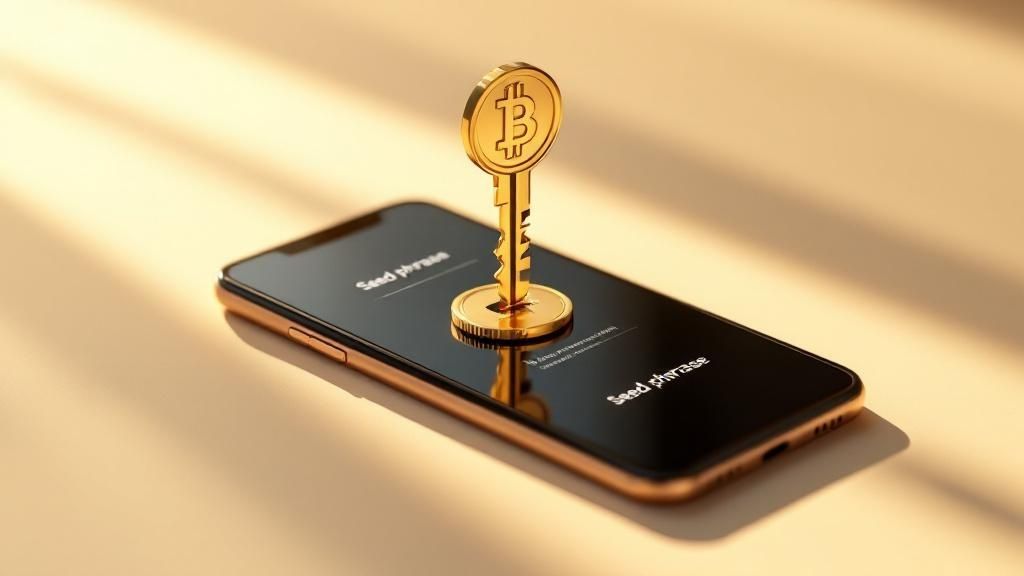
It all boils down to a simple, powerful principle, perfectly captured by the crypto maxim: "not your keys, not your coins." When you set up a non-custodial wallet, you are the sole holder of the private keys—the secret cryptographic code required to sign off on any transaction.
The Power of Private Keys
Think of your private key as the one and only master key to a digital vault. You're the only person who can open it. It's the ultimate proof of ownership. This key is often presented in a more human-friendly format called a seed phrase, usually a list of 12 or 24 random words. This phrase is the only backup you'll ever have for your entire wallet.
This level of control opens up a world of possibilities often walled off by custodial platforms. A non-custodial wallet gives you unrestricted, permissionless access to the entire decentralized web (Web3).
- DeFi Protocols: Directly engage with lending, borrowing, and staking platforms without asking a middleman for permission.
- NFT Marketplaces: Mint, buy, and sell non-fungible tokens with full ownership.
- Decentralized Applications (dApps): Interact with a rapidly growing ecosystem of services built on the blockchain.
Key Takeaway: A non-custodial wallet is your passport to the decentralized economy. It lets you interact directly with the blockchain, making it impossible for your funds to be frozen, censored, or moved without your explicit consent.
This desire for direct control is fueling major growth in the non-custodial wallet market. In 2024, the market was valued at around USD 2.5 billion, and forecasts show it skyrocketing to USD 15 billion by 2033. This isn't just a niche trend; it's a powerful signal of the growing demand for self-custody. You can dig deeper into these non-custodial wallet market projections to see the full picture.
A Spectrum of Self-Custody Options
Non-custodial wallets aren't a one-size-fits-all product. They come in several flavors, each striking a different balance between security and convenience, so you can pick the right tool for the job.
| Wallet Type | Description & Use Case |
|---|---|
| Hardware Wallets | Physical devices, like a USB drive, that store your private keys completely offline. They are the gold standard for securing large amounts or for long-term "cold storage." |
| Software Wallets | Apps you install on your computer or phone. They offer a great mix of security and ease of use for everyday transactions and interacting with DeFi. |
| Browser Wallets | Browser extensions that make connecting to dApps and Web3 sites incredibly smooth. They are very convenient but are considered "hot wallets" because they're always connected to the internet. |
The Great Responsibility of Control
Here's the catch: absolute ownership comes with absolute responsibility. If you lose your seed phrase, you lose access to your funds. Permanently. There's no customer support line to call or password reset button to click. This is the critical trade-off when choosing between custodial and non-custodial wallets.
Securing your seed phrase isn't just important—it's everything.
- Write It Down: Use a pen and paper or, even better, engrave it in metal.
- Store It Securely: Lock it in a safe, a safety deposit box, or another private, secure location that only you can access.
- Never Store It Digitally: Don't ever save it as a text file, take a picture of it, or upload it to a cloud drive. Any digital copy is a target for hackers.
By embracing this responsibility, you gain something invaluable: complete financial sovereignty. You become the true custodian of your own digital wealth.
Comparing Wallet Security, Control, and Accessibility

The whole debate between custodial and non-custodial wallets comes down to a fundamental set of trade-offs. This isn't about finding a one-size-fits-all "best" wallet. Instead, it’s about figuring out which model’s strengths fit your needs and which risks you’re more comfortable handling.
Let's break down the most critical differences in security, control, and overall user experience.
H3: Security: A Tale of Two Risks
Security is usually the first thing on anyone's mind when holding Bitcoin, but what "secure" actually means is worlds apart between these two wallet types. Each one protects you from a specific kind of threat while leaving you exposed to another.
With a custodial wallet, you're essentially outsourcing your security to a company that specializes in it. These platforms use institutional-grade defenses—think multi-signature protocols, heavy-duty encryption, and keeping the lion's share of assets in offline cold storage. This setup is built to shield you from big, external threats like a coordinated hacking attempt.
The catch? This introduces platform risk. You're putting your trust in the custodian to stay in business and keep its digital fortress secure. If the exchange gets hacked or goes under, your funds are on the line. While many have insurance, the risk is tied to the company's health, not your personal actions.
A non-custodial wallet completely flips the script. By holding your own private keys, you wipe out platform risk entirely. A massive exchange getting hacked means absolutely nothing to your funds. Your Bitcoin is safe on the blockchain, and only you can get to it.
This, however, introduces personal responsibility risk. The safety of your Bitcoin depends entirely on your ability to guard your seed phrase. A simple phishing scam, a piece of malware, or just losing the piece of paper with your backup phrase can mean your funds are gone forever. It's estimated that around 20% of all circulating Bitcoin is likely lost, a huge portion of that from misplaced private keys.
Key Differentiator: Custodial wallets shield you from external attacks but create counterparty risk. Non-custodial wallets remove counterparty risk but make you 100% responsible for protecting your keys from personal error and targeted attacks.
H3: Control: The Freedom of True Ownership vs. Playing by Platform Rules
The amount of control you have over your money is probably the starkest difference between the two. It's a direct result of who holds the private keys.
Non-custodial wallets give you absolute, undeniable control. Since you hold the keys, you can send any amount of Bitcoin to anyone, anywhere, at any time, without needing permission. No one can freeze your account, block a transaction, or tell you you've hit your withdrawal limit. This is what financial self-sovereignty really means.
This freedom is also essential for diving into the wider world of decentralized finance. You can connect to any DeFi protocol or dApp directly, all while keeping full ownership of your assets.
Custodial wallets, on the other hand, feel more like a traditional bank account. You own the Bitcoin, but the platform makes the rules. This often includes:
- Withdrawal Limits: Caps on how much you can move off the platform daily or monthly.
- Transaction Delays: Security holds or review periods for transfers that seem large or unusual.
- Account Freezes: Your account could be locked, temporarily or for good, because of regulatory demands or if you violate the platform's terms.
These rules are usually there for security and compliance, but they place a hard limit on your direct control.
H3: Accessibility: A Smooth On-Ramp vs. a Steeper Learning Curve
Finally, let's talk about the user experience. Custodial platforms are built for one thing: mass adoption. They are intentionally designed to feel just like the online banking apps you already use.
Getting started is quick and painless. You sign up with a username and password, and if you forget them, there's a simple password reset. This incredibly low barrier to entry makes custodial wallets perfect for beginners.
Non-custodial wallets, however, ask more of the user. The setup process forces you to securely generate and back up a 12 or 24-word seed phrase—a concept that's completely foreign to most people. This step is critical for your security, but it’s also a significant learning curve.
Even though modern non-custodial wallets have become much more user-friendly, the core responsibility of managing your keys never goes away. That initial hurdle can be a real roadblock for anyone who isn't super tech-savvy.
Feature-by-Feature Wallet Comparison
To make the choice clearer, here’s a direct comparison of the core trade-offs you'll be making.
| Comparison Point | Custodial Wallet | Non-Custodial Wallet |
|---|---|---|
| Primary Security | Institutional-grade measures protecting against hacks. | Self-sovereignty protecting against platform failure. |
| Primary Risk | Custodian failure, platform hacks, or frozen accounts. | Lost seed phrase, phishing scams, personal error. |
| Fund Control | Governed by platform terms; subject to limits & delays. | Absolute and unrestricted, 24/7 access. |
| Recovery Process | Password reset through customer support. | Impossible if seed phrase is lost. |
| Onboarding | Fast and familiar (username/password). | Requires careful seed phrase management and education. |
Ultimately, choosing the right wallet means being honest with yourself about which set of these features and risks aligns with your goals and comfort level.
Matching Your Wallet to Your Crypto Strategy
The whole "custodial vs. non-custodial" debate isn't about finding a single winner. It's about matching your tools to your mission. The right wallet for you comes down to your personal goals, how much risk you're comfortable with, and what you actually plan to do with your Bitcoin.
Once you get clear on your own crypto strategy, choosing the right setup becomes a much simpler decision.
To make things crystal clear, let's walk through three common user profiles. See which one sounds the most like you—it's the best way to figure out your ideal starting point.
The Casual Investor
This is someone new to Bitcoin or who views it mostly as a straightforward investment. They buy and hold on an exchange they're familiar with, watch the price, and maybe make a few trades here and there. Their priorities are all about simplicity, a minimal learning curve, and the safety net of account recovery.
For the Casual Investor, a custodial wallet that's part of a major exchange is the most natural fit. The entire experience feels a lot like online banking, complete with a simple username and password. You don't have to get tangled up in the complexities of seed phrases or managing private keys.
- Primary Goal: To easily buy, sell, and hold Bitcoin.
- Top Priority: Convenience and a user-friendly interface.
- Recommended Wallet: The custodial wallet provided by their chosen cryptocurrency exchange.
This approach lets them focus on their investment moves without getting bogged down by the technical side of self-custody. The platform handles security and offers a crucial backup if a password is ever lost.
The DeFi Explorer
The DeFi Explorer is a bit more adventurous. They're drawn to the bigger world of Web3 and want to get their hands dirty with decentralized applications (dApps), lend or borrow on DeFi protocols, or trade NFTs. What they need most is total, unrestricted access to the decentralized world, which means having direct control over their assets.
This user absolutely needs a non-custodial wallet. Wallets like MetaMask or Trust Wallet are like a passport to the decentralized web. They let you sign transactions and plug into any dApp you want, no middleman required. For this profile, control and interoperability are everything.
Key Insight: You can't really participate in decentralized finance with most custodial wallets. A non-custodial wallet is the essential tool for anyone wanting to do more than just hold or trade on a centralized exchange.
For the DeFi Explorer, the responsibility of safeguarding their own seed phrase is a small price to pay for the incredible freedom it unlocks.
The Long-Term Holder
Often called a "HODLer," this person's game plan is simple: accumulate Bitcoin and lock it away securely for years, maybe even decades. Their absolute number one priority is maximum security against every possible threat—exchange hacks, company failures, and online scams.
The undisputed choice for the Long-Term Holder is a non-custodial hardware wallet. These are physical devices that keep your private keys completely offline, which makes them immune to online attacks like malware or phishing. They offer the highest level of personal security you can get.
- Primary Goal: To secure a significant amount of Bitcoin for the long haul.
- Top Priority: Iron-clad security and the elimination of third-party risk.
- Recommended Wallet: A non-custodial hardware wallet from a trusted brand like Ledger or Trezor.
By using a hardware wallet, the HODLer takes all third parties out of the equation, truly living by the "not your keys, not your coins" mantra for ultimate peace of mind.
Adopting a Hybrid Strategy
Here’s the thing: you don't have to pick one and stick with it. In fact, most seasoned crypto users operate on a hybrid model, using both custodial and non-custodial wallets for different jobs. This gives you a smart, balanced approach to convenience and security.
Here’s what a practical hybrid strategy looks like:
- Trading and Spending: Use a custodial wallet on a trusted exchange for your active trading. The speed and low fees are perfect for frequent transactions.
- Long-Term Savings: Move the bulk of your Bitcoin—your "savings account"—off the exchange and into a non-custodial hardware wallet. This insulates your core holdings from any platform-related risks.
- DeFi Interaction: Keep a separate non-custodial software wallet (a "hot wallet") with a smaller, designated amount of funds for exploring dApps. This isolates your more experimental activity from your main stash.
This kind of strategic separation is a powerful habit. It lets you enjoy the easy-access benefits of custodial services for your day-to-day moves while protecting the majority of your wealth with the fortress-like security of self-custody. You really do get the best of both worlds.
How to Make the Right Wallet Choice for You
The debate between custodial and non-custodial wallets isn't about finding a definitive winner. It’s about understanding your own goals, habits, and comfort level with responsibility. Forget hunting for a single "best" wallet—the right choice for you will come from some honest self-reflection.
Answering a few straightforward questions helps you build a practical framework. This isn't just about picking a wallet for today; it's about finding a starting point that aligns with where you are now and can adapt as your Bitcoin journey unfolds.
Answering Key Personal Questions
To cut through the noise, you need to get clear on your priorities. Your answers will be your compass, pointing you toward either the convenience of a custodial service or the absolute control of a non-custodial wallet. The entire custodial vs non-custodial wallets discussion is, at its core, deeply personal.
Start by asking yourself these three critical questions:
- What is my primary goal? Are you here to trade frequently, hoping to catch market swings? Or are you stacking sats for the long haul? Maybe you're keen to jump into the world of decentralized applications (dApps). Each goal carries a different risk profile and demands different tools.
- How much responsibility am I willing to take? Be honest. Are you ready to become your own bank, meticulously protecting a seed phrase like it's a bar of gold? Or would you rather have the safety net of customer support and simple password recovery?
- What is my personal risk tolerance? What keeps you up at night? The idea of a third-party platform getting hacked and losing your funds (platform risk), or the thought of making a personal mistake and losing your keys forever (personal error risk)?
Your responses will shine a light on the right path forward, making the decision much less intimidating.
Key Takeaway: There is no universally correct answer. The best wallet is the one that lines up perfectly with your goals, your technical comfort, and how you personally define security.
Tailoring Your Wallet Choice to Your Answers
Okay, let's turn those abstract answers into a concrete recommendation. This simple framework will help you connect your personal profile to a specific type of wallet.
- If your primary goal is active trading and you value convenience over control, a custodial wallet on a reputable exchange is your ideal starting point. It's built for speed and simplicity, letting you react to the market without friction.
- If your focus is long-term saving (hodling) and you're prepared to take on full security responsibility, a non-custodial hardware wallet is the undisputed champion. Nothing else offers the same level of offline protection for your assets.
- If you're eager to explore DeFi and truly value financial sovereignty, a non-custodial software wallet is non-negotiable. It's your passport to interacting directly with the decentralized web, no intermediaries required.
Remember, this isn't a one-and-done decision. Most seasoned Bitcoiners end up using both types of wallets for different reasons. Start with the one that fits you best right now, and as your confidence and needs evolve, you can expand your setup.
Still Have Questions? Let's Clear Things Up.
Diving into the world of Bitcoin wallets always brings up a few practical questions. It's one thing to understand the concepts, but another to know how they play out in the real world. Let's tackle some of the most common queries I hear.
Why Would Anyone Bother With a Non-Custodial Wallet?
It really boils down to one word: control. Choosing a non-custodial wallet is a conscious decision to be your own bank. For people who truly value financial self-sovereignty and privacy, this isn't just a feature—it's the entire point.
When you're the only one holding the private keys, no third party can freeze, censor, or lose your funds. It's a powerful position to be in. For the more adventurous user, it also unlocks the entire, unfiltered world of decentralized finance (DeFi), which is a huge plus.
What Are the Real Risks of a Custodial Wallet?
The biggest risk you take on with a custodial wallet is counterparty risk. It sounds technical, but it’s simple: you are trusting another company with your money. Since you don't hold the private keys, your ability to access your Bitcoin is completely tied to the health, security, and ethics of that provider.
Think about it. If that company gets hacked, goes bankrupt, or faces a sudden regulatory crackdown, your assets could be frozen, delayed, or, in a worst-case scenario, gone for good. That's the fundamental trade-off you make for the convenience they provide.
The Bottom Line: With a custodial wallet, you're paying for professional security but introducing a layer of trust. With a non-custodial wallet, you eliminate that trust requirement, but the full weight of securing your funds lands squarely on your shoulders.
How Different Are Their Security Setups?
They're essentially polar opposites. Each model is designed to protect you from a different kind of threat.
- Custodial Wallets throw institutional-grade, centralized security at the problem. We're talking about the bulk of assets in deep cold storage, multi-signature controls, and even insurance policies to cover platform-wide hacks.
- Non-Custodial Wallets put security entirely in your hands. Its effectiveness hinges on one thing: your ability to keep your private key or seed phrase safe from everything—phishing emails, malware, and even just losing the piece of paper you wrote it on.
So, one model shields you from external attacks but makes you vulnerable to platform failure. The other removes platform risk entirely but demands your constant, personal vigilance.
Can I Move My Bitcoin Between These Wallet Types?
Absolutely. Moving Bitcoin between custodial and non-custodial wallets is a simple, everyday transaction. It’s no different from sending Bitcoin from one friend to another. You just start a withdrawal from your custodial wallet and paste in the public address from your non-custodial wallet.
Just be aware of potential speed bumps. Custodial services often have their own rules, like withdrawal limits, security holds on new deposits, or their own fixed withdrawal fees on top of the Bitcoin network fee. It's always a good idea to check their policies before you hit send.
Ready to give your customers the freedom to pay you directly and securely? Flash empowers merchants to accept Bitcoin payments straight from any wallet—custodial or non-custodial—without ever touching your funds. You can integrate our decentralized payment tools in under a minute and open your doors to a global crypto audience.