The Payment Revolution That's Reshaping Your Shopping
Think about your last shopping trip. Did you pay with cash? Chances are you used a card, a digital wallet, or maybe just a quick tap of your phone. This isn't just a matter of convenience; it’s a deep shift in how money moves through our daily lives. We are currently experiencing the biggest change in retail payments since the credit card was introduced, and it's happening incredibly fast. This change goes far beyond new gadgets, affecting everything from business costs to customer loyalty.
This payment revolution has reshaped consumer shopping habits. As customers get used to smooth digital transactions online, they start expecting that same frictionless experience in physical stores. For businesses, this highlights the necessity of an ecommerce website for small businesses to meet these modern expectations. This growing expectation gap is a major force pushing for new solutions.
Why This Shift Is More Than Just a Tech Trend
At its heart, this transformation is about delivering more value. For shoppers, the value is in speed, security, and simplicity. Why fumble for change when a single tap gets the job done? For merchants, the value is even more significant. Modern payment systems offer a rich source of data that was previously out of reach. Every transaction can offer clues about customer behavior, how often they buy, and what products they like.
Smart retailers are using this information to:
- Slash operational costs: Digital payments cut down on cash handling expenses and reduce human error.
- Understand customers deeply: Data analytics can reveal patterns that help create targeted marketing and personalized offers.
- Build better experiences: A smooth, fast checkout process leaves a lasting positive impression, encouraging repeat business.
The psychology behind this is fascinating. Consumers aren't just adopting new tools; they're leaving old habits behind. The physical security of cash is being replaced by the digital assurance of encrypted transactions. This reflects a broader trust in the digital infrastructure that now forms the backbone of modern commerce. The scale of this movement is massive, with global payments revenue hitting roughly $2.4 trillion in 2023 and projected to climb to $3.1 trillion by 2028. This growth is a direct result of digital adoption and the continuous expansion of e-commerce. You can explore more global payment trends and projections to get the full picture.
Growth Across the Globe
This isn't just a Western trend. The move toward digital and contactless options is happening worldwide, though the speed of growth and popular technologies differ by region. The table below breaks down how various markets are contributing to this global payment revenue boom.
Global Payment Revenue Growth Projections by Region
Regional breakdown of payment market growth showing projected revenue increases across different global markets
| Region | 2023 Revenue Share | 2028 Projected Share | Growth Rate |
|---|---|---|---|
| Asia-Pacific | 45% | 49% | High |
| North America | 24% | 22% | Moderate |
| Europe | 20% | 19% | Steady |
| Latin America | 6% | 7% | High |
| Middle East & Africa | 5% | 3% | Moderate |
This data shows that the future of retail payments is not a single, uniform concept but a diverse collection of regional movements. While the Asia-Pacific region leads in sheer volume, high-growth markets like Latin America present distinct opportunities for businesses that are ready to adapt. Staying competitive today means understanding these global currents and preparing for the next wave of payment innovation.
Why Digital Wallets Are Winning the Payment Wars
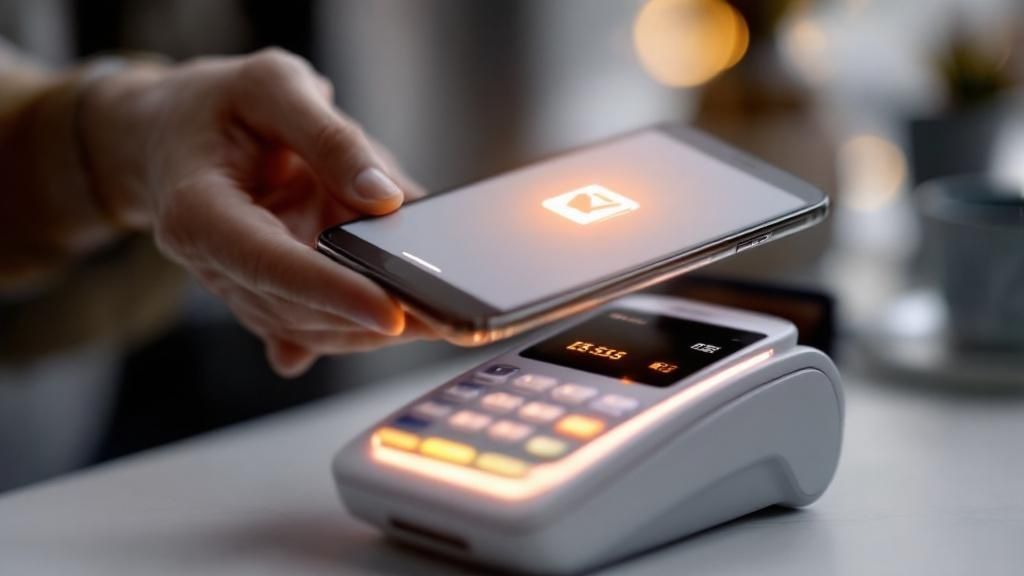
Not long ago, paying with a phone felt like something from a futuristic movie. Today, it's a common sight. Digital wallets have moved from a niche option to the preferred payment method for millions worldwide. This isn't just about new tech; it's about solving the practical problems that cash and cards create. Think of a digital wallet as the Swiss Army knife for your finances—it packs convenience, security, and control into a single app.
This powerful combination has led to massive adoption, particularly in developing economies. In Brazil, the instant payment system Pix has been integrated into numerous wallets, completely changing how people manage their money. Similarly, India's Unified Payments Interface (UPI) has made digital transactions a reality for hundreds of millions, turning local shops into hubs of digital commerce. These examples show that when digital wallets are simple and solve a real need, they become indispensable.
The Driving Forces Behind Digital Wallet Dominance
The core appeal of digital wallets is how they improve the entire payment experience. They directly address customer frustrations while offering merchants strategic benefits beyond just processing a sale. This is a key reason they are shaping the future of retail payments.
Here are the key factors fueling their growth:
- Reduced Friction and Anxiety: Digital wallets make checkout simple. No more fumbling for the right card or counting out cash. A quick tap or scan is all it takes, which means shorter lines and a smoother experience for everyone.
- Enhanced Security: Wallets use a feature called tokenization, which replaces your real card number with a unique digital code for each purchase. If a merchant's system is ever compromised, your actual financial details stay safe, offering valuable peace of mind.
- Greater Financial Control: Many wallets come with built-in tools for tracking spending, setting budgets, and reviewing your transaction history in real-time. This gives you a clear, instant snapshot of your financial health right from your phone.
The Unstoppable Rise in Numbers
The data clearly shows this is a global movement. The transaction volume on these platforms is immense. In 2023, about 70% of e-commerce transactions and over 50% of point-of-sale (POS) payments in the Asia-Pacific region were made using digital wallets. This momentum is accelerating, with global digital wallet transaction volume expected to reach $25 trillion by 2027, driven by quarter-over-quarter growth rates that exceeded 60% in 2023. You can discover more insights about these global payment trends on Planergy.com.
For merchants, accepting digital wallets is no longer a choice—it's a necessity. Integrating this payment option connects you with a growing customer base that expects it. It can also lead to lower processing fees compared to traditional card payments and provides useful, anonymized data on customer buying habits. Businesses can use these insights to create targeted promotions and manage inventory better. As digital wallets continue their global ascent, the businesses that adapt now will be the ones that succeed.
Beyond Tap-and-Go: Where Contactless Payments Are Heading
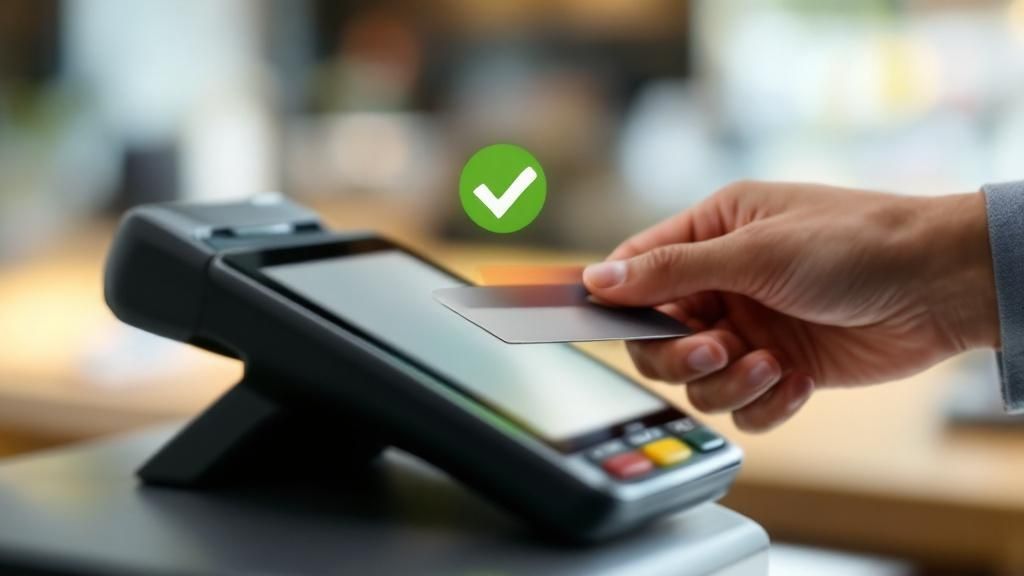
Contactless payments once felt like a small convenience, shaving a few seconds off at the checkout counter. Now, "contactless" points to something much bigger. We're on the verge of commerce where the payment itself becomes almost invisible, a natural extension of an activity rather than a separate step. Picture a world where your face or a simple hand gesture authorizes a purchase, and you never have to reach for a card or phone.
This shift is all about removing friction from the customer journey. Forward-thinking retailers and transit systems are already adopting advanced contactless methods to manage customer flow and cut down on operational tasks. Some stores are even testing "walk-out" systems where sensors automatically charge you for the items you take. The future of retail payments isn't about the transaction; it's about the effortless experience that surrounds it.
Biometrics: Your Body as Your Password
The next big leap forward is biometric authentication. Instead of needing a PIN or a fingerprint on your device, the payment terminal itself can recognize you. This can happen in several ways:
- Facial Recognition: Cameras at the point of sale identify a registered customer and automatically link to their payment account.
- Palm Vein Scanners: These devices use infrared light to map the unique vein patterns in your hand, offering an incredibly secure way to pay.
- Voice Authentication: Just saying a specific phrase could confirm your order at a drive-thru or through a smart speaker.
This isn't just a concept from a sci-fi movie. Major corporations are actively piloting these technologies to build faster and more secure checkout experiences. For shoppers, it’s the peak of convenience. For merchants, it’s a powerful tool against fraud.
The screenshot from Wikipedia below shows the foundational technology, Near Field Communication (NFC), that makes most modern contactless systems possible.
This diagram illustrates the direct communication between a card and a reader, which serves as the building block for the more advanced applications we see today.
The Rise of IoT and Ultrasonic Payments
Beyond biometrics, other technologies are also redefining payments. Internet of Things (IoT) devices are turning everyday objects into potential payment tools. Your car could pay for its own gas, or your smart fridge could order milk when you're running low. It’s all part of creating a connected web of commerce.
Another emerging technology is ultrasonic payments. This method uses sound waves—inaudible to humans—to send payment data between devices. Since it doesn't rely on NFC or Bluetooth, it opens up new ways for secure transactions, even in crowded places. By removing physical and technological hurdles, businesses can craft shopping moments that truly impress customers, fostering loyalty and setting a new bar for what a simple transaction can feel like.
Making Sense of Crypto Payments in Everyday Retail
 Cryptocurrency payments once seemed like a concept reserved for tech enthusiasts, but they are now making their way into the everyday retail world. This change is more than just about accepting a new currency; it’s about plugging into an entirely different financial network with its own rules and real-world benefits. For many merchants, the idea of decentralized payments is attractive because it offers a way to reduce fees, speed up global transactions, and gain more control over their money.
At its heart, a decentralized payment system works without a central middleman like a bank or payment processor. Think of it as a direct, peer-to-peer exchange. When a customer uses a credit card, the payment bounces between several intermediaries—the merchant's bank, the card network (like Visa or Mastercard), and the customer's bank—with each one taking a slice of the pie. With a cryptocurrency like Bitcoin, the payment travels directly from the customer’s digital wallet to the merchant’s wallet.
This direct model is a key element in the future of retail payments because it changes the fundamental costs of doing business. For merchants, especially those with tight margins or significant international sales, the financial impact can be substantial.
The Practical Advantages of Decentralized Payments
Businesses looking into crypto are finding solid reasons to adopt it beyond the initial excitement. The main benefits come from bypassing the old financial infrastructure.
- Lower Transaction Fees: Credit card processing fees usually fall between 1.5% and 3.5% for every transaction. Decentralized payment networks can slash these costs, often to less than a single percent.
- No Chargebacks: Cryptocurrency transactions are final and cannot be reversed. This protects merchants from fraudulent chargebacks, which are a major source of loss for many online stores.
- Faster Cross-Border Settlement: An international wire transfer can take days to clear. Bitcoin transactions are typically confirmed in minutes, giving merchants access to their funds much more quickly.
Of course, challenges like price volatility and an evolving regulatory scene are still important factors. But new solutions are appearing to tackle these problems. Services like Flash enable instant, low-cost Bitcoin transactions, effectively turning a standard mobile phone into a point-of-sale device. By connecting wallets directly without holding the funds, these services maintain the decentralized spirit of crypto while making it practical for daily retail use.
A Quick Comparison: Old vs. New Rails
To see the full picture, it helps to compare the traditional financial system with a decentralized alternative. The following table breaks down the key differences and what they mean for retail businesses.
Traditional vs. Decentralized Payment Systems Comparison
Comprehensive comparison of features, benefits, and challenges between traditional payment systems and decentralized alternatives
| Feature | Traditional Payments | Decentralized Payments | Impact on Retail |
|---|---|---|---|
| Intermediaries | Multiple entities (Banks, Card Networks, Processors) | Minimal to none (Peer-to-Peer Network) | Reduces operational complexity and cuts fee overhead for merchants. |
| Transaction Fees | Typically 1.5% - 3.5% | Often less than 1% | Directly increases profit margins on every sale. |
| Settlement Time | 2-3 business days | Minutes to an hour | Improves business cash flow by providing faster access to funds. |
| Global Reach | Limited by country-specific banking and regulations | Inherently borderless | Simplifies selling to an international audience and supports market expansion. |
This comparison shows a clear shift toward greater efficiency and lower costs with decentralized systems. By removing intermediaries, businesses can keep more of their revenue and operate with better agility.
As digital currencies become more integrated into our financial lives, their use in commerce is set to expand. This includes the development of Central Bank Digital Currencies (CBDCs), which are government-backed digital currencies that mix traditional finance with new technology. Furthermore, programmable money and smart contracts are poised to automate everything from loyalty programs to supplier payments, creating new opportunities for efficiency and customer interaction in the retail space.
The Hidden Infrastructure Powering Modern Payments
 Every time you tap your card or click "buy now," you're interacting with a complex, high-speed network operating silently in the background. Think of this infrastructure as the digital plumbing of modern commerce. It handles millions of requests daily, making sure every transaction is both secure and instant. As commerce continues to shift online, this backend technology is getting a serious upgrade to support the future of retail payments.
This invisible but essential industry is a huge economic force. The digital payment processing market was valued at $61.1 billion in 2023. It's projected to grow at a compound annual rate of 10.5%, which means it could reach an estimated $147 billion by 2032. While giants like PayPal and Stripe currently lead the pack, this rapid growth signals a need for smarter, more resilient systems to handle increasing transaction volumes. You can explore more payment processing industry statistics to see the full picture of this expansion.
The Role of AI in Securing Transactions
One of the most important upgrades to payment infrastructure is the use of artificial intelligence (AI). In the past, fraud detection was based on simple rules that looked for obvious red flags. Today, AI algorithms analyze thousands of data points in real-time to catch subtle patterns that might signal fraud.
For instance, an AI can monitor:
- How often and for how much a card is used
- The geographic location of a purchase
- The time of day the transaction occurs
- The device being used for the purchase
If an account that usually buys coffee in one city suddenly makes several expensive purchases in another country, the AI can instantly flag the activity or block the transaction. This protects both the customer and the merchant. AI also automates compliance checks, ensuring that transactions adhere to complex international regulations without needing a human to review every one.
Democratizing Power with Cloud-Based Processing
Not long ago, only the largest corporations could afford the powerful, secure payment systems needed for high-volume sales. This put smaller businesses at a clear disadvantage. Now, cloud-based payment processing has leveled the playing field.
By hosting services in the cloud, payment providers can offer top-tier security and scalability to businesses of all sizes through a subscription model. It's like giving a local bakery access to the same industrial-strength oven used by a national bread company. This democratizes powerful tools, allowing small and mid-sized merchants to offer the same secure and smooth checkout experiences as their largest competitors. This change ensures that as payment technology gets better, businesses of all scales can adapt and succeed.
How Instant Payments Are Creating New Business Models
The ability to move money in real time is more than a simple speed upgrade—it’s a foundational shift that creates entirely new ways of doing business. When payments settle instantly, the traditional delays that dictate cash flow and operations simply disappear. Think of it like the jump from postal mail to instant messaging; the immediacy changes not just how fast you communicate, but *what* you can communicate. This is how instant payments are shaping the **future of retail payments**.Successful systems like Brazil’s Pix and India’s UPI show this in action. These platforms have completely changed what consumers expect and how businesses operate by making real-time transactions the norm. For merchants, this means everything from inventory management to pricing can become more dynamic and responsive. This rapid adoption is part of a much larger trend. Global non-cash transaction volumes are projected to grow at a compound annual growth rate exceeding 10%, on track to reach nearly 3 trillion transactions by 2028. You can read the full research on the acceleration of the global payment market.
From Faster Transactions to Smarter Business
The true power of instant payments is found in the innovative business models they make possible. When the friction of waiting for money to settle is gone, businesses can structure their services in more creative and customer-focused ways. Companies that adopt this early are already building a strong competitive edge.
Here are a few examples of new models powered by instant payments:
- Micro-Subscriptions: Content creators or software providers can offer "pay-as-you-go" access, charging tiny amounts for a single article or one-time use of a feature. This was previously impractical because of high transaction fees on small payments.
- On-Demand Service Payments: A delivery service can bill a customer the moment a package arrives, or a ride-sharing app can settle a fare instantly when the trip ends. This dramatically improves cash flow and lowers the risk of non-payment.
- Dynamic Recurring Billing: Instead of a fixed monthly subscription, a service can bill customers based on actual usage. An energy company could charge daily for electricity consumed, giving customers more direct control over their spending.
The Technical Foundation for Real-Time Commerce
Supporting instant payments requires an infrastructure that can handle immediate validation, security, and settlement. This involves more than just the customer's payment app. It relies on strong backend systems and a new messaging standard known as ISO 20022. This standard allows much richer data to be sent with each payment, which helps with everything from automatic accounting to better fraud detection.
For a business, adopting this technology means improved cash flow, as funds are available immediately, and lower settlement risk, since each transaction is confirmed in real time. It also boosts customer satisfaction by providing instant confirmation and peace of mind. By embracing these real-time capabilities, companies are not just speeding up payments; they are building more efficient, responsive, and durable business operations.
Your Strategic Roadmap for Payment Success
Navigating the future of retail payments is more than just grabbing the latest shiny tech. It calls for a clear strategy that connects forward-thinking ideas with your day-to-day business needs. Think of it as creating a blueprint for your financial engine room. Before you start swapping out parts, you need a solid understanding of how the whole system works and where you're headed. A well-planned roadmap ensures any changes support your business goals instead of just adding complexity.
The first step is a hard look at your current payment setup. This goes deeper than just transaction fees. It's about finding the hidden costs and points of friction. For instance, how much time does your team really spend on manual reconciliation? How often do checkout delays or system glitches frustrate your customers? Answering these questions gives you a clear baseline to measure future success against.
Creating a Flexible and Future-Proof System
Building a payment infrastructure for tomorrow means putting flexibility first. You don't want to sink a ton of money into a system that will be obsolete in a couple of years. A modular approach is often the best path forward, where different payment services can be added or removed like building blocks. This lets you adapt as customer habits change and new technologies pop up, all without needing to tear everything down and start over.
This global shift is happening fast. By 2028, the Asia-Pacific region is projected to make up nearly 50% of a global payments market that will top $3 trillion in revenue. Trends from other markets give us a peek at what's on the horizon. For example, cash payments in India are expected to fall to less than 10% of consumer spending by 2028, while Brazil's Pix system already handles 20% of e-commerce payments. You can discover more insights about the accelerating global payments market and see how these shifts might impact your business.
Best Practices for a Smooth Transition
Putting your roadmap into action requires careful management. A successful rollout depends on bringing both your team and your customers along for the ride.
- Educate Your Team: Offer hands-on training for new point-of-sale systems or payment dashboards. When your staff feels confident, they can guide customers much more effectively.
- Communicate with Customers: Clearly explain any changes to the checkout process. Frame them as improvements designed to make their experience faster and more secure. Use in-store signs, email newsletters, and social media to spread the word before you launch.
- Measure Your Success: Track key performance indicators (KPIs) to see the real impact of your upgrades. Keep an eye on metrics like transaction speed, cart abandonment rates, and how quickly customers adopt new payment methods. This data will prove the value of your investment and help shape future decisions.
By taking a structured, strategic approach, you can ensure your business isn't just keeping up but is ready to thrive in the changing world of retail payments.
Ready to offer your customers the speed and security of Bitcoin payments? With Flash, you can accept instant, low-fee Bitcoin transactions directly to your own wallet. Our tools make it easy to start in under a minute, with no KYC and no coding required. Join the future of commerce and start accepting Bitcoin with Flash today.