So, you're ready to turn some of your Bitcoin into cash. The most well-trodden path is selling it on a centralized exchange for a currency like USD, then simply wiring the funds over to your bank.
This usually means sending your Bitcoin from your personal wallet to your exchange account, executing a sale, and then kicking off a withdrawal.
Your First Steps to Cashing Out Bitcoin
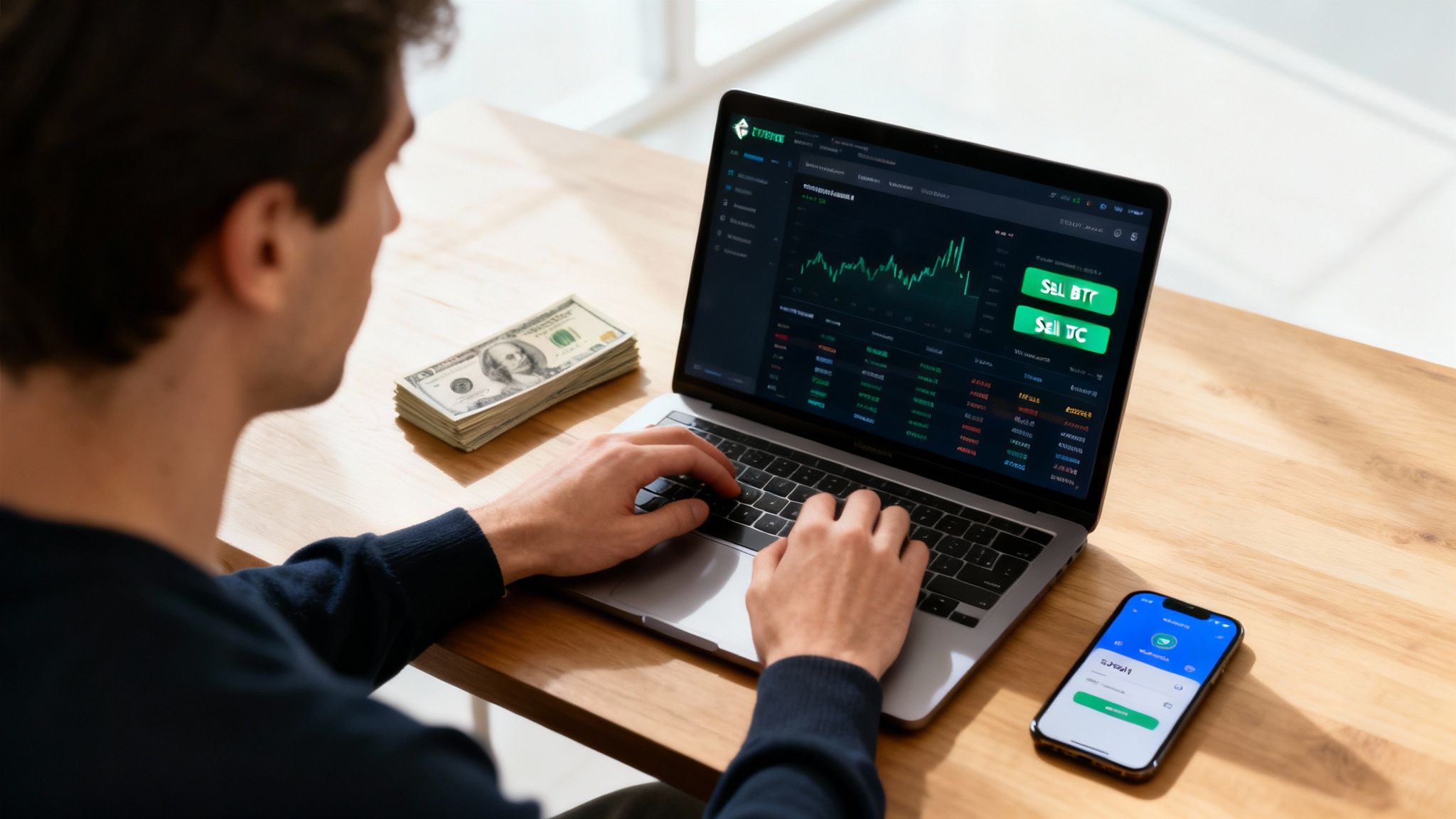
Turning your digital coins into spendable cash might feel like a big step, but it really just comes down to picking the right tool for the job. Before you dive in, having a good grasp of the basics is key. Taking a little time for understanding the cryptocurrency landscape will pay dividends when it's time to make a move.
The road from a digital asset to money in your bank account has a few main routes. Each one offers a different mix of speed, cost, and privacy.
Bitcoin Cash-Out Methods at a Glance
To help you get a quick sense of your options, here’s a high-level look at the most common ways to cash out your Bitcoin.
| Method | Typical Fees | Transaction Speed | Best For |
|---|---|---|---|
| Centralized Exchanges | 0.1% - 1.5% | 2-5 days | Users who prioritize security and high liquidity. |
| Peer-to-Peer (P2P) | Varies widely (often 0% - 1% from seller) | Minutes to hours | People who want more payment options and control over the price. |
| Bitcoin ATMs | High (7% - 12% or more) | Instant | Getting physical cash quickly and conveniently. |
As you can see, your decision will likely come down to a trade-off. Are you looking for the lowest fees and deep liquidity of an exchange, or do you prefer the flexibility of a P2P sale? Maybe the instant access offered by an ATM is what you need right now.
This guide will walk you through exactly how each of these scenarios works.
Using Centralized Exchanges to Convert Bitcoin to Cash
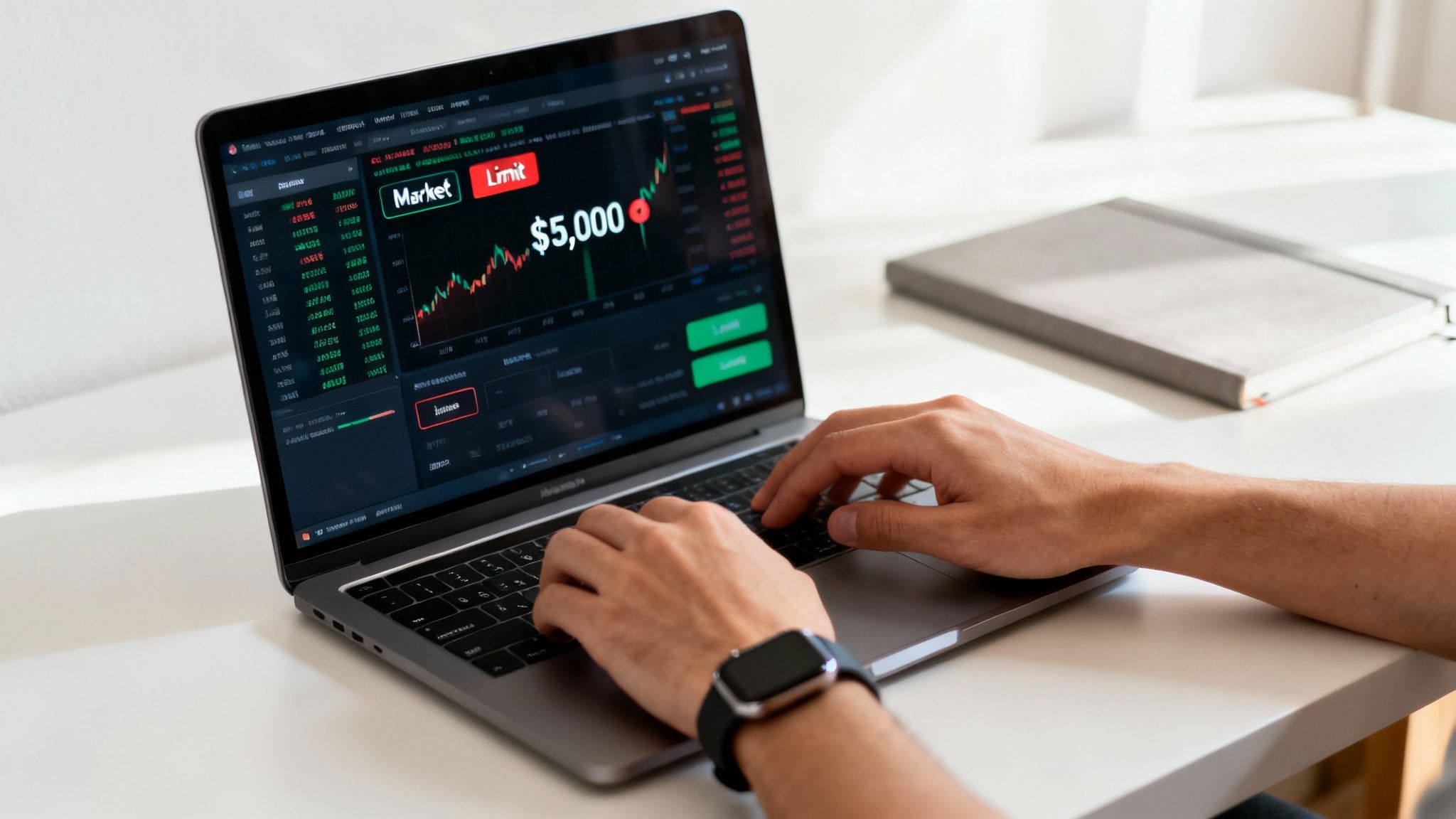
For most people asking how to turn their Bitcoin into cash, a centralized exchange is the most well-trodden and direct path. Think of platforms like Coinbase or Kraken as the bridge connecting the Bitcoin world to your traditional bank account. They’ve built the infrastructure, liquidity, and security to make this conversion relatively smooth.
The first move is simple: send the Bitcoin you want to sell from your personal wallet over to the deposit address provided by your exchange. This is a pretty basic transfer, but you need to be meticulous—always, always double-check the wallet address before you hit send. Once your Bitcoin lands in the exchange account, you’re all set to sell.
Preparing Your Exchange Account for a Sale
Before you can pull the trigger on a sale, you'll need to handle a few one-time setup steps. Any reputable exchange is a regulated financial business, which means they have to follow Know Your Customer (KYC) rules. This is just a fancy way of saying they need to verify who you are, usually by asking for a government-issued ID and maybe proof of address.
I know, it can feel like a bit of a hassle. But this verification is a critical security layer that helps fight fraud and protects everyone using the platform. Once you're verified, the next step is linking your bank account. This is where the cash from your sale will land, so make absolutely sure all the details are correct.
Placing Your Sell Order The Right Way
Let’s walk through a real-world example. Say you need to cash out $5,000 worth of Bitcoin for a down payment on a car. You've already sent the BTC to your exchange, and it’s ready to go. Now you've got a decision to make about how you sell it.
Generally, you'll run into two main types of orders:
- Market Order: This is your classic "sell now" button. A market order executes instantly at the best price currently available. It’s the fastest way to get the deal done, but you do give up some control over the exact sale price, which can wobble a bit from second to second.
- Limit Order: This option puts you firmly in the driver's seat. You set a specific "limit price"—the minimum you're willing to accept. Your order will only go through if Bitcoin's price hits your target, making it perfect if you're not in a huge rush and want to lock in a particular rate.
For our car down payment scenario, a market order is usually the most practical choice to get the funds quickly. But if the market is looking particularly choppy, setting a limit order just a hair below the current price can be a smart move to protect yourself from a sudden dip while you're placing the trade.
Key Takeaway: The choice between a market and limit order boils down to your priority. If speed is what you need, go with a market order. If hitting a specific price point is more important, a limit order is the way to go.
Understanding Fees and Finalizing Your Withdrawal
Once your sell order goes through, you’ll see a cash balance in your exchange account. The final piece of the puzzle is withdrawing that money to your linked bank account. Just be aware of two fees that can take a bite out of your final total.
First, there’s the trading fee, which is a small percentage the exchange takes for handling the sale. This usually falls somewhere between 0.1% and 1.5%. Second is the withdrawal fee, which is often a flat rate for sending the money to your bank. These costs vary a lot between exchanges and the method you choose (ACH transfers are typically cheaper than wire transfers).
After you've accounted for those costs, you just hit withdraw. It generally takes about 1-3 business days for the cash to show up in your bank account, completing your journey from a digital asset back to spendable money.
Exploring Peer-to-Peer Cashing Out Options
While centralized exchanges offer a well-paved road for cashing out Bitcoin, they certainly aren't the only route. Peer-to-Peer (P2P) platforms provide a more direct, marketplace-style experience, connecting you straight to individual buyers. This method opens up a huge range of payment options, from simple bank transfers and mobile payments all the way to in-person cash meetups.
Think of it like an eBay, but for your Bitcoin. You list your Bitcoin for sale, set your own price, and spell out exactly how you want to get paid. Buyers browse the listings and kick off a trade with you, making for a much more flexible and often faster way to turn your Bitcoin back into cash.
The Upsides of Trading Directly with Peers
The single biggest advantage of P2P platforms is the incredible variety of payment methods on the table. Where a big exchange might box you into a standard bank transfer, a P2P marketplace could have buyers ready to pay with specific payment apps, money orders, or other niche methods you won't find elsewhere. For many people, that flexibility is the main draw.
Another major plus can be getting better exchange rates. Since you're the one setting the price, you can often ask for a small premium over the going market rate. This works especially well if you offer a convenient payment method that's in high demand. For you as the seller, this can mean walking away with a little more cash in your pocket than you would from a standard exchange sale.
P2P platforms give you control. You're not just accepting a market price; you're creating your own market. The trade-off for this flexibility and potential for better rates is the increased need for personal vigilance and security.
Navigating the Risks of P2P Transactions
Of course, this direct interaction comes with its own set of challenges—namely, a higher risk of running into scams. When you ask how to cash out crypto on a P2P platform, the answer has to include a serious focus on safety. Your single biggest shield in this environment is the platform's escrow service.
Here's the typical flow of an escrow-protected trade:
- A buyer accepts the terms of your trade.
- Your Bitcoin is automatically moved from your wallet into the platform's secure escrow account.
- The buyer sends their payment directly to you using your chosen method.
- Once you confirm the funds have safely arrived, you release the Bitcoin from escrow to the buyer.
This escrow system is absolutely non-negotiable. It's what stops a buyer from taking your Bitcoin and vanishing before they've paid. Never, ever agree to a trade that tries to go around the platform's official escrow process. It's a massive red flag.
Beyond just using escrow, doing your own due diligence on your trading partner is vital. Reputable P2P platforms have solid reputation systems built-in. Before you agree to anything, always check a buyer's profile for a few key things:
- Positive feedback history: You want to see a long and consistent history of successful trades.
- Verification status: Many platforms verify a user's identity, which adds another valuable layer of trust.
- Trade volume: A buyer who has already completed hundreds of trades is generally a much safer bet than a brand-new account with zero history.
By sticking to the platform's rules, using the escrow service every single time, and taking a minute to vet your trading partners, you can safely tap into all the flexibility and benefits the P2P marketplace has to offer.
Alternative Methods: Bitcoin ATMs and Debit Cards
Sometimes, the usual online methods just don't cut it. When you need physical cash right now, waiting for a bank transfer simply isn't an option.
This is where alternative tools like Bitcoin ATMs and specialized debit cards come into play. They act as a direct bridge between your digital assets and the physical world, giving you a completely different way to cash out your Bitcoin.
Think about it: you're traveling and need local currency fast. Messing around on a laptop to initiate a multi-day bank transfer is the last thing you want to do. A Bitcoin ATM, on the other hand, can put cash in your pocket in minutes.
Using a Bitcoin ATM for Instant Cash
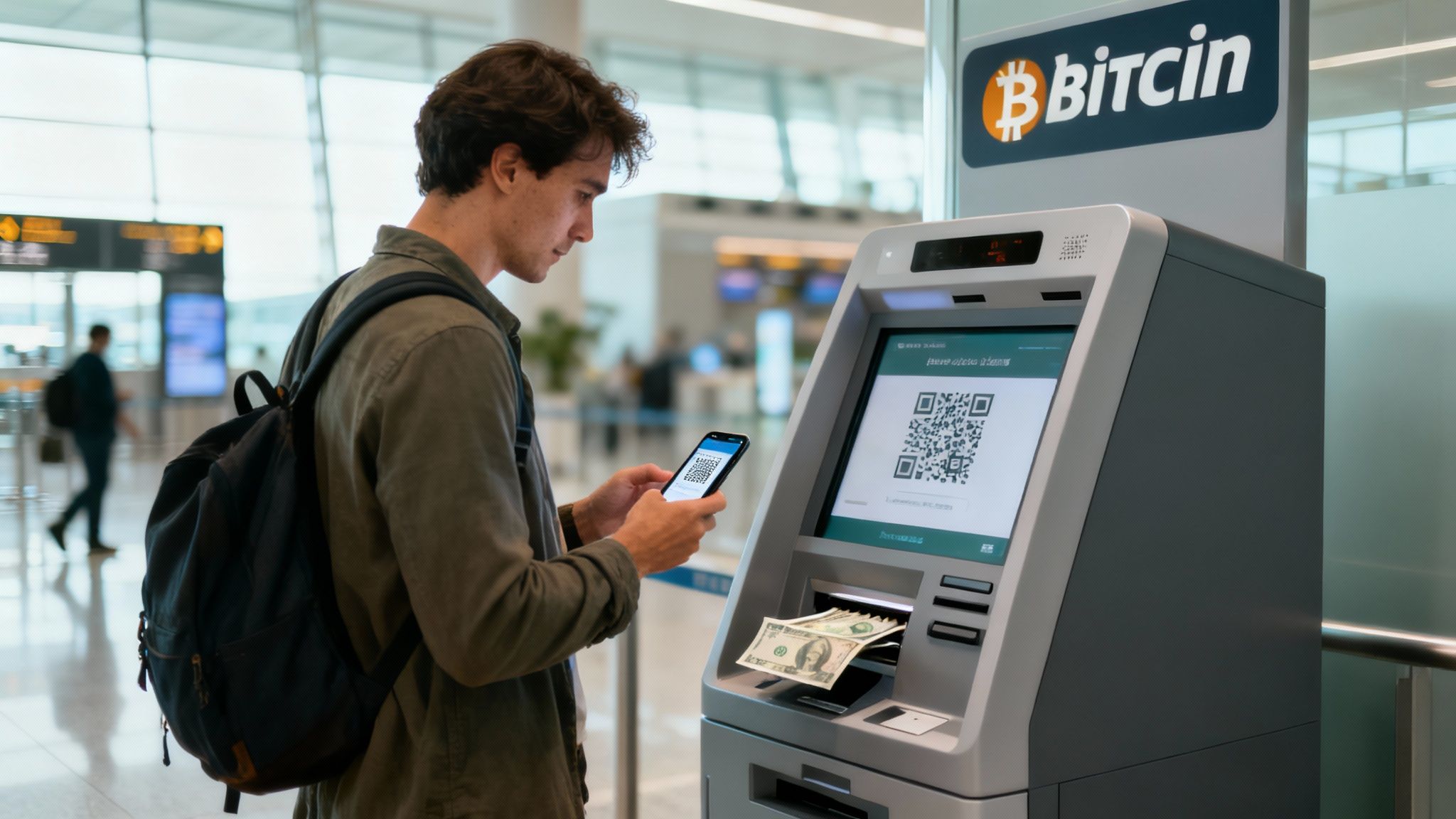
A Bitcoin ATM is basically a traditional cash machine, but it works in reverse. Instead of inserting a card to get money, you send Bitcoin from your phone to the ATM and it spits out fiat currency.
The whole process is surprisingly simple:
- Find a Machine: Use an online map like Coin ATM Radar to locate an ATM nearby.
- Start the Sale: On the ATM's screen, you'll choose the "Sell Bitcoin" option.
- Send the Bitcoin: The machine generates a QR code. Just scan it with your mobile wallet and send over the amount of BTC you want to cash out.
- Grab Your Cash: Once the Bitcoin network gives the transaction the green light, the machine dispenses your cash. It's that quick.
But this convenience comes with a hefty price tag. Bitcoin ATM fees are notoriously high, often ranging from 7% to over 15% per transaction. You're paying a massive premium for the speed and, in some cases, the relative anonymity these machines provide.
Spending Bitcoin with a Debit Card
Another fantastic tool for turning BTC into spendable cash is a Bitcoin debit card. This isn't your average bank card. Instead, you top it up by selling Bitcoin directly from your crypto holdings.
Once loaded with fiat (like USD or EUR), it works just like any other debit card. You can swipe it at the grocery store, use it for online shopping, or withdraw cash from any standard ATM.
Bitcoin debit cards are the most direct link between your crypto portfolio and your everyday expenses. They make your digital assets spendable in the real world without the hassle of a manual bank withdrawal every time you need money.
Before you jump in, you need to be aware of the fees and limits. There are almost always conversion fees when you sell BTC to load the card. You might also run into monthly maintenance fees or charges for ATM withdrawals.
On top of that, these cards usually have daily or monthly limits on spending and withdrawals. It's crucial to check these details before trying to make a large purchase. The convenience is amazing, but you have to weigh it against the associated costs.
Staying Safe When Cashing Out Your Bitcoin
Successfully selling your Bitcoin is only half the battle. The real win is seeing the funds land safely in your account. When you're ready to cash out your crypto, you have to shift your mindset to be security-first. It's non-negotiable.
Every single step, from logging into an exchange to hitting that final "confirm" button, opens the door to potential risks. You need to be the one to actively manage them.
The unforgiving nature of Bitcoin means transactions are final. There's no "undo" button. A simple mistake, like sending funds to the wrong address, means they're gone for good. There’s no bank to call for a refund. This is why solid security habits are your most important asset.
Fortify Your Accounts with Two-Factor Authentication
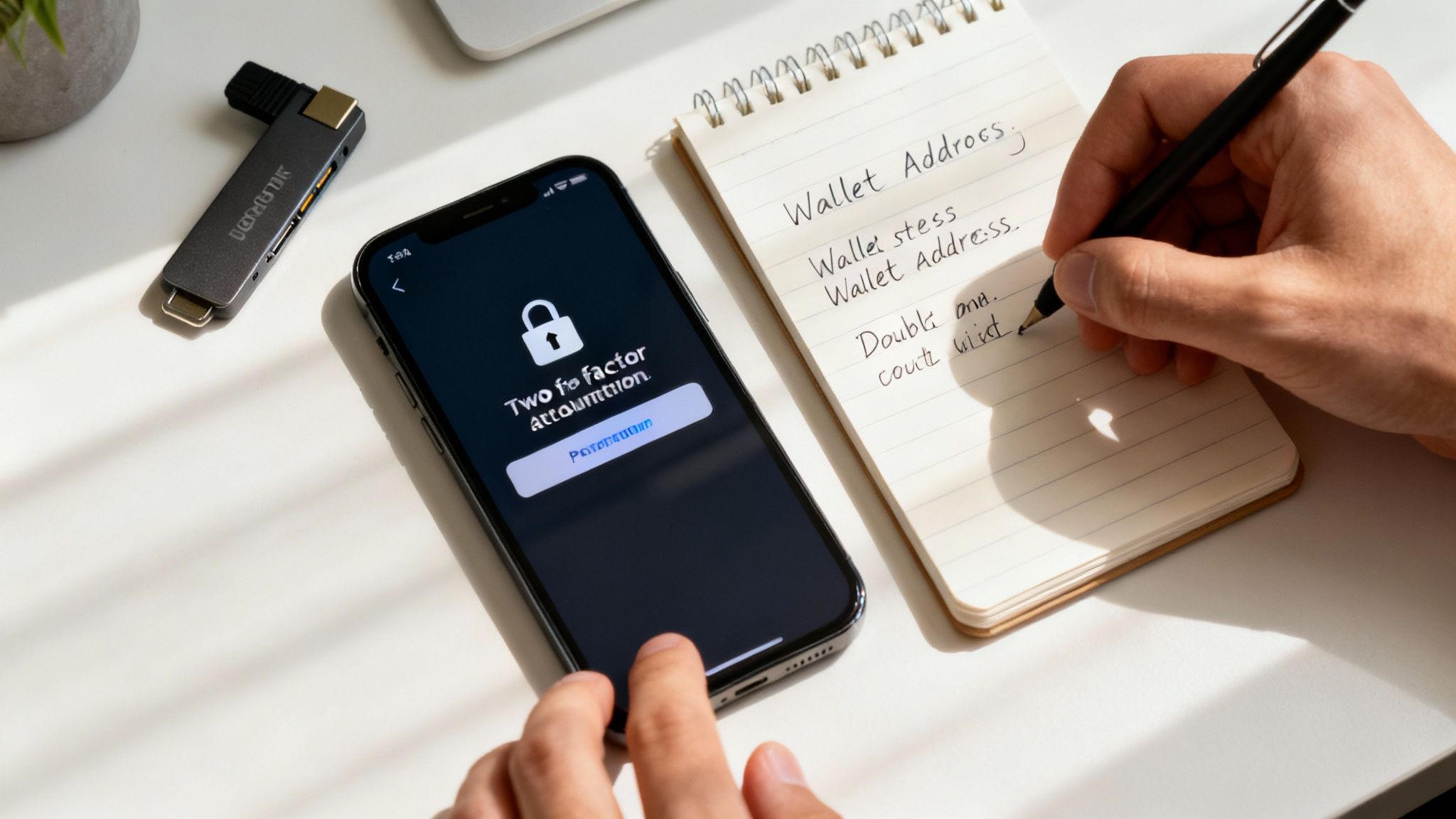
Your first line of defense, and it’s a big one, is enabling Two-Factor Authentication (2FA) on every single platform you use. A password alone just doesn't cut it anymore. A good 2FA setup forces a second check, usually a time-sensitive code from an authenticator app on your phone, before granting access.
This simple step creates a massive barrier for anyone trying to get into your accounts without permission. Even if a scammer somehow gets your password, they can’t do a thing without also having your phone.
When you cash out crypto, you become a more visible target. 2FA is the digital equivalent of adding a deadbolt to your front door—it's a fundamental security measure you can't afford to skip.
The Dangers of Public Wi-Fi and Phishing Scams
I can't stress this enough: never manage your Bitcoin on public Wi-Fi. That coffee shop or airport network is a playground for attackers who can spy on your activity and snatch things like your login details. Only handle your funds on a secure, private network you trust.
You also have to stay hyper-aware of phishing scams. These often show up as official-looking emails or texts designed to create panic, pushing you to click a malicious link or give up your account details. Scammers are getting craftier every day, and their tactics are always changing.
Even the criminals are getting smarter about how they move money. According to data from Chainalysis.com, direct transfers from illicit sources to exchanges have dropped from around 40% to roughly 15% since 2021. Bad actors are now taking extra steps to spread funds across tons of different addresses to avoid getting caught, proving just how sophisticated the threat landscape has become.
Always Double-Check Your Wallet Addresses
One of the most devastatingly simple mistakes you can make is sending Bitcoin to the wrong address. It could be a simple copy-paste error or, much worse, the work of malware on your computer that secretly swaps your intended address with an attacker's.
To protect yourself, make this a hard and fast rule:
- Triple-check every character: Before you confirm any send, meticulously compare the first few and last few characters of the destination address on your screen with the one in your wallet app. Read them out loud if you have to.
- Send a small test amount first: For any significant transaction, send a tiny amount of Bitcoin first. Wait for it to arrive and be confirmed before you even think about sending the rest.
This little bit of extra diligence might feel tedious, but it can easily be the one thing that separates a successful cash-out from a very expensive, irreversible mistake.
Common Questions About Cashing Out Crypto
As you get ready to turn your Bitcoin into cash, a few final questions always seem to pop up. Honestly, navigating these last few details can feel just as critical as the sale itself. Getting straight answers now helps make sure the whole process goes smoothly.
This section gets right into the most common things people worry about when they decide to cash out. We'll cover everything from taxes to timing, giving you the essential info you need to move ahead without any last-minute surprises.
Are There Tax Implications When I Cash Out Bitcoin?
Yes, there absolutely are. In most places, including the United States, selling your Bitcoin for a currency like the U.S. dollar is a taxable event. The moment you sell, you’re officially realizing either a capital gain or a capital loss on that investment.
If you sold your Bitcoin for more than you originally paid, that profit is considered a capital gain and you'll owe tax on it. The exact rate you'll pay usually boils down to two things:
- Your income level: Higher earners generally face a higher capital gains tax rate.
- How long you held the asset: Gains are usually split into short-term (held for a year or less) or long-term (held for over a year). Long-term gains often get a much better tax rate.
It is absolutely crucial to keep detailed records of all your Bitcoin transactions. You'll need purchase dates, costs, sale dates, and final sale prices. Trust me, this paperwork will be your best friend when tax season rolls around.
Tax laws for digital assets can be a real headache and they change depending on where you live. We strongly recommend talking to a qualified tax professional who actually knows their way around cryptocurrency. They can give you advice that fits your specific situation and keep you on the right side of the law.
How Long Does It Take for the Money to Reach My Bank Account?
The time it takes for cash to actually hit your bank account can vary a lot based on the method you pick. There's no single answer, but here’s a rough idea of what to expect from the most popular options.
- Centralized Exchanges: The go-to method is a standard bank transfer, like an ACH transfer in the U.S. This usually takes 1 to 3 business days. If you're in a hurry, a wire transfer can sometimes show up the same day, but you'll almost always pay a higher fee for the speed.
- Peer-to-Peer (P2P) Platforms: On a P2P marketplace, the speed is all about the payment method you and the buyer agree on. Using a digital payment app can be almost instant. If you go with a traditional bank transfer, you're looking at the same timeline as a withdrawal from an exchange.
- Bitcoin ATMs: This is, without a doubt, the fastest way to get physical cash in your hand. Once the Bitcoin network confirms your transfer to the ATM—which typically takes about 10 to 30 minutes—the machine spits out your money right away.
Can I Cash Out Bitcoin Without Identity Verification?
Trying to cash out any serious amount of Bitcoin without doing identity verification—often called Know Your Customer (KYC)—is incredibly difficult and, frankly, not a good idea. Regulated platforms, which includes every major centralized exchange, are required by law to verify who you are. It’s how they prevent money laundering and other illegal stuff.
Sure, you might find some P2P traders or Bitcoin ATMs that don't require full verification for tiny transactions. But these options almost always hit you with much higher fees and come with way more risk. For your own security and to stay compliant with the law, using a reputable, regulated service and completing the KYC process is by far the smartest and safest way to go.
Before jumping into the mechanics of cashing out, it helps to grasp the fundamental differences between crypto coins, tokens, and general cryptocurrency. This foundational knowledge makes it clearer why different assets act the way they do in the financial world.
Ready to accept Bitcoin payments directly from your customers, wallet-to-wallet, with no KYC and minimal fees? Flash provides merchants with powerful, easy-to-use tools to integrate Bitcoin into any business in under a minute. Join the future of payments at .