So, you’re ready to turn some of your Bitcoin into cash. The quickest and most common way to do this is through a centralized crypto exchange.
It's a pretty straightforward process: you send your Bitcoin to the platform, sell it for a fiat currency like U.S. dollars, and then pull the money out to your bank account. All in, you're usually looking at a timeframe of one to five business days.
Your First Steps to Cashing Out Bitcoin
Before you can turn your Bitcoin into spendable cash, you need to get a feel for the options out there. The path you choose will have a real impact on how fast your transaction is, how much you'll pay in fees, and how private the whole process will be.
There are a few different ways to get this done, and each one is built for a different need. Picking the right one from the get-go will save you a lot of headaches (and money).
As the crypto world has grown up, the process has become much more established. In 2025, the go-to method for most people is a centralized exchange. It's the most secure and regulated way to convert your BTC into fiat and get it into your bank. You can find out more about the current cashing out landscape at OpenDue.com.
Comparing Popular Bitcoin Cashing Out Methods
To make your decision easier, let's break down the main ways you can turn your Bitcoin into cash. This table cuts right to the chase, comparing the key differences to help you figure out what fits your situation best—whether you care most about speed, low costs, or just pure convenience.
| Method | Best For | Typical Speed | Average Fees |
|---|---|---|---|
| Centralized Exchange | Most users, security, and large transactions. | 1-5 business days | Low (0.1% - 1.5%) |
| Peer-to-Peer (P2P) | Users in regions with limited banking or who prefer direct trades. | Varies (minutes to days) | Very Low (0% - 1%) |
| Bitcoin ATM | Small, fast cash withdrawals and convenience. | Nearly instant | High (8% - 20%) |
At the end of the day, knowing how you cash out of cryptocurrency is all about matching your needs with the right tool for the job.
For the vast majority of people, a centralized exchange hits that sweet spot of top-notch security and totally reasonable fees. But hey, if you need cash in your hand right now and don't mind paying a premium for it, a Bitcoin ATM might actually be the better call. We'll dig deeper into each of these options next.
Finding the Right Cashing Out Method for You
So, you've decided it's time to turn some of your Bitcoin into cash. Great. Now comes the important part: figuring out how. This isn't a one-size-fits-all situation. The best path for you depends entirely on what you prioritize—is it speed, low fees, privacy, or convenience?
Think of it like choosing between a wire transfer, a personal check, or an ATM withdrawal. Each has its place, and the crypto world offers parallel options. You can use a centralized exchange, find a buyer on a peer-to-peer platform, or even walk up to a Bitcoin ATM.
Understanding the trade-offs is the first step to a smooth transaction. For a deeper dive into these methods, the team at BitPay.com has some excellent insights. Whether you're a high-volume trader or just need some quick spending money, there’s a solution that fits.
Centralized Exchanges: The Go-To for Most Users
For the vast majority of people, a centralized exchange is the gold standard for cashing out. These are the big, household names in crypto that act as trusted middlemen, matching buyers and sellers in a highly liquid and secure environment. They're built to handle everything from a few hundred dollars to major institutional withdrawals.
Their main strength is their reliability and regulatory oversight. Exchanges operating in major jurisdictions have to play by the rules, which means implementing strict Know Your Customer (KYC) and Anti-Money Laundering (AML) protocols.
While some see identity verification as a hassle, it’s a crucial safeguard. KYC processes protect both you and the platform from fraud and illicit activities, ensuring you have a secure and legitimate channel to convert your Bitcoin into fiat.
This regulated environment makes them the safest bet, especially if you're dealing with a significant amount of money. The combination of deep liquidity, robust security, and a clear process for withdrawing funds to your linked bank account provides a level of peace of mind that other methods just can't match.
Peer-to-Peer Platforms for Direct Control
If you prefer a more hands-on approach and want to cut out the middleman, peer-to-peer (P2P) platforms are a compelling alternative. Instead of selling your Bitcoin on an open market, you connect directly with another individual to negotiate the trade. The platform simply acts as an escrow service, holding the Bitcoin until the buyer confirms they've sent the payment.
This method really shines in a few specific scenarios:
- Greater Flexibility: You often get a much wider range of payment methods. Think bank transfers, digital wallets, and sometimes even in-person cash deals.
- Potential for Better Rates: By negotiating directly with a buyer, you can sometimes lock in a more favorable exchange rate than what the big platforms offer.
- Accessibility: In regions with restrictive banking systems or strict capital controls, P2P platforms can be an absolute lifeline for accessing funds.
But with this flexibility comes more personal responsibility. You have to be diligent. That means carefully checking your trading partner’s reputation and, most importantly, never releasing your Bitcoin from escrow until you have confirmed the payment has landed in your account.
Bitcoin ATMs: The Choice for Instant Cash
Need cash in your hand, right now? A Bitcoin ATM is your fastest option, hands down. You can find these kiosks in convenience stores, malls, and airports. The process is simple: scan your wallet's QR code, send the Bitcoin, and the machine spits out physical cash in minutes.
The convenience, however, comes at a steep price. Bitcoin ATMs are notorious for their high fees, which can range anywhere from 8% to over 20% of the transaction value.
This makes them completely unsuitable for cashing out large sums. But for small, urgent withdrawals where speed is the only thing that matters? They’re perfect. Think of it as paying a massive premium for instant access, much like using an out-of-network bank ATM on steroids.
Navigating an Exchange Withdrawal From Start to Finish
For most people asking "how do you cash out of cryptocurrency," the journey almost always starts and ends with a centralized exchange. It's the most common, secure, and regulated path, turning what seems like a complex process into a handful of straightforward steps.
Let's walk through this playbook together, from setting up your account to getting that cash into your bank.
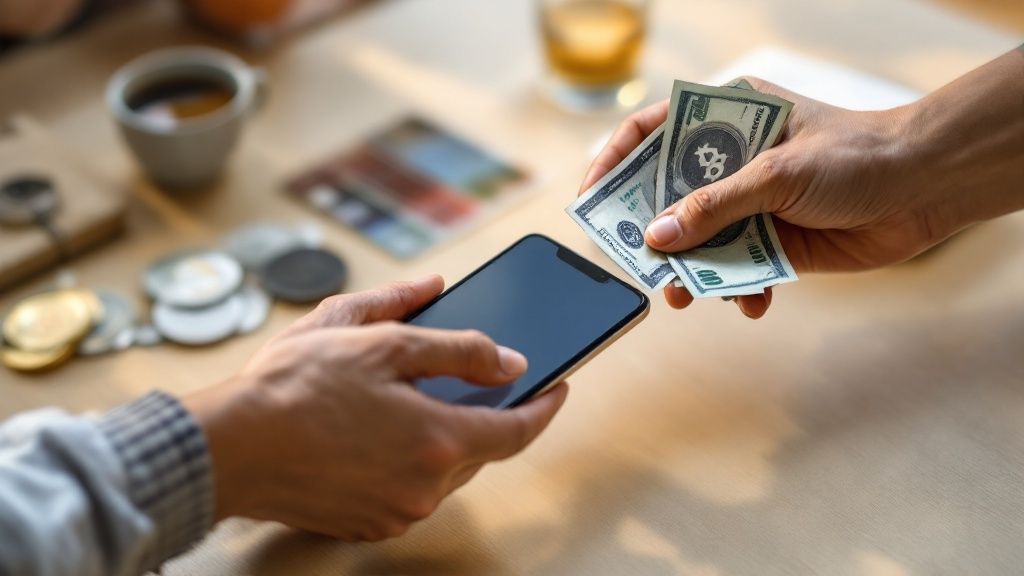
This is a typical exchange dashboard. It might look intimidating, but it's just the control center where you'll swap your Bitcoin for fiat currency. Getting comfortable here is the first step to a smooth withdrawal.
Choosing an Exchange and Getting Verified
Your first move is to pick a reputable, regulated exchange that operates in your country. Think of it like choosing a bank—you're looking for security, reliability, and decent customer support. Once you sign up, you'll run into the Know Your Customer (KYC) process.
This just means you'll need to submit a government-issued ID and maybe a proof of address. It can feel a bit intrusive, but KYC is non-negotiable for legitimate exchanges. It’s there to protect your account and help the platform comply with anti-money laundering laws, ensuring there’s a clean, legal path for your money to follow.
Sending Your Bitcoin to the Exchange
With your account verified, it's time to move your Bitcoin from your personal wallet over to the exchange. Pay attention here, because this is where mistakes can be costly.
Inside your exchange account, look for a "Deposit" or "Receive" button. This will generate a unique Bitcoin wallet address for your account. This long string of letters and numbers is your destination.
Always use the copy-paste function. And then—this is critical—double-check the first and last few characters of the address to make sure they match perfectly. A single typo can send your funds into the digital abyss, with absolutely no way to get them back.
Making the Sale: Crypto to Fiat
Once your Bitcoin lands in your exchange wallet, you’re ready to sell it for your local currency (like USD, EUR, or GBP). To do this well, it helps to have a basic understanding of crypto trading.
The quickest way is to place a "market order." This tells the exchange to sell your Bitcoin immediately at the best price currently available. It’s simple and fast.
After the sale goes through, the cash equivalent will pop up in your fiat balance on the exchange. You're now on the home stretch. Centralized exchanges are the undisputed kings of cashing out. According to Chainalysis, between July 2024 and June 2025, over $4.6 trillion in fiat flowed into Bitcoin through these platforms alone, proving just how essential they are.
Withdrawing Cash to Your Bank Account
The final leg of the journey is getting the money from the exchange into your personal bank account. First, you'll need to link your bank account, which usually means providing your account and routing numbers.
Pro Tip: Exchanges usually give you a few withdrawal options, like ACH and wire transfers. ACH is often free but can take a few business days. A wire transfer is much faster—often same-day—but will cost you a fee. Pick the one that fits your timeline and budget.
After you hit the withdraw button, the transfer begins. Depending on the method you chose and your bank's own processing times, the money should show up in your account within one to five business days. And just like that, you've successfully cashed out.
Understanding the True Cost of Cashing Out
That big, beautiful number you see on the screen when you sell your Bitcoin? It's not what's going to hit your bank account. Cashing out crypto has its own set of costs, and they can take a surprising bite out of your profits if you aren't ready for them.
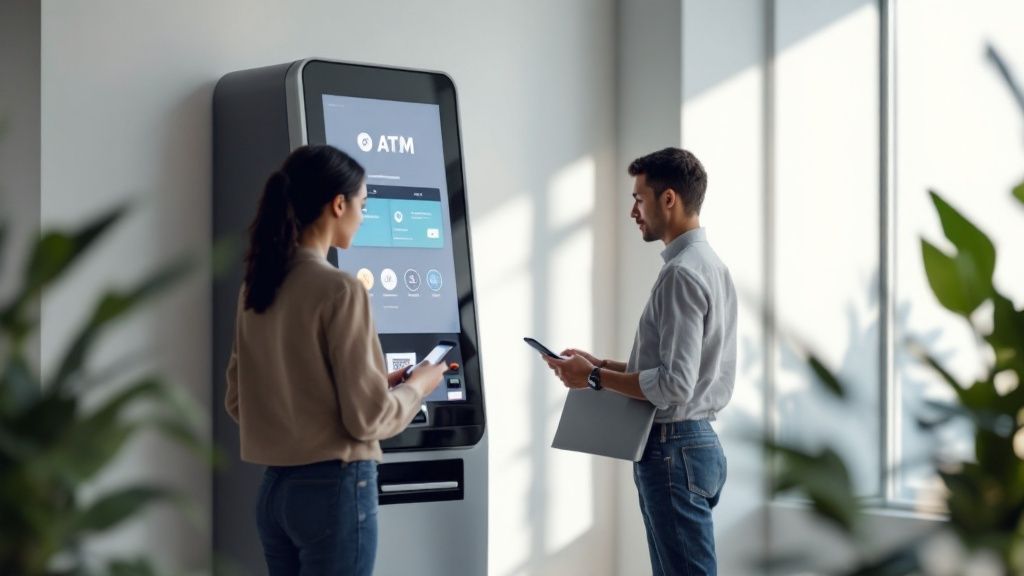
Smartly converting crypto to cash means getting a handle on these fees and—just as important—the taxes that come along for the ride. Let's break down the real costs so you can plan your withdrawal without any nasty surprises.
The Trio of Transaction Fees
When you hit that "sell" button, you're usually going to run into three main types of fees. They're often small on their own, but they sure can add up.
- Exchange Trading Fees: This is the cut the platform takes for handling the sale. It's almost always a small percentage of your total sale, typically somewhere between 0.1% and 1.5%.
- Bitcoin Network Fees: If you're moving Bitcoin from a personal wallet over to an exchange to sell it, you'll have to pay a network fee. This fee goes to the miners who process and validate the transaction, and its cost can swing up or down depending on how busy the network is.
- Bank Withdrawal Fees: Finally, getting the cash from the exchange into your bank account can have a fee. ACH transfers are usually free but can be slow. If you need it faster, a wire transfer can cost you anywhere from $25 to $35.
It's not just about the explicit fees, either. Market mechanics play a role, too. For example, understanding bid-ask spreads is key, because that tiny gap between what buyers are willing to pay and what sellers are willing to accept also shaves a little bit off your final total.
Don't Forget About Taxes
For a lot of people, the single biggest "cost" of cashing out is taxes. In most countries, selling Bitcoin for cash is a taxable event. It's on you to report any profit you made as a capital gain.
Think of it this way: the government treats your Bitcoin like a stock or a piece of property. When you sell it for more than you originally paid, that profit is considered income and is subject to capital gains tax.
To file your taxes correctly, you absolutely must know your cost basis—what you originally paid for your Bitcoin, including any fees. The difference between that cost basis and your sale price is your capital gain (or loss).
This is why keeping detailed records of every single purchase and sale is non-negotiable for anyone involved in Bitcoin. Skipping this step can lead to some serious financial headaches and penalties later on. It’s always a good idea to chat with a tax professional who knows their way around crypto.
Don't Get Rekt: Essential Security for Cashing Out
Knowing how to cash out your crypto is only half the story. Doing it safely is what really counts. The second you decide to move your Bitcoin from a cold wallet to an exchange and then into your bank account, you paint a giant target on your back.
For this critical step, security isn’t just an optional feature—it's everything. These aren't just suggestions; they're non-negotiable actions to protect your hard-earned gains.
Fortify Your Exchange Account
Think of your exchange account as the bridge between the crypto world and your bank. It's also the weakest link in the chain. Start by locking it down with a unique, strong password you haven't used anywhere else. Seriously, get a password manager if you haven't already.
Next, and this is the big one, enable two-factor authentication (2FA). This forces a second verification step, usually a code from an app on your phone, before anyone can make major changes or withdrawals. It's one of the most powerful security moves you can make.
Think of 2FA as a deadbolt on your digital vault. A stolen password might get a thief through the first door, but without that second key from your phone, they're not getting to your funds.
Every single reputable exchange offers 2FA. If yours doesn't, find a new exchange.
Safeguard the Withdrawal Process Itself
Once your account is a fortress, you have to protect the actual transaction. A fantastic way to do this is by using the withdrawal address whitelisting feature that most major exchanges provide.
Whitelisting lets you create a pre-approved list of bank accounts and crypto addresses where your funds are allowed to go. If a hacker somehow gets into your account, they can't just add their own address and drain your funds. The system will block any transfer to an unapproved destination.
This simple step creates a massive barrier against unauthorized transfers. Sure, it might add a small delay when you need to set up a new bank account, but the peace of mind it offers is more than worth it.
Your Security Checklist Before Cashing Out Bitcoin
Before you even think about hitting that "withdraw" button, run through this checklist. These are the critical security steps to shield your assets from the most common threats out there.
| Security Measure | Why It's Important | How to Implement It |
|---|---|---|
| Enable 2FA (Authenticator App) | A stolen password becomes useless without the second factor from your physical device. | Use an authenticator app. Avoid SMS 2FA, as it's vulnerable to SIM-swap attacks. |
| Use a Unique, Strong Password | Prevents credential stuffing attacks where hackers use passwords leaked from other sites. | Generate a long, random password with a password manager. |
| Set Up Withdrawal Whitelisting | Creates an "approved send" list, blocking transfers to any unauthorized addresses or bank accounts. | Find this feature in your exchange's security settings and add only your own verified bank details. |
| Double-Check Wallet Addresses | Malware can swap a copied address with an attacker's address just before you paste it. | Visually verify the first and last 4-6 characters of any address before confirming a transaction. |
| Beware of Public Wi-Fi | Unsecured networks are breeding grounds for "man-in-the-middle" attacks where hackers can intercept your data. | Never access your exchange or initiate withdrawals on public Wi-Fi. Use your home network or a trusted VPN. |
| Perform a Small Test Transaction | Confirms the withdrawal path is correct before you send a large amount. | Send a very small amount first (e.g., $20). Wait for it to arrive in your bank account before sending the rest. |
Taking a few extra minutes to verify these points can be the difference between a successful cash-out and a catastrophic loss. Don't rush it.
Spotting and Dodging Common Scams
Scammers get incredibly creative when they smell money moving. Your awareness is your best weapon.
Keep an eye out for these classic tricks:
- Phishing Emails and Texts: You'll get an urgent message that looks like it's from your exchange. It'll ask you to click a link to "verify your account" or "authorize a transaction." These links lead to fake login pages built to steal your password and 2FA code. Pro tip: Always go directly to the official website by typing the URL yourself.
- Fake Support Scams: Scammers hang out on social media and forums, posing as helpful support agents. They'll slide into your DMs to "help" with your withdrawal and eventually ask for your password or private keys. Real support will never ask for this information.
- Remote Access Scams: This one is terrifying. An attacker will convince you your computer is infected and trick you into installing software that gives them remote control. They will then log into your accounts and drain your funds right in front of your eyes. Never, ever let a stranger access your computer.
By staying vigilant and building these security habits, you can ensure your money makes its journey from the digital world to your bank account without any nasty surprises.
Common Questions About Cashing Out Bitcoin
As you get closer to turning your Bitcoin into actual cash, a few questions almost always pop up. Getting the right answers can be the difference between a smooth process and a stressful one. Let’s cut through the noise and tackle the concerns I hear most often.
Knowing this stuff ahead of time helps you plan your withdrawal with confidence, especially when you're thinking about timing, taxes, and how to handle larger amounts without any hiccups.
How Long Does It Take to Cash Out Bitcoin?
The timeline for cashing out Bitcoin isn’t set in stone; it really hinges on the method you choose. There's no single answer, but here’s a breakdown of what to expect from the most common routes.
- Centralized Exchanges: This is the go-to for most people. The whole process, from the moment you sell your BTC to the funds landing in your bank account, typically takes 1 to 5 business days. Selling the Bitcoin is instant, but the bank transfer (like an ACH) is what introduces the wait.
- Bitcoin ATMs: Need physical cash right now? This is your fastest bet. Once your transaction gets confirmed on the Bitcoin network—which can take anywhere from a few minutes to an hour—the machine spits out your cash on the spot.
- Peer-to-Peer (P2P) Platforms: The speed here is all about your trading partner and their payment method. If they're sending it to a digital wallet, it can be nearly instant. A classic bank transfer, on the other hand, could take a day or two to clear.
Can I Cash Out Bitcoin Without Paying Taxes?
Let’s be direct: in most countries, including the United States, selling Bitcoin is a taxable event. It’s treated as property, not currency, which means you’re legally on the hook to report any capital gains from the sale.
Don't even think about trying to sidestep taxes on crypto gains. It's illegal and can land you in serious trouble with hefty penalties. You have to treat your Bitcoin transactions with the same financial diligence as you would stocks or any other investment.
I can't stress this enough: talk to a tax professional who actually understands cryptocurrency. They can help you accurately figure out your capital gains and make sure you’re totally compliant with local laws, saving you a massive headache later.
What Is the Safest Way to Cash Out a Large Amount of Bitcoin?
When you’re dealing with a substantial amount of Bitcoin, security and avoiding market impact become the name of the game. The safest and most reliable approach is to use a major, regulated centralized exchange known for its deep liquidity.
These platforms are built to handle big orders and have fortress-like security protocols.
For the really big moves (think over $100,000), you should look into using an Over-the-Counter (OTC) desk. These are specialized services, often run by the big exchanges, that give you personalized support to execute large trades without causing the price to slip on the public market. It adds a crucial layer of privacy and stability to your transaction.
At Flash, we provide the tools for businesses to accept Bitcoin payments directly, wallet-to-wallet, without ever taking custody of your funds. See how our decentralized payment solutions can help you tap into the Bitcoin economy by visiting .