Why Smart Businesses Are Embracing Cryptocurrency Payments
Accepting cryptocurrency payments is no longer a niche idea. It's a strategic decision for businesses that want to succeed in today's market. Early adopters are already experiencing real benefits, changing how they operate and connect with customers.
Reduced Transaction Fees and Faster Settlements
One of the biggest reasons businesses are switching to crypto payments is the potential for major cost savings. Traditional payment processors often charge fees that can impact profits, sometimes as high as 3% per transaction. Cryptocurrency transactions, however, typically have much lower fees, directly boosting a business's bottom line.
Settlement times are also drastically shorter. Traditional bank transfers can take days to clear, while crypto payments often settle in minutes. This improves cash flow and operational efficiency, allowing businesses to access funds quickly for reinvestment or immediate expenses.
Access to a Global Customer Base and Increased Revenue
The global cryptocurrency user base is expanding rapidly, creating a valuable new market for businesses. The growing number of users and increasing transaction volume show that accepting crypto payments could significantly boost a business's market reach and revenue.
By 2025, the number of crypto users worldwide is projected to hit approximately 861 million, with almost 40 million new users added just in the latter half of 2024. Find more detailed statistics here.
This growth offers businesses a chance to reach a global customer base, particularly in regions with high crypto adoption, such as North America and Europe. For a smoother crypto payment system, consider options like affiliate payment automation to maximize efficiency. This wider reach can lead to higher sales and brand visibility, especially for businesses in niche markets or those targeting a younger demographic.
Addressing Volatility Concerns With Stablecoins
Price volatility is a common concern for businesses considering crypto payments. The development of stablecoins, however, provides a solution. These cryptocurrencies are tied to stable assets like the US dollar, minimizing the risk of price swings.
This allows businesses to benefit from lower fees and faster settlements without the volatility of Bitcoin or other cryptocurrencies. Stablecoins bridge traditional finance and the crypto world, offering stability while retaining the advantages of blockchain technology. A business can accept payments in a stablecoin pegged to the US dollar, for instance, ensuring predictable transaction value regardless of market changes.
Enhancing Customer Experience and Brand Image
Beyond the financial benefits, accepting crypto payments also improves the customer experience. By providing a modern and easy payment choice, businesses cater to the increasing number of consumers who prefer using digital currencies. This can increase customer satisfaction and loyalty.
Furthermore, accepting crypto payments can create a forward-thinking and innovative brand image. This attracts tech-savvy customers and positions the business as an industry leader, differentiating it from competitors and strengthening its market position.
Understanding the Digital Payment Revolution

The payments world is evolving rapidly. Cryptocurrency is a major player in this transformation, changing how we think about money and transactions. It's not just a tech upgrade; it's a fundamental shift. This means businesses need to understand how consumers use things like digital wallets and expect instant payment options. Adapting to these new demands is key to staying competitive.
The Rise of Digital Wallets and Instant Payments
Think about the impact of services like Apple Pay and Venmo. These platforms have made digital transactions commonplace. They've also created an expectation for speed and convenience. This shift in consumer behavior has set the stage for cryptocurrency to enter mainstream payment systems.
Imagine paying for groceries with Bitcoin as easily as using a contactless card. This is fast becoming a reality. The lines between traditional fintech and cryptocurrency are blurring. The global payments market reflects this trend.
By 2028, the market is projected to be worth over USD 3 trillion. The Asia-Pacific region is leading this growth. Digital wallets experienced an impressive year-over-year growth rate of over 60% in Q3 2023. This clearly shows the movement toward digital and instant payments, creating a ripe environment for wider crypto adoption. More detailed statistics can be found here: Global Payments Market Report
Cryptocurrency's Place in the Modern Payment Ecosystem
Cryptocurrency is no longer a niche idea. It's a core component of the digital payment revolution. The increasing use of digital wallets shows that consumers are more open to alternative payment methods. This presents an opportunity for businesses.
By integrating crypto payments, businesses can potentially boost customer satisfaction and increase market share. It's a chance to connect with customers in new and exciting ways.
The Technology Driving Change
This isn't just about changing consumer habits. Technological advancements are fueling this transformation. Improvements in blockchain infrastructure are making crypto payments more secure and efficient. Increased regulatory clarity is also making it easier for businesses to enter the crypto payments space.
These factors combine to create a seamless payment experience for businesses and customers. Ultimately, adopting crypto payments is a strategic decision. It's a way for businesses to stay ahead of the curve and thrive in the evolving world of digital finance.
Choosing The Right Crypto Payment Solution For Your Business
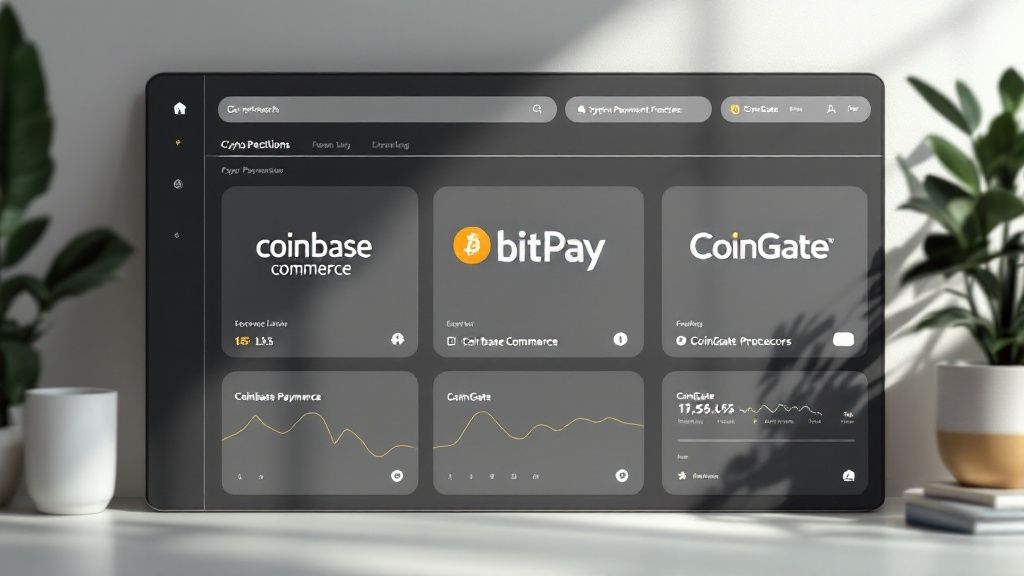
Accepting cryptocurrency payments can open up new opportunities for your business, but it's essential to choose the right solution. Each option has its own set of pros and cons that can impact your operations, customer experience, and ultimately, your bottom line. This guide will help you understand the key differences between popular crypto payment methods.
Crypto Payment Processors: A Simpler Approach
For businesses new to crypto, payment processors like BitPay and Coinbase Commerce offer a user-friendly experience. These platforms handle the technical complexities of accepting crypto, converting it to fiat currency like USD or EUR, and depositing it directly into your bank account.
- Pros: Easy setup, automatic fiat conversion, support for multiple cryptocurrencies, dedicated customer support
- Cons: Transaction fees, reliance on a third-party platform, less control over the payment process
Payment processors often integrate seamlessly with popular eCommerce platforms like Shopify and WooCommerce, simplifying implementation. They also manage security measures, reducing the risks associated with handling cryptocurrency directly. However, this convenience typically comes with transaction fees, which can vary depending on the processor and transaction volume.
Direct Wallet Acceptance: More Control, More Responsibility
If your business has the technical expertise, direct wallet acceptance gives you greater control over your crypto payments. This involves setting up a business crypto wallet and receiving payments directly from customers’ wallets.
- Pros: Lower transaction fees, more control over funds, direct interaction with customers
- Cons: Requires technical expertise, more complex setup, exposure to cryptocurrency price volatility
Direct wallet acceptance minimizes transaction fees but requires a solid understanding of blockchain technology and security best practices. You'll also be exposed to the volatility of cryptocurrency prices, meaning the value of a payment can fluctuate before you convert it to fiat.
To help you compare these different methods, let's take a look at a detailed breakdown:
Crypto Payment Methods Comparison
| Payment Method | Setup Complexity | Transaction Fees | Security Level | Best For |
|---|---|---|---|---|
| Payment Processors (e.g., BitPay, Coinbase Commerce) | Easy | Higher (typically 1-2%) | High (managed by processor) | Businesses new to crypto, prioritizing ease of use |
| Direct Wallet Acceptance | Complex | Lower (network fees) | Medium (requires in-house expertise) | Businesses comfortable with blockchain technology, seeking lower fees |
| Stablecoin Solutions (e.g., Flash) | Medium | Low | High (blockchain-based) | Businesses wanting to minimize volatility, focusing on specific stablecoins |
This table highlights the core differences between the various crypto payment methods. Choosing the right one depends on your business's individual needs and priorities.
Stablecoin Solutions: Stability in the Crypto World
Stablecoins, cryptocurrencies pegged to stable assets like the US dollar, offer the benefits of crypto transactions without the price volatility. Payment stablecoins (PSCs) are emerging as a practical solution, bridging the gap between traditional finance and the crypto world. They're increasingly used for various purposes, including remittances and cross-border payments, offering a faster and cheaper alternative. The stablecoin market has grown significantly, with a market cap exceeding $200 billion, according to a report by Deloitte.
Services like Flash allow businesses to accept Bitcoin payments directly via Bitcoin wallets without intermediaries. Flash emphasizes decentralization and security through direct wallet connections, offering instant settlement with minimal fees and various integration options.
Choosing the right crypto payment solution depends on your business’s technical capabilities, transaction volume, and risk tolerance. Carefully consider these factors to find the solution that best aligns with your needs.
Step-by-Step Implementation That Actually Works
Turning the idea of accepting crypto payments into reality requires careful planning and execution. This guide will walk you through each step, from selecting a solution to training your team, ensuring a smooth transition without disrupting your current business.
Selecting and Configuring Your Chosen Payment Solution
The first step is choosing your payment solution. Whether you use a payment processor like BitPay or opt for direct wallet integration with a service like Flash, proper configuration is essential. For processors, this means setting up your merchant account and connecting it to your bank account.
For direct wallet acceptance, you’ll need to set up a secure wallet and integrate it with your point-of-sale system. You’ll also need to decide which cryptocurrencies to accept. Bitcoin is a good starting point, but consider other popular options based on your customer base. This early planning prevents future integration issues and creates a seamless customer experience.
Integrating With Existing Systems
Once your payment solution is configured, the next step is integration. For online businesses, this means integrating the payment gateway with your e-commerce platform. For brick-and-mortar stores, this might mean updating your point-of-sale system.
You could also consider solutions like Flash's point-of-sale app, which can quickly turn mobile devices into Bitcoin-ready terminals. Thoroughly testing the integration before going live is crucial. This ensures a smooth transition and identifies any potential issues. A test environment that mirrors your real-world setup is invaluable.
Staff Training and Customer Communication
Implementing a new payment system involves more than just technology. Your staff needs to be comfortable explaining the new payment options. Create training materials and conduct sessions that cover how to accept crypto payments, troubleshoot common issues, and answer customer questions.
Clear customer communication is also vital. Announce the new payment option on your website, social media, and through email marketing. Provide clear instructions on using the new system, address any security concerns, and highlight the benefits for customers. Consider offering incentives for early adopters to encourage usage and generate excitement.
Accounting and Operational Procedures
Establish clear accounting workflows for cryptocurrency transactions. This involves integrating your payment solution with your accounting software. This helps maintain accurate financial records and simplifies tax reporting.
Also, establish clear processes for handling refunds and disputes. These should be documented and readily available to your staff. This proactive approach helps mitigate potential customer service challenges. Establishing these procedures ensures long-term scalability and operational efficiency.
Timeline, Resources, and Measuring Success
Implementation timelines vary based on the complexity of your chosen solution. Simple integrations can be completed in days, while more complex setups may take weeks. Allocate enough resources to testing and training for a smooth launch.
Measuring success is crucial. Track key metrics like the number of crypto transactions, their total value, and customer feedback. These metrics help assess the effectiveness of your crypto payment implementation. This data allows for continuous improvement and optimization. Flash, for instance, provides merchants with tools and analytics to track these key indicators, allowing for data-driven decisions.
Security Best Practices That Protect Your Business

Accepting crypto payments offers exciting advantages for businesses, but robust security is paramount. Protecting your business and your customers requires a comprehensive, multi-layered approach that goes beyond the basics. This means implementing strong security measures and staying informed about the ever-changing threat landscape in the cryptocurrency world.
Secure Wallet Management and Private Key Protection
Your crypto wallets are the digital repositories holding your cryptocurrency. Protecting them is absolutely essential. Think of your private keys as the key to these repositories. Losing them means losing access to your funds. Secure private key management is therefore non-negotiable. Solutions like Flash prioritize decentralization by connecting Bitcoin wallets directly without ever handling your funds. This wallet-to-wallet approach minimizes the risks of theft or loss.
- Use Hardware Wallets: Hardware wallets are physical devices that store your private keys offline. This offers significant protection against hacking attempts.
- Implement Multi-Signature Wallets: Multi-signature wallets require multiple approvals for any transaction, much like a joint bank account. This adds an extra layer of security, particularly for larger transactions.
Transaction Monitoring and Fraud Prevention
Just like with traditional payments, monitoring transactions for suspicious activity is crucial. This allows you to quickly identify and address potential fraud.
- Real-Time Monitoring: Implement real-time transaction monitoring systems. These systems will alert you to unusual patterns, such as large or frequent withdrawals from your wallets.
- Address Verification: Consider using address verification services to ensure the customer's wallet address aligns with their physical location. This provides an additional layer of fraud prevention.
Backup and Recovery Procedures
Technical glitches and human error are inevitable. A robust backup and recovery plan is essential to safeguarding your business against data loss.
- Regular Backups: Back up your wallet data and private keys regularly. Store these backups in secure, offline locations.
- Recovery Procedures: Develop clear recovery procedures to restore your wallets and access your funds should a device fail or another unexpected event occur.
Regulatory Compliance and Ongoing Security Assessments
Cryptocurrency regulations vary by jurisdiction. Staying informed and compliant is vital for avoiding legal complications. Regular security assessments also help identify and address potential vulnerabilities.
- Legal Counsel: Consult with legal counsel specializing in cryptocurrency regulations. They can help ensure your business meets all applicable requirements in your region.
- Security Audits: Conduct regular security audits of your crypto payment system. This proactive approach will help you identify weaknesses and update your security measures accordingly.
Employee Access Controls and Insurance
Controlling who has access to your crypto funds is crucial, just as with any financial system. Limiting access to authorized personnel minimizes the risk of internal theft or mismanagement. Also, explore insurance options specifically designed for businesses holding cryptocurrency to further protect against potential losses.
To help you navigate the complexities of crypto payment security, we've compiled a checklist of essential measures.
Before the table explaining its purpose
The following table outlines essential security measures and best practices for businesses accepting cryptocurrency payments. It categorizes these measures by priority level and implementation difficulty to help you prioritize your security efforts.
| Security Measure | Priority Level | Implementation Time | Cost Impact | Risk Reduction |
|---|---|---|---|---|
| Secure Wallet Management (Hardware Wallets) | High | Short | Medium | High |
| Private Key Protection (Multi-signature wallets) | High | Short | Low | High |
| Real-Time Transaction Monitoring | High | Medium | Medium | High |
| Address Verification | Medium | Short | Low | Medium |
| Regular Wallet Backups | High | Short | Low | High |
| Documented Recovery Procedures | High | Medium | Low | High |
| Consult with Legal Counsel on Crypto Regulations | High | Ongoing | Medium | High |
| Regular Security Audits | Medium | Ongoing | Medium | High |
| Employee Access Controls | High | Short | Low | High |
| Cryptocurrency Insurance | Medium | Medium | Medium | High |
After the table summarizing key insights
This checklist highlights the importance of a multi-layered security approach. While some measures are quick and inexpensive to implement, others require more time and resources. Prioritizing high-impact, low-cost measures like secure wallet management and regular backups is a good starting point.
Accepting crypto payments securely involves much more than simply setting up a wallet. By following these best practices, you can significantly reduce risk and create a secure and positive crypto payment experience for both your business and your customers. Remember, security is an ongoing process. Stay informed about new threats and best practices to ensure your business remains protected. Flash, with its focus on decentralization and direct wallet-to-wallet connections, provides a strong foundation for a secure and efficient crypto payment system.
Maximizing Success With Your Crypto Payment System
So, you’ve integrated a crypto payment system. Excellent! Now, let's explore how to maximize its potential for growth. This involves promoting your new payment options, tracking key performance indicators (KPIs), and adapting to the dynamic crypto market. Security is paramount when accepting crypto payments. Follow best practices, especially if managing transactions remotely, such as maintaining strong cybersecurity while traveling. For helpful tips, check out this resource on cybersecurity during travel.
Promoting Crypto Payment Options
Promoting your crypto payment options effectively is crucial for encouraging adoption. Highlighting customer benefits can significantly boost usage.
Consider offering exclusive discounts or promotions for crypto payments. This incentivizes customers to try the new method. Showcasing the speed and convenience of crypto transactions, especially compared to traditional methods, can also attract tech-savvy customers.
Website and Social Media: Clearly display your crypto acceptance on your website and social media channels.
Email Marketing: Inform your current customers about this new payment option through targeted email campaigns.
In-Store Signage: For brick-and-mortar stores, use clear signage promoting crypto payments at the point of sale.
Measuring Success With KPIs
Tracking the right KPIs is essential for understanding your crypto payment system’s performance. This data-driven approach helps optimize your strategy and pinpoint areas for improvement.
Transaction Volume: Monitor the number of crypto transactions processed to gain insights into customer adoption.
Average Transaction Value: Analyze the average value of crypto transactions to understand customer spending patterns.
Conversion Rates: Track the percentage of customers completing purchases with crypto versus other methods.
Adapting and Improving
The cryptocurrency world is constantly changing. Continuously refining your implementation based on real usage data is vital for long-term success. Regularly evaluate your processes, incorporate customer feedback, and stay updated on new trends and technologies.
Explore new stablecoin options like USD Coin and integrate them if they suit your customer base. This adaptability keeps you competitive and maximizes the benefits of accepting crypto. You might also adjust pricing strategies based on insights from your crypto payment data.
Leveraging Crypto for Growth
Crypto payments can be a powerful growth tool. Accepting crypto can simplify international expansion by streamlining cross-border transactions and minimizing the complexities of traditional currency conversions.
Consider developing customer loyalty programs using blockchain technology. This can offer unique rewards and experiences, boosting customer engagement and brand loyalty. Furthermore, understanding customer behavior through crypto payment data can reveal new market opportunities. By identifying purchasing trends within your crypto-paying customer segment, you can tailor products and marketing more effectively.
Ready to explore the future of payments? Flash allows you to accept Bitcoin payments securely and efficiently, connecting wallets directly without ever touching your funds. Learn more and start accepting Bitcoin today.