So, you're ready to turn your Bitcoin into cold, hard cash. The good news is you've got options. You can go through a centralized cryptocurrency exchange, find a buyer directly on a peer-to-peer (P2P) platform, or just pull physical cash out of a Bitcoin ATM.
Each route has its own mix of speed, convenience, and cost. Figuring out which one is right for you really depends on what you need at the moment.
Your Quick Guide to Cashing Out Bitcoin
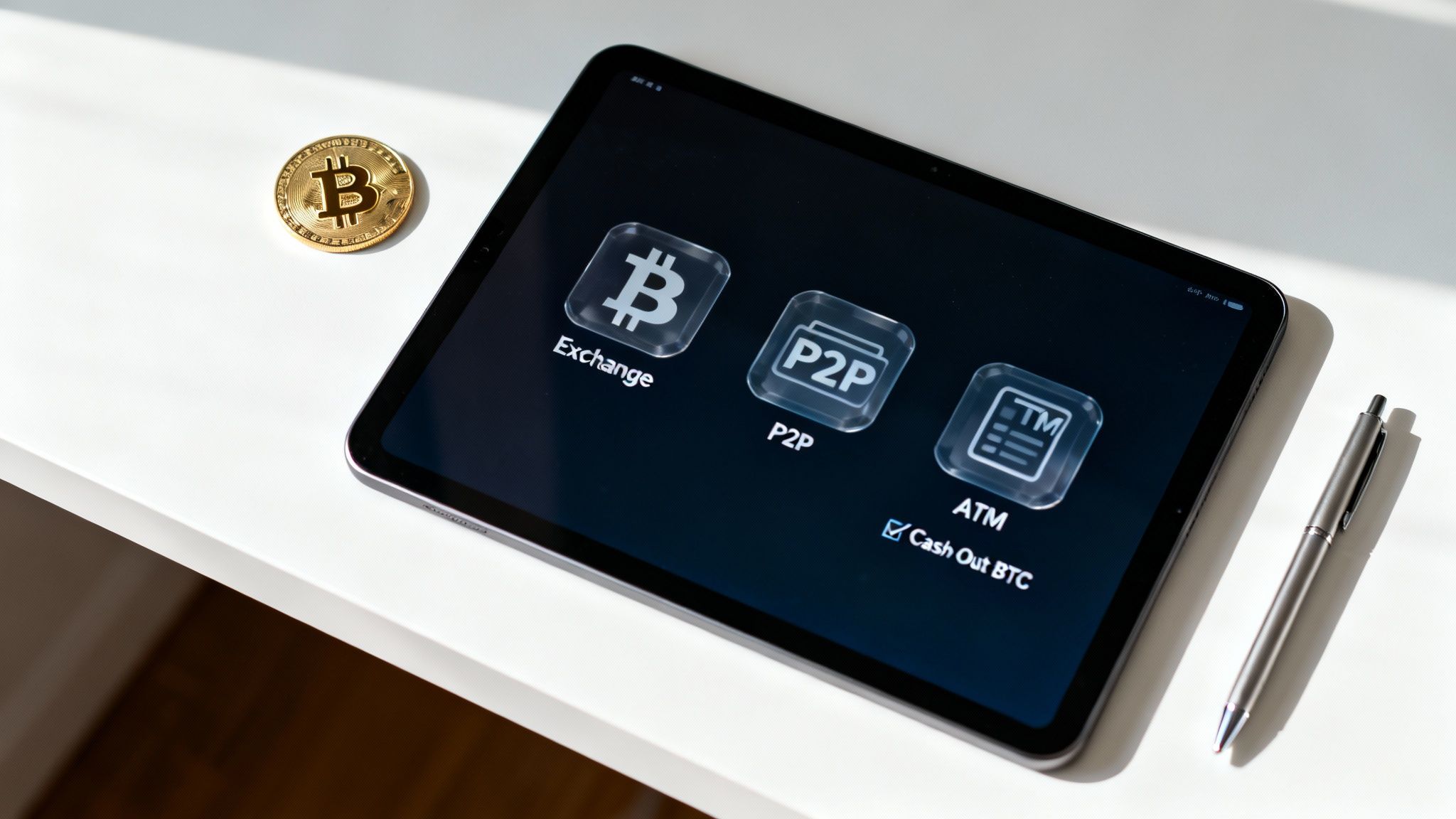
Let's cut to the chase. You want to convert your Bitcoin holdings into dollars, and you want it to be as painless as possible. The first step is just understanding the landscape.
Think of this section as the high-level overview. We'll look at the three most reliable ways to cash out your BTC, whether you're a merchant handling business funds or just an individual making a personal sale. We'll get into the nitty-gritty details of each method a bit later on.
Bitcoin to USD Conversion Methods at a Glance
Choosing how to cash out your Bitcoin isn't a one-size-fits-all decision. What works perfectly for a quick, large sale might be a terrible choice if you're trying to stay private or need a few hundred dollars in your hand right now. To help you see the differences clearly, here's a quick rundown of the main players.
| Method | Best For | Typical Speed | Privacy Level | Associated Fees |
|---|---|---|---|---|
| Centralized Exchanges | Large volumes & competitive rates. Perfect for merchants. | 1-5 business days for bank withdrawal. | Low, requires identity verification (KYC). | Low to moderate trading and withdrawal fees. |
| Peer-to-Peer (P2P) Platforms | Direct sales with more control over price and payment method. | Varies by payment type (instant to a few days). | Moderate, some platforms require less verification. | Low platform fees, but the seller's rate includes their profit. |
| Bitcoin ATMs | Instant access to physical cash for smaller amounts. | Minutes. | High, often no extensive identity check needed for small sums. | Very high, typically ranging from 7% to over 20%. |
As you can see, each option comes with its own trade-offs. It's a classic balancing act between speed, privacy, and how much you're willing to pay in fees.
Key Takeaway: For most business-level transactions, centralized exchanges like Coinbase or Kraken are the go-to because they have deep liquidity and lower fees. P2P platforms give you flexibility, while ATMs offer unmatched speed for getting cash in hand—but they'll cost you a pretty penny.
Using Centralized Exchanges for High Liquidity Conversions
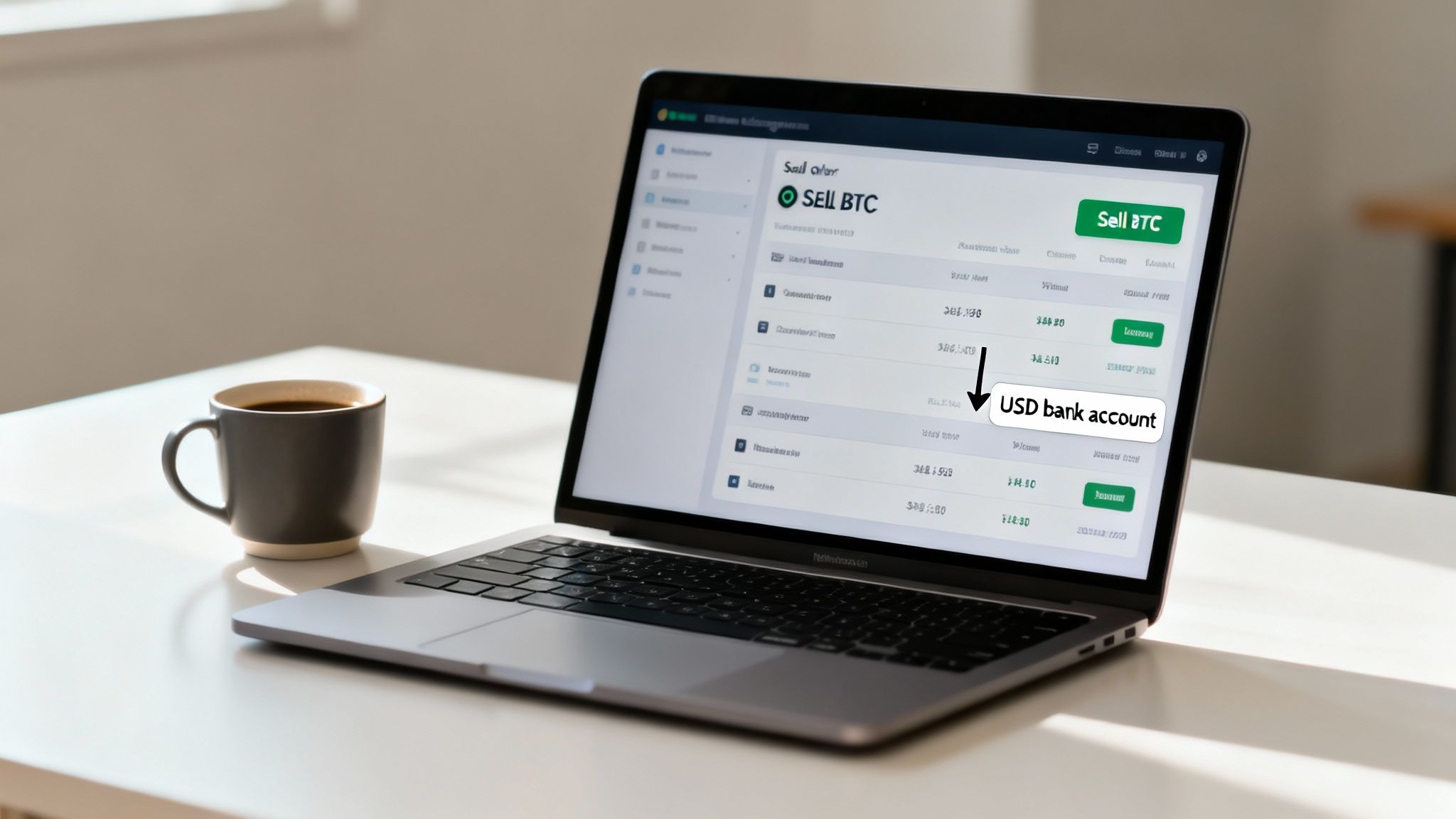
When it's time to cash out larger amounts of Bitcoin, centralized exchanges are the go-to for most people and businesses. Their biggest advantage is high liquidity—a fancy way of saying there are always tons of buyers and sellers hanging around.
This market depth is critical. It means you can sell a significant chunk of BTC without tanking the price, a nasty surprise known as slippage. Think of it as trying to sell your house; you want a market with lots of interested buyers, not just one or two who can lowball you.
First things first, you need to pick a reputable exchange that actually operates where you live. Not all of them serve every country, so this is a crucial step. Once you’ve signed up, you'll go through a Know Your Customer (KYC) check. This usually means uploading a government ID and proof of address—standard procedure for any regulated financial service.
The Conversion Process Explained
Once your account is greenlit, it's time to move your Bitcoin. Inside your exchange account, you'll find an option to generate a unique Bitcoin deposit address. Copy that address, head over to your personal Bitcoin wallet, and send the BTC.
Just remember, this transaction is happening on the Bitcoin blockchain, so it needs to be confirmed. This can take a few minutes or sometimes up to an hour if the network is clogged.
After your BTC lands in the exchange wallet, you’re ready to sell. You’ve got a couple of ways to do this:
- Market Order: This is the "sell it now" button. Your Bitcoin sells instantly for the best price available at that moment. It's fast, but you get what you get.
- Limit Order: This gives you control. You set the exact price you’re willing to sell at. Your order will sit there until the market hits your target price. No sale happens otherwise.
With the sale complete, a USD balance will pop up in your account. The final move is withdrawing that cash to your linked bank account. This isn't instant; expect it to take anywhere from 1-5 business days depending on the exchange and your bank.
For anyone using centralized exchanges, a solid grasp of how market liquidity works is crucial for getting the best price. A deeper dive into understanding market liquidity can help you make smarter trades and avoid leaving money on the table.
Demystifying The Fee Structure
Nobody likes surprise fees, so it pays to know what you’re in for. When you sell Bitcoin on an exchange, you’ll typically run into three kinds of fees:
- Network Fee: This is a small fee paid to Bitcoin miners to process your initial deposit into the exchange. It's unavoidable.
- Trading Fee: The exchange takes a small cut of your sale, usually between 0.1% to 0.5%. This is how they make their money.
- Withdrawal Fee: A flat fee the exchange charges to send the USD to your bank account.
The massive trading volumes on major exchanges are what make all of this work smoothly. For example, back on December 30, 2025, Bitcoin’s price hit $88,185.26 USD. This kind of dynamic market is what allows you to convert large sums efficiently without causing major price swings. You can always check out historical data like Bitcoin’s price performance on FRED to get a feel for the market.
Navigating Peer to Peer Platforms for Direct Sales
If you're not a fan of the impersonal, one-size-fits-all feel of a centralized exchange, peer-to-peer (P2P) platforms are a fantastic alternative. Think of them as a specialized eBay or Facebook Marketplace, but built specifically to connect people selling Bitcoin directly with those who want to buy it. This direct-to-consumer approach gives you a surprising amount of control over the deal.
Instead of just accepting whatever the market price is on a huge exchange, P2P platforms let you set your own terms. You create your own sell offer and decide the exact exchange rate you're happy with. In fact, many experienced sellers list their Bitcoin at a slight premium above the current market rate, effectively building a small profit right into their asking price.
How P2P Escrow Protects Your Sale
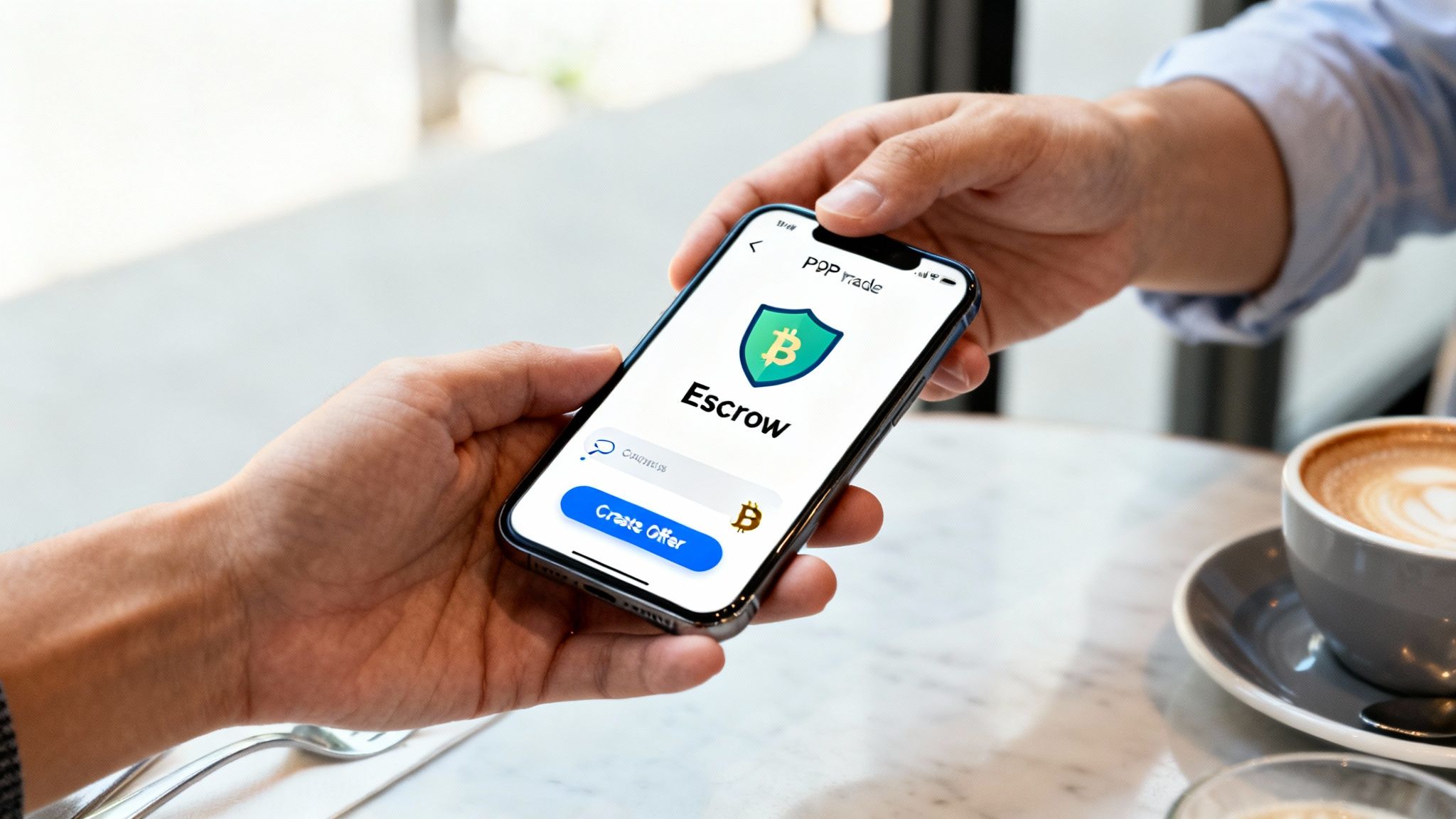
The magic that makes these direct trades possible is the platform's built-in escrow system. This is the critical safety net that shields both you and the buyer from getting ripped off, making sure every trade is fair and trustworthy.
Here’s the simple play-by-play of how it works:
- A buyer finds your offer and agrees to your terms, starting the trade.
- The platform immediately and automatically locks your Bitcoin into a secure, neutral holding account—the escrow.
- The buyer gets a notification that the Bitcoin is secured in escrow, so they can confidently send the USD payment directly to you.
- Once you see the cash in your account and confirm you've received it, you give the platform the green light to release the Bitcoin from escrow to the buyer’s wallet.
This simple process completely removes the "who goes first?" dilemma. You never have to worry about sending your Bitcoin and getting nothing in return, and the buyer knows their money is safe until the coins are ready to be released.
The escrow service is the heart of P2P trading. By creating a secure holding zone, it eliminates the counterparty risk that makes direct online trades so dangerous. The whole system is designed so nobody can walk away with someone else's funds.
Crafting a Successful Sell Offer
Your ability to sell quickly and for a good price on a P2P platform really comes down to how you frame your offer. To attract the right buyers, you need to be clear, competitive, and maybe a little flexible. First things first, decide which payment methods you'll accept.
Some of the most common options include:
- Bank Transfers: A reliable choice, especially for larger amounts, though they can take a bit longer to clear.
- Digital Wallets: Services like PayPal or Cash App are popular for their nearly instant transfers.
- In-Person Cash: An option for local trades, but this requires taking extra security precautions for your own safety.
When you're figuring out your price, take a minute to browse what other sellers are asking. Setting a competitive rate is key. Clearly stating your terms—like minimum or maximum transaction limits and whether the buyer needs a certain verification level—will make your offer much more attractive.
Always remember to communicate clearly and respond quickly to potential buyers. A little bit of good rapport goes a long way and helps ensure the trade goes off without a hitch. That direct, human interaction is what really makes P2P trading stand out.
When to Use a Bitcoin ATM for Instant Cash
Sometimes, cashing out your Bitcoin isn't about getting the absolute best exchange rate. It's about getting physical cash in your hand as fast as humanly possible. This is exactly where Bitcoin ATMs come into play.
They are, by far, the fastest bridge between your digital wallet and physical dollars. If speed is your number one priority, these machines are unbeatable. You can forget waiting days for a bank transfer from an exchange to clear. A transaction at a Bitcoin ATM is usually done in minutes—from scanning your wallet's QR code to the machine spitting out crisp bills. This makes them perfect for small, urgent cash needs where convenience is king.
How the Process Works
Selling your BTC at a two-way Bitcoin ATM is surprisingly simple. The whole experience feels a lot like using a regular bank ATM, just with a couple of extra crypto steps thrown in.
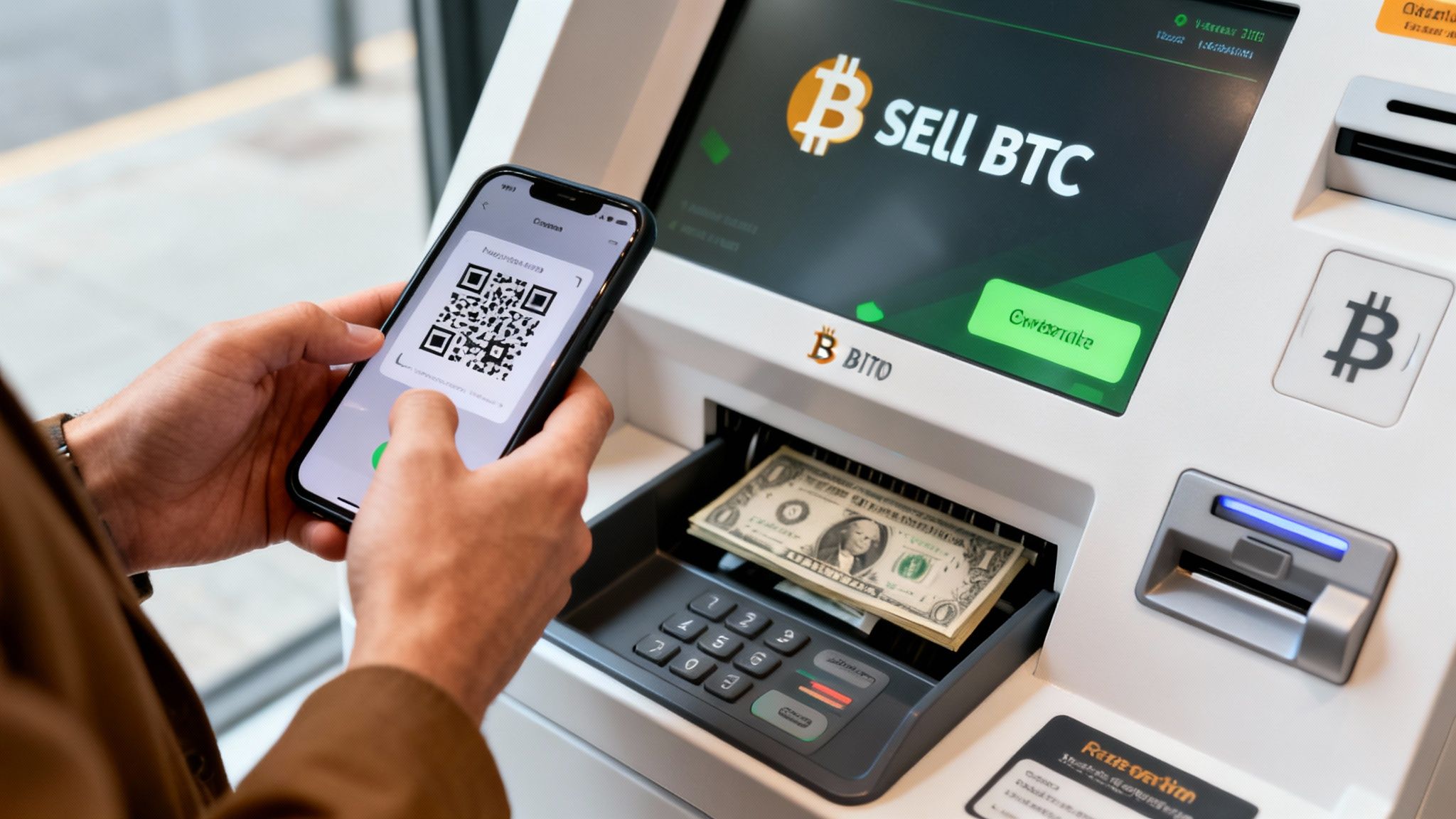
First things first, you need to find a machine that actually supports selling Bitcoin, since many are buy-only. Once you've located one, the screen will guide you to select the "Sell BTC" option. The machine then generates a QR code for you to scan with your mobile Bitcoin wallet.
You'll send the amount of Bitcoin you want to sell to that address right from your phone. After the transaction gets a confirmation on the blockchain (which usually takes about 10-15 minutes), the ATM will dispense your cash. It's a direct and immediate way to convert bitcoin to usd.
Important Note: Brace yourself for the fees. The incredible speed and convenience of Bitcoin ATMs come at a serious cost. Transaction fees can range from a steep 7% to a staggering 20%, which is dramatically higher than any other method.
The Trade-Offs of Convenience
While the speed is a huge plus, you have to understand the limitations. Bitcoin ATMs are definitely not built for cashing out large amounts. They have much lower withdrawal limits than exchanges or P2P platforms, often capping you at a few hundred or maybe a couple of thousand dollars per day.
This makes them a poor choice for liquidating a significant position, but absolutely perfect for scenarios like:
- Needing quick cash for an emergency while you're traveling.
- Making a small, time-sensitive purchase from a cash-only seller.
- Simply wanting to test the waters and see how the cash-out process works with a small amount.
Think of a Bitcoin ATM as a specialized tool in your kit. It's not your go-to for regular conversions, but it’s an absolute lifesaver when speed is the only thing that matters.
Critical Factors to Consider Before You Sell
Cashing out your Bitcoin for USD isn't as simple as hitting a "sell" button and watching the money appear. If you want to maximize your returns and avoid costly mistakes, you need a plan.
It comes down to a blend of timing, security, and a clear understanding of your financial obligations. Getting any of these wrong can turn a profitable move into a painful lesson.
Mastering Market Timing and Analysis
Let's be real: timing the market perfectly is a fantasy. Bitcoin is famously volatile, and its price can swing wildly in just a few hours. Selling in a panic during a sudden dip will wreck your returns, whereas a little patience might make a massive difference.
The goal isn't perfection, but making an educated decision. This means getting comfortable with basic market trends and chart patterns. Learning to spot simple support and resistance levels, for example, can give you a much better feel for when to sell versus when to hold on.
If you're new to this, learning how to read a cryptocurrency chart for beginners is a great first step. It helps you move from emotional reactions to data-driven decisions.
History gives us valuable context. Over the last seven years, Bitcoin's exchange rate against the dollar has exploded by 1,343.81%. But don't forget the brutal bear markets. After its 2017 peak, Bitcoin closed out 2018 at just $3,693. Understanding these cycles is key to timing your sale.
Understanding Your Tax Obligations
This is the part everyone loves to ignore, but you absolutely can't. In the U.S. and most other countries, selling Bitcoin for cash is a taxable event.
The second you sell, you trigger a capital gain or a capital loss. This is simply the difference between the price you sold it for and the price you originally paid for it (your cost basis).
Crucial Takeaway: You have to keep meticulous records. For every single transaction, track the date you bought, the USD value at that time, the date you sold, and the final sale price. This isn't optional—it's what you'll need for tax reporting.
Failing to report your gains can bring serious penalties from the IRS. It's always a smart move to talk to a tax professional who gets crypto. They can help you stay compliant and avoid any nasty surprises down the road.
Prioritizing Security During the Conversion
Last but certainly not least: security. Your Bitcoin is at its most vulnerable when it's on the move—whether you're sending it to an exchange or waiting for a withdrawal to hit your bank. Strong security isn't just a suggestion; it's your primary defense against getting ripped off.
Make these steps non-negotiable:
- Activate Two-Factor Authentication (2FA): Every single exchange or platform you use needs 2FA enabled. Always opt for an authenticator app (like Google Authenticator) over SMS, which is far less secure.
- Double-Check All Addresses: This is critical. Before you send Bitcoin or withdraw USD, check every single character of the wallet and bank account addresses. One typo can send your funds into a black hole, permanently.
- Beware of Phishing Scams: Get paranoid about unsolicited emails or messages asking for your login details or private keys. Never click links in emails. Always go directly to the exchange’s official website by typing the URL yourself.
Protecting your assets at every stage of the process is the only way to ensure the money you've earned actually ends up in your bank account, safe and sound.
Common Questions About Converting Bitcoin to USD
Turning your Bitcoin into dollars is a pretty straightforward process, but it's natural to have questions, especially when you're doing it for the first time or as part of your business operations. Getting a handle on timelines, fees, and taxes is crucial for managing your funds effectively.
Let's walk through some of the most common questions that pop up when it's time to cash out your BTC.
How Long Does It Take to Convert Bitcoin to USD?
The time it takes to see dollars hit your bank account really depends on the path you choose. There’s no one-size-fits-all answer here; every method has its own quirks, from blockchain confirmations to old-school banking delays.
Using a centralized exchange is a multi-step game. First, your Bitcoin has to land in their wallet and get confirmed on the blockchain, which usually takes anywhere from 10 to 60 minutes. The actual sale is almost instant. The real waiting game is the final step: withdrawing the USD to your bank, which typically takes 1 to 5 business days.
Need cash in hand right now? Nothing beats a Bitcoin ATM. The whole process, from scanning a QR code on your phone to the machine spitting out bills, can be over and done in less than 15 minutes.
Peer-to-peer (P2P) platforms are the wildcard. The speed is all about the payment method you and the buyer agree on. A transfer to a digital wallet like Cash App can be almost instant, but a classic bank transfer might take a few hours or even a full business day to show up.
What Are the Common Fees for Selling Bitcoin?
Fees are a huge deal. They can take a serious bite out of your final amount, so understanding them is key to making sure you get the most bang for your buck.
Here’s a rough breakdown of what you can expect to pay:
- Centralized Exchanges: These guys usually charge a small trading fee, often somewhere between 0.1% and 0.5% of your sale. You'll also pay a small network fee to deposit your Bitcoin and likely a flat fee to withdraw the final USD amount to your bank.
- Bitcoin ATMs: You pay a steep price for convenience here. ATM fees are easily the highest, ranging anywhere from a hefty 7% to over 20% of the transaction. Ouch.
- Peer-to-Peer Platforms: The platform fees are often super low, sometimes less than 1%. But the real "fee" is baked into the exchange rate. The seller sets their own price, and that price includes their profit margin.
Always look at the total cost, not just the flashy, low trading fee. A platform might advertise a 0.1% trade fee but then hit you with a $25 withdrawal fee, making it more expensive than an all-in-one service.
Do I Have to Pay Taxes When I Sell Bitcoin?
Yes, absolutely. In the United States and most other countries, selling Bitcoin for USD is a taxable event. Trying to fly under the radar here can lead to some pretty nasty penalties down the line.
The IRS doesn't see Bitcoin as a currency; they see it as property. That means when you sell it, you have a capital gain or a capital loss. You calculate this by taking the sale price in USD and subtracting the price you originally paid for it (your "cost basis").
The tax rate you'll pay depends entirely on how long you held the Bitcoin:
- Long-Term Capital Gains: If you held your BTC for more than a year, you get a much friendlier tax rate.
- Short-Term Capital Gains: Held it for a year or less? That gain gets taxed at your regular income tax rate, which is almost always higher.
Keeping meticulous records is non-negotiable. You need to track the date, amount, and USD value for every single time you buy and sell. If you're running a business, your best bet is to talk to a tax professional who actually gets crypto. It's the only way to be sure you're staying compliant.
Ready to accept Bitcoin payments directly from your customers without intermediaries? Flash provides wallet-to-wallet payment solutions that are secure, decentralized, and incredibly easy to set up. Offer your customers a modern payment option and expand your reach to the global Bitcoin community. Get started in under a minute at .