So, you're ready to turn your digital assets into actual cash you can hold? The most common ways to do this are through centralized exchanges (CEXs), peer-to-peer (P2P) platforms, and crypto debit cards. The right one for you really boils down to what you prioritize most—whether that’s speed, keeping fees low, or maintaining privacy.
Your Blueprint for Cashing Out Cryptocurrency

Before you jump in, it's crucial to understand the main paths available for turning your crypto into fiat currency. Each method strikes a different balance between convenience, cost, and how much control you have over the process. Knowing your own priorities is what will guide you to the perfect fit.
For a long time, the go-to method has been using a major centralized exchange like Coinbase or Kraken. These platforms are popular for a reason: they offer high liquidity and a pretty straightforward process. You can sell assets like Bitcoin directly for USD or EUR and then withdraw to your bank. The process is familiar and generally secure, which you can read more about in the latest cryptocurrency security report.
Comparing Your Options
To make this decision easier, let's lay out your options side-by-side. Think of this as the strategic overview before we get into the nitty-gritty of each method later in the guide.
- Centralized Exchanges (CEXs): A great starting point if you're new to this. They offer a familiar, bank-like experience with solid security and plenty of buyers and sellers.
- Peer-to-Peer (P2P) Platforms: Ideal if you want more control over the sale, need flexible payment options (like PayPal or a specific bank transfer), and want to hunt for better rates.
- Crypto Debit Cards: Perfect for pure convenience. If you just want to spend your crypto on everyday things without a formal cash-out process, this is for you.
The real key is matching the method to your goal. Are you planning a large, one-time sale to fund a big purchase? Or do you just need to spend small amounts regularly on groceries and coffee? Your answer will point you straight to the best solution.
Deciding between these methods can feel overwhelming, so I've put together a quick comparison table. This breaks down the three main ways to convert crypto to cash, helping you see at a glance which one lines up with your needs.
Crypto to Cash Conversion Methods at a Glance
| Method | Best For | Typical Speed | Average Fees | Security Level |
|---|---|---|---|---|
| Centralized Exchange | Beginners & large trades | 1-5 business days | Low to medium | High |
| Peer-to-Peer Platform | Control & payment options | Minutes to hours | Low to none | Medium (relies on escrow) |
| Crypto Debit Card | Everyday spending & convenience | Instant | Variable | High (card network protections) |
Use this table to weigh the pros and cons based on what matters most to you. Once you have a clearer idea, you'll be ready to dive into the detailed steps for your chosen method.
Using Centralized Exchanges for Fiat Conversion
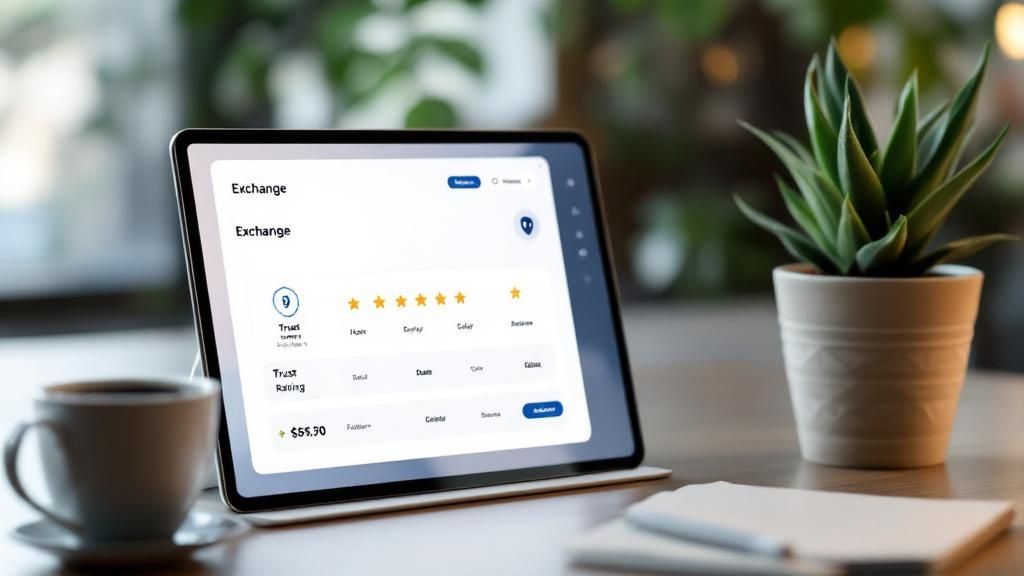
For a lot of people, the most straightforward path from crypto to cash runs through a centralized exchange (CEX). If you’ve ever used an online stock brokerage, platforms like Coinbase, Kraken, or Gemini will feel very familiar. They offer a structured environment to buy and sell, which is why they’re often the first stop for newcomers.
The whole process kicks off with picking a reputable exchange that’s legally allowed to operate where you live. After signing up, you’ll have to go through a Know Your Customer (KYC) verification. This isn't just red tape; it's a mandatory step for regulated exchanges to prevent fraud and other financial crimes.
Preparing for Verification and Withdrawal
To avoid getting stuck in verification limbo, it's smart to have your documents ready from the get-go.
You'll typically need:
- A government-issued photo ID, like a driver's license or passport.
- Proof of your address, usually a recent utility bill or bank statement.
Once you get the green light, the next step is linking your bank account. This is where the money will land after you sell your crypto, so you'll want to triple-check that the account and routing numbers are correct. A simple typo here can cause major headaches.
With your bank account connected, you're all set to sell.
Pro Tip: Don't just hit the "sell" button without a second thought. Every exchange has its own fee schedule. Trading fees, which can range from 0.1% to 0.6%, plus withdrawal fees can take a bite out of your final total. Always factor those costs in beforehand.
When you place a sell order, the exchange converts your crypto into your local currency (like USD or EUR) and the funds appear in your account balance on the platform. From there, you just initiate a withdrawal to your linked bank account.
Be prepared to wait a bit. The final transfer can take anywhere from one to five business days. The exact timing really depends on the withdrawal method you choose (ACH is usually slower than a wire transfer) and how quickly your own bank processes incoming funds.
It’s also crucial to remember that the crypto world and traditional banking don't always play nicely together. We’ve seen instances where the big banks are playing hardball with Binance, cutting off its access to the US banking system. This kind of thing just underscores why it’s so important to pick an exchange with solid, stable banking relationships in your country. A little due diligence here can save you a lot of trouble later.
Exploring Peer-to-Peer Platforms for Direct Sales

If you find centralized exchanges a bit too restrictive, peer-to-peer (P2P) platforms offer a far more hands-on way to turn your crypto into cash. Think of them as marketplaces, like Binance P2P or Paxful, where you connect directly with people who want to buy what you're selling. This setup puts you in the driver's seat.
This direct-to-buyer approach unlocks a whole menu of payment options that you just won't find on a standard exchange. You can get paid via bank transfer, PayPal, or even arrange a face-to-face cash exchange—it all comes down to what you and the buyer agree on. This incredible flexibility is exactly why P2P is exploding, especially in places where traditional banking is hard to come by.
The rise of P2P isn't just a small trend. Data shows that in emerging markets, nearly 15-20% of all crypto conversion volume is now flowing through these platforms. It's a clear signal that people want more personalized control over their money. You can get a deeper look at this shift and what it means for the future of crypto-to-cash conversions.
Mastering the P2P Trading Process
Nailing a P2P trade comes down to two simple things: making a good offer and playing it safe. When you post an ad to sell your crypto, you’re not just naming a price; you're setting the rules for the transaction.
- Set a Competitive Price: Take a quick look at what others are charging on the platform. You don't have to be the cheapest, but you need to be in the ballpark to attract buyers.
- Be Clear on Your Terms: Explicitly state how you want to be paid, any minimum or maximum transaction amounts, and how long the buyer has to send the money. Clarity avoids headaches later.
Once a buyer takes you up on your offer, the platform’s escrow service activates. This is your safety mechanism. Your crypto is moved into a secure, neutral holding account, out of your direct control but not yet in the buyer's.
The escrow system is your safety net. Never, ever release your crypto from escrow until you have personally logged into your bank account or payment app and confirmed the money has landed and cleared.
After you've verified the payment is secure, you go back to the platform and authorize the release of the crypto to the buyer. This two-step process is what keeps both of you honest and ensures a smooth trade. It's also smart to check a buyer's reputation score and trade history before you even start. A little due diligence goes a long way.
Spending Crypto Instantly with Debit Cards
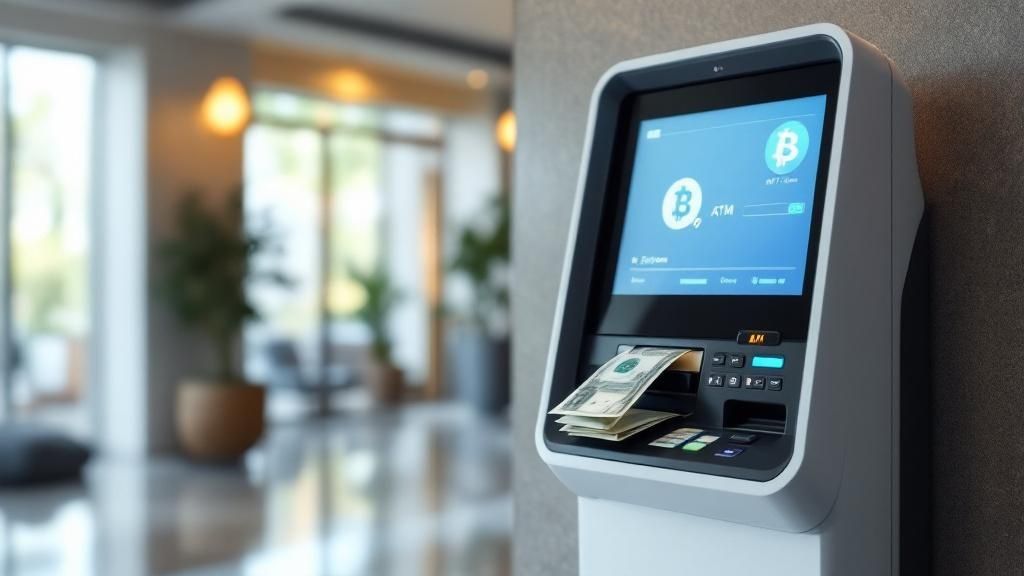
What if you could skip the entire withdrawal process and just spend your crypto at the grocery store? That’s the promise of crypto debit cards. Services like Crypto.com or RedotPay have built the bridge between your digital assets and everyday spending, making it a reality.
These cards work just like the one from your bank. The magic happens behind the scenes: when you swipe, tap, or pay online, the card provider instantly converts just enough of your crypto into local currency to settle the purchase. It's an incredibly smooth way to use your holdings without ever going through a formal cash-out process.
The main draw here is pure, unadulterated convenience. You don't have to watch sell orders or wait a few business days for a bank transfer to clear. On top of that, many of these cards come with some pretty compelling perks, like earning crypto back on every purchase. For frequent spenders, those rewards can really add up.
Understanding the Costs and Tradeoffs
Of course, that convenience isn't entirely free. Before you jump in, you need to get familiar with the fee structures, as they vary quite a bit from one card to another.
Keep an eye out for a few common charges:
- Top-Up Fees: Some cards will ding you a small percentage every time you move crypto onto them.
- Monthly Maintenance Fees: You might find a recurring fee just for keeping the account active, even if you don't use it.
- Foreign Transaction Fees: Planning to use the card abroad? You could get hit with extra charges for international purchases.
The biggest tradeoff is simply trust. You're relying on a third-party service to handle the on-the-spot conversion. While convenient, you're placing your faith in their system to give you a fair exchange rate at the moment you buy something and, more importantly, to keep your funds secure.
Ultimately, choosing a crypto debit card comes down to a simple calculation: is the incredible ease of use worth the fees and the custodial risk? For a growing number of people, the answer is a resounding yes, making it the perfect tool for daily spending.
Look, whenever money is changing hands, especially when you're moving crypto into cash, you have to put security first. It's not optional. Getting this right is your best defense against losing your funds to a simple, preventable mistake.
The absolute bare minimum is setting up two-factor authentication (2FA) on every single account involved in the process. I’m talking about your exchange account, your email—everything. An authenticator app is a massive step up from basic SMS verification. If you're dealing with new platforms, you might even consider using SMS verification services to keep your main phone number private and secure.
Don't Get Scammed
Beyond just securing your accounts, you've got to be on high alert for active threats. Phishing scams are everywhere. These are the fake login pages and panicked-looking emails trying to get you to hand over your credentials. A simple rule of thumb: always type the exchange’s URL directly into your browser. Never, ever click on links from emails or messages you weren't expecting.
Another habit that will save you a world of pain is to double-check, then triple-check, every wallet address. Before you hit 'send' to move crypto from your wallet to an exchange, meticulously compare the first and last few characters of the destination address. One character off, and your funds are gone. Forever.
One of the biggest mistakes I see people make is treating an exchange like a bank. It's not. Don't leave large amounts of crypto sitting there. Think of it as a temporary stopover—only move what you intend to sell immediately, and keep the rest safe in your own self-custody wallet.
The risks are no joke. In the first half of 2025 alone, a staggering $2.17 billion was stolen from various crypto services. With nearly 40% of owners admitting they feel insecure about their holdings, exchanges are being forced to beef up their security. Of course, that usually means we end up paying higher fees. If you want to dive deeper into these numbers, the latest crypto crime report breaks it all down.
Common Questions About Cashing Out Crypto
Once you’ve decided to cash out, a few last-minute questions always seem to pop up. Getting these sorted out beforehand is the key to making sure everything goes off without a hitch.
Let's start with the big one: taxes. The moment you sell your crypto for fiat currency, you've likely created a taxable event. In most countries, you'll owe capital gains tax on any profit you made, and the amount often depends on how long you held the asset. This is why keeping meticulous records of every single transaction isn't just a good idea—it's essential.
Another thing people always ask about is how long it all takes. The truth is, the wait time to see cash in your bank account can vary wildly.
If you’re using a centralized exchange, you can typically expect to wait anywhere from 1 to 5 business days. On the other hand, P2P transactions are often much quicker, sometimes wrapping up in just a few minutes. Crypto debit cards are, of course, instant at the point of sale.
Identity Verification and Timing
So, can you turn your crypto into cash without showing any ID? It's a tempting thought for anyone who values their privacy, but in reality, it's extremely difficult. Centralized exchanges are legally obligated to conduct Know Your Customer (KYC) checks to clamp down on illicit activities.
While some P2P platforms or Bitcoin ATMs might let you slide on small transactions without full verification, they usually hit you with much higher risks and significantly steeper fees. For any serious amount, you should expect to verify your identity.
Think of it as a standard security measure in the financial world. It’s a classic trade-off: you give up some privacy in exchange for the security and peace of mind that comes with using a regulated platform.
To wrap it up, keep these transfer times in mind:
- Centralized Exchange: 1-5 business days
- P2P Platform: Minutes to hours
- Crypto Debit Card: Instant at purchase
Knowing these details helps you pick the right method for your situation and sets realistic expectations for a stress-free cash-out. By planning for taxes, timing, and verification, you can confidently convert your digital assets into cash.
For merchants looking to accept Bitcoin directly, Flash provides a secure, decentralized solution. Our software enables wallet-to-wallet transactions without ever touching your funds, offering instant payments and minimal fees. Get started in under a minute and connect with over 500 million Bitcoin users.