Knowing how to boost retail sales isn't about finding a single magic bullet. It's a combination of smart moves—in-store tweaks, a sharp digital strategy, and yes, even modernizing how you get paid. The real goal is to polish every single moment a customer interacts with your brand, from the second they walk in to the final tap of their payment.
We'll even dive into how accepting new payment forms, like Bitcoin, can open your doors to a whole new crowd.
Your Blueprint for Sustainable Retail Growth
Thriving in today's retail world means you can't just rely on the occasional sale or discount. You need a solid, holistic strategy for growth. It’s about building a business that’s tough enough to handle whatever comes next, whether it’s a shift in shopper habits or a new piece of tech. Think of this guide as your practical playbook, breaking down the essential pillars you need to get right.
We'll start with the fundamentals and work our way up to the more forward-thinking stuff, giving you clear, actionable steps you can put into practice immediately. The aim here is lasting growth, not just a quick, temporary spike in sales.
To give you a quick look at where we're headed, here's a rundown of the key areas we'll be tackling. These are the core pillars that support a truly resilient and profitable retail operation.
Core Pillars of Retail Sales Growth
| Strategy Pillar | Key Objective | Primary Channel |
|---|---|---|
| Store Layout & Merchandising | Optimize the physical space to guide purchases and enhance the customer journey. | In-Store |
| Pricing & Promotions | Develop a dynamic pricing strategy that drives sales without devaluing the brand. | All Channels |
| Staff Training & Conversion | Empower your team to become expert brand ambassadors who close more sales. | In-Store, Phone |
| Digital Channels | Master eCommerce, mobile, and subscriptions to capture the online market. | Digital |
| Customer Loyalty & Retention | Build programs that turn one-time buyers into lifelong, profitable customers. | All Channels |
| Analytics & Measurement | Use data to understand what's working and make smarter business decisions. | Digital, In-Store |
Each of these pillars is a critical piece of the puzzle. By focusing on them individually and as part of a connected strategy, you create a powerful engine for consistent revenue growth.
The Modern Retail Landscape
Don't let the headlines fool you—the retail market is incredibly resilient. After a quick dip in 2020, global retail sales shot up by 9.7% in 2021, proving that consumer demand is as strong as ever. And it's not slowing down. Projections show the market hitting around $32.4 trillion by 2025, a massive leap from $26.4 trillion in 2021.
This incredible growth spells huge opportunity, but only for businesses that are ready to adapt. You can dig into more retail industry statistics to see how these trends can shape your own strategy.
This guide will walk you through the key areas you need to nail to grab your piece of that pie:
- Your In-Store Experience: How to turn your physical shop into a place people genuinely want to be (and buy from).
- Your Digital Channels: Getting a handle on eCommerce, mobile shopping, and even subscription models.
- Your Customer Loyalty: Creating retention programs that don't just give discounts, but build a real community.
- Your Data-Driven Decisions: Finally making sense of the numbers to fine-tune your sales approach.
A big piece of this puzzle we'll explore is how adopting innovative payment options, like accepting Bitcoin through the Flash app, can be a game-changer. It instantly opens you up to a new, tech-forward customer base and sets you apart in a seriously crowded market.
By pulling all these threads together, you'll build a tough, adaptable framework that doesn't just bump up your immediate revenue but cements your spot for the long haul. This is your comprehensive roadmap to getting real, measurable results across your entire retail business.
Transforming Your In--Store Customer Experience

Your physical store is so much more than a warehouse for your products; it's the stage where your brand comes to life. If you really want to figure out how to increase retail sales, you have to start by mastering the art of the in-store experience. This begins the second a customer walks through your door, and it all starts with the intentional design of your store's layout.
A well-planned layout isn't just about looking good—it's about psychology. Think about it: most shoppers naturally turn right when they enter a store. Knowing this allows you to create a "power wall" right there, a prime piece of real estate to show off new arrivals, bestsellers, or seasonal items. It’s your best shot at making a powerful first impression.
From that power wall, you want to guide customers on a circular path around the perimeter of your store. This simple trick ensures they see the maximum amount of merchandise without hitting dead ends or getting frustrated. It’s a logical flow that pulls them from one section to the next.
Crafting an Irresistible Visual Appeal
Once you’ve nailed the customer flow, it's time to focus on visual merchandising. This is the science of making your products look so good that people can't help but touch, try, and ultimately, buy them. You're creating little moments of discovery and desire around every corner.
Effective visual merchandising isn’t just one thing; it’s several key elements working in harmony:
- Strategic Lighting: Use spotlights to make your high-margin products or new collections pop. In other areas, softer, ambient lighting can create a more relaxed, upscale vibe that encourages people to slow down and browse.
- Compelling Signage: Your signs should do more than just state a price. Use them to tell a story about a product, explain its benefits, or create a little urgency with phrases like "Limited Edition" or "Staff Favorite."
- Engaging Displays: Group products together to show them in action. A mannequin dressed in a full outfit—dress, scarf, handbag, and shoes—is way more effective than showing each piece separately. It doesn't just display the products; it helps customers visualize how they can use them.
The goal is to transform your store from a simple place to shop into an immersive brand experience. Every detail, from the music you play to the scent in the air, contributes to a sensory environment that can significantly lift your average sale.
The numbers back this up. After hitting $5.19 trillion in 2020, U.S. retail sales jumped by an incredible 12% in 2021 to $5.81 trillion—the sharpest annual increase in modern history. Forecasts see this figure climbing to a record $5.95 trillion by 2025, driven by a powerful mix of physical and eCommerce retail. For a closer look at these numbers, you can explore more insights on U.S. retail sales growth.
Empowering Your Team to Drive Sales
Let’s be clear: your sales associates are your most valuable asset. They are the human connection that turns a casual browser into a buyer and a first-time shopper into a lifelong fan. Training them to be consultants, not just cashiers, is one of the most important steps you can take.
This means arming them with deep product knowledge so they can answer any question with confidence and make genuine recommendations. Role-playing common sales scenarios is a fantastic way to build their skills without the pressure of a live customer.
And don't forget to focus on techniques like upselling and cross-selling. An upsell might be suggesting a premium version of a product. A cross-sell is recommending something that complements it. For example, if a customer buys a pair of leather shoes, a well-trained associate should naturally suggest shoe polish and a protective spray. It’s a win-win: the customer gets a complete solution, and you increase the sale value.
Capturing Growth Through Digital Channels
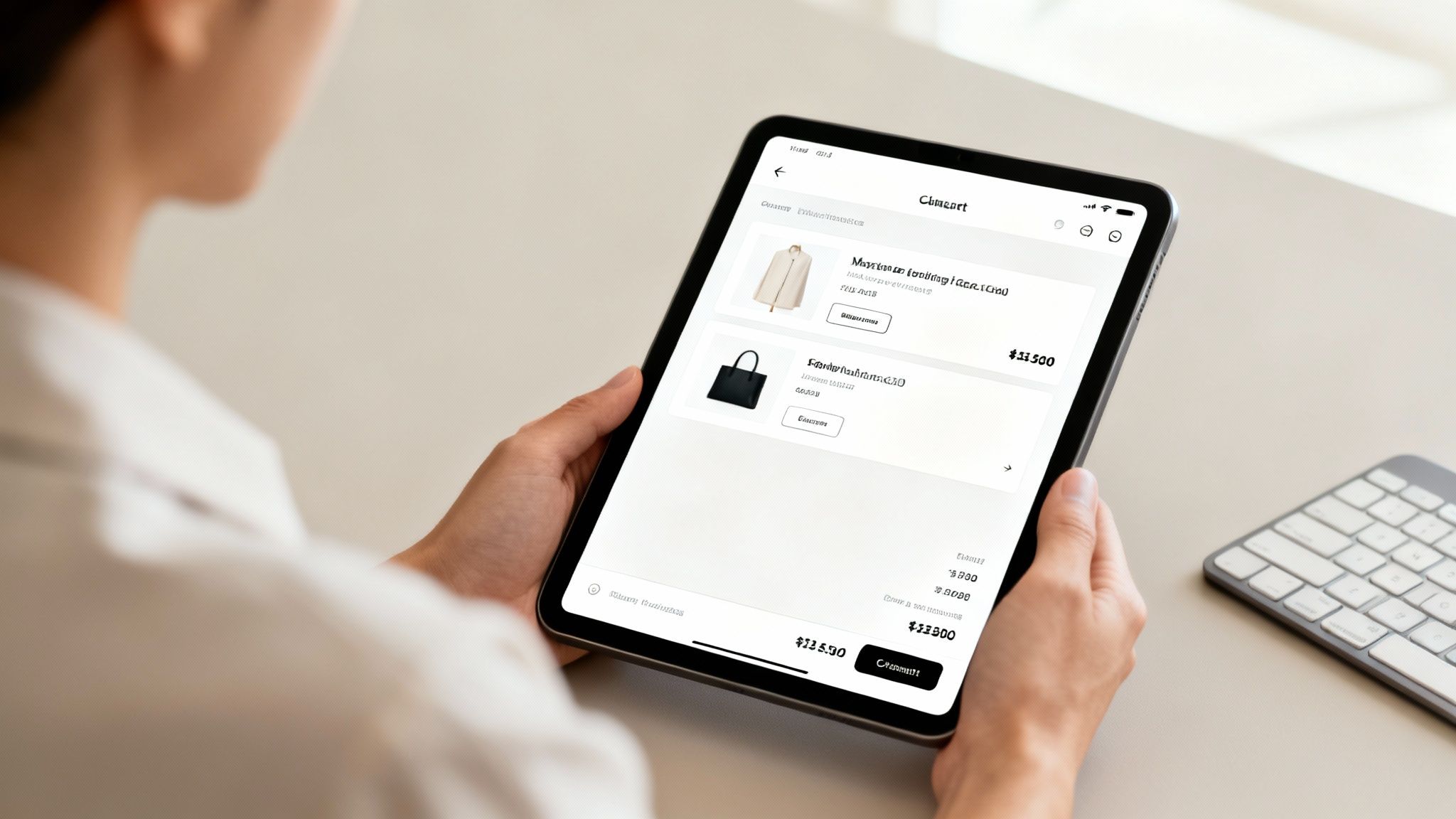
While a fantastic in-store experience is the heart of your brand, your digital presence is how you scale. It’s where you reach customers far beyond your local neighborhood. Your website, mobile experience, and other online channels aren't just add-ons anymore; they are absolutely central to any modern strategy for how to increase retail sales. Without a strong digital game, you're leaving a massive amount of revenue on the table.
The growth in online shopping is impossible to ignore. Forecasts show global eCommerce sales are expected to rocket to $6.86 trillion in 2025, grabbing a huge slice of all retail activity. A massive chunk of that is driven by mobile commerce, which is projected to hit $2.51 trillion in the same year. This isn't a fluke; it's a permanent shift powered by better tech and new customer habits. You can dig into more of these online retail statistics and trends to see the full picture.
This is a huge market, and the opportunity is right there for the taking. The trick is to build a digital experience that's every bit as thoughtful and compelling as your physical one.
Optimizing Your eCommerce Storefront
Think of your eCommerce site as your digital flagship store. It needs to be fast, intuitive, and laser-focused on turning browsers into buyers. This all starts with a buttery-smooth user experience (UX). Customers should be able to find what they're looking for in just a few clicks, guided by clear navigation and a powerful search bar.
Your product descriptions are your digital sales associates. They can't just list specs; they have to tell a story. Use vivid, sensory language that helps the customer imagine using the product. High-quality images from every conceivable angle are non-negotiable, and product videos showing items in action can be a game-changer. This level of detail builds trust and melts away the hesitation that comes with buying something sight unseen.
Finally, you have to obsess over your checkout process. Cart abandonment is a notorious profit killer, and a clunky, multi-step checkout is almost always the villain.
One of the biggest friction points in any checkout is the payment process itself. Simplifying this step with options like one-click purchases or accepting modern payments like Bitcoin via apps such as Flash can dramatically reduce abandonment and appeal to a tech-savvy audience looking for speed and security.
A smooth, fast, and flexible checkout shows you respect your customer's time and makes that final "buy now" click a whole lot easier.
Mastering Mobile Commerce
Your customers are shopping on their phones—while waiting for coffee, on their lunch break, or relaxing on the sofa. If your site isn't built for mobile, you're actively turning away business. A mobile-responsive design is the absolute baseline; your website must automatically adapt to look great and function perfectly on any screen.
But real mobile mastery goes deeper. You have to think about the entire mobile journey. Are the buttons large enough for easy tapping? Are the forms simple enough to fill out on a tiny screen? Do your pages load in a flash? Speed is everything here.
For your most loyal customers, a dedicated mobile app can be an incredibly powerful tool. An app offers a more personalized and convenient experience, and it gives you a direct line to your biggest fans through push notifications for new arrivals or exclusive sales. It's how you build a real, engaged community around your brand.
Building Predictable Revenue with Subscriptions
Imagine having a steady, predictable stream of revenue hitting your bank account every single month. That's the power of a subscription model. It's a brilliant way to increase retail sales by transforming one-time buyers into recurring, loyal customers. This model is a perfect fit for consumable products or curated experiences.
Think about products customers use up and need to re-order:
- Coffee beans or specialty teas
- Skincare or grooming supplies
- Vitamins and supplements
- Artisan snacks or food items
The secret to a successful subscription is offering undeniable value. This could be a small discount, early access to new products, or just the sheer convenience of never running out of their favorite things. When you build a program that genuinely makes the customer's life better, you create a loyal base that provides consistent, predictable cash flow, turning a simple sales tactic into a long-term growth engine.
Digital Channel Strategy Comparison
Choosing where to focus your digital efforts can be overwhelming. Each channel serves a different purpose and requires a different level of investment. The table below breaks down the primary goal, effort, and potential return for the main digital channels to help you prioritize.
| Digital Channel | Primary Goal | Implementation Effort | Potential ROI |
|---|---|---|---|
| eCommerce Store | Direct sales, brand control, customer data | High | High |
| Mobile Commerce/App | Convenience, loyalty, repeat purchases | Medium to High | High |
| Subscription Model | Predictable revenue, customer lifetime value | Medium | Very High |
| Social Commerce | Impulse buys, community engagement | Low to Medium | Medium |
| Email Marketing | Nurturing leads, driving repeat sales | Low | Very High |
| Marketplaces (Amazon) | Reaching a massive, existing audience | Medium | Medium to High |
Ultimately, the best strategy often involves a mix of these channels. An eCommerce store is your foundation, mobile optimization is essential for everyone, and subscriptions can create a stable revenue base. Use this comparison to decide where to place your bets first based on your specific products and resources.
Integrating Bitcoin Payments to Attract New Customers
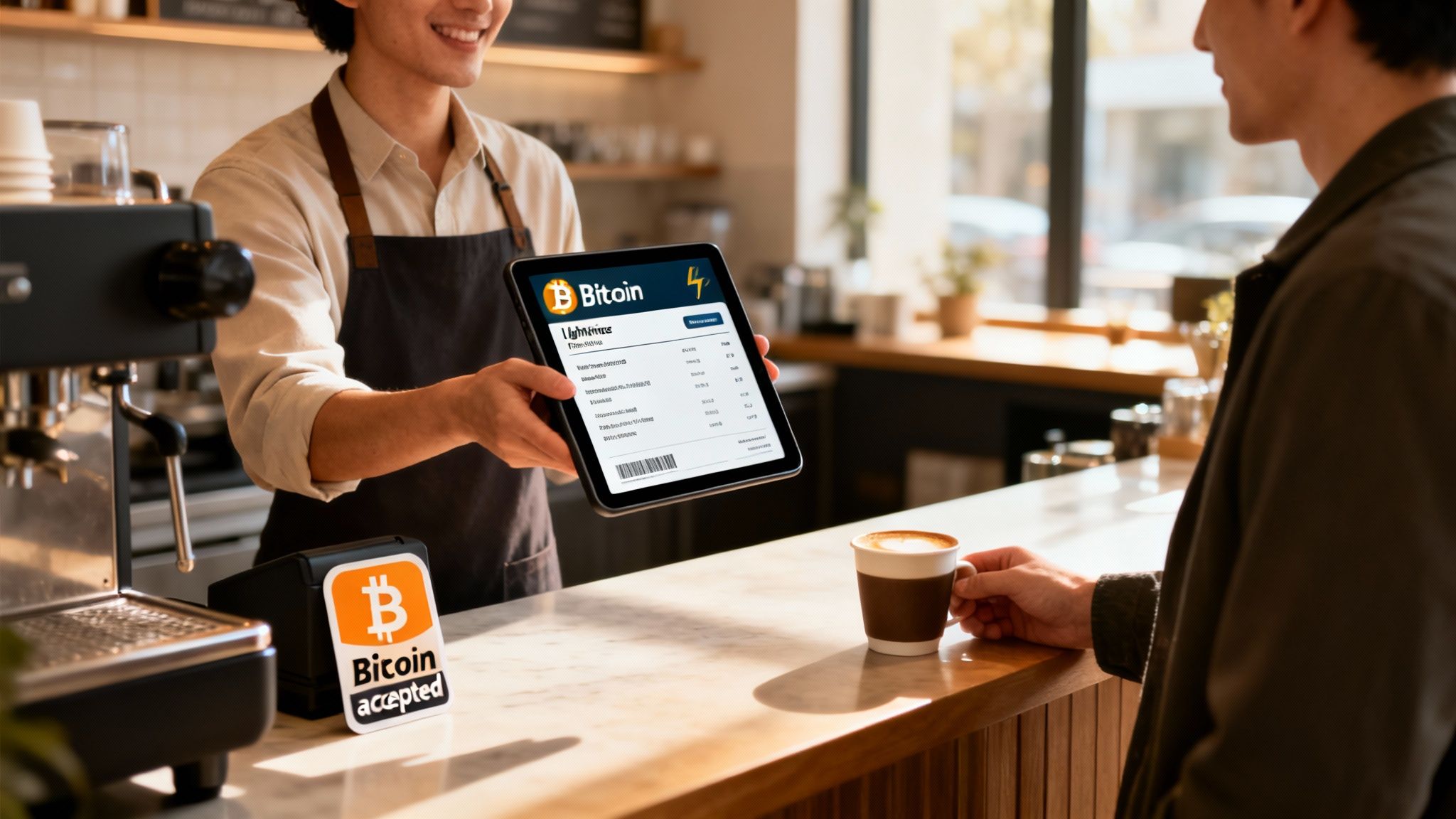
Offering modern payment options is more than just a convenience. It's a powerful signal that your business is forward-thinking and ready to meet customers where they are. Tapping into new markets is a core part of knowing how to increase retail sales, and embracing new payment tech is one of the most direct ways to do it.
Accepting Bitcoin isn't a niche idea anymore—it’s a practical strategy to stand out and attract a whole new demographic of shoppers. This isn't about becoming a tech guru. It's about recognizing that a growing, global community of consumers actively seeks out and supports merchants who accept Bitcoin. By integrating a simple system, you can open your doors to this loyal and often high-spending customer base.
The Business Case for Bitcoin Payments
Before we get into the "how," let's quickly cover the "why." For any retailer, the benefits of accepting Bitcoin go way beyond just adding another payment button at checkout. The advantages are tangible and hit your bottom line directly.
Here’s what you can expect:
- Drastically Lower Fees: Traditional credit card processors often skim between 2-4% off every single transaction. Bitcoin payments, especially over the Lightning Network, have near-zero fees. That means more of the sale price stays in your pocket.
- Instant Settlement: Forget waiting days for card payments to clear. Bitcoin transactions settle almost instantly. This gives you faster access to your revenue and dramatically improves cash flow.
- Zero Chargeback Fraud: Once a Bitcoin transaction is confirmed, it's final. This completely wipes out the risk of costly and time-consuming chargebacks—a common headache for merchants, particularly in eCommerce.
- Access to a Global Market: Bitcoin is borderless. You can easily accept payments from international customers without wrestling with currency conversion fees or cross-border payment hassles.
Accepting Bitcoin isn't just a technical upgrade; it's a marketing tool. By simply putting a "Bitcoin Accepted Here" sign in your window or on your website, you are sending a clear message. You are signaling that you are a modern, adaptable business, which can be a powerful draw for tech-savvy consumers.
Making Bitcoin Payments Simple with Flash
The idea of accepting a digital currency might sound complicated, but tools like Flash are designed to make it incredibly simple for merchants. Flash is a point-of-sale (POS) app that uses the Bitcoin Lightning Network, which is built for speed and low costs. It essentially turns your existing phone or tablet into a Bitcoin-ready payment terminal.
The setup is ridiculously straightforward and built for business owners, not developers. You can get up and running in under a minute without any complex know-your-customer (KYC) hoops to jump through, protecting both your privacy and your customers'.
Let's walk through a real-world scenario. Imagine you run a local coffee shop. A customer wants to pay for their latte with Bitcoin. Here's how it would work with the Flash app:
- Generate the Request: You simply enter the total—say, $5.00—into the Flash POS app on your tablet.
- Display the QR Code: The app instantly generates a unique QR code for that transaction.
- Customer Scans and Pays: The customer uses their Bitcoin wallet on their phone to scan the QR code and confirms the payment.
- Instant Confirmation: Within seconds, you get a confirmation on your screen that the payment has been received.
The whole thing is as fast, if not faster, than a typical credit card tap. The funds go directly from their wallet to yours, with no middleman holding your money. This direct, peer-to-peer nature is what makes it so secure and efficient.
For online businesses, the integration is just as easy. Flash offers customizable payment widgets and links you can add to your eCommerce site. You can also set up digital paywalls or automated subscription billing, all powered by Bitcoin. This opens up recurring revenue models that are both low-cost and globally accessible, truly expanding how you can increase retail sales across your digital channels.
Building Loyalty That Drives Repeat Business
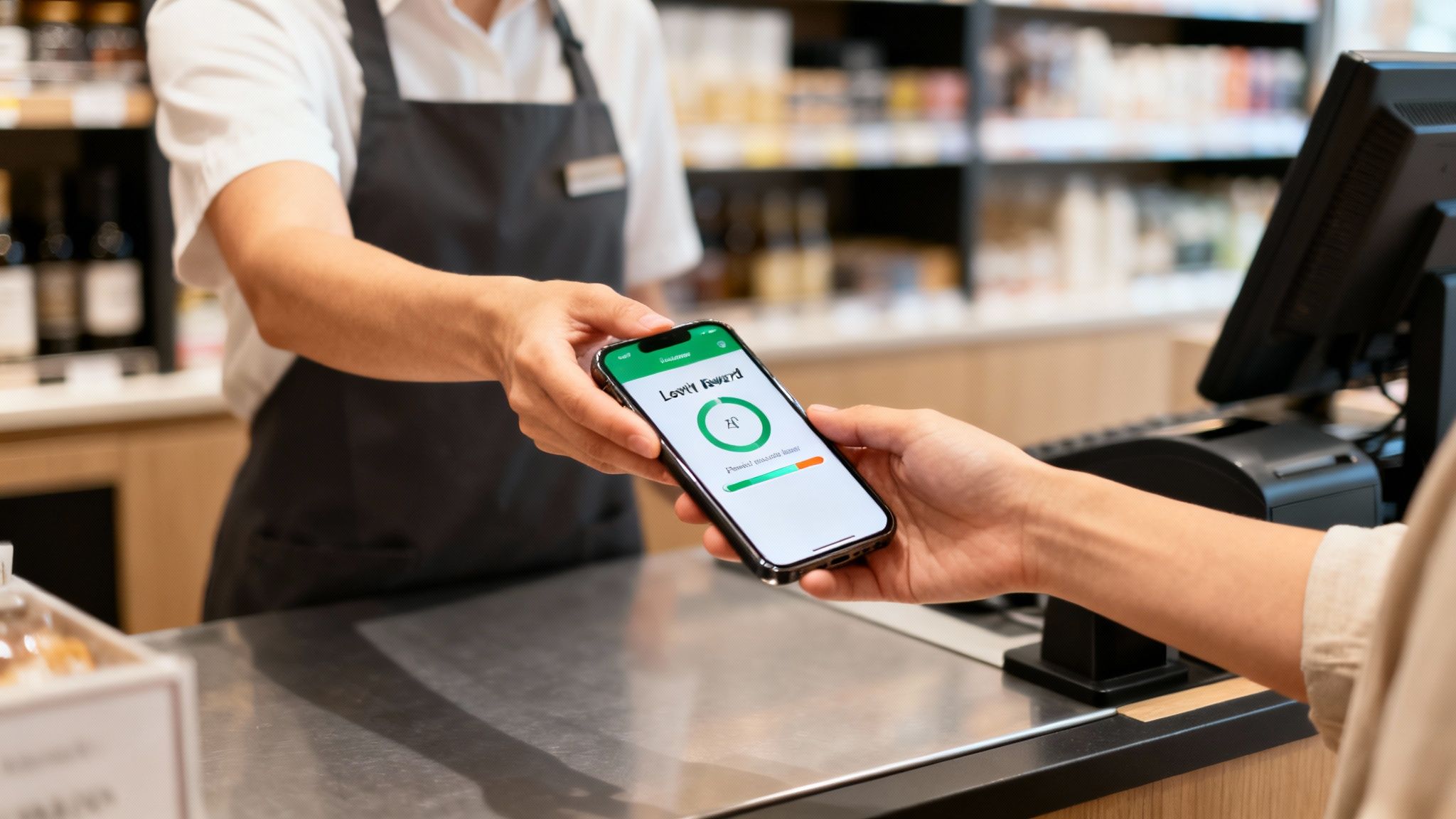
Let’s be honest, chasing new customers is a grind. It’s expensive, and the numbers back it up: a staggering 82% of companies agree that keeping an existing customer is far cheaper than finding a new one.
This is why the most profitable part of any retail strategy isn't the first sale—it's turning that first-time buyer into a lifelong fan. If you're serious about increasing retail sales for the long haul, you have to look beyond generic punch cards and start building genuine loyalty.
Modern retention isn't about just throwing discounts at people. It's about forging a connection so strong that your customers wouldn't dream of shopping anywhere else. This means creating programs and conversations that make them feel seen, valued, and part of an exclusive club.
Designing a Loyalty Program That Actually Works
An effective loyalty program dangles a carrot that customers actually want and can realistically get. The trick is finding that sweet spot between rewarding behavior and protecting your margins. Forget one-size-fits-all; today’s shoppers expect personalization and real value.
Here are a few modern structures that get results:
- Tiered Systems: This is all about rewarding your best customers with escalating perks. A basic tier might offer points per dollar, but higher tiers could unlock free shipping, early access to new products, or invites to special events. It gamifies spending and gives customers a clear reason to choose you over a competitor.
- Value-Based Rewards: Think beyond discounts. What experiences or services align with your brand? A coffee shop could offer a free barista class. A bookstore might host a private "meet the author" event for loyal members. These non-monetary rewards build a much deeper, emotional connection.
- Community-Focused Perks: People want to belong. Your program could offer access to a private social media group where members share tips, see behind-the-scenes content, and interact directly with your team.
The best programs make customers feel like insiders. You're building a two-way street: they give you their business, and you give them more than just a product in return. You give them an experience and a community.
The Art of Retention-Focused Email Marketing
Your email list is pure gold for driving repeat business. It's a direct line to people who have already raised their hands and said they’re interested. But just blasting out weekly promos is a surefire way to land in the spam folder. You need a smarter, segmented approach.
Segmentation is what makes your emails relevant. By grouping your audience based on their behavior, you can send targeted messages that actually resonate.
Key Segments for Targeted Campaigns
- New Customers: Roll out the welcome mat. Send a series of emails that tells your brand story, showcases bestsellers, and maybe offers a small nudge to make that second purchase. Your goal is to make a killer first impression and get them back in the door.
- VIPs/Frequent Buyers: These are your rockstars—treat them like it. Send exclusive offers, sneak peeks of upcoming collections, and personalized thank-you notes. Make it crystal clear that you appreciate their loyalty.
- Lapsed Customers: Someone who hasn't bought in a while isn't a lost cause. A well-crafted "we miss you" campaign, maybe with a compelling offer or a quick survey asking for feedback, can be surprisingly effective at winning them back.
This kind of personalized approach shows customers you're paying attention. You’re not just another brand shouting into the void; you're a partner that understands their needs.
Email is also the perfect channel for gathering feedback. After a purchase, set up an automated email asking for a review or a simple rating. This does two things: it gives you priceless insights into your products, and it makes the customer feel heard. Use this feedback—the good and the bad—to show your community you’re always improving. It closes the loop and creates a cycle that fuels repeat business and a fiercely loyal following.
Using Data to Make Smarter Sales Decisions
Gut feelings can get you in the game, but data is what helps you win it. If you’re serious about figuring out how to increase retail sales, you have to move past guesswork. The numbers tell a story, and learning to read it lets you make smart, systematic improvements across your entire business.
This isn't about getting lost in spreadsheets. It’s about finding the vital signs of your business—your key performance indicators (KPIs)—and tracking them relentlessly. These metrics show you what’s working, what's bleeding cash, and where your next big opportunity is waiting.
Must-Track KPIs for Every Retailer
Don't overcomplicate things at the start. Just focus on the numbers that directly tie to revenue and profit. Get a handle on these four essentials first:
Conversion Rate: This is your batting average—the percentage of people who walk in (or visit your site) and actually buy something. A low conversion rate can point to problems with everything from store layout and pricing to a clunky checkout process.
Average Transaction Value (ATV): How much does the average customer spend in a single purchase? This is a goldmine. Pushing this number up with smart upselling and cross-selling is one of the fastest ways to see a real jump in revenue.
Customer Lifetime Value (CLV): This is the big one. It's a forecast of the total amount of money a single customer will spend with you over their entire relationship with your brand. When your CLV is climbing, you know your loyalty efforts are hitting the mark.
Inventory Turnover: Are you selling through your stock quickly, or is it gathering dust? Slow turnover means your cash is tied up in products that aren't moving, which could signal a problem with your product selection or pricing strategy.
Think about it: foot traffic data might reveal your busiest time is Saturday morning. With that insight, you can staff up for peak conversion, not just peak traffic. That's how tracking numbers translates directly into smarter operations.
Turning Insights into Action
Data is useless until you do something with it. The real magic happens when you interpret the numbers and let them guide your decisions. You don’t need a fancy business intelligence platform to start; the built-in reporting from your POS system or Google Analytics for your website is packed with valuable information. For a deeper dive, check out this guide to leveraging big data for retail.
Let's say your data shows that customers who buy running shoes almost always check out the high-performance socks page next. What do you do? You create a bundle deal. You place them next to each other in the store. You create a pop-up on your website.
This is the rhythm of modern retail growth: measure, analyze, act, and repeat. It’s a continuous loop that lets you stop guessing and start building a more profitable business based on what your customers are actually telling you.
Answering Your Top Questions on Boosting Retail Sales
When you're focused on driving growth, a lot of questions pop up. I get it. Retailers often ask about the same core challenges, from surviving slow seasons to adopting new tech. Let's tackle some of the most common ones head-on with practical answers you can use right away.
What’s the Quickest Way to Increase Sales in My Store?
The fastest win is almost always focusing on the customers you already have. Forget expensive marketing campaigns for a moment and look at upselling and cross-selling.
This means training your team to be more than just cashiers—they need to be style consultants or product experts. If someone is buying a new suit, a well-trained associate shouldn't just ring them up. They should be suggesting the perfect tie, a crisp shirt, and a pocket square to complete the look. That one simple habit can dramatically lift your average transaction value (ATV) without needing a single new person to walk through the door.
How Can I Boost Sales During Slow Months Like January and July?
Slow seasons are tough, but they're also a massive opportunity if you get creative. You can't just wait for people to show up; you have to give them a reason. This is the perfect time for targeted promotions that create a little urgency.
Here are a few ideas that have worked for others:
- Host an exclusive event: Throw a VIP night for your best customers. Offer them a special discount or a sneak peek at new products. It makes them feel valued and gets them shopping.
- Run a flash sale: Use your email list and social media to announce a "24-Hour Sale." The limited time frame is a powerful motivator for people to buy now.
- Create smart bundles: Take some of your slower-moving products and package them with bestsellers. This helps you clear out old inventory while still giving the customer a great deal.
Here's a more forward-thinking idea: make some noise by adding a new way to pay. Announcing that you now accept Bitcoin can create buzz and attract a whole new type of tech-savvy customer who might never have considered your store before. It can turn a slow month into a surprisingly busy one.
Does Accepting Bitcoin Complicate My Accounting?
Not at all, especially with the tools available today. This isn't like the early days of crypto. Modern point-of-sale apps like Flash are built specifically for merchants.
You continue to price everything in your local currency (like USD or EUR), and the app handles the real-time Bitcoin conversion at the point of sale. Every transaction is recorded cleanly, just like a credit card sale, so your bookkeeping is completely straightforward. It completely removes the headache of worrying about currency fluctuations in your day-to-day operations.
Ready to unlock a new global customer base and slash your transaction fees? Flash makes it simple to accept Bitcoin payments instantly, with no technical skills needed. Visit the Flash website to get started in under a minute.