Remote work is reshaping how we live and work, and choosing the right city is key for digital nomads. Here are 10 popular cities that offer a mix of affordability, reliable internet, coworking spaces, and visa options tailored for remote workers:
- Chiang Mai, Thailand: Budget-friendly with costs as low as $800/month. Strong internet (103 Mbps) and a vibrant community.
- Da Nang, Vietnam: Coastal charm with affordable living ($750–$1,300/month) and reliable internet.
- Medellín, Colombia: "Spring-like" weather, affordable costs ($820–$1,800/month), and fast internet (137 Mbps).
- Mexico City, Mexico: Rich culture, costs from $1,400/month, and solid internet (67 Mbps).
- Tallinn, Estonia: A tech-forward city with costs around $1,000–$2,000/month and great digital infrastructure.
- Split, Croatia: Mediterranean appeal, costs from $1,076/month, and flexible visa options.
- Bali, Indonesia: Beachside living starting at $1,200/month, though internet reliability varies.
- Lisbon, Portugal: A sunny European hub with costs around $1,350–$2,300/month and excellent coworking spaces.
- Barcelona, Spain: Dynamic city life at ~$2,600/month with high-speed internet (200 Mbps).
- Dubai, UAE: A luxury hotspot with tax-free income but higher costs (~$3,000/month).
Quick Comparison
| City | Monthly Cost | Internet Speed | Visa Duration | Income Requirement |
|---|---|---|---|---|
| Chiang Mai | $800–$1,500 | 103 Mbps | 5 years (180-day stays) | Varies |
| Da Nang | $750–$1,300 | Reliable fiber | 90 days | None |
| Medellín | $820–$1,800 | 137 Mbps | 2 years | $775/month |
| Mexico City | $1,400–$2,200 | 67 Mbps | 180 days–4 years | ~$2,500/month |
| Tallinn | $1,000–$2,000 | 150 Mbps | 1 year | ~$4,800/month |
| Split | $1,076–$1,614 | 55 Mbps | 1 year | ~$2,475/month |
| Bali | $1,200–$2,400 | 20–100 Mbps | 60–180 days | None |
| Lisbon | $1,350–$2,300 | 120–180 Mbps | 1–2 years (renewable) | ~$3,900/month |
| Barcelona | ~$2,600 | 200 Mbps | 1–3 years (renewable) | ~$2,950/month |
| Dubai | ~$3,000+ | 300+ Mbps | 1 year (renewable) | $3,500–$5,000/month |
Each city offers unique benefits depending on your budget, lifestyle, and work needs. From affordable havens like Chiang Mai to high-end hubs like Dubai, the choice is yours.
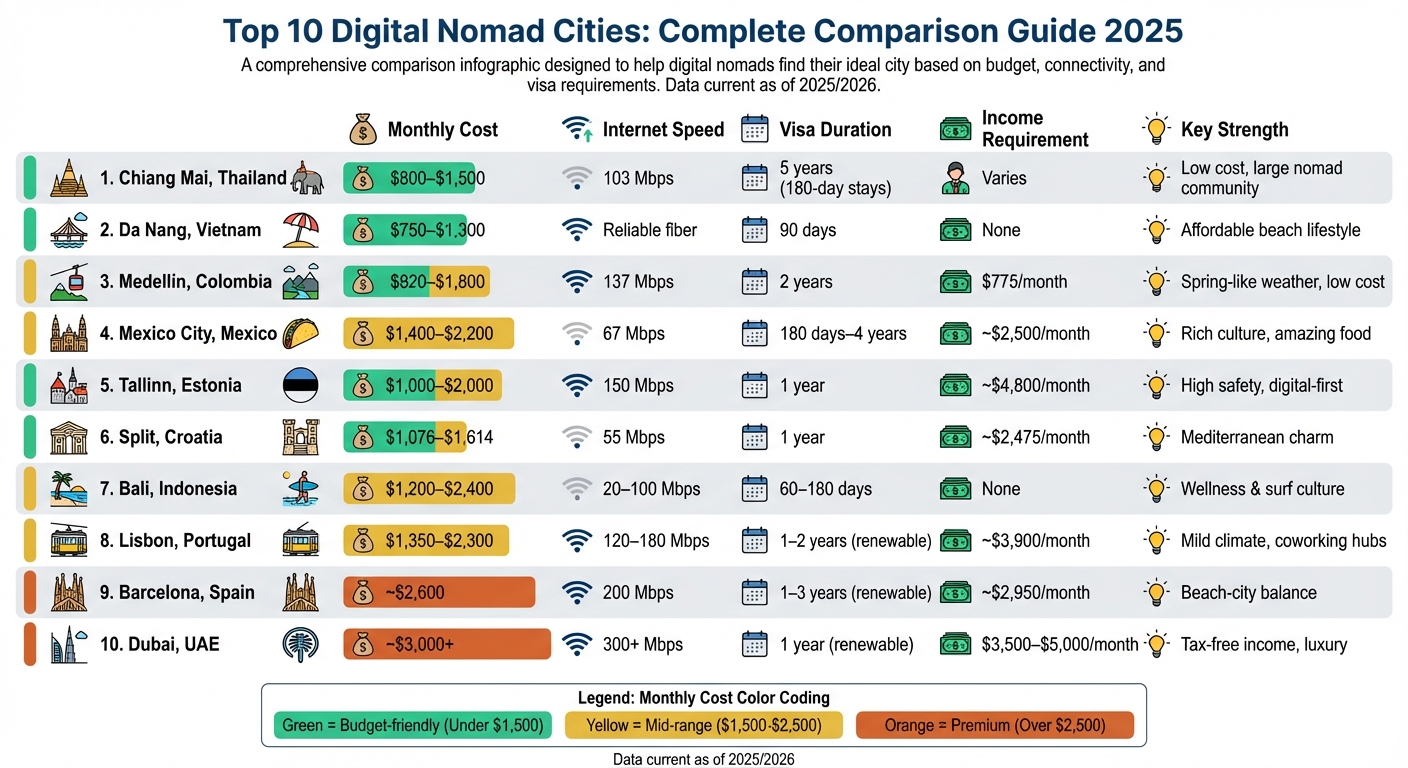
Top 10 Digital Nomad Cities: Cost, Internet Speed, Visa & Income Requirements Comparison 2025
Best Places for Digital Nomads To Live in 2026
sbb-itb-f81ab9b
1. Lisbon, Portugal
Lisbon is a top destination for digital nomads in Europe, blending its rich history with all the conveniences of modern living. With over 300 sunny days a year, a thriving expat community, and a well-established remote work infrastructure, the Portuguese capital makes it easy for newcomers to feel at home. Let’s dive into what makes Lisbon such an appealing choice.
Cost of Living
For solo digital nomads, living in Lisbon typically requires a monthly budget of $1,800 to $3,000. Housing is the largest expense - renting a one-bedroom apartment in the city center ranges from $1,050 to $1,575 (€1,000–€1,500) per month. Public transportation, on the other hand, is budget-friendly, with unlimited metro, bus, and tram passes costing just $42 per month.
Food and dining are reasonably priced. A traditional lunch menu runs between $7 and $12, while a mid-range dinner costs $15 to $25. If you’re looking for a more affordable lifestyle, neighborhoods like Arroios and Alcântara offer a more local vibe and lower prices compared to tourist-heavy areas like Chiado or Baixa. Just make sure to book accommodations early if you’re visiting during the high season (June–August) to avoid inflated prices.
Internet Connectivity
Lisbon’s internet infrastructure is highly reliable, with fiber-optic speeds ranging from 100 to 400 Mbps and some areas offering up to 650 Mbps. Mobile networks are equally dependable, with widespread 4G coverage and a rapidly growing 5G presence. For mobile data, NOS is a popular provider, offering prepaid packages of 10GB to 20GB for $13 to $19.
Coworking Infrastructure
Lisbon’s coworking scene is well-developed, offering options to suit different work styles. Avila Spaces, a two-time winner of "Best Co-work in Lisbon" (2018 and 2019), provides ergonomic setups with monthly plans starting at $157 (€150). Another standout is Second Home, located in the Time Out Market, known for its lush, plant-filled environment. However, its popularity often results in a waitlist.
For those who prefer flexibility, the Croissant App grants access to multiple coworking spaces with a single membership. Cafes like Selva and Seagull Method Cafe also cater to remote workers, offering internet speeds of 100–200 Mbps, though some limit laptop use during peak hours.
Visa Accessibility
Portugal makes it straightforward for remote workers to settle in. The Digital Nomad Visa (D8) requires proof of a monthly income of $3,444 (€3,280), while the D7 Passive Income Visa is available for those with passive income of at least $861 (€820) per month. Additionally, new residents can benefit from the Non-Habitual Resident (NHR) tax program, which offers generous tax breaks for up to 10 years.
Quality of Life
Lisbon is one of Europe’s safest capitals, with low rates of violent crime. The city’s networking opportunities are abundant, highlighted by the Lisbon Digital Nomads Facebook group, which boasts nearly 19,000 members and organizes weekly meetups attracting 100–300 participants. Add to that Lisbon’s Mediterranean climate, walkable streets, and rich cultural experiences, and you have an ideal setting for remote workers looking to balance productivity with leisure.
2. Tallinn, Estonia
Tallinn, the capital of Estonia, has carved out a niche as a haven for digital nomads. It was the first country to introduce a dedicated Digital Nomad Visa and consistently ranks among the top destinations for remote workers. The city seamlessly blends its medieval aesthetic with cutting-edge technology, offering an appealing mix of affordability and modern conveniences.
Cost of Living
Living in Tallinn is surprisingly affordable, with monthly expenses typically ranging from $1,000 to $1,400. Renting a one-bedroom apartment in the city center costs between $500 and $738, while utilities add another $265 to $290. Internet is both reliable and budget-friendly, priced at $26 to $29 per month. Dining out is equally accessible, with inexpensive meals averaging $13.90, coffee at $3.50, and a local beer for $5.00. Public transportation is efficient and affordable, with monthly passes costing between $32 and $37. Plus, Tallinn’s compact design makes walking a practical option, and trendy neighborhoods like Kalamaja offer a vibrant atmosphere at prices more reasonable than the historic Old Town.
Internet Connectivity
Tallinn boasts a strong digital infrastructure, making it ideal for remote work. Average download speeds range from 52 to 59.5 Mbps, with some areas exceeding 100 Mbps. The city provides over 30 free public Wi-Fi hotspots in parks, cafes, and public buildings, though these typically operate at around 15 Mbps. For more reliable connections, many remote workers head to laptop-friendly cafes like Fika Cafe and Epic Coffee Shop. Local internet providers such as Super, Elisa, and Tele2 offer affordable plans, while eSIM options from services like Airalo and Holafly ensure uninterrupted connectivity.
Coworking Infrastructure
Tallinn’s coworking spaces reflect its forward-thinking, tech-savvy culture. Spaces like Baltic Cowork provide modern facilities with high-speed internet for about $160 per month. Other options, such as Workland and Lift99, focus on fostering a sense of community and creativity. Many cafes also double as informal workspaces. For example, ROST Bakery offers a cozy Scandinavian vibe, while Kohvipaus caters to early risers with its 7:00 AM opening time.
Visa Accessibility
Tallinn’s Digital Nomad Visa allows remote workers to live in Estonia for up to a year, with application fees ranging from $87 to $109. To qualify, applicants must have a monthly income of at least $4,900 (€4,500). Additionally, Estonia’s e-residency program offers global entrepreneurs the chance to establish a digital presence, further enhancing its appeal to remote professionals.
Quality of Life
Tallinn offers a rare combination of safety, convenience, and cultural richness. Its UNESCO-listed Old Town delivers historical charm without the high price tag of other European capitals. Residents benefit from free public transportation, while visitors pay only modest fees. The city’s low crime rate makes it a secure choice for solo travelers, and its compact layout ensures that most amenities are within walking distance. Tallinn also fosters a strong sense of community among remote workers, ranking 12th globally on Deel’s list of the friendliest cities for digital nomads. This welcoming atmosphere, paired with opportunities to network and maintain a balanced lifestyle, makes Tallinn a standout destination for remote professionals.
3. Barcelona, Spain
Barcelona has solidified its position as a favorite among digital nomads, blending modern amenities with a lively, dynamic atmosphere. Ranked as the second-best city globally for remote work in mid-2025, just behind Los Angeles, the city offers over 300 sunny days a year and a thriving tech ecosystem centered in Poblenou, its innovation district. However, its growing popularity has contributed to rising living costs and stricter rental regulations.
Cost of Living
Living comfortably in Barcelona costs around $2,261 per month. Rent is the biggest expense, with studio or one-bedroom apartments ranging from €900 to €1,800, while shared rooms are more budget-friendly at €400 to €850. Compared to Athens, Barcelona is about 26% pricier, yet leisure activities remain roughly 30% cheaper than in cities like Amsterdam or Paris.
You can stretch your budget by opting for the "menú del día" at local eateries (€12–€18) and avoiding tourist-heavy areas like Las Ramblas. Instead, explore neighborhoods like Sant Antoni or Eixample for dining and shopping. For transportation, the T-usual pass (€20–€40/month) offers unlimited travel. Groceries typically cost between €250 and €350 per month, and a mid-range dinner for two will set you back about $70. Arriving before the peak summer months (July and August) can also help you secure better rental deals and avoid the tourist crowds.
Internet Connectivity
Barcelona offers excellent internet speeds, with average broadband clocking in at 251 Mbps. Fiber optic plans provide speeds between 100 and 600 Mbps, starting at around $60 per month for 60+ Mbps. For mobile data, local SIM providers offer plans with 20 to 50GB for €10 to €25 per month. The city also boasts "Barcelona WiFi", a network of free hotspots in public areas. To save on mobile plans, buy prepaid SIM cards from official shops in the city center rather than at the airport. These reliable connections make Barcelona a hub for remote work.
Coworking Infrastructure
With around 350 coworking spaces, Barcelona caters to various work preferences. Popular choices include Aticco MED, which features rooftop pools, gyms, and 24/7 access, and Betahaus in Gràcia, known for its creative vibe, six floors, and five terraces. Monthly hot desk memberships typically cost between €150 and €350, while day passes range from €10 to €30. For those who prefer cafés, spots like SandwiChez offer 90-minute Wi-Fi codes, though some venues are cracking down on extended laptop use.
Visa Accessibility
Spain's Digital Nomad Visa makes it easier for remote workers to settle in Barcelona. It offers a 15% tax rate for the first four years for individuals earning under €600,000 annually. Applicants need a minimum monthly income of €2,400 (200% of Spain's national minimum wage) and proof of employment with a company that's been established for at least a year. However, changes in the rental market are worth noting - short-term rentals will be completely banned by 2029, leading to tighter regulations and increasing costs.
Quality of Life
Barcelona's appeal goes beyond work - it’s a city designed for living well. With its walkable streets, easy beach access, and vibrant community, it’s no wonder digital nomads are drawn here. Groups like "Barcelona Digital Nomads" and "CODINO" host regular meetups, language exchanges, and outdoor activities like hiking. Many coworking spaces also organize social events, workshops, and wellness activities such as yoga to help newcomers feel at home. While pickpocketing remains an issue in touristy areas, Barcelona’s Mediterranean charm, strong infrastructure, and welcoming international community keep it a top choice for remote workers worldwide.
4. Mexico City, Mexico
Mexico City has become a hotspot for digital nomads in Latin America, blending the buzz of a bustling metropolis with rich traditions and dependable infrastructure. For those working remotely, living comfortably here typically costs between $1,400 and $2,200 per month. Everyday expenses are notably lower compared to cities like Seattle, with consumer goods nearly 50% cheaper and rent over 53% less.
Cost of Living
Living in Mexico City can be surprisingly affordable. Monthly expenses, excluding rent, average around $781.30. In trendy neighborhoods such as Roma Norte and Condesa, expect to pay $800 to $1,200 per month for a one-bedroom apartment. For more budget-friendly options, areas like Juárez are worth considering.
Everyday costs are also easy on the wallet: street tacos are just $1–$2, metro rides cost about $0.30, and utilities for a 915-square-foot apartment run around $57 per month. Dining out is equally affordable, with mid-range restaurants charging $5–$12 per meal and a dinner for two ranging from $30 to $50.
"Rent might sting, but daily life feels refreshingly affordable."
- Trisha Velarmino, Founder, P.S. I'm On My Way
To save on accommodation, skip Airbnb and look for local "Se Renta" signs or use platforms like Homie, which often don’t require a Mexican cosigner. For coworking spaces, memberships usually cost $150 to $250 per month, while gym memberships range from $30 to $60. These costs create an ideal setup for remote work, supported by excellent internet connectivity.
Internet Connectivity
Mexico City offers reliable internet, with average download speeds of about 67 Mbps. In central neighborhoods like Roma, Condesa, and Polanco, fiber-optic connections in apartments typically range from 80–200 Mbps, while coworking spaces often provide speeds between 200 and 500 Mbps. When booking accommodations, ask for a speed test screenshot to ensure quality service. The city also boasts over 21,000 free public Wi-Fi hotspots, and broadband plans (60+ Mbps) are available for about $36 per month.
"In my apartment in Roma, I get a fiber connection that usually runs between 80–200 Mbps, which is more than enough for video calls, streaming, and heavy uploads."
- Trisha Velarmino, Digital Nomad and Resident
For backup, a local Telcel SIM card offers dependable 4G/5G speeds of 20–40 Mbps in central areas. If working from cafes, it’s good etiquette to buy at least one drink or snack every two hours. With strong connectivity and affordable options, Mexico City is well-equipped for remote professionals.
Coworking Infrastructure
The city has a wide variety of coworking spaces to meet different needs. There are 16 WeWork locations scattered throughout, alongside boutique spots like El 3er Espacio and community hubs such as Homework. Público stands out with specialized features like podcast studios and photo facilities, with memberships ranging from $190 to $320 per month. Day passes generally cost $10 to $20, while cafes like Coffeefy offer high-speed internet (often over 200 Mbps) for about $2.50 per hour.
WeWork locations in Roma and Condesa cater to a creative crowd, while Regus spaces are concentrated in Polanco’s corporate district. Whether you prefer a lively community vibe or a more professional setup, there’s no shortage of options.
Visa Accessibility
For short stays, most nationalities can get a 180-day tourist permit upon arrival, though the duration granted can vary. Those planning a longer stay can apply for a Temporary Resident Visa, valid for up to four years. This visa requires proof of a monthly income between $2,500 and $4,400, depending on the consulate. Operating on Central Time (UTC-6) also makes it easier to coordinate with teams in North America.
Quality of Life
Mexico City offers more than just work-friendly infrastructure - it’s a city brimming with culture and a vibrant digital nomad community. However, gentrification in areas like Roma and Condesa has led to rising rents and housing concerns among locals. While these neighborhoods are generally safe, petty crimes like phone snatching can happen. To stay secure, avoid displaying expensive electronics in crowded areas and opt for ride-hailing apps like Uber or DiDi at night.
Despite these challenges, Mexico City remains an enticing destination for remote workers, offering an engaging mix of work opportunities and cultural experiences. Its strong community of digital nomads ensures you’ll find both inspiration and connection.
5. Medellín, Colombia
Medellín has become a standout destination for digital nomads in Latin America, thanks to its pleasant year-round weather (63–83°F) and modern infrastructure that comes at a fraction of European costs. In fact, the city saw a 254% surge in digital nomad check-ins by 2026, ranking it as the 15th fastest-growing hotspot for remote workers. Living comfortably here costs about $1,600 per month, making it an attractive option for those seeking affordability without compromising on quality.
Cost of Living
Monthly expenses, excluding rent, range from $800 to $1,800, depending on your lifestyle. In El Poblado, the go-to neighborhood for expats, one-bedroom apartments cost between $600 and $1,200 per month. For a more budget-friendly option, Laureles offers similar apartments for $300 to $500.
Daily costs are also quite reasonable. A local lunch will set you back just $3 to $6, metro rides cost $0.80, and coworking memberships range from $80 to $200 per month. To save significantly on rent, consider using local platforms like Fincaraiz or Metrocuadrado, which can reduce costs by 30–50% compared to Airbnb.
When paying with credit cards, always choose to be charged in Colombian Pesos (COP) to avoid currency conversion fees of 5–10%. For ATM withdrawals, banks like Colpatria or Davivienda typically charge lower fees than Bancolombia.
Internet Connectivity
Medellín is well-equipped for remote work, offering reliable high-speed internet. In July 2025, average speeds measured at 137 Mbps for downloads and 93 Mbps for uploads. Fiber-optic connections in neighborhoods like El Poblado and Laureles typically range from 100 to 300 Mbps, while professional coworking spaces, such as nomadico coliving, provide even faster speeds - up to 225 Mbps download and 427 Mbps upload - ideal for demanding tasks.
Before booking accommodations, request a speed test screenshot, as residential internet speeds can vary widely, from 10 to 60 Mbps. For mobile connectivity, pick up a local SIM card from Claro or Tigo; 5GB of data costs around $15 and delivers reliable 4G coverage.
Coworking Infrastructure
Medellín offers a variety of coworking options tailored to different needs. International spaces like WeWork are available in El Poblado, while Laureles boasts a vibrant café culture perfect for working remotely. Day passes typically cost $8 to $15, and monthly memberships range from $50 to $200. Spaces like Semilla Cafe & Coworking provide dedicated call booths, while Bloom Eco Coworking offers a serene, open-air workspace surrounded by greenery.
Coliving spaces such as nomadico and Casa Santa Fe blend accommodation with coworking facilities and host networking events. Private rooms in these spaces cost around $860 to $900 per month, making them a convenient choice for digital nomads.
Visa Accessibility
Colombia makes it easy for remote workers with its specialized Digital Nomad Visa (Visa V), which allows stays of up to two years - much longer than the standard tourist visa. To qualify, applicants must show a monthly income of at least three times the Colombian minimum wage, approximately $900 to $1,100 USD. Alternatively, many digital nomads start with a 90-day tourist visa, which can often be extended to 180 days.
Quality of Life
Medellín isn’t just about work - it’s a city rich in culture and community. It boasts Colombia’s only metro system, offering an affordable and efficient way to get around. However, the city’s growing popularity has led to rising rental prices in upscale areas like El Poblado and increased traffic congestion.
Safety is another factor to keep in mind. Avoid displaying expensive electronics in crowded areas, and stick to well-lit, well-traveled neighborhoods at night.
"Medellín is a top digital nomad destination in Latin America, offering affordability, modern infrastructure, and vibrant culture."
- Mike, NomadDealsInfo
"With its lush hills and street art, Medellín is like an open-air exhibition, where brilliant minds convene and let their creativity flow."
- RoamRank
6. Chiang Mai, Thailand
Chiang Mai has earned its reputation as the world's top city for digital nomads. By late 2025, over 6,000 remote workers had made this northern Thai city their home, drawn by its affordability, reliable infrastructure, and vibrant community. Here, you can live comfortably on $800 to $1,500 per month - a fraction of what you'd spend in cities like Lisbon or San Francisco, where costs can soar to $4,000–$6,000. Let’s take a closer look at why Chiang Mai stands out.
Cost of Living
Living in Chiang Mai is surprisingly budget-friendly. Monthly expenses include:
- Food: $200–$400
- Housing: $300–$800 for a one-bedroom apartment in Nimman
- Coworking memberships: $50–$150
Street food is a steal at just $1–$3 per meal, while a café meal ranges from $5–$15. For transportation, renting a scooter - a favorite among locals and expats - costs $50–$100 per month. Just make sure to have an International Driver's Permit.
Looking to save even more? Many expats negotiate rent directly through Facebook Groups, often cutting costs by 10%–20%. For mobile data, an AIS SIM card from Maya Shopping Mall offers unlimited plans starting at just $5–$8 per month.
Internet Connectivity
Chiang Mai’s internet speeds are impressive. The average speed is 103 Mbps, with some fiber connections reaching up to 500 Mbps in apartments and coworking spaces. Mobile data from providers like AIS or dtac serves as a reliable backup, with unlimited plans available for about $8 per month. If you're renting an apartment, ask for a speed test screenshot to confirm the connection, as residential speeds can vary between 10 and 60 Mbps.
Coworking Infrastructure
With over 85 coworking spaces, Chiang Mai has one of the most developed remote work scenes in Asia. Popular spots include:
- Punspace Wiang Kaew: Known for its balance of quiet work zones and social areas (rated 4.7/5 from 118+ reviews).
- Yellow Coworking: A hotspot for networking, rated 4.5/5 from 200+ reviews.
Day passes typically cost $5–$10, and many spaces, like Yellow and Wake Up café, offer 24/7 access - perfect for those juggling global time zones.
"Chiang Mai remains the world's #1 digital nomad city in 2025, thanks to its unbeatable balance of affordability, infrastructure, and community."
- Starting Nowhere
For remote workers, the abundance of coworking spaces pairs perfectly with Thailand’s visa options.
Visa Accessibility
Thailand’s Destination Thailand Visa (DTV) is a game-changer for digital nomads. It allows stays of up to 180 days and can be renewed for a total of five years. However, applicants must show a minimum bank balance of 500,000 THB (about $13,800) held for at least three months.
Quality of Life
While Chiang Mai offers an exceptional lifestyle, it’s not without its challenges. The "Burning Season" from February to April is a major drawback. During this time, agricultural burning leads to hazardous air pollution, with dangerous PM2.5 levels. Many nomads choose to leave the city temporarily during these months.
Outside of the Burning Season, Chiang Mai shines. The weather is pleasant, the café culture is thriving, and the community of remote workers is close-knit. Nimman is the go-to area for coworking and socializing, while Santitham provides a more local vibe at lower costs. Combining affordability with excellent infrastructure, Chiang Mai continues to be a standout destination for digital nomads.
7. Bali, Indonesia
Bali offers a vibrant mix of beachside living and digital innovation, making it a favorite among remote workers. The island, especially Canggu, has become a hub for digital nomads. As Nomad Cloud describes it, "Canggu alone has transformed into what feels like a mini Silicon Valley by the beach, with coworking spaces, networking events". However, this popularity has driven up living costs. In early 2026, rent in Canggu jumped by 18% compared to the previous year, and landlords now often require a two-month deposit instead of the usual one-month.
Cost of Living
Your monthly expenses in Bali depend on your lifestyle and location. A solo nomad can manage on a budget of $1,170–$1,390, live comfortably for $1,900–$2,400, or indulge in a premium lifestyle for $3,165–$4,430. Canggu is the most expensive area, with one-bedroom villas costing $760–$1,140 per month. Ubud offers similar accommodations at lower prices, while Sanur and Denpasar are even more affordable, with rents ranging from $380–$635.
For meals, local dishes are a bargain at $1.25–$1.90, while Western-style brunches or specialty coffees run between $5 and $7.60. Renting a scooter - a must for navigating Bali’s traffic - costs $47–$63 per month, and a 50GB mobile data plan from Telkomsel is about $9.50. To save on rent, consider locking in a six-month lease starting in April to avoid peak-season rates.
Internet Connectivity
Internet in Bali is generally reliable, with fiber providers like Biznet and IndiHome offering speeds of 50–100 Mbps for $25–$45 per month. However, tropical storms can occasionally cause outages. When viewing a villa, it’s smart to test the Wi-Fi and ask neighbors about recent service interruptions. Mobile data is a reliable backup, with Telkomsel delivering average speeds of about 29 Mbps.
Coworking Infrastructure
Bali is well-equipped for remote work, with coworking spaces like Dojo Bali and Outpost charging $115–$125 for unlimited monthly access. Canggu has the highest concentration of coworking options, while Ubud caters to wellness-focused workers, though internet reliability can vary there. For those who need occasional workspace access, day passes typically range from $9 to $20.
Visa Accessibility
Indonesia introduced the five-year Second Home Visa for digital nomads in 2025, requiring a $950 upfront fee. For shorter stays, the B211A visa allows up to 180 days (with extensions) and requires a local sponsor or agent. Alternatively, the Visa on Arrival costs $32–$35 for 30 days and can be extended once.
Quality of Life
Bali offers an appealing lifestyle with its beach culture, buzzing café scene, and strong nomad community. However, the rainy season from November to March often brings afternoon downpours, which can occasionally cause power outages. A portable battery pack for your laptop is a handy backup. Traffic in Canggu can be intense, leading some nomads to relocate to quieter areas like Pererenan while still enjoying access to reliable infrastructure. Healthcare is accessible, with facilities like BIMC or Siloam hospitals offering consultations for around $50.
8. Da Nang, Vietnam
In 2026, Da Nang strikes a great balance between the buzz of city life and the laid-back vibe of a coastal town. Nestled along the Han River, this Vietnamese gem has become a favorite among remote workers, particularly in the My An and Son Tra neighborhoods near the picturesque My Khe Beach. As NomadExpenses aptly describes it, "Da Nang often feels like the calm middle ground... a cost of living that still feels like a cheat code in 2026". Here's a closer look at what makes Da Nang an appealing choice for digital nomads, covering costs, connectivity, workspaces, visas, and lifestyle.
Cost of Living
Living in Da Nang is surprisingly affordable. Monthly budgets vary based on your lifestyle:
- Basic living: $750–$900
- Comfortable living: $1,000–$1,300
- Upgraded lifestyle: $1,500–$2,000
Rent is the biggest expense. A one-bedroom apartment near the beach typically costs $350–$500 per month, while studios range from $200–$300. Meals are budget-friendly too - street food costs just $1.50–$3 per meal, and dining at mid-range restaurants usually sets you back $4–$8 per dish. Specialty coffee is a treat at $2–$3 per cup, and renting a scooter, the go-to mode of transport, costs between $40 and $70 per month.
Internet Connectivity
Da Nang boasts reliable high-speed internet in most apartments, cafes, and coworking spaces. Speed tests from late 2025 highlight impressive results: The Backpacker Hotel clocked 472 Mbps download and 339 Mbps upload, while Passport Coffee Club reached 351 Mbps download and 416 Mbps upload. For extra security, many remote workers opt for a local SIM card. Viettel, for example, offers a 30-day tourist plan with 60GB of data for just $10. While power outages are rare in the city center, having a portable power bank and backup SIM card can be helpful for unexpected situations.
Coworking Spaces
Da Nang offers plenty of coworking options to suit remote workers. Monthly memberships typically cost $70–$150, and day passes range from $8 to $12. Popular spaces like Enouvo Space, The Embassy, and DNC provide 24/7 access and fast internet. If you prefer a more casual setting, the city's café scene - especially in the My An (An Thuong) area - is packed with work-friendly spots.
Visa Options
Vietnam's e-visa system makes it simple to stay in Da Nang. The e-visa allows for up to 90 days of travel and is available to all nationalities. Single-entry visas cost $25, while multiple-entry options are priced at $50 through the official portal (evisa.gov.vn). Ranked 34th globally for visa accessibility with a score of 77.84 out of 100, Da Nang is a convenient choice for extended or repeat visits.
Quality of Life
Da Nang scores highly for safety (4.5 out of 5 stars) and overall livability, earning a nomad score of 4.25 based on 18 reviews. The city offers easy access to My Khe Beach, the Marble Mountains, and a growing expat community. Each neighborhood has its own vibe:
- My An: Close to the beach and bustling nightlife
- Hai Chau: Home to upscale cafes and commercial hubs
- Tho Quang: An artistic, more local atmosphere
That said, there are a few challenges to keep in mind. Traffic can be chaotic, the humidity is high, and English isn't widely spoken outside expat-focused areas. Since public transportation is limited, ridesharing apps or scooter rentals are essential.
9. Split, Croatia
Split blends its rich Roman history with a vibrant modern atmosphere, making it an appealing choice for remote workers. It strikes a balance between the high costs of Western Europe and the affordability of Southeast Asia. As noted by Flatio:
"Compared to cities in Western Europe, Split is relatively affordable, particularly for dining and housing".
This Croatian gem offers reasonable living costs, reliable internet, diverse coworking spaces, and flexible visa options tailored for digital nomads.
Cost of Living
Living comfortably in Split typically costs between €1,000 and €1,500 ($1,076–$1,614) per month. Housing takes up the largest share of expenses, with one-bedroom apartments outside the city center priced at €600–€800 ($646–$861). If you prefer living in the Old Town or plan to stay during the busy summer months (July–August), expect prices to rise to €900–€1,500 ($969–$1,614), with seasonal spikes of up to 30%. For a more budget-friendly option, co-living spaces cost around €500–€700 ($538–$753) monthly, often including utilities and internet.
Groceries typically run between €200 and €300 ($215–$323) per month. Dining out at local konobas (traditional restaurants) costs about €7–€15 ($7.50–$16) per meal, and a local beer will set you back €2.60 ($2.80). Public transportation is affordable, with a monthly bus pass priced at approximately €35 ($38). For those applying for Croatia's digital nomad visa, non-EU citizens need to demonstrate a monthly income of around €2,300 ($2,475). These manageable costs make Split an attractive choice for remote professionals.
Internet Connectivity
Split offers reliable internet for remote work, with average speeds of 55.39 Mbps for downloads and 19.20 Mbps for uploads. Digital nomad Nicola Curtis shared:
"I never found a problem with the Internet in Split generally, so working from home shouldn't be an issue".
Most apartments and coworking spaces provide stable connections, but older buildings may have weaker signals. Before committing to a rental, it’s a good idea to request a screenshot of a speed test. If you need mobile internet, local SIM cards with generous data plans cost just €10–€15 ($11–$16) per month. While many cafes offer good Wi-Fi, they often lack power outlets, so carrying a portable power bank is a smart move.
Coworking Infrastructure
Split’s coworking spaces cater to a variety of needs and budgets. TinkTank offers a community-oriented, pet-friendly space with parking and kitchen access for €15 ($16) per day or €65 ($70) per week. Smartspace, located in the Old Town, charges €5 ($5.50) per hour or €25 ($27) per day and includes perks like free coffee and outdoor seating. Scale Up Office provides a more premium option, with day passes at €17 ($18) and monthly dedicated desks for €250 ($269). For those near Firule beach, The Works boasts modern amenities such as private booths and A/V equipment. These coworking spaces are ideal for tasks requiring robust infrastructure, like video calls or large file uploads, and they foster a sense of community among remote workers.
Visa Accessibility
For EU and EEA citizens, Split allows stays of up to three months without registration. Longer stays require a simple registration with local authorities. Non-EU citizens can apply for Croatia’s one-year Digital Nomad Visa, which requires proof of a stable monthly income of approximately €2,300 ($2,475). While the visa cannot be renewed, applicants can reapply six months after the previous visa expires. These policies make Split an accessible destination for those with steady remote incomes.
Quality of Life
Split offers a high quality of life, combining safety, a Mediterranean climate, and plenty of outdoor activities. You can explore beaches, hike on Marjan Hill, or take a ferry to nearby islands like Hvar and Brač. Residential areas such as Žnjan, Firule, and Poljud provide a more local vibe and lower rent compared to the tourist-heavy Old Town.
Parking can be a hassle in Split, so renting a bicycle for €1 ($1.08) per hour or using the bus network is often more convenient than driving. To avoid the summer crowds and higher prices, consider visiting during the shoulder seasons of April–June or September–November, when the weather is still warm but the city is less crowded.
10. Dubai, UAE
Dubai took the top spot globally in 2025, according to Instant Offices (407/770). With its tax-free environment and endless sunshine, the city has become a magnet for remote workers. As Mohammad Alard, Founder of Arab Digital Nomads, puts it:
"Dubai can be classified as a global digital business hub competing with cities like Bangkok, Barcelona or Cape Town... I witnessed the advanced digital infrastructure, widespread high‑speed internet, availability of co‑working spaces, and a culturally diverse society."
Expats make up over 85% of Dubai's population, creating a rich tapestry of networking opportunities in a highly multicultural environment.
Cost of Living
For a single digital nomad, monthly expenses in Dubai average around $2,936, though costs can vary depending on the neighborhood. Rent is typically the biggest expense. In suburban areas like Jumeirah Village Circle, studio or one-bedroom apartments range between AED 4,000 and 6,000. In more central locations, such as Dubai Marina or Downtown, rents can climb to AED 7,000–10,000 or higher. Additional monthly costs include groceries (AED 1,000–1,500), utilities (AED 600–1,000), and public transportation (AED 300–500). Health insurance adds another AED 500–1,000. The absence of personal income tax makes Dubai especially attractive for high-income remote professionals.
Internet Connectivity
Dubai offers some of the fastest internet speeds in the world, with mobile (62/70) and Wi-Fi hotspot speeds (67/70) rated among the best. Average internet speeds hit an impressive 304.24 Mbps, and the city's broadband score of 54 nearly doubles that of Lisbon. Major tech hubs like Dubai Silicon Oasis and Dubai Internet City further bolster connectivity, making Dubai a prime location for remote work.
Coworking Infrastructure
The city is packed with coworking spaces, particularly in tech-focused areas like Dubai Silicon Oasis and Dubai Internet City. These spaces are equipped with modern amenities, high-speed internet, and networking opportunities, catering to both startups and seasoned professionals.
Visa Accessibility
Dubai’s Work Remotely from Dubai Program, launched in March 2021, simplifies the process of securing a one-year residency permit for remote workers. Applications can be completed entirely online or through AMER service centers in Dubai, with no need for a local sponsor. Eligibility requires proof of one-year employment or business ownership, a monthly income between $3,500 and $5,000, UAE-valid health insurance, and a passport valid for at least six months. The total visa fee is approximately $611, covering application, medical insurance, and Emirates ID. The UAE ranks 2nd globally in the VisaGuide Digital Nomad Visa Index. Upon arrival, newcomers must complete a medical check within the first month to finalize residency. The visa also allows family sponsorship for spouses, children, and parents. However, staying outside the UAE for more than six consecutive months will result in automatic visa cancellation. This streamlined visa process makes Dubai a convenient and attractive choice for remote professionals.
Quality of Life
Dubai combines top-tier infrastructure with the perks of tax-free income. The city’s year-round sunshine, excellent services, and work-life balance make it stand out. Add to that a dynamic food and entertainment scene tailored to its diverse expat community, and it’s clear why Dubai is a favorite among digital nomads.
Comparison of Pros and Cons
Selecting the right city as a digital nomad involves weighing factors like cost of living, internet connectivity, coworking options, visa flexibility, and overall quality of life. For instance, Southeast Asian cities like Chiang Mai and Da Nang are budget-friendly, with monthly expenses ranging from $600 to $1,180. On the other hand, European hotspots such as Barcelona (around $2,600) and Lisbon ($1,350–$2,300) offer established coworking spaces and modern infrastructure. At the higher end of the spectrum, Dubai stands out with monthly costs exceeding $3,000. However, its tax-free income and unparalleled connectivity can make it a worthwhile choice for higher earners. These examples highlight the trade-offs between affordability and premium amenities across various regions.
Fast and reliable internet is a top priority for digital nomads, with 77% now valuing connectivity over affordability. Cities offering internet speeds above 100 Mbps are increasingly seen as ideal for remote work.
Visa policies also play a major role in choosing a destination. Spain and Portugal provide stable, long-term options, including visas that may lead to permanent residency. However, they require proof of monthly incomes around $3,000 and $3,900, respectively. In contrast, Colombia offers a more accessible Type V Nomad visa, requiring just $775 in monthly income for stays up to two years. Thailand provides a five-year digital nomad visa with income thresholds that are easier to meet. Meanwhile, Estonia and Croatia typically issue non-renewable one-year visas, requiring applicants to leave and reapply if they wish to extend their stay.
Quality of life differs significantly depending on the region. European cities like Tallinn, Split, and Lisbon shine in areas like safety and healthcare. Meanwhile, Latin American destinations such as Medellín and Mexico City are celebrated for their vibrant culture and lower living costs, though they may require greater street awareness. For example, Medellín is known for its year-round spring-like weather, a stark contrast to Tallinn’s cold winters. Dubai offers luxury living and constant sunshine but at a much steeper price.
Here’s a quick comparison of key cities based on important factors:
| City | Monthly Cost | Internet Speed | Visa Duration | Income Requirement | Key Strength |
|---|---|---|---|---|---|
| Chiang Mai | $600–$1,180 | 110 Mbps | 5 years (180-day stays) | Varies | Low cost, large nomad community |
| Da Nang | ~$1,048 | Reliable fiber | 90 days | None | Affordable beach lifestyle |
| Medellín | $820–$1,800 | 90–100+ Mbps | Up to 2 years | $775/month | Great weather, low cost |
| Mexico City | $1,010–$2,030 | 45–67 Mbps | 180 days to 4 years | ~$2,700/month | Rich culture, amazing food scene |
| Tallinn | $1,000–$2,000 | 150 Mbps | 1 year | ~$4,800/month | High safety, digital-first government |
| Split | Mid-range | High-speed | 1 year | ~$2,450/month | Mediterranean charm, historic appeal |
| Bali | $1,200–$2,000 | 20–100 Mbps | 60–180 days | None | Wellness and surf culture |
| Lisbon | $1,350–$2,300 | 120–180 Mbps | 1–2 years (renewable) | ~$3,900/month | Mild climate, coworking opportunities |
| Barcelona | ~$2,600 | 200 Mbps | 1–3 years (renewable) | ~$2,950/month | Beach-city balance, top-tier healthcare |
| Dubai | ~$3,000+ | 300+ Mbps | 1 year (renewable) | $3,500–$5,000/month | Tax-free income, luxury infrastructure |
Conclusion
We've explored the key factors - cost, connectivity, coworking options, visa policies, and lifestyle - that shape the appeal of top digital nomad cities. The best choice for you depends entirely on your unique priorities and needs as a digital nomad.
If keeping expenses low is your main goal, Chiang Mai and Da Nang stand out, offering monthly costs under $1,300 along with dependable coworking spaces and active communities to support your work-life balance. For those seeking advanced infrastructure, Tallinn boasts cutting-edge digital services and reliable fiber internet, while Dubai offers world-class facilities and tax-free income for higher earners.
Of course, it's not just about costs and connectivity - community matters, too. Lisbon is a hub for over 16,000 digital nomads year-round, thanks to its well-established coworking spaces and vibrant cultural scene. Similarly, Mexico City and Medellín combine affordability with rich cultural experiences and straightforward visa options. For example, Colombia's Digital Nomad Visa requires just $775 in monthly income, making it an attractive choice.
As David Garcia, Co-founder and CEO of ScoutLogic, points out:
"Successful remote work destinations now require more than connectivity - they need professional and social infrastructure too."
- David Garcia
The global shift toward legitimizing remote work is undeniable. By 2026, more than 50 countries are expected to offer official digital nomad visas. European options like Spain and Portugal provide pathways to long-term EU residency, with Spain's visa extendable up to five years. Meanwhile, Thailand's five-year digital nomad visa is among the longest available.
For budget-conscious nomads, Southeast Asia and Latin America offer excellent options with monthly expenses under $1,500. If you prioritize strong infrastructure and regulatory support, European cities might be your best bet. High earners, on the other hand, may find Dubai's tax-free luxury particularly appealing. To find your perfect match, consider trying out different regions and seeing which one aligns best with your work and lifestyle.
FAQs
What should digital nomads look for when choosing a city to work remotely?
When deciding on a city for remote work, digital nomads should weigh several important factors to ensure a smooth and enjoyable experience. One of the biggest considerations is the cost of living, as it directly impacts daily expenses like rent, meals, and transportation. Another crucial factor is reliable internet access - speeds of at least 25 Mbps are ideal for activities like video conferencing and uploading files.
It's also smart to think about visa options if you're planning a longer stay, as well as time zone compatibility to make collaborating with clients or team members easier. Access to local amenities - like coworking spaces, cafes, and efficient public transportation - can significantly enhance productivity and convenience. Additionally, factors such as safety, quality healthcare, and a friendly community can help create a more balanced and fulfilling remote work lifestyle. By keeping these elements in mind, digital nomads can choose a destination that supports both their work and personal goals.
What are the visa requirements for digital nomads in popular cities?
Visa requirements for digital nomads differ greatly depending on the country and city you’re considering. In recent years, many places have introduced digital nomad visas to simplify long-term stays for remote workers. For instance, countries like the UAE, Spain, and Portugal now offer tailored visa programs that allow digital nomads to live and work legally for extended periods.
That said, not all destinations make it as straightforward. In countries like Mexico and Thailand, staying longer might mean dealing with more intricate immigration rules or applying for specific permits. Since these policies are constantly changing, it’s crucial to thoroughly research the requirements of your chosen destination before making plans. With many countries actively refining their visa options to attract remote workers, staying up-to-date will help you choose a location that aligns with your lifestyle.
Why is it important for digital nomads to choose cities with strong coworking spaces?
Choosing a city with a thriving coworking scene can make all the difference for digital nomads. Why? Because reliable, high-speed internet is a lifeline for remote work - whether you're jumping on video calls, managing projects, or using online tools. Coworking spaces are specifically designed to reduce distractions, keeping you focused and productive.
But there's more to it than just a good Wi-Fi connection. These spaces are also hubs for networking and building connections with other professionals. They offer a sense of community that can help combat the loneliness that often comes with working remotely. Plus, many coworking spaces come with perks like meeting rooms, printing services, and, of course, plenty of coffee to keep you fueled throughout the day.
By choosing a city with a strong coworking culture, you’re setting yourself up for a smoother, more enjoyable remote work experience - one that balances productivity with the chance to connect and thrive.