At its core, a crypto QR code payment system is a beautifully simple concept. It lets customers pay for things directly with Bitcoin just by scanning a code with their phone. This process sidesteps the old-school banking and card networks, creating a direct, secure, and often much cheaper way for businesses to accept digital money. Think of it as the most straightforward bridge between the growing world of digital currency and your everyday sales counter.
Why Merchants Are Adopting QR Code Crypto Payments
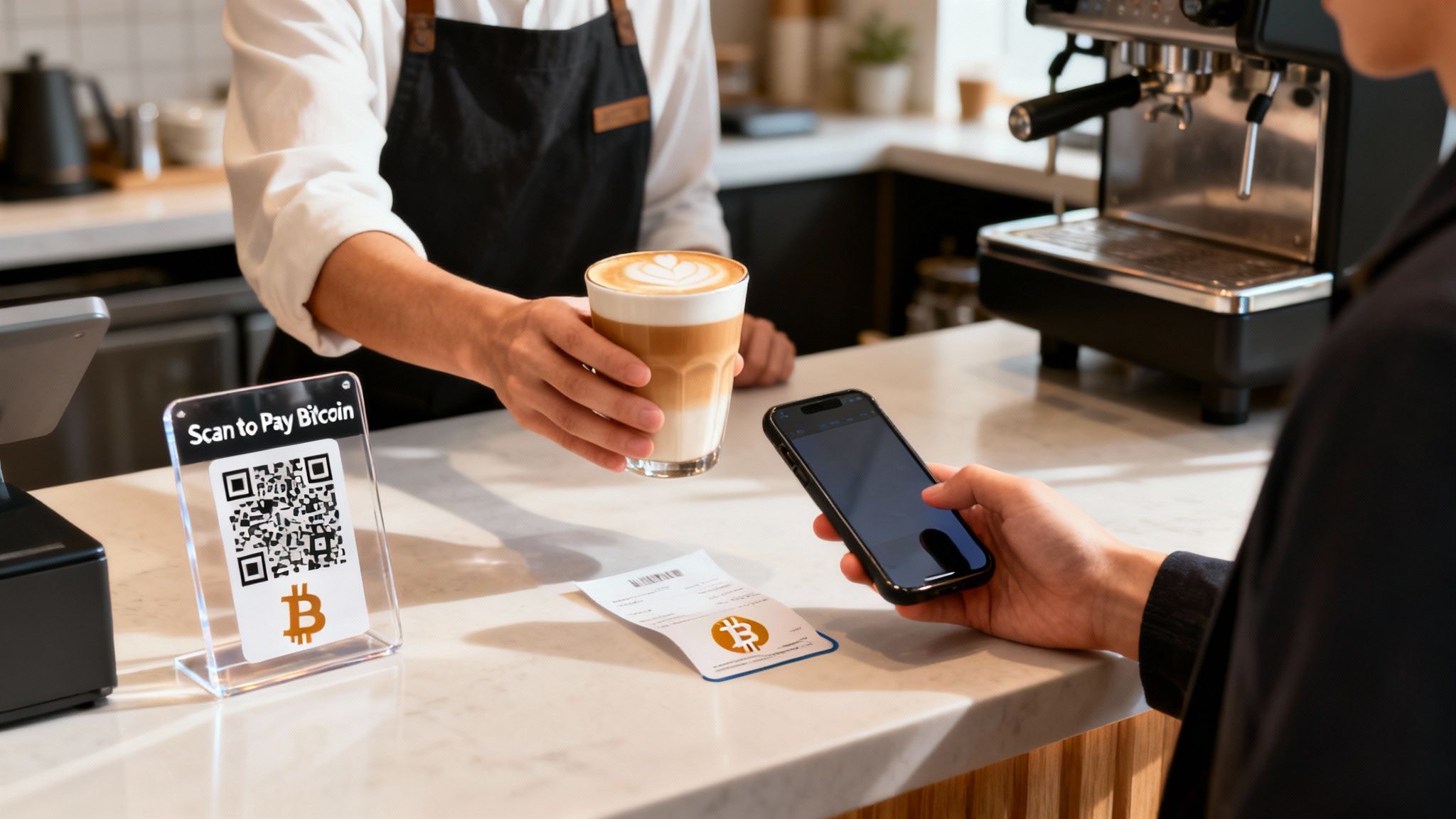
For a growing number of businesses, taking Bitcoin via QR codes has moved beyond being a cool gimmick. It's a strategic move that solves some very real, very frustrating problems. Traditional payment systems are notorious for high processing fees, painful chargebacks, and settlement delays that can put a serious strain on cash flow. Bitcoin payments, triggered by a simple QR scan, offer an elegant way out of these common headaches.
Picture a small coffee shop trying to attract international tourists, or maybe a freelance designer invoicing clients halfway across the world. Cross-border card payments can be painfully slow and surprisingly expensive. A QR code crypto payment, on the other hand, knows no borders. The transaction zips directly from the customer's wallet to the merchant's, usually settling in minutes for just a fraction of the cost.
Unlocking New Revenue Streams
By embracing this tech, merchants can connect with a rapidly expanding global market of Bitcoin users. This isn't just about ticking another box on your list of payment options. It's about opening your doors to a tech-savvy crowd that actively looks for businesses that accept their preferred currency. The numbers really tell the story here.
The global QR code payment market hit a massive USD 12.35 billion in 2024 and is on a steep upward climb. This boom is powered by billions of smartphone users who are already completely comfortable with scan-to-pay tech. When you pair that habit with the hundreds of millions of Bitcoin owners out there, the opportunity for merchants becomes impossible to ignore. You can explore more about QR code usage trends to get a sense of just how big this shift is.
For a merchant, every single transaction that avoids a 2-3% card processing fee is pure profit straight back to the bottom line. Over a year, those savings can be huge—enough to fund growth, stock new inventory, or launch a marketing campaign.
The Power of Decentralized Payments
Platforms like Flash are pushing this even further by enabling completely decentralized, wallet-to-wallet transactions. This means the money flows directly from your customer to you, with no third-party company sitting in the middle. This direct model brings some serious advantages:
- Reduced Fees: When you cut out the middleman, transaction costs plummet.
- Instant Settlement: The funds land in your wallet almost immediately, which is a game-changer for your business's cash flow.
- No Chargebacks: Bitcoin transactions are final. This completely eliminates the risk of the fraudulent chargebacks that are a constant plague for credit card merchants.
- Enhanced Privacy: Wallet-to-wallet payments don't involve sharing sensitive customer data, making it a more private and secure experience for everyone involved.
At the end of the day, integrating a QR code crypto system is about future-proofing your business. It's about slashing your operating costs and throwing open your doors to a truly global digital economy.
Deconstructing a Bitcoin QR Code Transaction
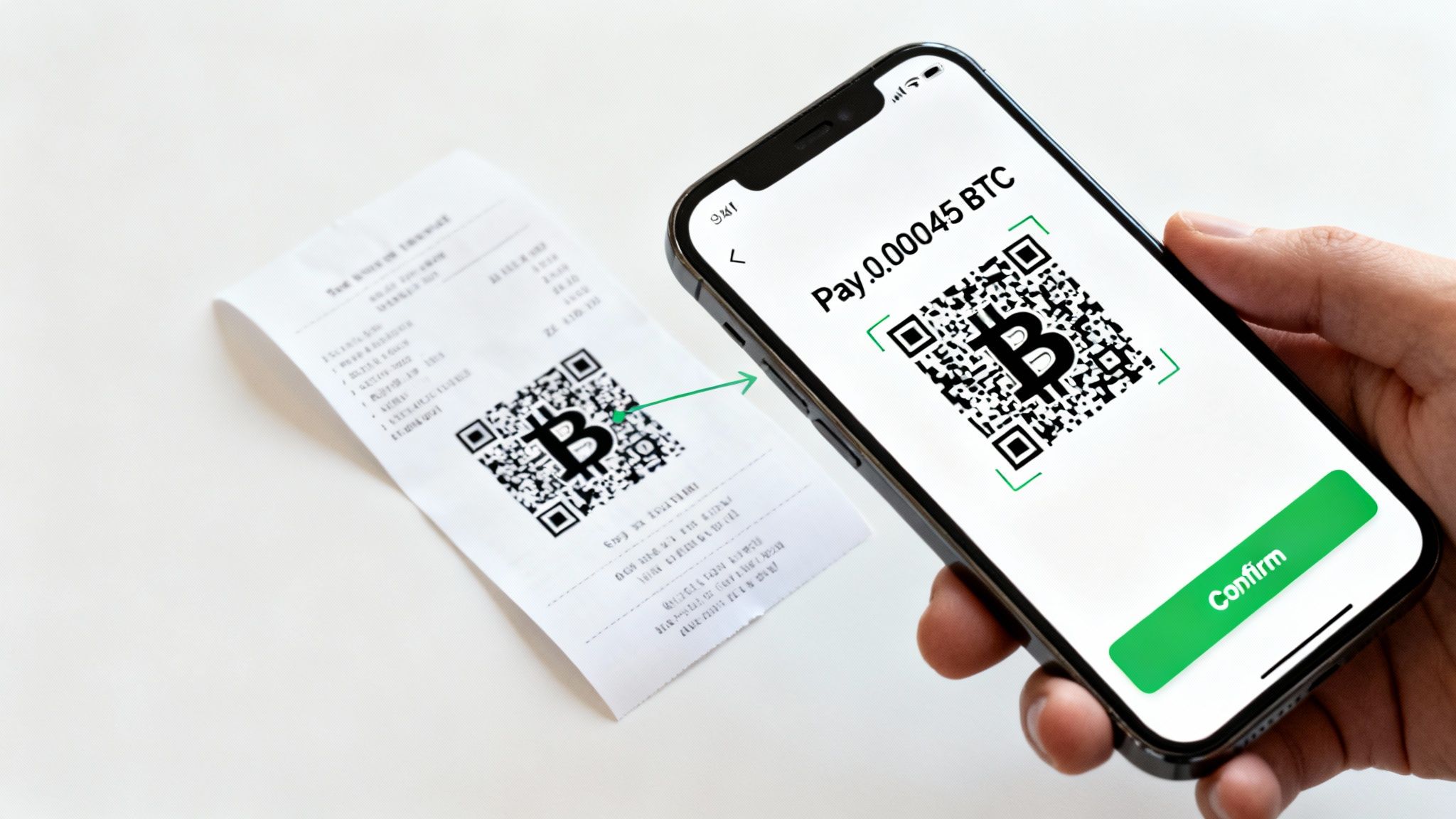
To a customer, paying with a Bitcoin QR code feels almost like magic. Scan, confirm, and the transaction is done. But for a business owner, knowing what’s happening behind that simple scan is crucial. It’s a beautifully simple process that cuts out the traditional banks and payment processors, creating a direct connection between your customer's wallet and your digital cash register.
The whole thing works because of a clever standard called BIP-21. You can think of it as a universal language that all modern Bitcoin wallets speak. It allows a single QR code to bundle together two key pieces of information: your Bitcoin receiving address and the exact payment amount.
This means you don't need to generate a new code for every single price point. The code itself tells the customer’s wallet exactly where to send the funds and how much, making the entire checkout flow incredibly smooth.
The Customer's Seamless Experience
From the buyer's point of view, the process is designed for speed and simplicity. They just open their favorite Bitcoin wallet app, point their phone's camera at the QR code you show them, and the app instantly fills in all the transaction details.
There’s no need to manually copy and paste a long, complex Bitcoin address—a process that is not only annoying but also dangerously prone to error. Get just one character wrong in a Bitcoin address, and those funds can be lost forever.
A QR code completely removes the risk of manual entry. It transforms what could be an intimidating task into a familiar point-and-scan action that anyone with a smartphone can handle in seconds.
The customer sees a clear confirmation screen with the destination address and the exact amount. With one final tap to approve, they broadcast their transaction to the Bitcoin network.
What Happens on the Merchant's End
This is where the direct, peer-to-peer power of Bitcoin really comes to life. As soon as the customer confirms the payment, the transaction is sent out to the global network of computers that secure the Bitcoin blockchain.
Your own Bitcoin wallet—whether it's on a tablet, POS system, or computer—is constantly listening to this network. Within moments, it will spot the incoming transaction. This first alert, often called a "zero-confirmation" transaction, tells you the payment is on its way.
For most small, everyday sales like a cup of coffee, many merchants are perfectly comfortable accepting this initial notification as proof of payment. For larger transactions, you might prefer to wait for one or more confirmations as the network officially validates and records the transaction, which usually takes about 10 minutes each.
The bottom line is this: the funds are sent directly to a Bitcoin address that only you control. No intermediary is holding your money, there's no three-day settlement period, and no third party is skimming a percentage off the top. The payment is direct, final, and entirely yours. This simple, secure flow is exactly what makes QR code crypto payments such a powerful tool for modern business.
Creating Your First Bitcoin Payment QR Code
Alright, enough theory. Let's get hands-on and generate a QR code to accept Bitcoin. It’s a surprisingly simple process, and you have a couple of solid options depending on what you're trying to do. We'll start with the most basic method before moving up to a more professional setup.
The quickest way to get started is right from your Bitcoin wallet. Almost every modern wallet has a "Receive" or "Request" function. Tap it, and the app will show you your unique Bitcoin address along with a scannable QR code. This is what’s known as a static QR code—it contains your address, but that's it. No specific payment amount is included.
This approach is perfect for situations where the payment amount is variable. Think of a digital tip jar on a coffee shop counter, a donation box for a non-profit, or a musician's guitar case on the street. A customer just scans the code, types in how much they want to send, and hits confirm.
Generating a Simple Static QR Code
Making a static code is dead simple. You don't need any special tools besides the wallet app you already have.
The process usually goes something like this:
- Open Your Bitcoin Wallet: Fire up your go-to wallet app on your phone or computer.
- Find the 'Receive' Screen: Look for a button or tab that says "Receive," "Request," or something similar.
- Display Your QR Code: The app will instantly generate a QR code for one of your wallet's receiving addresses.
- Share or Print It: You can now save this image, print it out on a sign, or just display it on a screen for people to scan.
Pro Tip: While easy, keep in mind this static code is tied to one specific Bitcoin address. For privacy reasons, which we'll get into later, it's good practice to generate fresh addresses for different uses rather than reusing the same one everywhere.
Upgrading to a Professional Dynamic Setup
For most shops or e-commerce stores, a static code just doesn't cut it. You need a fresh, unique QR code for every single transaction that specifies the exact price. This is where dynamic QR codes and dedicated point-of-sale (POS) tools are an absolute game-changer.
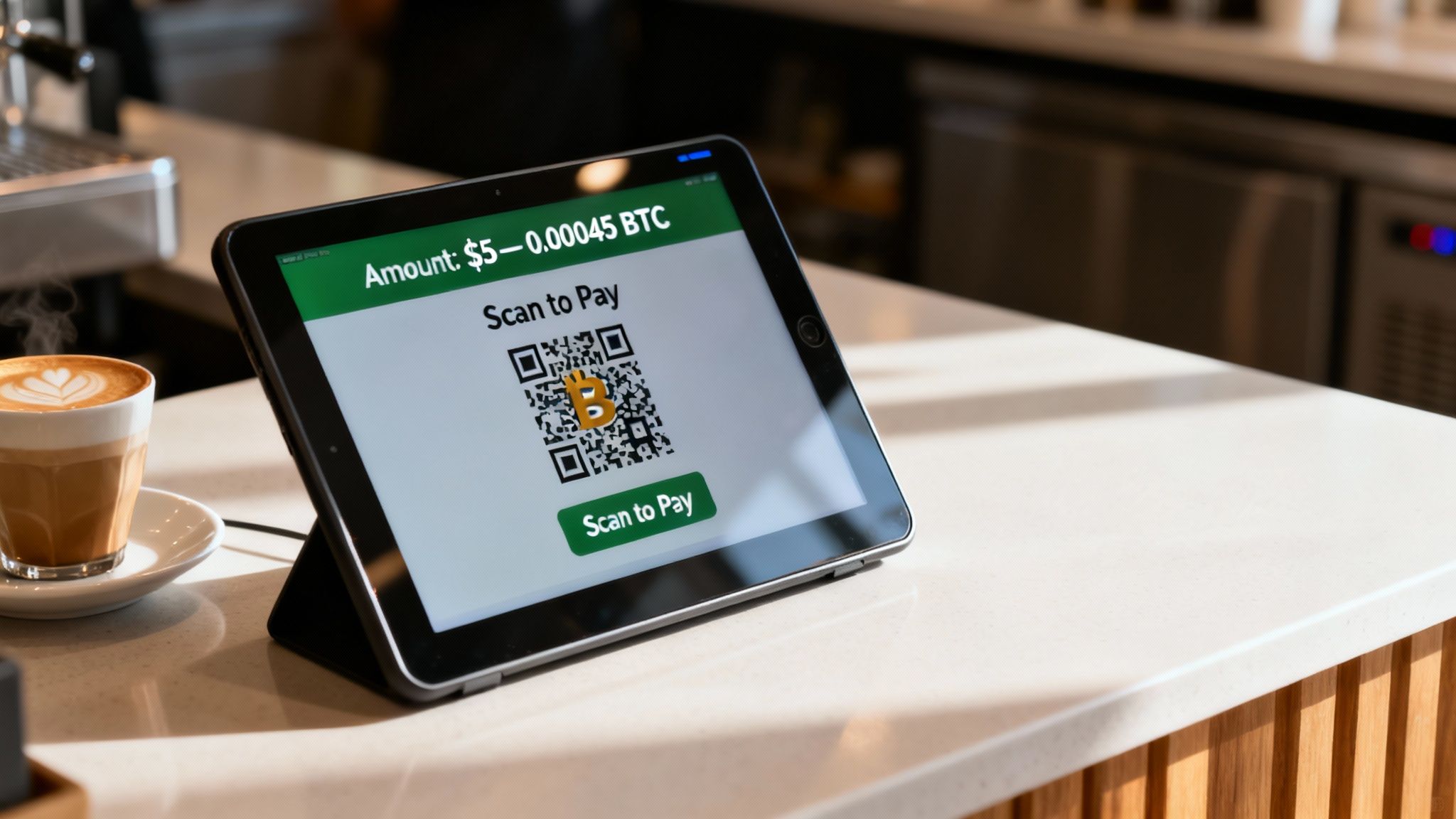
Imagine you're selling a latte for $5. Trying to manually calculate the Bitcoin equivalent on the spot is a recipe for disaster—it's slow and you're bound to make a mistake. A dedicated tool like the Flash POS app completely automates this, turning any old smartphone or tablet into a powerful Bitcoin payment terminal.
You just punch in the sale amount in your local currency (say, USD), and the app instantly fetches the current Bitcoin exchange rate to generate a dynamic QR code. This code contains both your receiving address and the precise Bitcoin amount. The customer scans it, their wallet shows the exact amount requested, and all they have to do is confirm. Simple.
This dynamic approach has some huge advantages:
- Accuracy: It gets rid of manual conversion errors. You get paid the right amount, every single time.
- Speed: The checkout process is way faster, which means happier customers.
- Reconciliation: It makes your bookkeeping a breeze, since every transaction is recorded with its specific value.
QR codes are the glue that turns Bitcoin from a niche asset into a practical tool for daily commerce, especially in emerging markets. In fact, global QR code payments are on track to hit USD 3 trillion in spending by 2025. This explosive growth is powered by tools that let any merchant tap into this market with decentralized, wallet-to-wallet payments, keeping them in full control of their money. You can discover more about QR code payment statistics and trends to see just how big this is getting.
Essential Practices for Security and Customer Trust
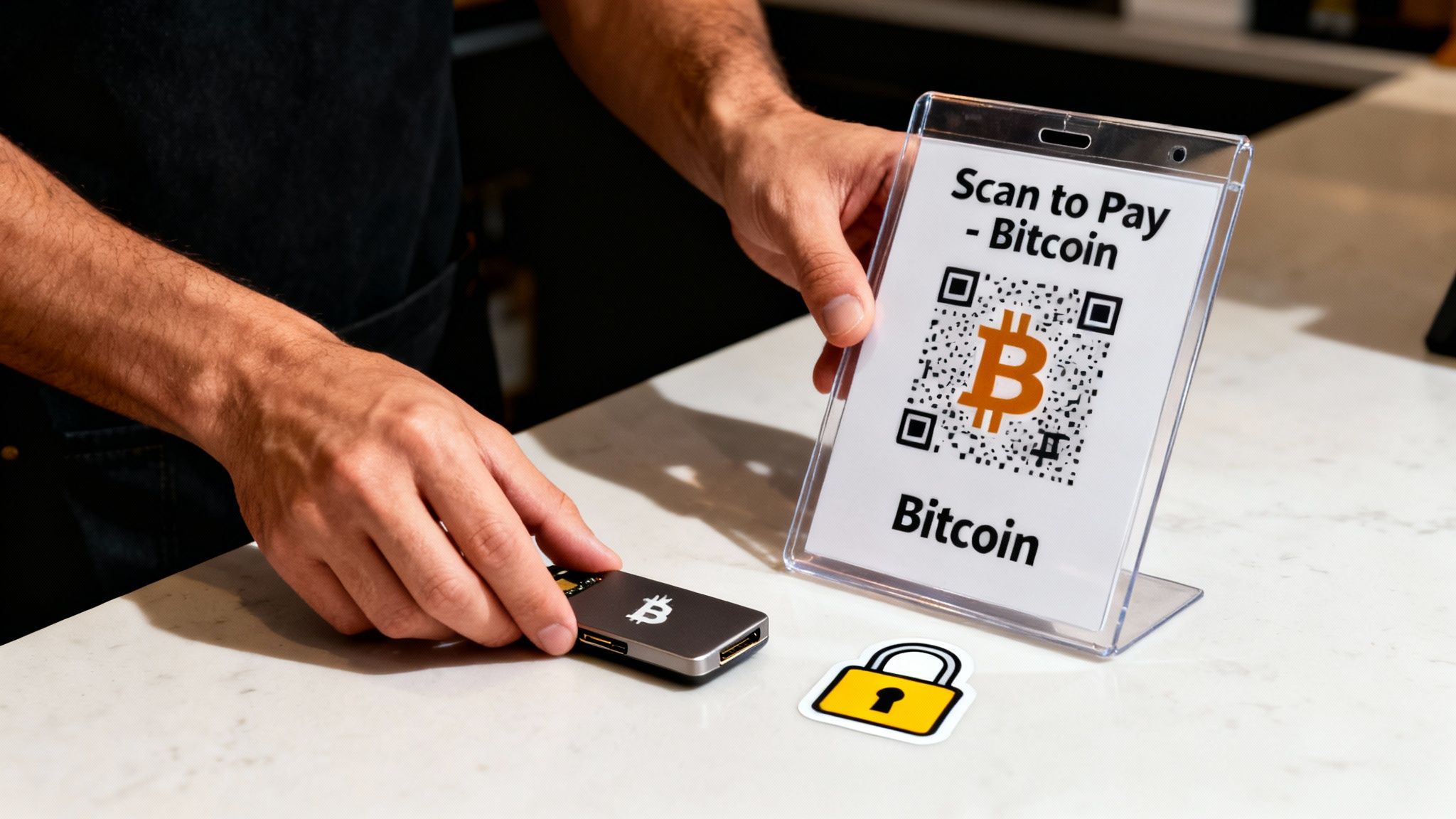
When you start accepting Bitcoin, you're not just handling money—you're managing trust. A secure and seamless payment experience is non-negotiable. It ensures you get paid correctly and gives customers the confidence to use qr code crypto payments with you again. Get these fundamentals right, and you'll build a system that's both robust and customer-friendly.
Security starts with how you handle your Bitcoin addresses. One of the most critical habits to adopt is avoiding address reuse. Using a single, static Bitcoin address for all transactions is like publishing your bank statement for the world to see. It links every single payment you receive back to one point, creating a major privacy risk for both you and your customers.
Think of it this way: a unique Bitcoin address for each transaction is like giving every customer a private, single-use deposit box. This simple practice makes it nearly impossible for an outside observer to track your total sales or link different customers together, protecting everyone's financial privacy.
Safeguarding Your Funds and Your Customers
Another cornerstone of security is ensuring you always have full control over your funds. This is exactly why partnering with non-custodial tools is so important. A non-custodial service, like Flash, facilitates the payment but never actually holds your Bitcoin. The funds move directly from the customer's wallet to yours.
This direct, wallet-to-wallet model eliminates a huge point of failure. You never have to worry about a third-party platform getting hacked or freezing your assets. Your money is always your money.
Crafting a Flawless User Experience
Security builds your confidence; a great user experience builds your customer's. The goal is to make paying with Bitcoin as easy as tapping a credit card. This comes down to simple, practical details that many businesses overlook.
- Clarity is Key: Display your QR code clearly. It needs to be large enough to scan easily from a comfortable distance and printed on a high-contrast background. A blurry or poorly lit QR code is a guaranteed point of friction.
- Provide Simple Instructions: Don't assume everyone is a Bitcoin expert. A simple, friendly prompt next to your QR code, like "Scan to Pay with a Bitcoin Wallet," removes any guesswork for the customer.
- Offer Clear Confirmation: After the customer pays, your POS system or app should provide immediate, unambiguous feedback. A simple "Payment Received!" screen with a green checkmark is perfect. This instant confirmation reassures the customer that everything worked as it should.
By focusing on these security and user experience fundamentals, you create a trustworthy payment environment. You protect your assets, respect customer privacy, and design a checkout flow that is so smooth it feels effortless. This positive experience is what turns a one-time crypto payment into a regular habit, encouraging repeat business and building a loyal customer base.
Real-World Integration for Your Business Model
Integrating Bitcoin QR code payments isn't a one-size-fits-all job. The right way to do it hinges entirely on how your business actually runs day-to-day. The good news? The tech is flexible enough for just about any scenario, from a busy coffee shop floor to an online checkout page.
Let’s get practical. A brick-and-mortar business—think a local café or boutique—can turn any standard tablet or smartphone into a Bitcoin point-of-sale terminal almost instantly. Just run a simple POS app, and you can generate a dynamic QR code for each specific order, making sure every payment is for the exact amount.
This setup is clean, professional, and seriously efficient for in-person sales. You get to skip the expensive, clunky hardware and offer customers a modern, secure way to pay.
Adapting to Different Business Scenarios
The real magic of a qr code crypto system is how well it adapts. No matter your business model, there’s a straightforward path to accepting Bitcoin, which opens you up to new customers and cuts down on overhead.
- E-commerce Stores: For online shops, it’s all about a frictionless checkout. This usually means embedding a payment widget right on your checkout page. When a customer picks Bitcoin, the widget pops up a unique QR code for them to scan. They complete the purchase without ever having to leave your site.
- Service Providers & Creators: If you're a freelancer, consultant, or content creator, payment links are your best friend. These are just shareable URLs that open up a payment page with a QR code. You can drop these links into invoices, stick them in your social media bio, or send them directly to clients for quick, borderless payments.
- Non-Profits & Charities: A simple static QR code can be a powerful fundraising tool. Put it on your website, in your newsletters, or even on donation boxes at live events. Supporters can scan and send any amount directly to your Bitcoin wallet, which means less money lost to processing fees and more going to your cause.
Bringing Bitcoin payments into your business gives you a real competitive edge. It’s a clear signal to a global, tech-savvy crowd that your business is modern and easy to work with, cutting through the usual friction and fees of cross-border payments.
Tapping into Global Trends
The combination of QR codes and Bitcoin is fundamentally changing how payments work across the globe. While the Asia-Pacific region has long been the king of QR payments, North America saw a solid 11% jump in usage during the pandemic. And with global Bitcoin ownership growing, the potential market is enormous.
As mobile subscriptions blanket most of the world's population, the foundation for QR code crypto payments is becoming nearly universal. You can dig into more data on this expanding market over at Polaris Market Research.
For businesses wanting to take the digital experience even further, building in mobile web applications as loyalty features can tie the whole customer journey together. This creates a more connected experience, encouraging repeat business from customers who love the convenience of paying with Bitcoin. When you think about the entire digital workflow, you can build a more engaging and rewarding system for your customers.
What Merchants Are Asking
If you're thinking about accepting qr code crypto payments, you probably have a few practical questions. That's smart. Getting the details straight before you dive in is the best way to feel confident about bringing Bitcoin payments into your business.
One of the first things business owners ask about is price volatility. We all know Bitcoin's value can swing, so how do you protect your bottom line? The easiest way is to convert any Bitcoin you receive into your local currency right away. Lots of wallet apps and payment services can do this automatically, so the $10 you charge for a sandwich is the $10 you get, minus a tiny network fee.
Fees, Confirmations, and Bookkeeping
Another common question is about transaction fees. What's the real cost of accepting Bitcoin? The fee, often called a "miner fee," is paid by your customer to the Bitcoin network—not to you or a payment processor. These fees change depending on how busy the network is, but they're often much lower than the 2-3% credit card companies take, especially on bigger sales or international orders.
So, how long do you wait for the payment to clear?
- For small, in-person sales: Think a cup of coffee or a t-shirt. Most merchants are comfortable accepting the payment the second it shows up in their wallet, which is almost instant. This is known as a "zero-conf" transaction and is generally very low-risk for everyday items.
- For larger or online sales: You'll probably want to wait for at least one network confirmation. This usually takes about 10 minutes and gives you a much stronger guarantee that the payment is final and can't be reversed.
You're in control here. You can decide what works for your business. Accept payments instantly for small stuff, and wait for a confirmation on high-ticket items. It's your call based on your own comfort level.
Finally, what about the books? How do you handle accounting and taxes? The best approach is to treat a Bitcoin payment just like any other sale. Simply record the value in your local currency at the moment of the transaction. This keeps your bookkeeping clean and gives you straightforward records for tax time, making it a breeze to fit Bitcoin into your existing financial workflow.
Ready to unlock a new global customer base and slash your payment processing fees? With Flash, you can start accepting secure, decentralized Bitcoin payments in under a minute. Our easy-to-use tools turn any device into a Bitcoin POS, with no KYC and wallet-to-wallet transactions that keep you in full control. Start accepting Bitcoin today.