Real-time payments are transforming how businesses handle transactions, offering immediate fund access, lower costs, and better customer experiences. In 2023, global real-time payment transactions grew by 42.2%, and by 2032, they are projected to reach 284.49 billion annually. This shift is driven by the demand for instant financial transactions, cost reductions, and the rise of technologies like Bitcoin's Lightning Network, which enables near-instant, low-cost payments.
Key Takeaways:
- Speed: Real-time payments eliminate delays, enabling instant fund transfers and improving cash flow.
- Cost Savings: Bitcoin payments via the Lightning Network reduce fees to under 1%, compared to 2-4% for credit cards.
- Global Access: Simplifies cross-border transactions, avoiding high fees and long delays.
- Customer Satisfaction: Faster payments enhance customer trust and convenience.
Switching to real-time Bitcoin payments can streamline operations, reduce expenses, and open new opportunities in global markets. Solutions like Flash offer tools for quick integration, secure transactions, and compliance support, making it easier for businesses to adopt this payment method.
Real-Time Bitcoin Payments - Terminal Demo
Problems with Current Payment Systems
Traditional payment systems come with inefficiencies that slow things down and drive up costs, making the case for real-time solutions more urgent than ever.
Slow Processing and Higher Costs
When it comes to payments, time and money are often wasted. Businesses still process a staggering $8.9 trillion in commercial check payments every year - a method that's both outdated and expensive. Even ACH payments, which are considered more modern, can take days to settle, leaving businesses waiting.
"Most B2B payments are slow and vastly inefficient." - Deloitte Insights
The costs don't stop at slow processing. Credit card transactions typically cost businesses 2% to 4% per transaction, which can quickly eat into profits, especially for companies with high transaction volumes. On top of that, there are hidden expenses like chargebacks, fraud prevention, and other processing overheads that add to the financial strain.
Take Hunt Companies, for example. Before switching to real-time payments in March 2023, they were spending $6 per wire transfer. After adopting a real-time system, their costs dropped to less than $1 per transaction. The result? A 375% increase in payment volume month-over-month.
Cross-border payments add another layer of complexity. About 70% of global business executives report delays of up to 10 days for international transactions. On top of the waiting time, businesses often face fees ranging from $10 to $50 per transaction, plus foreign exchange costs of 0.25% to 3%. These delays and fees don’t just hurt businesses - they also frustrate customers, creating barriers that no modern company can afford.
Poor Customer Experience and Limited Global Access
The problems with traditional payment systems extend beyond finances - they also affect customer satisfaction and global growth. In a world where instant gratification is the norm, making customers wait days for payment confirmation is a recipe for frustration and lost opportunities.
The global marketplace is growing fast. For example, the B2C cross-border e-commerce market is expected to jump from $785 billion in 2021 to $7.9 trillion by 2030. Yet traditional payment systems are struggling to keep up. By 2024, credit and debit cards accounted for just one-third of global e-commerce transaction values. This highlights a clear need for more flexible and efficient payment options to unlock the full potential of international markets.
Cross-border transactions often rely on correspondent banking networks, which bring their own set of challenges. These systems lack transparency, with daily cut-off times, unexpected delays, and unpredictable fees making it hard for businesses to maintain control. This lack of reliability can lead to missed opportunities and dissatisfied international customers.
The delays inherent in older systems also create cash flow headaches. Payments that take days to clear force businesses to keep larger cash reserves on hand, tying up funds that could otherwise be used to grow the business. Suppliers waiting on delayed payments may face financial strain, potentially damaging relationships and complicating future negotiations.
Operationally, the complexity of traditional systems adds another layer of difficulty. Payments often pass through multiple intermediaries, each with their own fees and timelines, making it nearly impossible to predict when funds will arrive. This uncertainty complicates financial planning and forces businesses to spend more just to manage the unpredictability.
With all these challenges, businesses are actively seeking better alternatives. Recognizing these issues, the Federal Reserve introduced the FedNow Service in July 2023 to modernize payment infrastructure. While it’s a step forward, even this update doesn’t solve all the fundamental problems businesses face in today’s fast-moving global economy.
How Real-Time Bitcoin Payments Solve Enterprise Problems
Real-time Bitcoin payments bring a game-changing advantage to businesses by providing instant access to funds. Unlike traditional ACH payments, which can take 1–3 business days to settle, Bitcoin transactions through the Lightning Network happen immediately. This speed not only allows businesses to access their funds right away but also frees up working capital, making it easier to manage day-to-day operations.
Instant Transactions and Better Cash Flow
"Real-time payments can help businesses access funds immediately and make payments on-demand, including outside regular business hours." - Alan Lee, Software Engineer & Developer Advocate, J.P. Morgan Payments.
Take, for instance, a large retail chain that improved its vendor relationships by paying suppliers instantly upon receiving goods. This kind of immediate settlement enhances cash flow visibility, enabling finance teams to make quicker, more informed decisions.
"The instant nature of RTP payments enables financial institutions to develop innovative business models around real-time liquidity, micro-lending, and just-in-time payment services." - Finchtrade.
These benefits of instant payments don’t just stop at cash flow management - they also help reduce operating expenses, which we'll explore next.
Lower Costs Through Direct Payments
Direct Bitcoin payments significantly reduce transaction fees. Traditional payment processors often charge between 2% and 4% per transaction, but Bitcoin transactions can cost as little as 1% or even nothing at all. Compare this to wire transfers, which generally run between $25 and $50 per transaction, and you can see how the savings add up. Real-time payment fees typically range from just $0.25 to $1.
For example, in May 2025, Steak 'n Shake adopted the Lightning Network for Bitcoin payments and managed to cut its payment processing fees by 50% compared to traditional credit card transactions. By bypassing banks, processors, and clearinghouses, Bitcoin payments eliminate many of the extra fees businesses usually face.
Cross-border transactions also benefit from Bitcoin's decentralized system, which avoids traditional currency conversion fees. Block Inc. has integrated Bitcoin payments into its Square POS ecosystem, allowing merchants to process international transactions with minimal fees and instant currency conversion. These cost efficiencies directly enhance enterprise financial strategies.
Better Customer Experience and Global Access
Real-time Bitcoin payments don’t just save money - they also reshape how businesses interact with customers and expand their global reach. By eliminating delays, these payments improve customer satisfaction, while instant transaction confirmations build trust. This kind of responsiveness aligns perfectly with the growing consumer demand for immediate service, which has become the norm.
The value of real-time payment transactions is expected to grow by 289% from 2023 to 2030, reflecting the increasing preference for instant payment solutions.
"Real-time payments support new use cases for businesses including instant payroll and merchant payouts, helping to remove the gap and friction points from the settlement process." - J.P. Morgan Payments.
In Brazil, for example, the PIX system has driven a 78% year-over-year increase in real-time payment transactions, demonstrating strong consumer adoption in emerging markets. For businesses looking to expand internationally, real-time Bitcoin payments remove traditional barriers. In September 2025, Citi revealed that its blockchain-based payment solutions could process cross-border payments in just 90 seconds. Similarly, J.D. Industries partnered with J.P. Morgan’s payment solutions to achieve 10% cost savings and 50% faster processing times, showcasing measurable improvements in both efficiency and customer service.
"The demand for real-time payments is rapidly increasing, as consumers and businesses seek faster, more efficient, and secure ways of transferring funds." - PwC.
Blockchain’s transparency further enhances the customer experience by offering real-time tracking of transactions. As consumers increasingly expect instant solutions, businesses that adopt real-time Bitcoin payment systems gain a clear edge in satisfying customers and reaching global markets.
sbb-itb-f81ab9b
How to Integrate Real-Time Bitcoin Payment Solutions
Integrating real-time Bitcoin payment solutions is about aligning technical capabilities with business goals. By 2025, crypto payment volumes surpassed $8 trillion globally, showcasing the immense potential for businesses ready to embrace this technology. Success lies in following a structured approach that prioritizes both security and regulatory compliance.
"Integrating a crypto payment processor for business is not just a trend - It is a strategic move to position yourself for future success." – Jonas Wald, Startup Advisor & Business Strategist.
Integration Methods and Tools
To make the most of Bitcoin payment solutions, businesses need to focus on speed, cost-effectiveness, and seamless implementation. Start by defining your objectives - whether it’s cutting transaction fees or enabling instant settlements. Then, assess your current systems to ensure they can securely handle cryptocurrency transactions.
Choosing the right payment gateway is a crucial step. Crypto payment gateways typically charge transaction fees between 0.5% and 2%. Look for platforms with robust APIs and SDKs to ensure smooth integration with your existing operations.
Flash offers several integration options that cater to different business needs. For a quick and easy start, payment links can be shared via email, SMS, or embedded on websites, requiring minimal setup. Businesses with subscription models can benefit from recurring payment widgets that integrate directly with billing systems. Retailers, on the other hand, can use point-of-sale solutions featuring mobile-friendly interfaces for in-store transactions.
For companies with in-house development teams, Flash’s APIs and no/low-code options allow for custom Bitcoin payment setups while maintaining a seamless user experience.
The scalability of enterprise payment systems is evident. For instance, in November 2025, BVNK processed over $25 billion in annual payment volumes, highlighting the growth potential of enterprise-focused solutions. Similarly, Cybrid provides businesses with Bitcoin payment integration that includes compliance tools and fast settlement options, making it easier to adapt without overhauling existing systems.
Before going live, use sandbox environments to simulate transactions, test security measures, and train staff. This step minimizes errors and ensures a smoother launch.
Once the integration is complete, the focus shifts to managing risks and staying compliant with evolving regulations.
Managing Risk and Meeting Compliance Requirements
After implementing Bitcoin payment solutions, security and compliance become top priorities. The Markets in Crypto-assets Regulation (MiCA), effective December 30, 2024, offers businesses a unified framework for crypto transactions in Europe. In the U.S., businesses need to address AML (Anti-Money Laundering) and KYC (Know Your Customer) requirements, along with state-level money transmission laws.
To secure transactions, use end-to-end encryption and multi-signature wallets. Conduct regular security audits to identify and address vulnerabilities early.
Flash’s non-custodial wallet-to-wallet payments help reduce custody risks by transferring funds directly between parties without intermediary storage. This approach simplifies compliance while offering tools to analyze transaction patterns and detect potential issues.
Integrating KYC and AML processes into your payment system is essential. KYC protocols ensure customer information is collected and verified according to local laws, while AML monitoring helps flag suspicious activities. Many companies also implement a crypto-risk matrix to assess risks related to liquidity, volatility, and regulatory challenges.
With 86% of central banks exploring digital currency systems, regulatory landscapes are constantly evolving. Staying compliant means regularly monitoring changes and updating your systems to meet new requirements. Flash’s platform includes tools that automatically adapt to regulatory updates, easing the burden on finance teams.
Lastly, comprehensive staff training is vital. Employees should understand both the technical aspects of Bitcoin transactions and how to handle customer inquiries effectively. While the time needed for integration depends on your existing infrastructure and complexity, a well-structured approach focused on security and compliance can enhance transaction efficiency, customer adoption, and overall operations.
Why Flash is the Best Solution for Enterprise Bitcoin Payments
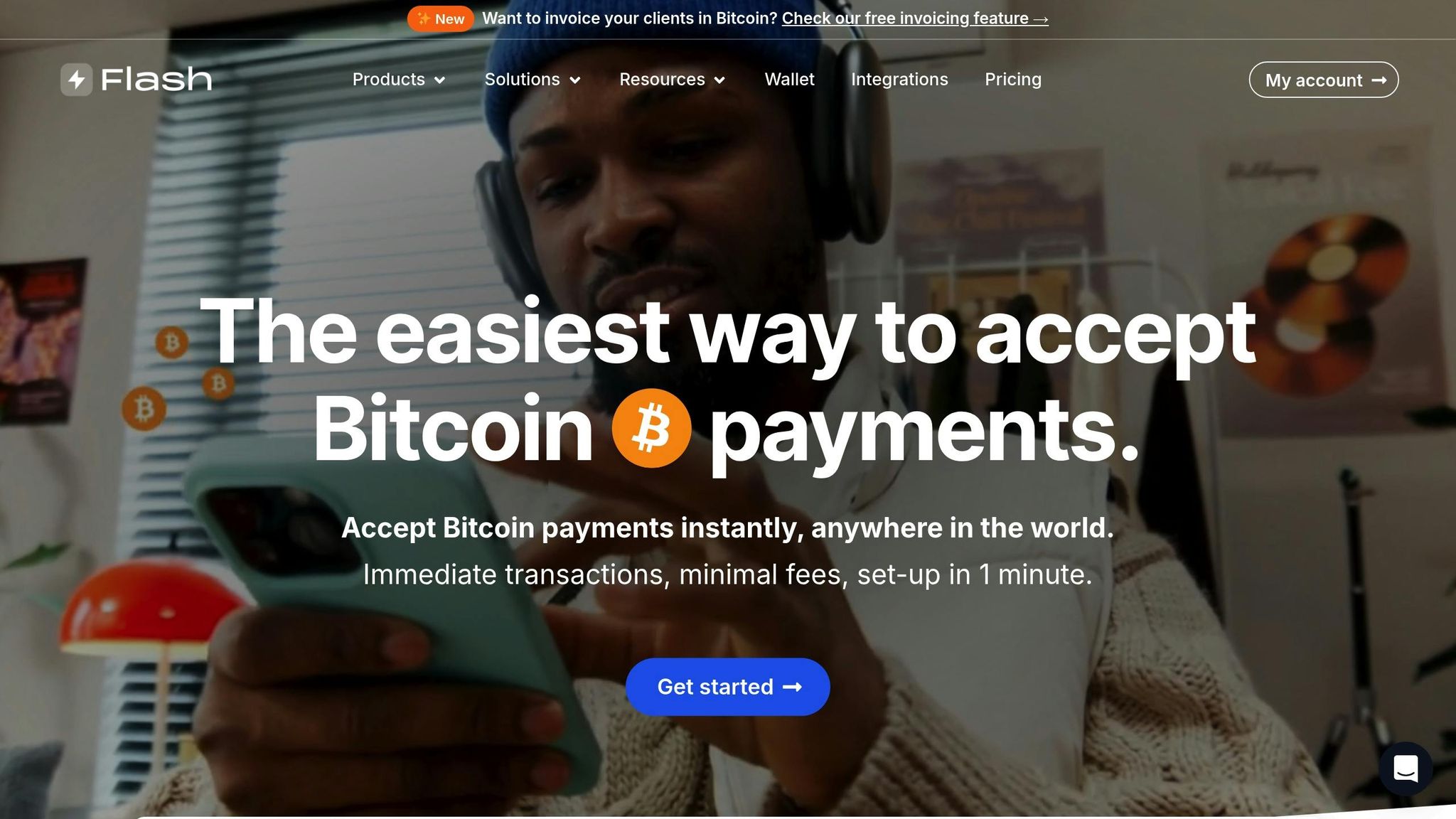
Flash stands out as a leading choice for enterprise Bitcoin payments, thanks to its seamless integration methods and robust technology. By harnessing the power of the Lightning Network and tailoring features specifically for businesses, Flash addresses the unique challenges of enterprise payment systems. Operating in a cryptocurrency market valued at over $8 trillion, Flash delivers specialized Bitcoin solutions that meet the needs of modern enterprises. Its Lightning Network foundation enables near-instant settlements - taking just seconds compared to the 1–3 day delays typical of traditional cross-border payments. This speed advantage significantly improves cash flow management for companies that depend on timely transactions.
Flash's Key Features for Enterprises
Flash offers a range of advanced features designed to meet the demands of enterprise users. At its core, it facilitates non-custodial wallet-to-wallet payments, ensuring that businesses retain full control over their funds without relying on third-party custodians. This setup eliminates counterparty risk, providing the security and autonomy enterprise finance teams require.
Another major benefit is cost efficiency. Flash reduces transaction fees to under 1%, making it particularly appealing for businesses processing high volumes of payments or managing frequent international transactions. This reduction in fees directly contributes to healthier cash flow.
Real-time payment processing is another standout feature, streamlining operations across various departments. Finance teams benefit from immediate payment confirmations, customer service teams can address inquiries more efficiently, and treasury departments gain better visibility into cash positions. The Lightning Network ensures transaction speeds that far surpass those of traditional banking systems.
"Bitcoin is faster than credit cards." - Dan Edwards, COO of Steak 'n Shake.
Flash also prioritizes security with measures like two-factor authentication and end-to-end encryption, safeguarding both data and transactions. Its architecture is designed to handle high transaction volumes, making it an excellent fit for enterprises that need scalable payment solutions.
Business-Focused Solutions
Beyond its technical strengths, Flash offers flexible solutions tailored to a variety of enterprise needs. For instance, businesses can use payment links that can be shared instantly via email, SMS, or websites, as well as recurring payment widgets for subscription-based models.
Retailers can take advantage of point-of-sale solutions optimized for mobile devices, enabling seamless in-store Bitcoin transactions. Companies with in-house development teams can utilize Flash's APIs or no/low-code tools to create custom payment systems that integrate smoothly with their existing infrastructure.
Flash also provides real-time analytics tools, giving finance teams detailed insights into transactions. These tools allow businesses to track payment trends, monitor cash flow, and generate compliance reports necessary for regulatory purposes.
For businesses just starting with Bitcoin payments, Flash offers free tools and competitive pricing. Enterprise-level pricing is available upon request, enabling larger organizations to negotiate terms that align with their specific transaction volumes and operational needs.
"Our solutions offer instant Bitcoin-to-fiat conversion options, helping you mitigate the volatility risks associated with cryptocurrency transactions." - Lightspark.
Additionally, Flash allows businesses to create branded payment experiences through customizable product pages that integrate seamlessly with existing systems. Its developer-friendly approach, featuring comprehensive APIs and plugins, ensures a smooth and rapid integration process - allowing companies to implement Bitcoin payments in days instead of months.
With its Lightning Network technology, enterprise-ready features, and versatile integration options, Flash provides businesses with a secure, efficient, and scalable solution for Bitcoin payments, meeting the high standards required for enterprise-level operations.
Conclusion: Get Ahead with Real-Time Bitcoin Payments
Switching to real-time Bitcoin payments isn’t just a change - it’s a step forward that redefines how businesses operate. Companies embracing this technology gain a competitive edge over those stuck with outdated payment methods that consume resources and stifle growth.
Why Real-Time Bitcoin Payments Matter
Here’s why financial decision-makers should take note:
- Instant Transactions: Say goodbye to cross-border delays. Payments are processed immediately, improving cash flow and operational efficiency.
- Lower Costs: By cutting out intermediaries, transaction fees drop significantly, reducing overhead expenses.
- Better Customer Experience: Immediate payment confirmations lead to happier customers and fewer support headaches.
- Global Reach: Expand into international markets without the hassle of traditional banking restrictions.
These benefits pave the way for businesses to adopt Flash’s real-time Bitcoin payment solutions seamlessly.
Simplify Payments with Flash
Flash makes it easy for enterprises to integrate real-time Bitcoin payments. With free tools, flexible APIs, and mobile-friendly solutions, deployment is quick and hassle-free.
For larger organizations, Flash offers tailored pricing options based on transaction volumes, ensuring a custom fit for your business needs. Add to that real-time analytics, top-tier security, and scalable infrastructure, and you’ve got everything you need to support long-term growth.
It’s time to leave traditional payment delays behind. Start transforming your operations today with Flash and embrace the speed and efficiency of real-time Bitcoin payments.
FAQs
How can real-time Bitcoin payments enhance cash flow and streamline operations for businesses?
Real-time Bitcoin payments let businesses process transactions instantly, giving them quicker access to funds and improving cash flow. Unlike traditional payment methods that often come with delays, this speed can help companies manage liquidity more effectively and streamline their financial operations.
Another advantage is the potential for lower transaction fees compared to conventional systems, which can significantly cut operational costs. On top of that, adopting real-time Bitcoin payments can simplify treasury tasks, reduce administrative work, and allow businesses to concentrate on driving strategic growth.
What cost advantages can businesses gain by adopting real-time Bitcoin payments?
Switching to real-time Bitcoin payments can save businesses money and time. With lower transaction fees and quicker settlement times compared to traditional payment systems, companies can significantly cut operational costs and improve how cash flows through their business.
By reducing payment processing delays and eliminating many intermediary fees, businesses can simplify their financial operations. On top of that, it creates a smoother payment experience for customers. For companies aiming to stay ahead in today’s fast-moving market, real-time Bitcoin payments offer a practical and efficient solution.
How can businesses securely integrate real-time Bitcoin payment solutions while staying compliant?
To securely integrate real-time Bitcoin payment solutions while staying compliant, businesses should focus on partnering with licensed payment processors that strictly adhere to AML (Anti-Money Laundering) and KYC (Know Your Customer) protocols. These measures help verify user identities and prevent illicit activities.
It's also essential to implement strong security practices, such as encryption and two-factor authentication, to protect transactions from potential threats. On top of that, following global compliance standards like the FATF guidelines and the Travel Rule ensures businesses align with regulatory expectations.
Regular audits of transaction processes, combined with a solid risk management strategy, can further strengthen security. Opting for a payment provider with a proven history of compliance and reliability can make the integration process smoother and more dependable.