The subscription economy is a fundamental shift in how businesses deliver value and build lasting customer relationships. Moving beyond one-off transactions, companies are creating predictable revenue streams, but success requires more than just a monthly fee. It demands a deep understanding of how to create undeniable, recurring value that fosters genuine customer loyalty.
This guide moves past the theory to provide a strategic blueprint for building a durable subscription business. We will dissect diverse subscription business model examples, exploring the specific tactics they use to attract, engage, and retain their customers. You'll gain a clear understanding of their value propositions, pricing psychology, and the operational mechanics that fuel their growth. For each platform, we provide direct links and screenshots to give you a clear view of their strategy in action.
Our analysis will break down replicable strategies you can apply to your own venture, whether you're an eCommerce merchant, a SaaS founder, or a content creator. We’ll also touch on how innovative payment systems, including decentralized options like Bitcoin, are unlocking new potential for automation and global reach within these models. This article is your resource for finding the right frameworks and actionable insights to build or scale your own recurring revenue engine.
1. Netflix: The Streaming Titan's Content & Curation Model
Netflix is a dominant force in digital media and a textbook case study for anyone analyzing subscription business model examples. It perfectly embodies the "access over ownership" model, granting subscribers entry to a massive, rotating library of movies, TV shows, documentaries, and stand-up specials for a flat monthly fee. This approach has fundamentally shifted how global audiences consume entertainment.
The platform’s core value proposition is its blend of licensed content and, increasingly, its exclusive original programming. This two-pronged content strategy ensures there's always something new to discover, from blockbuster acquisitions to critically acclaimed "Netflix Originals" like Stranger Things or The Crown. This constant stream of fresh content is a powerful tool for both acquiring new subscribers and, crucially, retaining existing ones by combating churn.
Strategic Breakdown
Netflix’s success isn't accidental; it's built on a sophisticated, data-driven foundation that sets it apart from competitors.
- The Algorithm as a Product: The recommendation engine is Netflix's secret weapon. It analyzes vast amounts of user data-what you watch, when you pause, what you re-watch, and even the artwork you click on-to create a deeply personalized homepage for every user. This creates a "sticky" experience, making subscribers feel the platform understands their unique tastes.
- Tiered Access Model: Netflix offers multiple subscription tiers, primarily differentiated by stream quality (Standard, HD, Ultra HD) and the number of simultaneous screens allowed. This tiered pricing structure effectively segments the market, capturing everyone from solo viewers on a budget to large families with diverse viewing habits.
- Global Content, Local Appeal: While it produces global hits, Netflix invests heavily in local-language original content for international markets. This strategy helps it penetrate new regions by offering culturally relevant stories, broadening its appeal far beyond Hollywood-centric programming.
Key Insight: Netflix's most replicable strategy is not just its content library but its hyper-personalization engine. By making discovery feel effortless and tailored, it transforms a vast catalog from overwhelming to indispensable, creating a powerful moat against competitors.
Actionable Takeaways
Businesses can learn a great deal from Netflix's model. Focus on creating an experience so personalized that customers feel it was built just for them. Use data not just for reporting, but to actively shape and improve the user journey, creating a feedback loop that continually enhances value and boosts retention.
2. Bernard Marr: The Expert Curation & Insight Model
While not a product subscription, Bernard Marr's official website serves as a prime example of a content-as-a-service model, offering immense value through curated expert knowledge. It operates like a subscription to a leading mind in business and technology, providing deep, analytical content on market trends, case studies, and strategic frameworks. Instead of a monthly fee, the "payment" from the user is their attention and engagement, which Marr leverages to build authority and drive opportunities elsewhere.
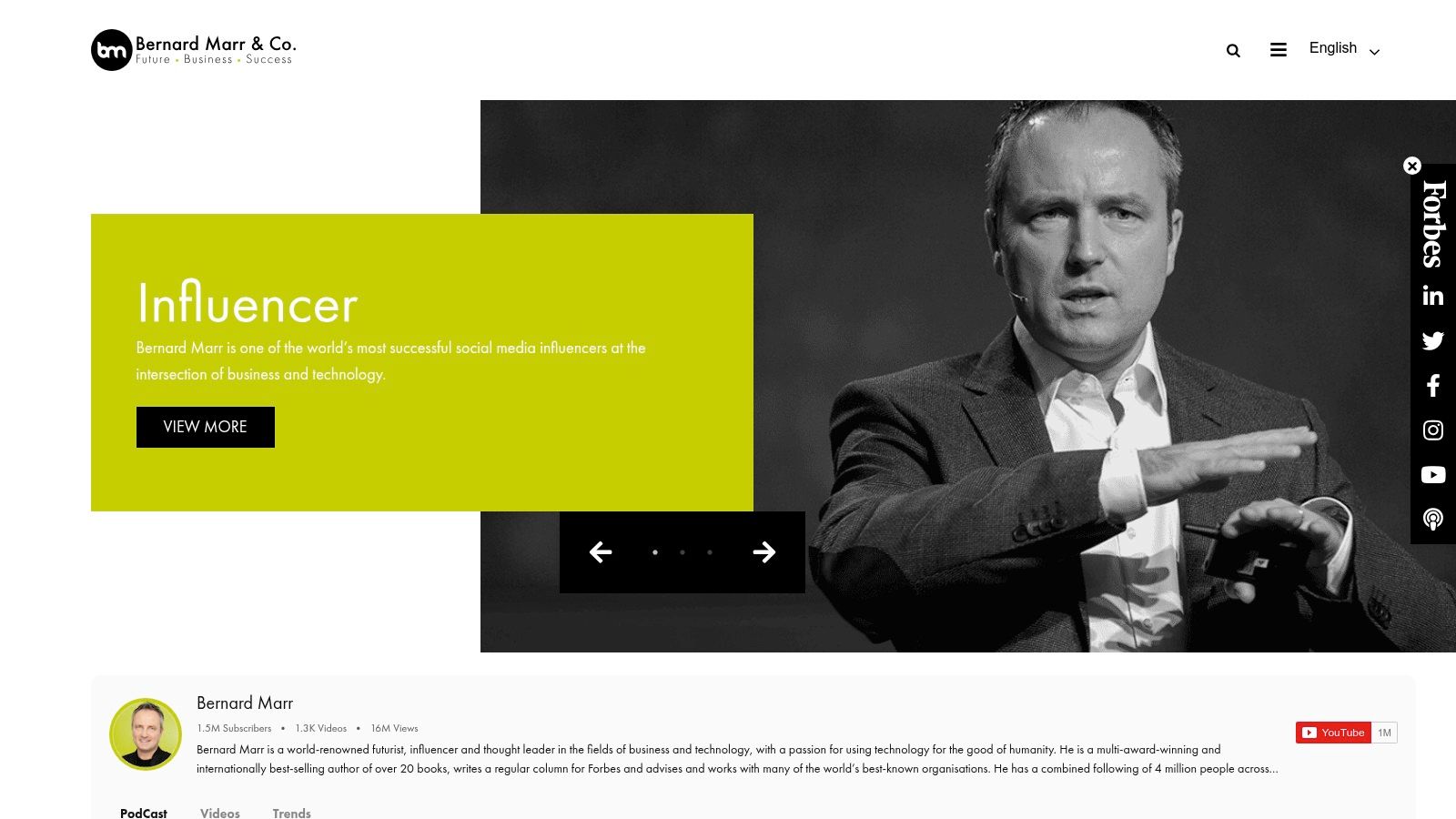
The platform’s core value is its high-quality, free-to-access analysis from a globally recognized authority. It deconstructs complex topics, including detailed breakdowns of other subscription business model examples like Adobe and Spotify. This focus on depth over breadth makes it an indispensable resource for entrepreneurs, executives, and academics seeking to understand the mechanics behind successful modern businesses.
Strategic Breakdown
Bernard Marr's model is a masterclass in using free content to build a powerful brand ecosystem that generates revenue indirectly. It demonstrates that value doesn't always have to be locked behind a paywall.
- Authority as the Core Product: The website's primary offering is Bernard Marr's personal brand and expertise. Every article, case study, and insight reinforces his position as a thought leader. This authority is then monetized through consulting, speaking engagements, and book sales, which are promoted on the site.
- Content Curation Model: Similar to a museum curator, Marr selects relevant topics and provides expert commentary. He simplifies complex business strategies and technological shifts, making them accessible to a broad audience. This curated approach saves users time and provides a trusted filter for business information.
- The "Freemium" Knowledge Hub: By offering all its detailed analysis for free, the site maximizes its reach and search engine visibility. This strategy attracts a wide top-of-funnel audience, which can then be funneled toward paid offerings. The high-value content acts as the ultimate lead magnet.
Key Insight: The most replicable strategy from Bernard Marr's site is building a business around expert curation. By becoming a trusted, authoritative source in a specific niche, you can create a loyal following that sees value not just in the information provided, but in your unique perspective and analysis. This trust becomes the foundation for monetization.
Actionable Takeaways
Businesses, especially consultants and service providers, can learn from this authority-centric model. Focus on consistently delivering exceptional, free insights within your area of expertise. Use this content to build a community and establish credibility, creating a platform from which you can launch premium products or services. The goal is to make your free content so valuable that customers are eager to pay for more direct access to your expertise.
3. Thinkific Blog: The Creator's Guide to Subscription Models
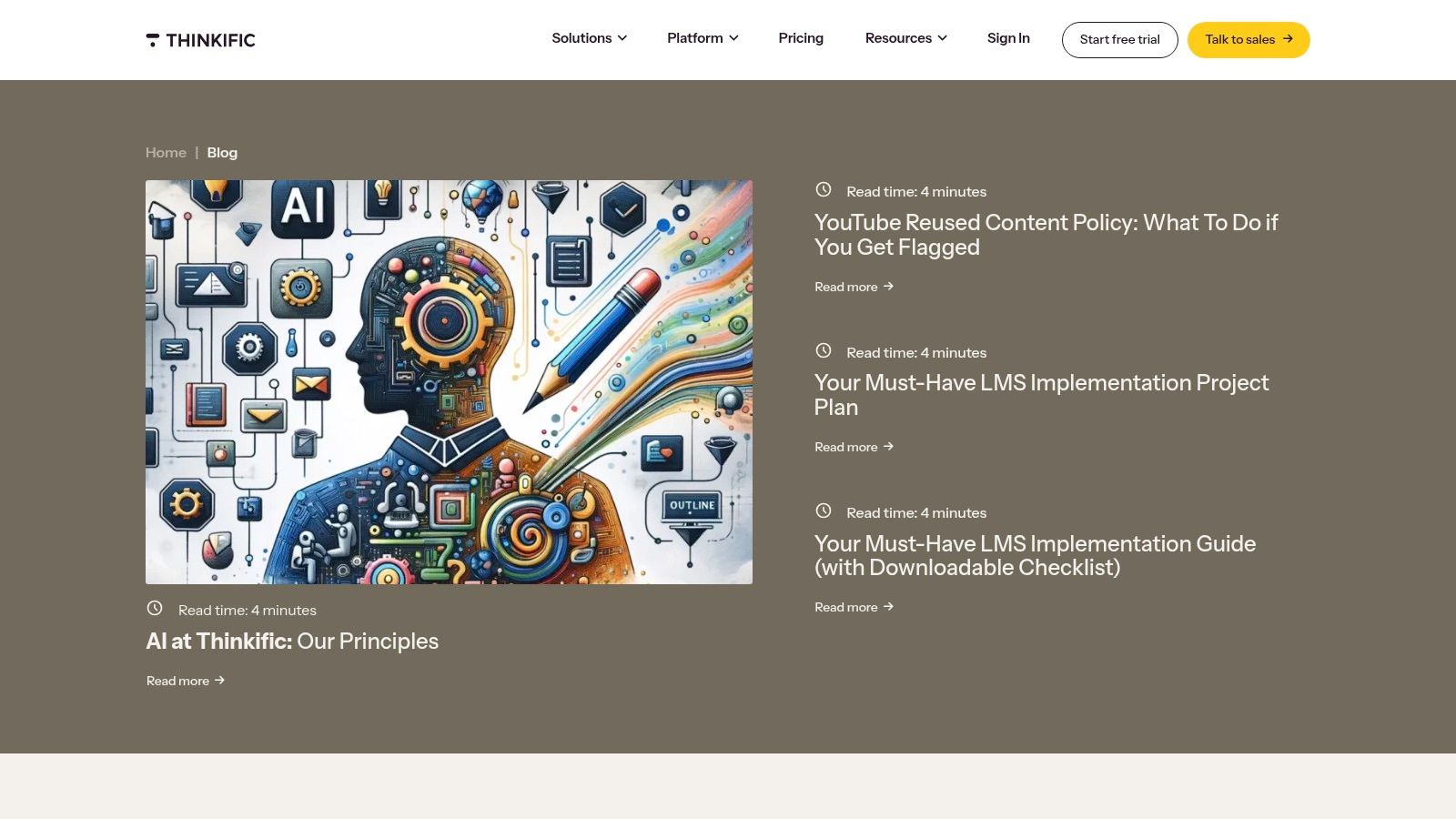
While not a subscription service itself, the Thinkific Blog earns its place on this list by being an indispensable resource for understanding and implementing subscription business model examples, particularly for creators and educators. It functions as a meta-example, providing the strategic blueprint for thousands of digital entrepreneurs to build their own recurring revenue streams through online courses, membership sites, and digital communities.
The blog’s core value is its laser focus on practical application. It moves beyond theoretical discussions to offer actionable guides, case studies, and tactical advice specifically for the creator economy. For anyone looking to launch a subscription-based educational platform, Thinkific's content provides a direct roadmap, covering everything from initial setup to long-term growth and retention strategies.
Strategic Breakdown
Thinkific’s content strategy is a masterclass in using free, high-value information to build authority and drive leads for its primary course-creation platform. It provides the "why" and "how" to attract users who will then need its software tools.
- Content as a Funnel: The blog is the top of Thinkific’s marketing funnel. By offering free, expert advice on creating and selling online courses with a subscription model, it attracts its ideal customer profile: motivated creators. This educational approach builds trust and naturally positions its paid platform as the logical next step.
- Case Study-Driven Proof: A key component of the blog is its use of real-world case studies from successful creators using the Thinkific platform. This provides powerful social proof, showing aspiring entrepreneurs that the models discussed are not just possible but highly achievable with the right tools and strategy.
- Niche-Specific Expertise: Unlike generic business blogs, Thinkific’s content is tailored to the unique challenges of the digital education space. It addresses topics like student engagement, pricing course bundles, and building a community around content, offering specialized insights that are immediately relevant to its target audience.
Key Insight: Thinkific's strategy demonstrates that a powerful way to succeed in the subscription economy is to become the leading educational voice within it. By generously teaching the principles of the model, you build an audience that trusts you and is primed to use your products to execute on that knowledge.
Actionable Takeaways
Businesses, especially in the B2B or SaaS space, can replicate Thinkific’s model. Instead of just selling a tool, focus on teaching the strategy that makes the tool valuable. Create comprehensive, free resources like blogs, webinars, and guides that empower your potential customers. This builds brand loyalty and authority, making your product the obvious choice when it’s time to implement.
4. HubSpot Blog: The Content-as-a-Service Education Model
HubSpot Blog presents a unique twist on the subscription concept, operating as a "content-as-a-service" platform rather than a traditional paid product. As a leader in marketing and sales software, HubSpot uses its blog as a powerful educational resource, offering deep-dive articles, guides, and analyses on business strategy, including countless subscription business model examples. Instead of charging a fee, the "payment" from the user is their attention and potential lead information, making it a cornerstone of inbound marketing.
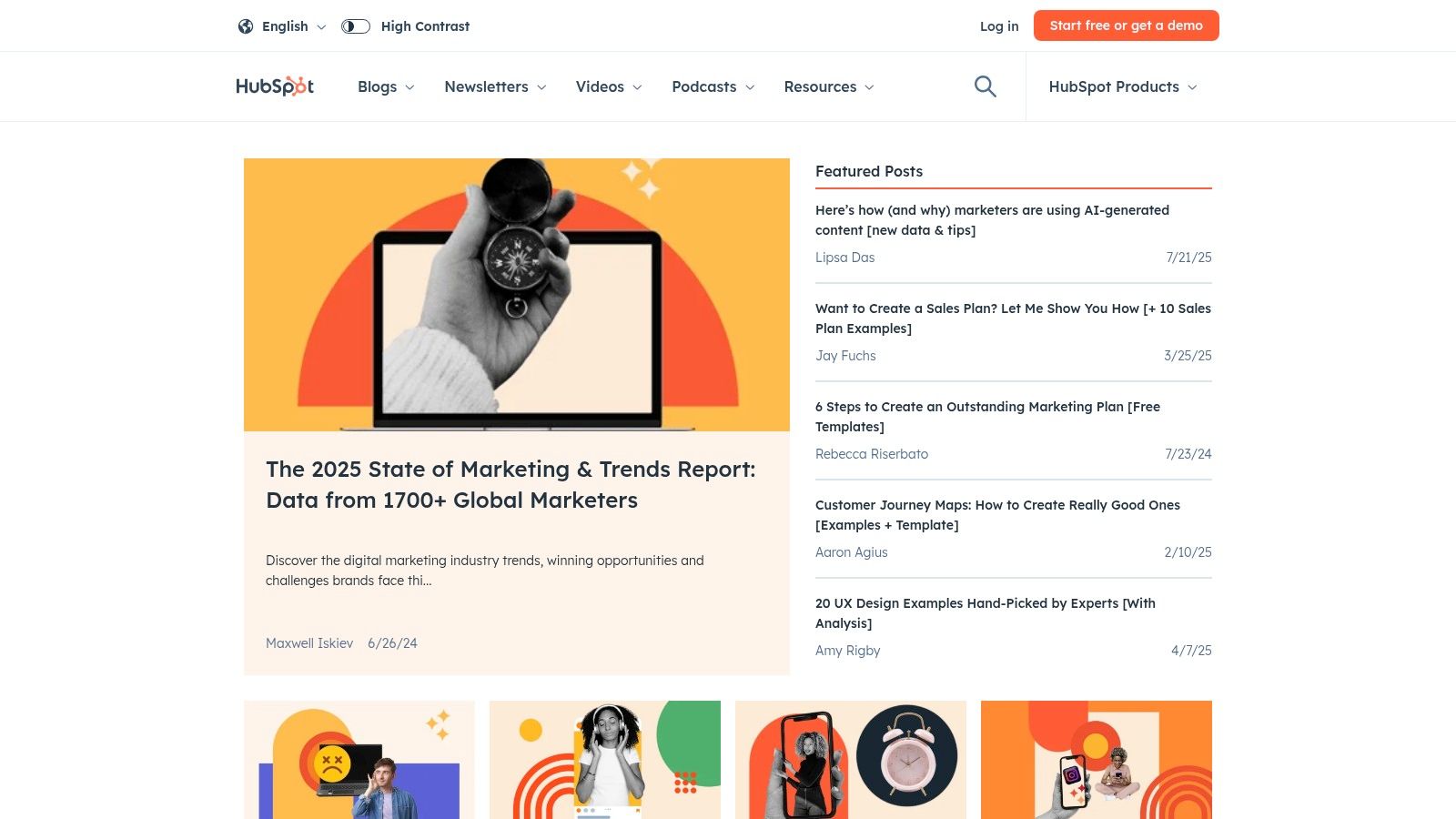
The platform's core value is its high-quality, authoritative content, which is freely accessible to anyone. By consistently publishing detailed breakdowns of business strategies, from customer acquisition to retention tactics, HubSpot positions itself as an indispensable thought leader. This builds immense brand trust and authority, attracting a dedicated audience of entrepreneurs, marketers, and business owners who rely on its insights. This strategy effectively turns the blog into a top-of-funnel machine for its core software products.
Strategic Breakdown
HubSpot’s content model is a masterclass in using free value to drive business growth. Its approach is built on a foundation of expertise and strategic content delivery.
- Content as a Lead Magnet: The entire blog functions as a massive lead magnet. While articles are free, deeper resources like templates, e-books, and reports often require an email address. This creates a powerful, self-sustaining funnel that nurtures readers from casual visitors into qualified leads for its CRM and marketing software suite.
- Topical Authority and SEO Dominance: HubSpot targets and dominates high-value business keywords, including "subscription business model examples." By creating comprehensive, pillar-style content and interlinking extensively, it builds immense topical authority, ensuring it ranks at the top of search engine results and captures a massive volume of organic traffic.
- Integrated Ecosystem: The blog content is not created in a vacuum; it seamlessly integrates with HubSpot’s product offerings. Articles often use examples and language that subtly guide readers toward seeing the value in using a platform like HubSpot to execute the strategies discussed. This creates a natural, educational pathway from learning to implementation.
Key Insight: HubSpot demonstrates that a subscription-like relationship can be built on trust and value, not just monetary exchange. By becoming the go-to educational resource in a niche, a business can create a loyal, engaged audience that is highly receptive to its core product offerings when the time is right.
Actionable Takeaways
Any business can leverage HubSpot's content-first strategy. Focus on becoming the most helpful and comprehensive source of information in your industry. Offer immense value for free to build an audience and establish trust. Then, create clear, non-intrusive pathways for that audience to engage with your paid products or services, turning your educational platform into a sustainable growth engine.
5. Awware Blog: The Knowledge-as-a-Service Content Model
Awware Blog represents a different facet of the subscription economy, operating on a "Knowledge-as-a-Service" model. While not a paid subscription, it provides immense value by offering free, in-depth strategic analysis on subscription business model examples and product marketing. The "payment" is user attention and potential lead generation for its core agency services, creating a powerful content marketing flywheel.
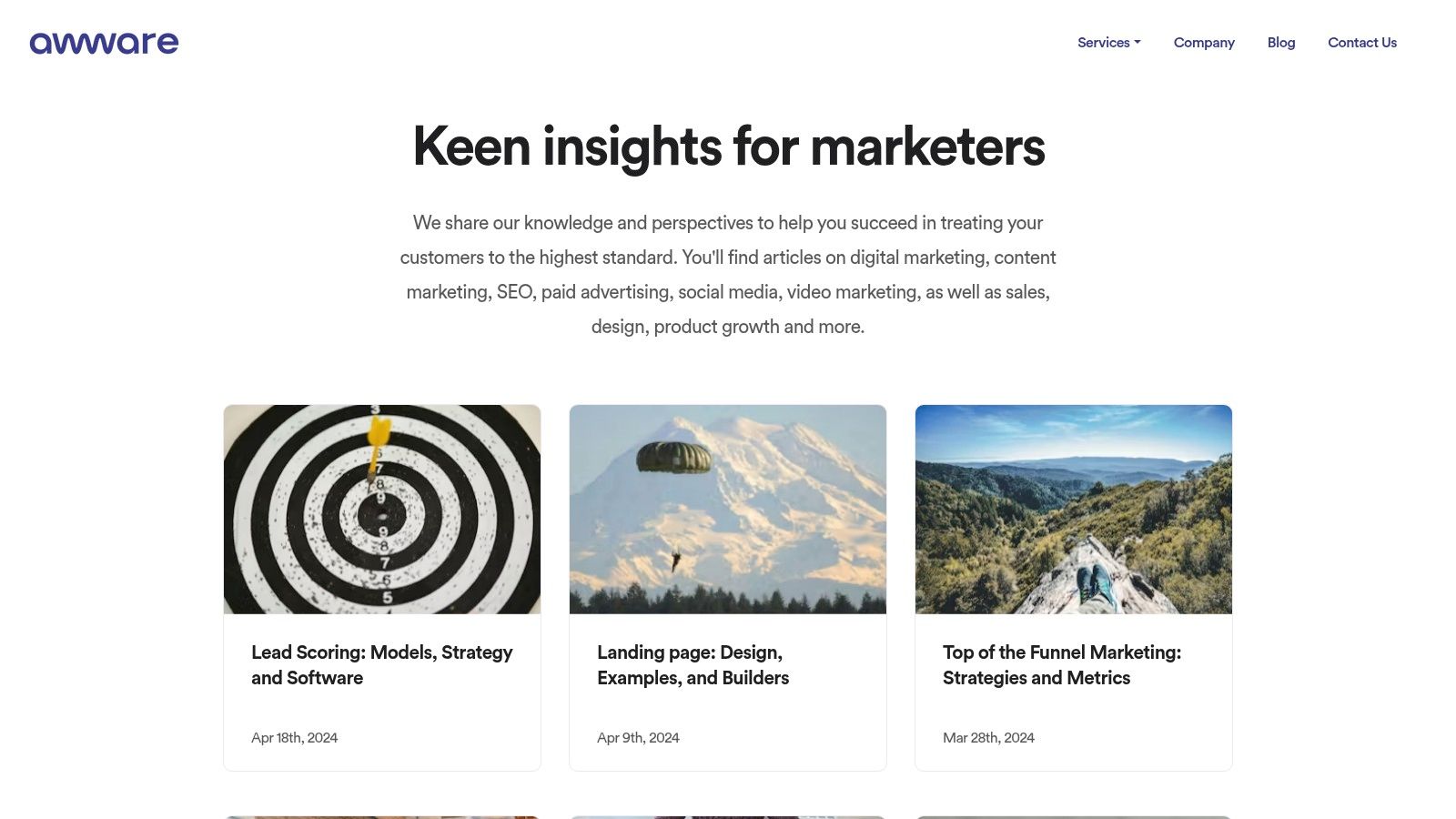
The platform's core value proposition is its highly detailed, well-researched content that deconstructs the strategies of successful subscription companies. Unlike surface-level lists, Awware's articles provide deep dives into the mechanics, key performance indicators (KPIs), and replicable tactics behind giants like Adobe and Amazon Prime. This makes it an indispensable resource for product managers, marketers, and entrepreneurs looking to build or optimize their own recurring revenue streams.
Strategic Breakdown
Awware's approach demonstrates how to build authority and attract a highly qualified audience through specialized, high-value content, a key strategy for B2B service providers.
- Content as the Product: The blog itself is the product. Each article is meticulously crafted to serve as a comprehensive guide, packed with actionable insights and strategic frameworks. This positions Awware not just as a service provider but as a thought leader in the subscription space.
- Zero-Cost Access Model: Access to all articles is completely free, removing any friction for its target audience of professionals and founders. This strategy maximizes reach and establishes goodwill, making it a go-to educational hub. The "cost" is the user's time and potential future business, a classic inbound marketing play.
- Niche Focus, Broad Appeal: While focusing tightly on the niche of subscription models and product marketing, the principles discussed have broad applicability. By dissecting universally recognized brands, the content appeals to anyone interested in modern business strategy, from SaaS startups to digital content creators.
Key Insight: Awware's most replicable strategy is leveraging expert-level educational content as a primary value driver. By providing tangible, free-to-access business intelligence, it builds a loyal audience and a pipeline of educated, high-intent leads for its core business, proving that value can be exchanged for more than just money.
Actionable Takeaways
Businesses, especially in the B2B or service sector, can learn from Awware's model. Instead of gating your best content, offer it freely to establish authority and trust. Focus on a specific niche where you can provide unparalleled depth and practical advice. This turns your blog or resource center from a simple marketing channel into a core part of your value proposition, attracting the exact customers you want to serve.
6. FoxEcom Blog: The Knowledge-as-a-Service Model
While not a subscription service itself, the FoxEcom Blog earns its spot on this list as a critical resource for anyone studying subscription business model examples. It operates on a "knowledge-as-a-service" basis, providing free, high-value educational content that functions as a top-of-funnel strategy for its core e-commerce solutions. This approach builds authority and trust by equipping entrepreneurs with actionable insights.
The blog’s core value proposition is its laser focus on practical application for online retailers. Instead of just theoretical discussions, it offers detailed guides on starting, managing, and scaling a subscription business. This free access to specialized knowledge helps businesses de-risk their entry into the subscription economy, making it an indispensable educational hub for the e-commerce community.
Strategic Breakdown
FoxEcom’s blog leverages content as a strategic asset to attract its ideal customer profile: e-commerce merchants looking to grow.
- Content as a Funnel: The blog is the first touchpoint for many potential customers. By providing in-depth articles, guides, and real-world examples, FoxEcom establishes itself as an expert. This educational content directly funnels qualified leads to its paid e-commerce products and services.
- Niche-Specific Expertise: Unlike generic business blogs, FoxEcom’s content is tailored specifically to the challenges and opportunities within e-commerce subscriptions. This specificity creates a highly relevant resource that speaks directly to the pain points of its target audience.
- Demonstrating Value Upfront: By offering comprehensive guides and strategic breakdowns for free, the platform demonstrates the quality of its expertise. This builds immense trust, making potential customers more confident in purchasing its premium solutions when they are ready to implement them.
Key Insight: FoxEcom’s most replicable strategy is using high-value, educational content as a free service to build a qualified audience. By solving your target market's problems upfront, you create a powerful inbound marketing engine that establishes authority and drives conversions for your core offerings.
Actionable Takeaways
Businesses can use this model to build credibility in their own niche. Focus on creating best-in-class resources that address your ideal customer's biggest questions. By becoming the go-to source for information, you build a loyal following that will naturally turn to you when they are ready to purchase a solution.
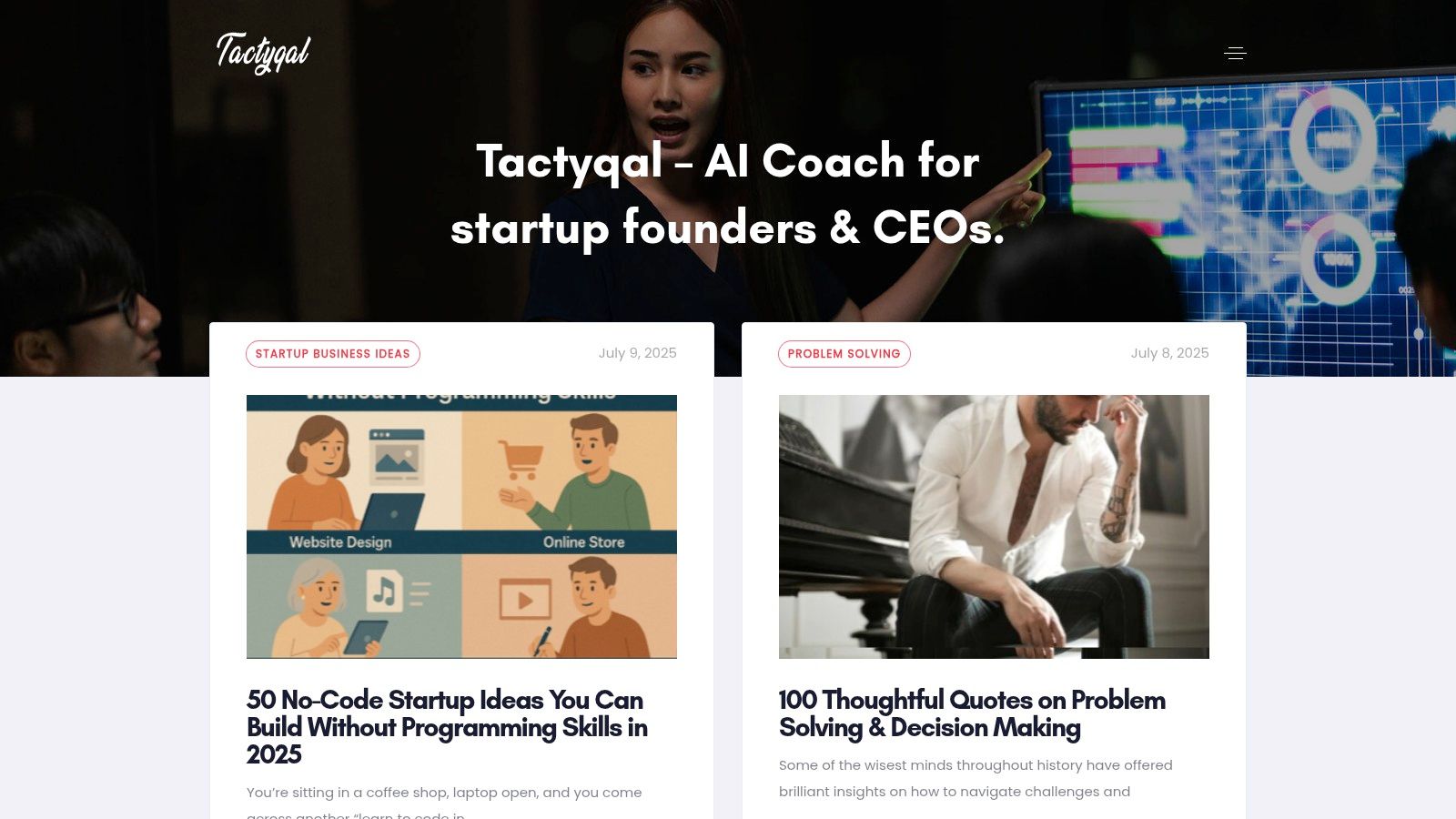
7. Tactyqal Blog: The Educational Hub for Subscription Strategies
Tactyqal Blog serves a unique role in the subscription economy, not as a direct service provider, but as an educational resource dedicated to demystifying the model itself. It operates on an "information as a service" basis, offering free access to a wide range of articles, case studies, and implementation guides. This makes it an essential starting point for entrepreneurs, marketers, and business owners looking to explore or refine their own subscription business model examples.
The platform's value lies in its broad, industry-agnostic approach. Rather than focusing on a single niche, it provides insights applicable to SaaS, e-commerce, digital media, and even traditional businesses. It breaks down complex concepts into digestible content, covering the benefits of recurring revenue, strategies for customer retention, and analyses of successful companies that have mastered the subscription game.
Strategic Breakdown
Tactyqal’s model is built on providing foundational knowledge, positioning itself as a trusted authority for those at the beginning of their subscription journey.
- Content as a Funnel: The blog acts as a top-of-funnel resource. By offering high-quality, free content, it attracts a target audience of potential subscription business owners. This strategy builds brand authority and creates a community of followers who may later be receptive to more advanced products or consulting services.
- Broad-Spectrum Examples: A key feature is its diverse collection of case studies. By showcasing how different industries apply subscription principles, it helps readers find relevant parallels for their own ventures, from membership-based communities to product-as-a-service models.
- Focus on Emerging Trends: The platform also explores forward-thinking concepts like decentralized subscription models. The core of enabling decentralized subscriptions lies in leveraging smart contracts to automate recurring payments and service access, a topic that demonstrates the blog’s commitment to covering the future of the industry.
Key Insight: Tactyqal’s strength is its accessibility. By removing the paywall and focusing on clear, introductory-level content, it becomes an indispensable first stop for anyone curious about recurring revenue, effectively capturing a wide audience before they move on to more specialized, in-depth sources.
Actionable Takeaways
Businesses, especially those in consulting or B2B services, can learn from Tactyqal's content-first approach. Focus on becoming a go-to educational resource in your niche. By providing genuine value upfront without asking for anything in return, you build trust and establish credibility, creating a powerful inbound marketing engine that draws qualified leads directly to you.
Subscription Business Model Examples Comparison
| Resource Title | Implementation Complexity 🔄 | Resource Requirements ⚡ | Expected Outcomes 📊 | Ideal Use Cases 💡 | Key Advantages ⭐ |
|---|---|---|---|---|---|
| How to Start a Subscription Business: Your Complete Guide | Medium - requires Bitcoin familiarity | Moderate - low-code tools, crypto setup | High - automated, privacy-focused recurring billing | Subscription businesses leveraging crypto payments | Strong niche validation, fast crypto payments, privacy-focused onboarding |
| Bernard Marr's Official Website | Low - informational | Low - free access to expert analyses | Medium - deep understanding of subscription models | Academics, strategists, business analysts | Expert authority, updated case studies, no fees |
| Thinkific Blog | Low - educational content | Low - free content | Medium - practical digital subscription strategies | Digital entrepreneurs, online education | Practical advice for course creators, pricing & retention tips |
| HubSpot Blog | Low - blog articles | Low - free extensive marketing resources | Medium - marketing & subscription growth insights | Marketers, SaaS companies, subscription businesses | Reputable source, comprehensive marketing strategies |
| Awware Blog | Medium - detailed analyses | Low - free content | Medium - actionable product marketing insights | Product managers, marketers | In-depth metrics & case studies, well-researched content |
| FoxEcom Blog | Low - practical guides | Low - freely accessible | Medium - e-commerce subscription implementation | E-commerce entrepreneurs, online retailers | Practical e-commerce focus, step-by-step guides |
| Tactyqal Blog | Low - introductory content | Low - free access | Low to Medium - broad subscription model overview | Beginners exploring subscription models | Broad industry coverage, easy-to-understand insights |
Your Blueprint for Building a Subscription Powerhouse
The journey through these diverse subscription business model examples illuminates a fundamental truth: successful recurring revenue is not built on a single transaction. Instead, it’s forged through the consistent delivery of value, transforming a one-time customer into a long-term partner. From Netflix’s content curation to Adobe’s creative ecosystem and Peloton’s community-driven fitness, the common thread is embedding the service into the customer's daily life or professional workflow.
The strategic breakdowns of each model reveal that the most durable subscription businesses are not just clever pricing schemes. They are meticulously designed systems that solve a persistent customer problem so effectively that the recurring payment feels like a necessity, not a burden. The goal is to make your offering indispensable.
Synthesizing the Winning Strategies
As you architect your own subscription model, distill the lessons from these industry leaders. The core of your strategy should revolve around your unique value driver. What specific, ongoing benefit can you provide that competitors cannot easily replicate? Is it access, convenience, curation, or community?
Once defined, your focus must shift to creating a frictionless customer experience. This extends beyond the user interface of your product; it includes the sign-up process, billing cycles, customer support, and cancellation policy. Every touchpoint is an opportunity to reinforce trust and demonstrate your commitment to the customer relationship.
Your Actionable Next Steps
To move from concept to reality, focus on these critical actions:
- Identify Your Core Value Loop: Pinpoint the recurring problem you solve. How does your solution deliver compounding value over time, encouraging users to stay subscribed month after month?
- Map Your Customer Journey: Detail every interaction a customer will have with your brand, from discovery to their 12th billing cycle. Identify potential friction points and design solutions to eliminate them before they become a problem.
- Select the Right Technology Stack: Your ability to manage subscribers, process payments, and analyze data is paramount. Choose tools that not only meet your current needs but can also scale as you grow. Consider how modern payment infrastructure can give you a competitive advantage.
- Launch a Pilot Program: Before a full-scale launch, test your model with a small, dedicated group of users. Use their feedback to refine your pricing, features, and overall experience.
Building a subscription powerhouse is a marathon, not a sprint. The most successful subscription business model examples demonstrate that success is found in a relentless focus on the customer relationship. It's about evolving your offering based on user feedback and market trends, ensuring your service remains essential. This approach transforms your business from a simple vendor into a vital, integrated part of your customers' lives, creating a foundation for sustainable, long-term growth.
Ready to build a future-proof subscription business? Power your recurring payments with Flash, the global payment network built on Bitcoin and the Lightning Network. Flash offers instant, low-cost transactions, enabling you to create a seamless billing experience for customers anywhere in the world.