Picture this: a secure credit card machine that lives right inside your web browser. That’s the simplest way to think about a virtual point of sale terminal. It turns any laptop, tablet, or smartphone into a payment processing powerhouse, freeing your business from the confines of a physical sales counter.
From Countertop to Cloud: What a Virtual POS Really Is
A virtual point of sale (POS) terminal isn't a bulky cash register; it's more like a secure webpage dedicated to taking payments. Instead of swiping a physical card, you simply log in through your browser, key in the customer's payment information, and hit "process." That's it.
This is the exact technology that lets a plumber take a credit card payment on-site after a repair or allows a consultant to settle an invoice over the phone the moment a meeting ends. It's built for businesses on the move or those that don't operate from a traditional storefront.
The DNA of a Virtual Terminal
At its core, a virtual terminal is designed to handle card-not-present (CNP) transactions. This is what makes it fundamentally different from a physical POS system that relies on a customer being there to swipe, tap, or insert their card.
The market is taking notice. The global virtual POS terminal market was valued at around $17.85 billion in 2024 and is expected to explode to $79.1 billion by 2029. Why the massive jump? It's simple: customers increasingly want remote and contactless ways to pay. If you want to dig deeper, you can explore the full virtual payment terminal market research to see the trends driving this growth.
What makes a virtual terminal, a virtual terminal?
- Hardware-Independent: It runs on the gear you already own—laptops, tablets, and phones.
- Web-Based Access: You get to it through a secure login on a web browser. No software installation needed.
- Manual Entry: You process payments by typing in the card number, expiration date, and CVV code by hand.
A virtual POS terminal gives you the power to accept payments anywhere you have an internet connection. It’s not just a tool; it's operational freedom in a browser tab.
To really see how different these two systems are, let's put them side-by-side.
Virtual POS Terminal vs Traditional POS System
This table breaks down the fundamental differences between taking payments through a browser and using a classic countertop machine. It helps clarify which tool is right for which job.
| Feature | Virtual Point of Sale Terminal | Traditional Physical POS System |
|---|---|---|
| Hardware | None required; uses existing computers, tablets, or phones. | Requires dedicated hardware (terminal, card reader, printer). |
| Location | Anywhere with an internet connection. | Fixed to a physical location, like a sales counter. |
| Primary Use | Card-not-present (phone, mail, invoice payments). | Card-present (in-person swipes, taps, and chip reads). |
| Initial Cost | Low to none; often included with a merchant account. | High; involves purchasing or leasing expensive equipment. |
| Setup Time | Instant; log in and start processing immediately. | Requires installation, software setup, and potential training. |
As you can see, the choice isn't just about technology—it's about how and where your business operates. One offers freedom and flexibility, while the other is built for high-volume, in-person transactions at a fixed spot.
The Big Wins: What a Virtual POS Actually Does for Your Business

Bringing a virtual POS terminal into your business isn't just a tech upgrade; it's a strategic move with real, bottom-line benefits. The first and most obvious win is the cost savings. You get to completely sidestep the hefty price tags of proprietary hardware, not to mention the ongoing maintenance fees that quietly eat into your profits.
Think about it. Instead of buying a clunky, single-purpose machine, a virtual point of sale terminal transforms the devices you already own—laptops, tablets, even your smartphone—into powerful payment processors. This immediately frees up your budget and simplifies your entire operation from day one.
That operational freedom is where things get really interesting. It introduces a level of flexibility that old-school systems just can't touch. Your team is no longer chained to a physical counter. You can close a sale right on the spot, whether you're at a client's office, a bustling trade show, or finishing up a service call.
Unlock New Ways of Working
Imagine a freelance consultant who just wrapped up a great call with a client. The old way? Send an invoice, cross your fingers, and wait weeks for a check to arrive. The new way? She pulls up the virtual terminal in her browser, keys in the client's card details, and secures payment before she even hangs up. This simple change is huge for cash flow and removes all the friction from getting paid.
This same principle opens up entirely new payment avenues. With a platform like Flash, you can use that same simple virtual terminal interface to accept Bitcoin payments directly, wallet-to-wallet. Suddenly, your business is open to a global audience of over 500 million Bitcoin users. There’s no complicated setup—just a fast, secure way to tap into a modern payment network.
Beyond just taking payments, a virtual terminal becomes your central hub for transaction data. This consolidation makes critical business functions far easier:
- Recurring Billing: Set up subscriptions and recurring payments once, then let the system handle them automatically.
- Sales Reporting: Get an instant, clear picture of your sales data to see what’s working and make smarter decisions.
- Customer Management: Securely save payment info for loyal customers, making their next checkout experience quick and painless.
Better Security Builds Customer Trust
Finally, let's talk about security—because with a good virtual POS, it's a core feature, not an afterthought. Reputable providers run on PCI-compliant gateways and use advanced security like tokenization. This is a fancy term for a simple, powerful idea: sensitive card data is replaced with a unique, non-sensitive token, protecting both you and your customer from a potential data breach.
By processing payments through a secure, centralized system, you not only protect sensitive data but also build a foundation of trust with your customers, encouraging repeat business.
This robust security framework means you can confidently handle card-not-present transactions, which traditionally carry a higher risk. By empowering you to process payments securely and efficiently, a virtual point of sale terminal gives your business the agility, cash flow, and customer trust it needs to thrive.
Must-Have Features in a Virtual POS System

Choosing a virtual point of sale terminal isn't just about finding a new way to punch in credit card numbers. The right system is more like a business partner—a suite of tools designed to solve real problems and open up new ways to work more efficiently.
Think of it like this: a basic pocket knife just has a blade. But a real Swiss Army knife is packed with tools for every imaginable situation. That's what you should look for in a virtual POS. It needs to go beyond simple payments and offer features that actively help you manage and grow your business.
At its very core, any virtual POS worth its salt has to connect flawlessly with payment gateways. This link is the engine that drives every single transaction, making sure data moves securely and quickly. To really get a handle on this crucial piece of the puzzle, it's worth exploring a good guide on payment gateway integration.
Core Functionalities That Drive Value
When you're comparing your options, zero in on the features that automate your tedious tasks and clean up your financial workflow. These are the tools that give you a real return on your investment by saving you time and headaches.
- Recurring Billing: If you run a subscription or retainer-based business, this is non-negotiable. It lets you automatically charge customers on a set schedule, which makes your cash flow predictable and cuts down on manual admin work.
- Invoice Generation with Payment Links: Don’t just email a PDF and hope for the best. A great system lets you create and send professional invoices with a "Pay Now" button right inside. It makes getting paid ridiculously easy for your clients.
- Customer Information Management (CIM): This feature securely saves customer card information using tokenization. It’s a game-changer for repeat business, enabling fast, one-click checkouts without making loyal customers re-enter their details.
Key Takeaway: The best virtual POS systems aren't just payment portals; they're active business management tools. Features like automated billing and one-click invoicing directly solve the most common pain points of getting paid.
Security and Reporting You Can’t Ignore
Beyond the convenient stuff, two features are absolutely critical: rock-solid security and insightful reporting. Without them, you’re just asking for trouble and flying blind on your own performance. Your system must have end-to-end encryption and tokenization to shield sensitive cardholder data from the moment a payment is initiated.
At the same time, you need reporting tools that turn all that raw transaction data into something you can actually use. Good reports help you spot sales trends, figure out who your best customers are, and manage your finances with total clarity. This is especially vital in a market that's exploding.
The total point of sale terminal market was valued at over USD 113 billion in 2024 and is on track to hit USD 181 billion by 2030, all fueled by the shift to digital payments. This growth underscores just how important it is to have a system that gives you a clear view of your own financial landscape.
How Different Industries Use Virtual Terminals
The real magic of a virtual point of sale terminal is just how adaptable it is. This isn't some rigid, one-size-fits-all tool. Think of it more like a piece of software that can be shaped to fit the unique needs of almost any industry you can imagine.
From service professionals constantly on the move to wholesalers juggling massive orders, businesses are finding smart ways to weave this tech into their day-to-day operations.
Take a home services pro, like a plumber or an electrician. The job's done, but the old way meant sending an invoice and then waiting… and waiting. With a virtual terminal, they just pull out a tablet or phone, log in, and process the customer's card right there. It’s a simple change that drastically speeds up cash flow and gives the whole customer interaction a much more professional feel.
A Fit for Many Business Models
This flexibility goes way beyond simple service calls. A virtual terminal can become the quiet, efficient engine behind all sorts of business models.
B2B and High-Value Sales
Picture a B2B wholesaler who handles most of their big orders over the phone or by email. Instead of the headache and risk of waiting for checks to clear or dealing with wire transfers, they can use their virtual POS. It lets them securely process high-value credit card payments in an instant, locking in the sale and cleaning up their accounts receivable process.
Nonprofits and Fundraising
Or how about a nonprofit during a big fundraising campaign? Volunteers can take donations over the phone from absolutely anywhere. All they need is a device with a web browser to access the terminal and securely process a pledge. To see just how specialized this can get, you only have to look at how organizations like churches use dedicated online giving platforms for churches to manage their specific needs.
At its core, it's about empowerment. A virtual terminal puts the business back in control, letting them decide when and where they get paid, instead of being chained to a physical credit card machine.
From Traditional Money to Digital Currencies
And it doesn't stop with traditional money. For businesses wanting to embrace the modern digital economy, virtual terminals are the perfect on-ramp. For instance, using a platform like Flash, that same simple interface can be used to accept Bitcoin payments straight from a customer's wallet.
This opens up a ton of new possibilities:
- A vendor at a farmer's market can accept Bitcoin using just their smartphone. It’s a great way to appeal to a tech-forward crowd without buying any extra gear.
- An online coach or consultant can invoice clients anywhere in the world and get paid in Bitcoin, completely sidestepping cross-border fees and banking delays.
- A coffee shop can set up a tablet at the counter as a virtual terminal, offering a fast, modern payment option right alongside cash and cards.
In every one of these cases, the virtual point of sale terminal is the secure, central hub for the transaction. It’s a single, familiar interface that’s powerful enough to handle a huge range of payment types and business situations, proving its worth across countless industries.
How to Choose and Set Up Your Virtual POS
Making the leap to a virtual point of sale terminal is surprisingly simple, but picking the right one? That takes a bit of homework. Think of it less like finding a vendor and more like finding a long-term partner whose tech actually lines up with where your business is headed.
The first step is to get brutally honest about your own needs.
Take a good look at your transaction patterns. Are you processing a handful of high-value B2B invoices or hundreds of small retail sales every month? Knowing your volume helps you immediately filter out providers that just aren't a good fit for your scale.
Next, think about the software you already use day-in and day-out. A virtual POS should make your life easier, not add another layer of complexity. You need to be sure any provider you consider plays nicely with the tools you already count on, like QuickBooks for your books or the specific CRM that runs your sales process.
Comparing Providers and Pricing
Once you’ve got a shortlist, it’s time to get into the nitty-gritty of their offers, especially how they charge. You'll typically run into two main pricing models.
- Flat-Rate Pricing: This is the simple, no-surprises model. You pay a set percentage plus a small fixed fee for every single transaction (think 2.9% + 30¢). It’s perfect for businesses that crave predictable costs and hate wading through complex statements.
- Interchange-Plus Pricing: This model is far more transparent. It separates the non-negotiable interchange fee (what the card-issuing bank takes) from the provider’s markup. For businesses with higher sales volumes, this can often be the more cost-effective route.
Your goal is to find a partner, not just a payment processor. Select a provider whose security, pricing, and features will support your business as it grows, not hold it back.
The move toward these flexible, software-driven systems is no small trend. Projections show that by 2025, cloud-based POS solutions will account for 73% of all new installations across the globe. These systems offer constant updates that can extend a terminal's life by up to 60%, not to mention they provide real-time inventory tracking and simplify tax compliance. You can explore more findings on the point of sale terminal market to see just how massive this shift is.
A Checklist for Making Your Final Decision
Before you sign on the dotted line, you need to go in armed with the right questions. This checklist will help you cut through the sales pitch and make sure there are no nasty surprises waiting for you later.
- What are all the fees? Demand a full fee schedule. Ask about monthly fees, PCI compliance costs, and chargeback penalties.
- Is the system PCI compliant? This is a deal-breaker. If they can't guarantee PCI compliance, they can't securely handle card data. Walk away.
- What does customer support look like? When things go wrong, you need help now. Look for 24/7 support via phone or live chat, not just an email address that gets checked once a day.
- How quickly do I get my money? Pin down their deposit schedule and ask about any circumstances that might lead to a hold on your funds.
- Does the system support multiple users? If you have a team, you’ll need the ability to create separate logins with different permission levels to keep things secure and organized.
By taking a methodical approach, you can confidently pick and set up a virtual point of sale terminal that doesn't just solve today's problems but is ready to scale with you for years to come.
The Future of Payment Processing Technology
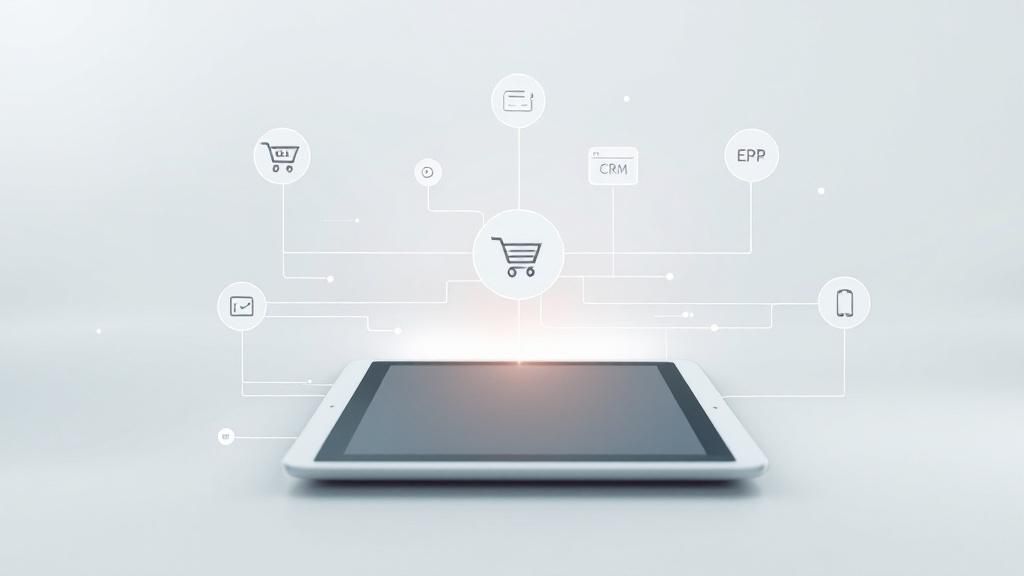
Think of a virtual point of sale terminal as more than just a tool for today's sales. It's really the launchpad for where your business is headed. The technology is evolving at a breakneck pace, moving far beyond simple card-not-present transactions to become a command center for the next generation of finance.
The most obvious shift is how alternative payments are being directly woven into the fabric of these systems. Modern virtual terminals are now built to natively accept everything from popular digital wallets to cryptocurrencies like Bitcoin. This means businesses can finally meet customer demand without having to bolt on clunky, third-party workarounds. For merchants using a platform like Flash, this future is already a reality, making direct wallet-to-wallet Bitcoin payments just as simple as a standard card transaction.
Smarter Payments and Deeper Insights
Looking just a little further down the road, artificial intelligence (AI) and machine learning are poised to completely redefine what a virtual terminal can do. We're moving beyond basic fraud detection. These technologies will soon offer predictive analytics that can spot suspicious activity and stop a fraudulent transaction before it even happens.
On top of that, AI will unlock deeper insights into your customer base by analyzing spending patterns and transaction histories. This isn't just data for data's sake; it helps you understand customer behavior on a whole new level, opening the door for truly personalized offers and loyalty programs that actually work. The virtual POS transforms from a simple payment tool into a vital source of business intelligence.
The next evolution of the virtual terminal is as a central engine for "headless commerce." It separates the complex backend payment logic from the customer-facing interface, giving you total creative control.
The Rise of Headless Commerce
This is where the virtual terminal really proves its worth as a future-proofing tool. By acting as a flexible, backend payment engine, it allows businesses to design and build completely custom checkout experiences on any device or platform you can imagine.
This approach lets you put a payment point virtually anywhere, including:
- Smart home devices for one-click reordering of supplies.
- Custom mobile apps with a unique look and feel.
- Interactive kiosks at events or in your physical store.
In a headless model, the virtual terminal handles all the heavy lifting—security, compliance, and processing—quietly in the background. This frees you up to focus on innovating the customer experience on the front end, ensuring your business is ready to take payments wherever your customers are, today and well into the future.
Common Questions About Virtual POS Terminals
Switching up your payment system is a big move, and it's totally normal to have a few questions. Let's walk through some of the most common things merchants wonder about when they're looking at a virtual POS terminal. My goal here is to give you clear, practical answers so you can make a decision that feels right for your business.
Is It Secure for My Customers?
Absolutely. Any provider worth their salt builds their entire system around PCI compliance, which is the gold standard for protecting cardholder data.
They use clever security tech like tokenization. This swaps out sensitive card numbers for a unique, one-time code. It means the actual card details never even touch your system, which massively cuts down the risk for everyone involved—you and your customers.
Do I Need a Separate Merchant Account?
Yes, you do. Think of it this way: the virtual POS terminal is the steering wheel you use to input payments, but the merchant account is the engine that actually processes the money and gets it into your bank.
Most providers make this easy by bundling the terminal with a merchant account, which simplifies the whole setup process.
A common misconception is that a virtual terminal replaces your payment processor. In reality, it works hand-in-hand with it. It's just a flexible, hardware-free way to kick off transactions through your existing merchant account.
Can I Use This for In-Person Sales?
Definitely. This is one of the biggest perks of a virtual point of sale terminal—its sheer flexibility.
Since it just runs in a web browser, you can pull it up on a tablet at your checkout counter, a smartphone at a market stall, or even on-site right after you finish a service call. It’s a fantastic tool for any business that operates in both physical and remote settings.
Ready to modernize your payments and tap into the global Bitcoin economy? With Flash, you can accept secure, wallet-to-wallet Bitcoin payments in under a minute. Discover how Flash can work for your business.