At its core, a payment processor is the financial middleman that securely handles the transaction between you (the merchant) and your customer. Think of it as the service that connects your customer's bank to your bank, making it possible to accept payments in just a few seconds.
Understanding the Role of a Payment Processor
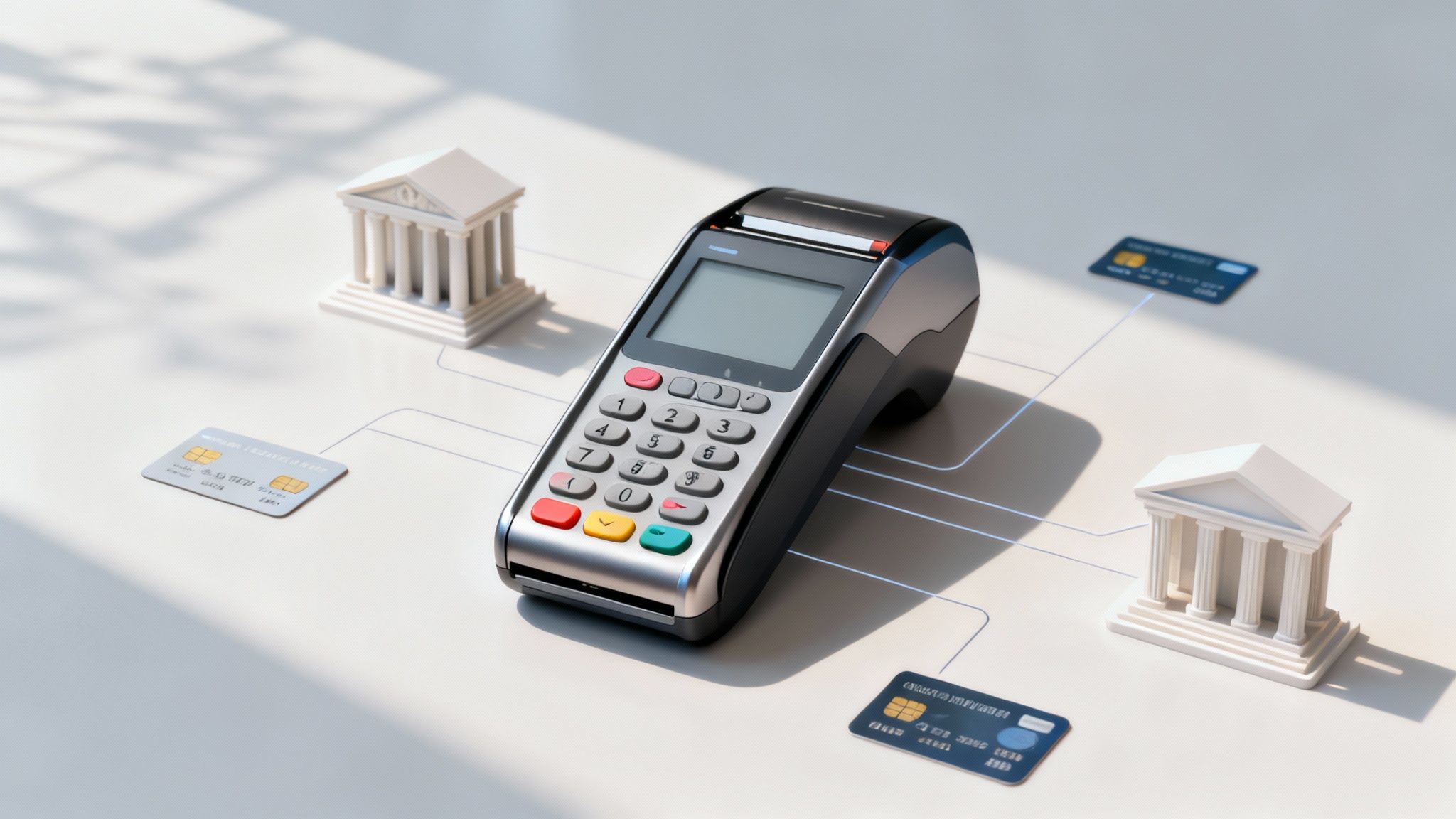
Imagine the payment processor as the central nervous system for your sales. It’s the invisible engine working tirelessly behind the scenes every time a customer makes a purchase, whether they're buying online with Bitcoin or tapping their card in your store.
This system is part translator, part security guard, and part traffic controller. It takes sensitive payment information and securely routes it between all the different parties involved in a transaction. The processor talks to various financial networks to check if funds are available, get the green light for the sale, and finally move the money into your business account. Without this critical link, accepting any kind of digital payment would be a nightmare for most businesses.
The Key Players in a Transaction
Every sale, no matter how small, triggers a rapid and complex dance between several key players. Knowing who's involved makes it much clearer what a payment processor actually does.
To break it down, here are the essential participants involved every time a payment is made.
| Player | Role in the Transaction |
|---|---|
| The Customer | The person making the purchase. |
| The Merchant | Your business, selling the goods or services. |
| The Payment Processor | The company managing the transaction and communication. |
| The Issuing Bank | The customer's bank (the one that issued their card). |
| The Acquiring Bank | Your business's bank, which receives the funds. |
This table shows how the payment processor acts as the central hub, connecting everyone else to make the sale happen smoothly and securely.
Payment processors are the true backbone of the global economy. They move trillions of dollars across borders every single day. It's estimated that over $10 trillion is processed daily through more than 60 million transactions in over 200 countries.
This incredible scale shows just how vital they are for modern commerce. They enable sales that would otherwise get stuck or blocked by incompatible banking systems. For a deeper dive into the trends shaping this space, check out the latest insights on cross-border payments from J.P. Morgan.
The Anatomy of a Payment Transaction: A Step-by-Step Breakdown
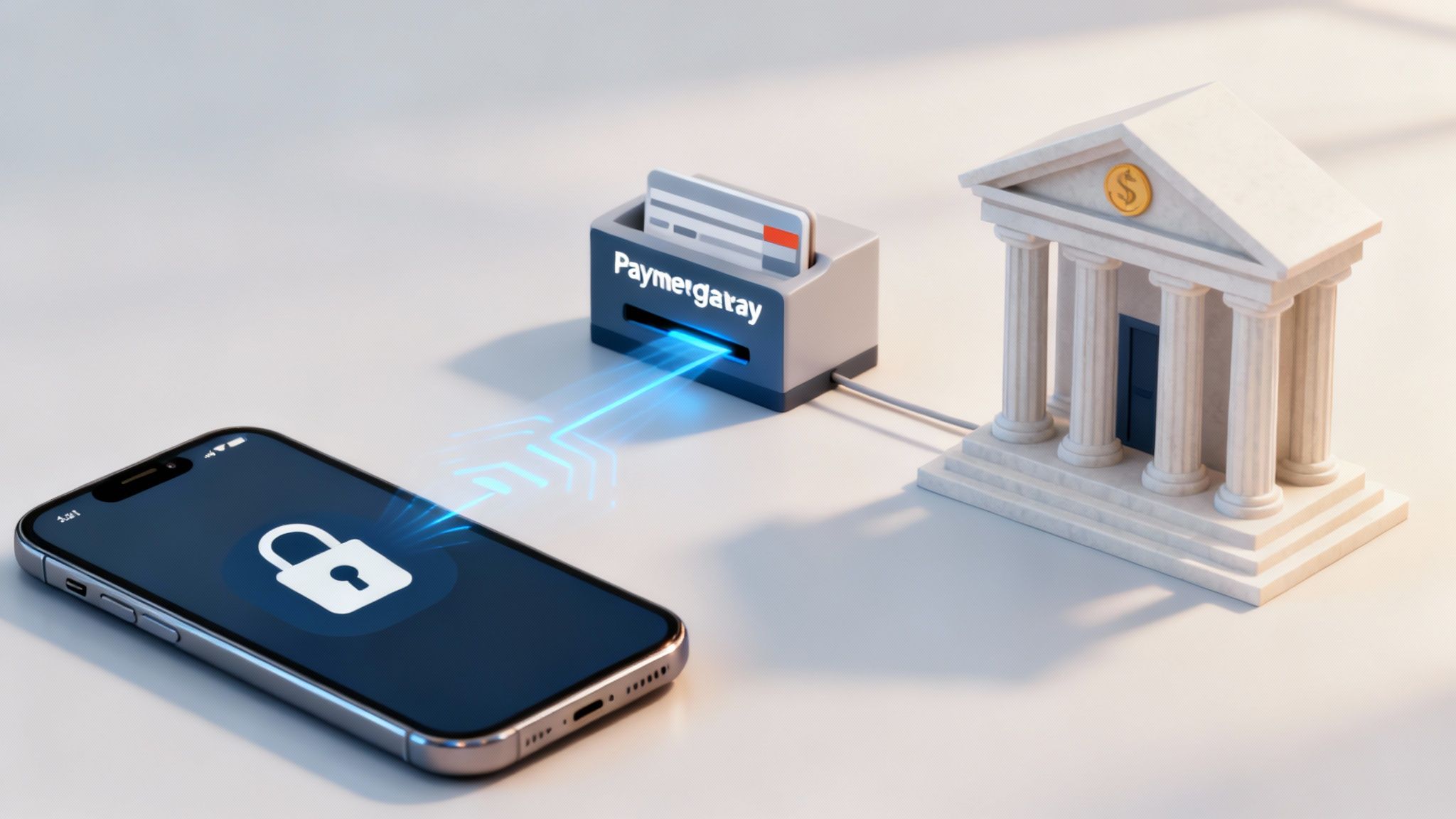
Ever wondered what happens in the few seconds after a customer hits "Pay"? It’s not just a simple transfer; it's a high-speed, multi-step process orchestrated by the payment processor. This intricate dance ensures money moves securely from your customer to your business account.
The entire journey unfolds in three key stages: authorization, clearing, and settlement. Think of it as a three-act play where data is encrypted, verified, and funds are finally moved—all in the blink of an eye.
Stage 1: Authorization - The Green Light
The moment a customer submits their payment details, the show begins. Your website's payment gateway acts like a secure courier, encrypting the sensitive information and whisking it away to your payment processor.
The processor doesn't waste a second. It immediately forwards this request to the customer's issuing bank (the bank that gave them their card). The issuing bank runs a quick background check on a few key things:
- Does the customer have enough funds or credit available?
- Are the payment details valid?
- Are there any red flags for fraud?
If everything looks good, the bank sends an approval message back through the same channels. This "authorization" is the green light that shows up on your screen as a successful payment. The whole thing usually takes less than two seconds.
Stages 2 and 3: Clearing and Settlement - Moving the Money
With the transaction approved, the next phase is to actually get the money moving. This doesn't happen instantly. At the end of the business day, the processor bundles all your approved authorizations into a single batch and sends them off for clearing.
Key Takeaway: While authorization feels instant, the actual transfer of money is not. The clearing and settlement phases are batch processes that make sure all the financial records are reconciled before funds change hands.
During the clearing stage, the processor sorts through all the day's transactions and routes them to the correct financial networks. Finally, during settlement, the customer's bank transfers the funds to your acquiring bank.
The money then officially lands in your merchant account, completing the cycle. This final step can take anywhere from 24 to 72 hours, depending on your processor, the payment method used, and even the day of the week.
Diving Into the Different Types of Payment Processors
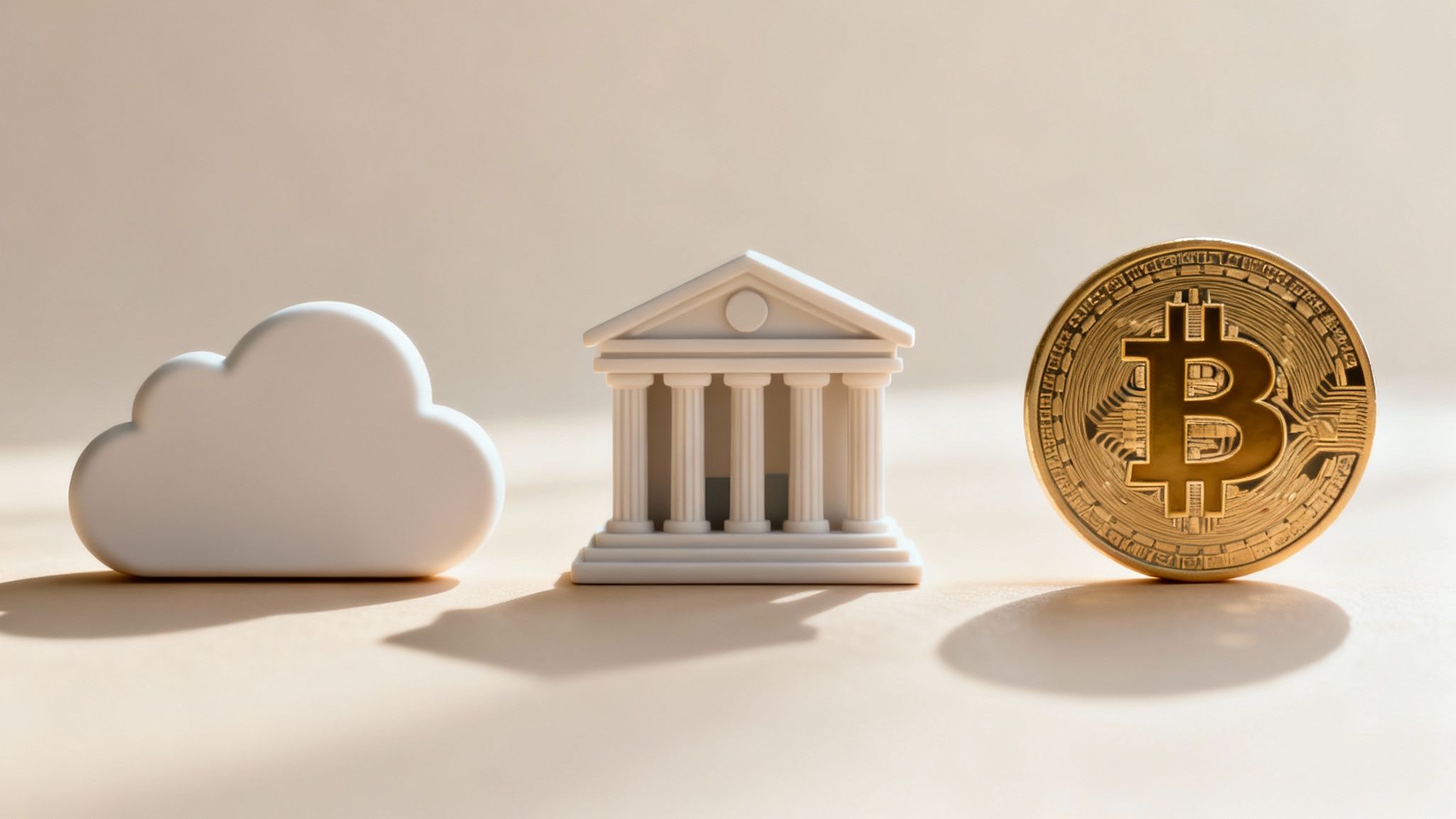
Not all payment processors are built the same. The right choice really hinges on your business model, how much you sell, and who your customers are. In the world of traditional payments, the landscape really boils down to two main camps: Payment Service Providers and traditional merchant accounts. They each have their sweet spots depending on the type of business you're running.
First up are Payment Service Providers, or PSPs. Think of these as the all-in-one, plug-and-play solutions that bundle everything you need—a merchant account, payment gateway, and processing—into one neat package. They’re famous for getting you set up fast with simple, flat-rate fees. This makes them a fantastic starting point for new businesses and smaller shops that just want to start accepting payments without a ton of hassle.
On the flip side, you have traditional merchant accounts. This route gives you a more direct line to an acquiring bank. While it takes more work to get set up, businesses with high sales volumes often find the payoff is worth it. You get access to more customized interchange-plus pricing, which can seriously lower your costs over time. It’s a more hands-on approach, but it offers a lot more flexibility.
The New Player: Bitcoin Payment Processors
A third, game-changing category has muscled its way into the conversation: Bitcoin payment processors. These services are the essential bridge for any business curious about accepting Bitcoin without having to become a Bitcoin expert or deal with the currency directly. It’s a powerful way to open your doors to a global market of Bitcoin users while sidestepping the headaches of price volatility.
Here’s how it works: a customer pays you in Bitcoin, and the processor instantly converts it into your currency of choice, like USD or EUR. The funds then land in your bank account, just like any other sale.
This setup comes with some massive advantages:
- Volatility Protection: You get the exact amount you charged, in your local currency. No need to watch the Bitcoin charts or worry about price swings eating into your profits.
- Global Reach: Suddenly, you can accept a payment from anyone, anywhere on the planet, without getting tangled up in cross-border fees or banking red tape.
- Lower Fees: Bitcoin transactions can often come with much friendlier processing fees than the traditional card networks.
Key Insight: Bitcoin payment processors let you welcome a forward-thinking customer base without needing to understand the nitty-gritty of Bitcoin. It's about expanding your reach, not adding complexity.
The payment processing world is fiercely competitive. Just look at a leader like Stripe—a PSP that holds between 20.8% and 29% of the global market and is trusted by over 62% of Fortune 500 companies. To get a better sense of just how big these players are, you can learn more about Stripe’s market dominance on Red Stag Fulfillment. It just goes to show how different processors are carved out to serve entirely different parts of the market.
Why a Payment Processor Is Your Growth Partner
It’s easy to think of a payment processor as just another monthly bill, another piece of the operational puzzle. But that’s a huge missed opportunity. The right processor isn’t just a utility for moving money around—it’s a strategic partner that can actively fuel your growth.
A great processor does way more than just handle transactions. It builds trust with your customers, opens up entirely new markets you couldn't reach before, and hands you the kind of business intelligence that leads to smarter decisions.
One of the first things you'll notice is a major security upgrade. A reputable processor keeps you PCI compliant, which is the gold standard for protecting sensitive customer card data. This acts as a shield, protecting your business from the nightmare of fraud and data breaches. Honestly, the peace of mind alone is worth it.
Expanding Your Reach and Efficiency
Beyond just locking things down, a processor is your passport to the rest of the world. For any business with global ambitions, it’s the key that unlocks international sales by seamlessly handling tricky currency conversions. This is how a local online shop can transform into a global marketplace without a massive headache.
Modern processors also cut down on the manual grunt work that bogs businesses down. Innovations like supplier payment automation are perfect examples of how they help you create more efficient, streamlined workflows.
The sheer growth of this industry tells you everything you need to know. The global market for payment processing solutions was valued at around $144.12 billion and is expected to explode past $914.91 billion by 2034. That boom is all thanks to the rise of digital payments, cementing these services as the backbone of modern commerce. If you're curious, you can dig into the full research on payment processing solutions on Precedence Research to see the trends for yourself.
Key Insight: A smooth, fast, and secure checkout experience is directly tied to higher conversion rates. When customers can pay easily without a second thought, they’re far more likely to finish the purchase and come back again.
Finally, don't overlook the data. The best processors give you a clear window into your business's health, showing you sales trends, what your customers are buying, and when they're most active. Those insights are gold for making smarter decisions about inventory, marketing, and everything else that drives real, sustainable growth.
How to Choose the Right Payment Processor

Picking a payment processor is one of those foundational decisions that can quietly make or break your business. It’s not just about taking money; it’s about your cash flow, your operational sanity, and the trust your customers place in you. To get it right, you have to look past the flashy headline rates and get into the weeds.
Your first move should always be to dissect the fee structure. A super-low transaction percentage looks great on paper, but the hidden costs are where they get you. Always ask about monthly account fees, what happens when a chargeback occurs, and any other sneaky charges that aren't advertised on the homepage.
Core Considerations for Your Business
Beyond the price tag, you've got to think about how a processor will actually slot into your day-to-day operations. A provider might offer the best rates in the world, but if it doesn't play nice with your e-commerce platform or accounting software, you’re just signing up for future headaches and manual data entry.
Here’s a practical checklist to run through as you compare your options:
- Fee Transparency: Is the pricing crystal clear? Processors offering a simple flat-rate model can make it much easier to predict your monthly costs without any nasty surprises.
- Bitcoin Support: If you're looking to accept Bitcoin, you need to know if the processor can instantly convert it to your local currency. This is a huge deal for protecting your business from price swings.
- Security and Compliance: Does the processor take PCI compliance off your plate? This is non-negotiable. It protects your business and, more importantly, your customers' sensitive data.
- Scalability: Will this processor be able to keep up as you grow? Make sure their infrastructure can handle a serious increase in transaction volume when your business takes off.
For smaller businesses trying to get a handle on all this, choosing the right payment solution is a game-changer. You can find some fantastic guides offering simplified payment processing for small businesses that break these concepts down even further.
Key Takeaway: The best payment processor isn't just the cheapest one—it's the one that fits your business model like a glove, integrates with your tools, and provides rock-solid security.
At the end of the day, you're not just choosing a service; you're choosing a partner. Take your time, weigh your top contenders against these points, and find a solution that will support you today and help you grow tomorrow.
Frequently Asked Questions
Even after getting the basics down, a few common questions always seem to pop up. Let's tackle them head-on to clear up any lingering confusion about how these systems actually work in the wild.
What Is the Difference Between a Payment Processor and a Payment Gateway?
Here’s a simple way to think about it: the payment gateway is like the digital credit card terminal on your website, while the processor is the massive banking network humming away in the background.
The gateway’s only job is to securely grab and encrypt your customer's payment details. Once it has that info, it hands it off to the processor. The processor then does all the heavy lifting—communicating with the banks and card networks to get the green light and actually move the money.
In short, the gateway starts the conversation, but the processor makes the money move.
How Do Bitcoin Payment Processors Work?
A Bitcoin payment processor acts as a bridge, letting you accept Bitcoin without ever having to touch or manage the currency yourself. It’s a pretty clever setup.
When a customer pays with Bitcoin, the processor instantly confirms the transaction. Then, it immediately converts that Bitcoin amount into your local currency (like USD or EUR) at the current market rate. This is the crucial part, as it shields your business entirely from Bitcoin's price swings.
The funds then land in your normal bank account. You get all the benefits of accepting a global digital currency without any of the risk or technical headaches.
Key Takeaway: A Bitcoin processor lets you sell to anyone in the world with Bitcoin, but you get paid in the same old dollars or euros you already use. It's the best of both worlds.
What Are the Most Common Fees I Should Expect?
When you’re looking at processing fees, they almost always fall into three buckets. Knowing what they are is half the battle.
- Transaction Fees: This is the most common one. It’s a small fee charged on every single sale, usually a percentage plus a fixed amount (a classic example is 2.9% + $0.30).
- Monthly Fees: Think of this as a subscription fee. It’s a flat charge for things like account maintenance, using their gateway, or getting access to reports.
- Incidental Fees: These are the "if/then" fees. They only pop up when something specific happens, like a customer disputing a charge. If you lose that dispute, you'll get hit with a chargeback fee.
Always, always read the fine print on the fee schedule before you sign anything. It’ll save you a lot of surprises down the road.
Is a Payment Processor the Same as a Merchant Account?
Nope, but they're partners in crime. You can’t have one without the other.
A merchant account is a special kind of bank account that gives your business the authority to accept card payments in the first place.
The payment processor is the company that actually handles the transaction, connecting the customer, your merchant account, and the customer’s bank. Many modern providers, often called Payment Service Providers (PSPs), bundle everything together—the merchant account and the processing—into one simple package. For most online businesses, this all-in-one solution is the way to go.
Ready to accept Bitcoin payments and reach a global audience without the volatility? Flash offers a secure, decentralized solution that connects directly to your wallet, ensuring you're always in control. Get started in under a minute and tap into the growing Bitcoin economy with our user-friendly tools. Learn more about Flash.