Bitcoin has evolved from a niche digital asset into a viable global payment network. Yet, a common question remains: where can you use Bitcoin in everyday life? The answer is more expansive and practical than ever before. From paying for your morning coffee to booking international flights, the opportunities to transact directly with Bitcoin are growing rapidly.
This guide moves beyond theoretical possibilities and dives into 10 concrete, actionable examples of how merchants, freelancers, and organizations are leveraging Bitcoin today. We are not just listing places; we are breaking down the strategic advantages of accepting Bitcoin, from slashing transaction fees to reaching a global, tech-savvy customer base.
For businesses and creators, the real value lies in the implementation. We will explore how non-custodial tools are simplifying the process, making it straightforward for anyone to integrate Bitcoin payments without relying on intermediaries. This approach turns the promise of a decentralized economy into a practical reality for your operations.
This article is designed to be a comprehensive resource. It provides clear, replicable strategies for anyone looking to understand the real-world utility of Bitcoin. Whether you are a merchant seeking to innovate, a freelancer aiming for borderless payments, or simply a user wanting to spend your Bitcoin, you will find actionable insights ahead. We will detail specific use cases across e-commerce, retail, subscriptions, donations, and travel, equipping you with the knowledge to start using and accepting Bitcoin effectively.
1. E-commerce and Online Retail
One of the most powerful and practical places where you can use Bitcoin is in the world of e-commerce. Online retail represents a natural fit for digital currency, allowing merchants to accept payments from a global customer base without the high fees and chargeback risks associated with traditional credit card processors. This method bypasses intermediaries, enabling direct peer-to-peer transactions between the customer and the business.
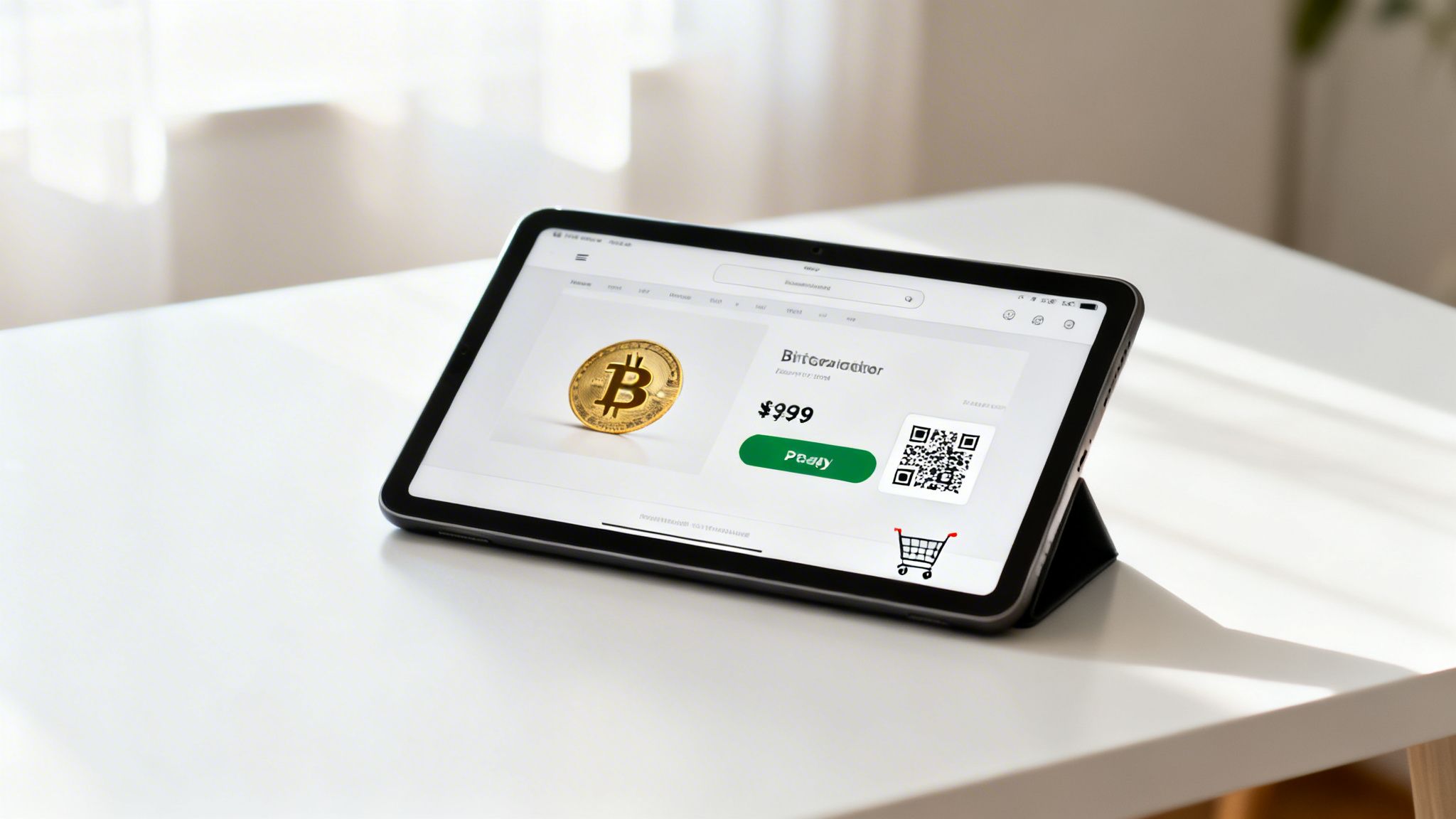
For online storefronts, integrating a Bitcoin payment option opens the door to over 500 million Bitcoin users worldwide. This not only expands market reach but also caters to a tech-savvy demographic actively looking for businesses that support the ecosystem. Tools like BTCPay Server allow for seamless integration with platforms like Shopify, empowering merchants to launch a Bitcoin checkout process quickly and without extensive coding knowledge.
Strategic Implementation for Merchants
Implementing Bitcoin payments requires a thoughtful approach to ensure a smooth customer experience and operational efficiency. The goal is to make it as simple as any other payment method.
- Pioneering Example: Overstock.com has been a trailblazer, accepting Bitcoin since 2014. Their early adoption demonstrated the viability of Bitcoin in a mainstream retail environment, setting a precedent for others to follow.
- Self-Hosted Solutions: For merchants prioritizing control and decentralization, BTCPay Server is a leading open-source solution. It allows businesses to receive Bitcoin directly to their wallets without relying on a third-party payment processor, eliminating fees and censorship risk.
- Global Reach: For electronics or fashion retailers, accepting Bitcoin removes cross-border payment friction. A customer in Japan can pay a merchant in the United States with the same ease as someone next door, with payments settling in minutes, not days.
Key Takeaway: Accepting Bitcoin in e-commerce isn't just about adding another payment button. It's a strategic move to lower operational costs, eliminate chargebacks, and attract a loyal, global customer base that values financial innovation. By using dedicated tools, you can manage volatility and streamline accounting.
2. Brick-and-Mortar Retail and Point-of-Sale
Beyond the digital realm, another practical place where you can use Bitcoin is in physical stores. Brick-and-mortar retailers can easily accept Bitcoin at their point-of-sale (POS) using simple apps that turn any smartphone or tablet into a Bitcoin-ready terminal. This allows merchants in diverse sectors like restaurants, coffee shops, and boutiques to tap into a new customer segment and reduce reliance on traditional payment networks.
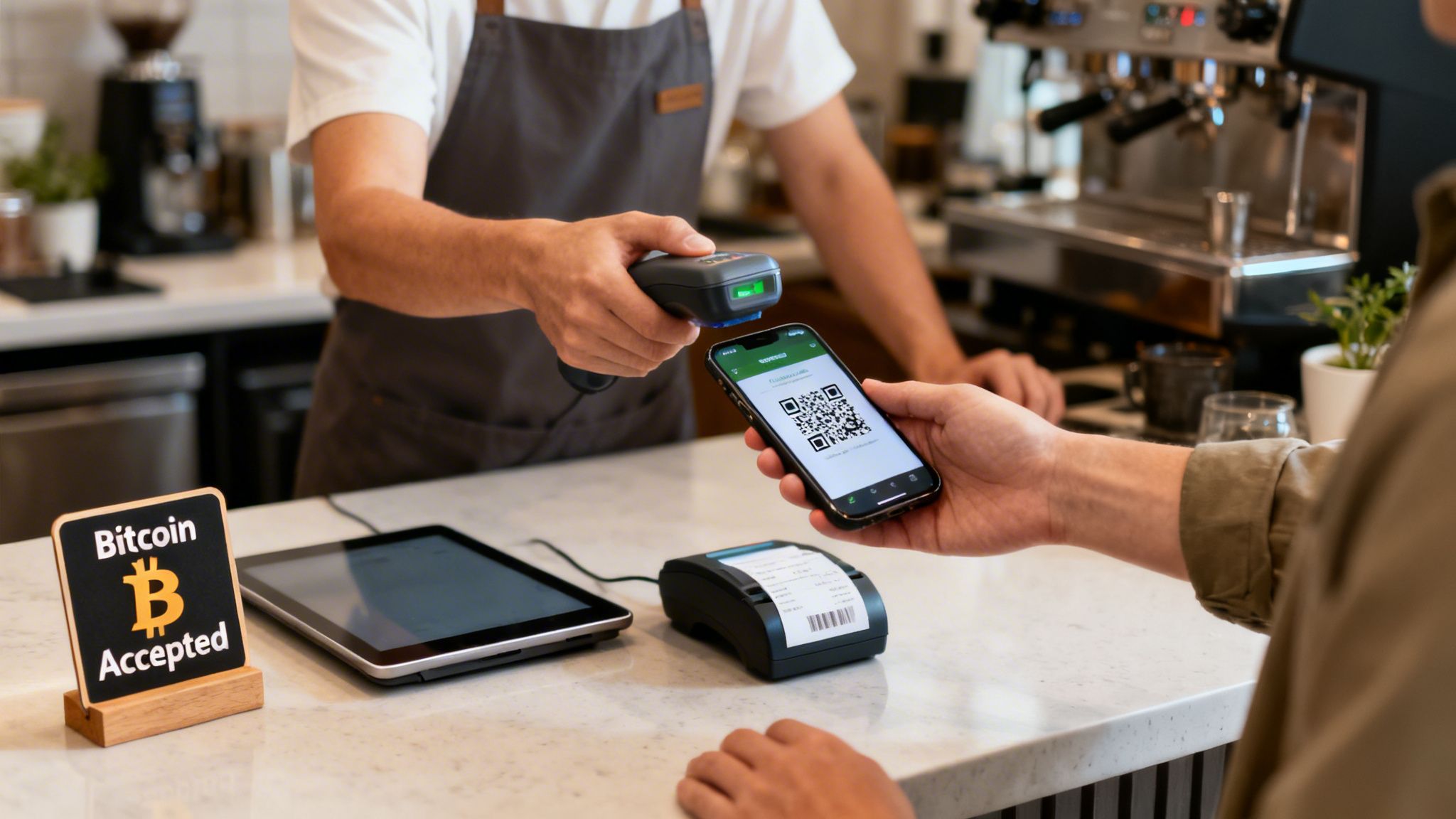
For a physical store, accepting Bitcoin modernizes the checkout experience and signals an embrace of innovation. By simply displaying a QR code, businesses can receive payments directly from a customer's Bitcoin wallet in seconds. This process eliminates costly credit card processing fees, which can range from 1.5% to 3.5% per transaction, and completely removes the risk of fraudulent chargebacks that often plague retailers.
Strategic Implementation for Merchants
Integrating Bitcoin into a physical retail environment requires clear communication and a streamlined process to ensure it's as fast and intuitive as a card swipe. The goal is to make the transaction effortless for both the customer and staff.
- National Adoption Example: El Salvador made Bitcoin legal tender in 2021, leading to widespread adoption in its retail sector. This national initiative, powered by apps like the Chivo wallet and integrations with payment processors, demonstrated how an entire economy, from large chains to small vendors, can incorporate Bitcoin payments.
- POS Solutions: Applications like Flash transform common devices into powerful Bitcoin POS systems. Merchants can enter a sale amount in their local currency, and the app instantly generates a QR code with the equivalent Bitcoin value for the customer to scan, simplifying the entire process.
- Community-Driven Growth: In cities like Austin, Texas, and Miami, Florida, local coffee shops, food trucks, and boutiques have started accepting Bitcoin, often spurred by local Bitcoin meetup communities. This grassroots adoption creates micro-economies where Bitcoin can be spent on everyday goods and services.
Key Takeaway: For brick-and-mortar businesses, accepting Bitcoin is a powerful strategy to cut operational costs, prevent fraud, and attract a growing demographic of tech-savvy consumers. By using intuitive POS apps and training staff, retailers can offer a seamless, modern payment option that sets them apart from the competition.
3. Digital Content and Media Sales
The creator economy is another powerful arena where you can use Bitcoin to monetize digital goods directly. Content creators, publishers, and media platforms can leverage Bitcoin to sell articles, music, ebooks, or software, often through micropayments. This approach enables a direct financial relationship between creators and their audience, bypassing traditional platforms that take a significant cut of revenue and often impose content restrictions.
For creators, accepting Bitcoin for digital content unlocks a global, censorship-resistant payment rail. This is especially valuable for independent journalists, artists, or educators who want to maintain full control over their work and revenue streams. With Bitcoin, a podcaster in one country can receive instant support from a listener anywhere else in the world, with minimal fees and no risk of de-platforming from a payment processor.
Strategic Implementation for Creators
Integrating Bitcoin payments for content requires a strategy that makes it easy for supporters to pay while giving the creator maximum control. The goal is to build a direct, resilient monetization model.
- Pioneering Example: Independent journalists and Substack writers have been early adopters, adding Bitcoin wallet addresses to their newsletters and websites. This simple method allows readers to contribute directly, fostering a loyal community that values the creator's independence.
- Self-Hosted Solutions: For more advanced applications like paywalls or subscriptions, tools can be integrated into a creator's website. This allows them to sell premium articles, video courses, or software licenses directly, receiving Bitcoin payments straight to their personal wallet.
- Global Reach: A musician can sell their new album directly to fans worldwide as digital downloads paid for in Bitcoin. This eliminates the high fees taken by platforms like Bandcamp or Spotify and provides the artist with instant access to their earnings, rather than waiting for monthly payouts.
Key Takeaway: For digital creators, accepting Bitcoin is a declaration of financial sovereignty. It reduces dependency on centralized platforms, cuts out costly intermediaries, and opens up a global audience ready to support content directly. It’s a strategic way to build a resilient, community-funded business model.
4. SaaS and Subscription Services
Another powerful area where you can use Bitcoin is within the Software-as-a-Service (SaaS) and subscription model. This sector is built on recurring revenue, making it an ideal candidate for automated Bitcoin payments. Accepting Bitcoin allows SaaS providers to cater to a global, privacy-conscious audience, reduce reliance on traditional payment gateways, and minimize cross-border transaction fees.
For subscription-based businesses like VPNs, cloud storage, or productivity tools, Bitcoin offers a direct and efficient payment rail. It removes intermediaries that often impose high fees, complicated compliance requirements, and potential service interruptions. Integrating a Bitcoin subscription module can automate billing, manage renewals, and provide a seamless experience for a tech-forward user base.
Strategic Implementation for Merchants
Successfully integrating Bitcoin into a subscription model requires focusing on user experience and managing payment cycles effectively. The key is to make paying with Bitcoin as reliable and simple as a standard credit card subscription.
- Pioneering Example: Privacy-focused services like Mullvad VPN and ProtonVPN have long accepted Bitcoin. They appeal to customers who value anonymity and financial sovereignty, demonstrating how Bitcoin can be a core feature that aligns with a brand's mission and attracts a specific, loyal market segment.
- Automated Billing: For recurring payments, businesses can use dedicated Bitcoin payment processors or self-hosted solutions like BTCPay Server, which includes features for managing subscriptions. This allows SaaS companies to automate monthly or annual billing directly to their own wallets, maintaining full custody of funds.
- Global Access: A project management tool or web hosting provider can use Bitcoin to onboard customers from countries with less developed banking infrastructure or restrictive financial regulations. This opens up previously untapped markets without the complexity of international payment processing.
Key Takeaway: For SaaS and subscription services, accepting Bitcoin is more than a payment option; it's a strategic tool to enhance user privacy, reduce operational costs, and expand into global markets. By automating recurring billing and offering fiat-pegged pricing, you can provide a stable and convenient experience that builds long-term customer loyalty.
5. Freelance Services and Gig Economy Work
The rapidly growing freelance and gig economy provides a powerful use case for Bitcoin, offering a streamlined payment solution for independent contractors and their clients. By accepting Bitcoin, freelancers can receive payments from anywhere in the world nearly instantly, bypassing the delays, high fees, and currency conversion challenges associated with traditional international bank transfers or payment platforms. This method empowers a direct, peer-to-peer financial relationship between the service provider and the client.
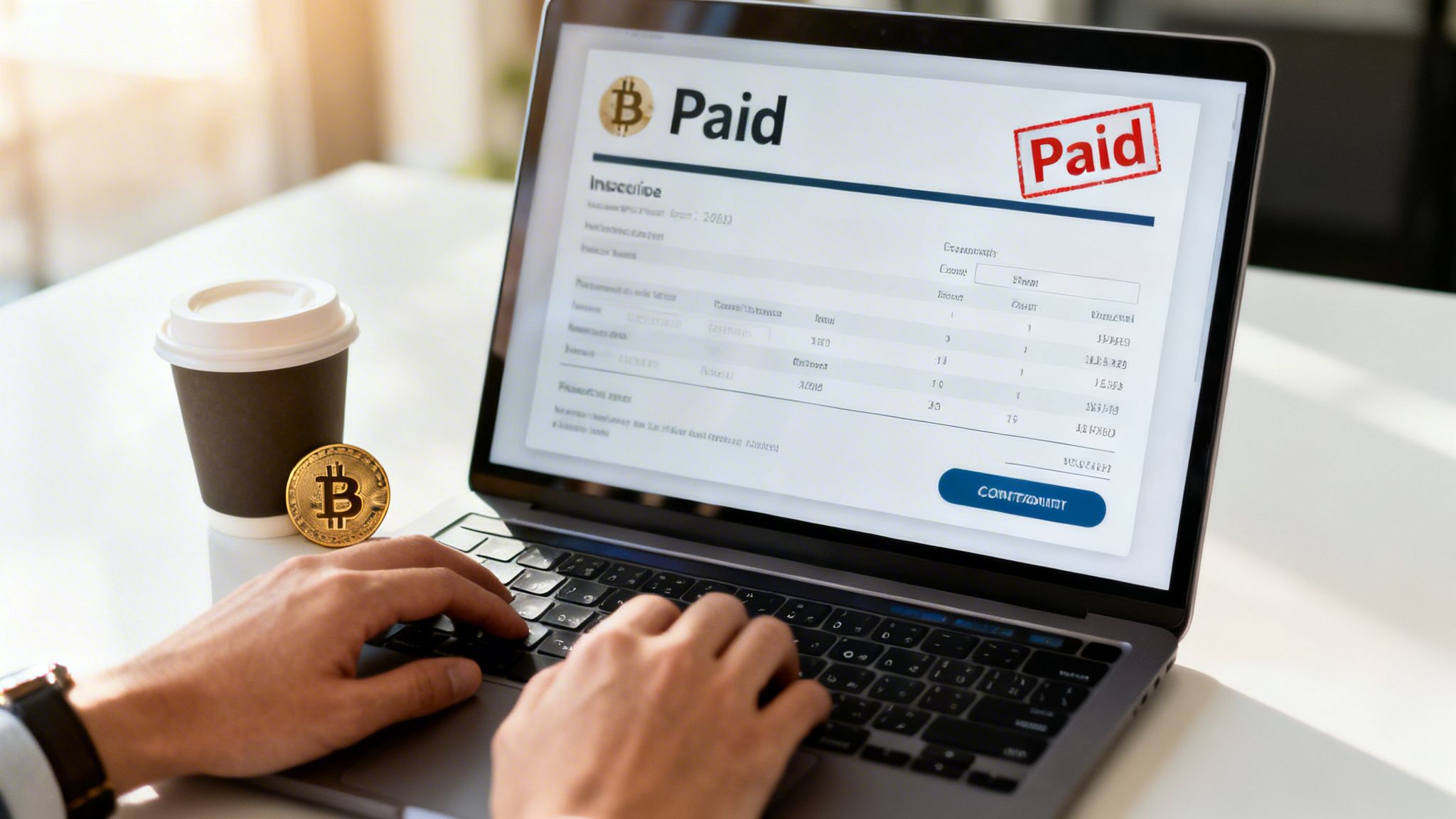
For a globalized workforce of developers, designers, writers, and consultants, integrating Bitcoin payments is a significant competitive advantage. It opens up access to international clients who might be deterred by complex payment processes, while also providing freelancers with full custody over their earnings without relying on intermediaries. This approach is particularly transformative for professionals in countries with unstable local currencies or restrictive banking systems, offering a secure store of value and a reliable payment rail.
Strategic Implementation for Freelancers
Adopting Bitcoin payments requires a clear strategy to ensure professionalism, transparency, and ease of use for clients. The primary goal is to make the payment process seamless and secure.
- Pioneering Example: Remote developers in emerging markets have become early adopters, receiving BTC for projects from clients in North America and Europe. This practice bypasses slow and costly remittance services, allowing them to receive their full payment value quickly.
- Automated Invoicing: Use invoicing systems that can generate bills in a local currency (e.g., USD, EUR) with a real-time Bitcoin equivalent. Tools like BTCPay Server can be self-hosted to create professional invoices with unique payment addresses, streamlining the process for both parties.
- Contractual Clarity: For larger projects, a consultant can specify Bitcoin as a settlement option directly in their service agreement. This sets clear expectations and frames Bitcoin as a legitimate and pre-approved payment method, often with clauses detailing the exchange rate mechanism for payment calculation.
Key Takeaway: For freelancers, accepting Bitcoin is a strategic move to tap into a global client base, reduce transaction costs, and gain greater financial autonomy. By quoting prices in fiat and using automated invoicing, you can eliminate volatility concerns for clients while benefiting from fast, borderless payments and retaining full control of your funds.
6. Non-Profits, Charities, and Social Impact Organizations
For non-profits and charities, accepting Bitcoin donations represents a powerful way to expand their donor base and enhance operational transparency. Digital currency allows these organizations to receive contributions from a global audience instantly, bypassing traditional banking systems that can be slow, costly, and restrictive. This is especially crucial for humanitarian efforts in regions with unstable financial infrastructure or strict capital controls.
By integrating Bitcoin, social impact organizations can lower their fundraising overhead, as transaction fees are typically much lower than credit card processing fees. This means a larger portion of every donation goes directly to the intended cause. The public nature of the Bitcoin blockchain also allows for unprecedented transparency, enabling donors to verify that their funds have reached the organization’s wallet.
Strategic Implementation for Non-Profits
Implementing a Bitcoin donation program requires a clear strategy focused on security, transparency, and donor education. The goal is to make the process simple and trustworthy for supporters who want to contribute using Bitcoin.
- Pioneering Example: Save the Children was one of the first major international NGOs to accept Bitcoin donations, recognizing its potential to fund relief efforts for children worldwide. Their adoption signaled to the non-profit sector that Bitcoin is a viable and effective fundraising tool.
- Direct Impact: Organizations like The Water Project use Bitcoin to fund clean water initiatives. Accepting Bitcoin allows them to attract support from the global tech community and channel funds directly to projects with minimal cross-border friction or conversion costs.
- Security and Trust: For enhanced security and accountability, non-profits should implement multi-signature wallets. This setup requires multiple parties to approve any transaction, protecting donated funds from a single point of failure and building donor confidence.
Key Takeaway: For non-profits, accepting Bitcoin is more than a novel fundraising method. It is a strategic decision that reduces operational costs, provides access to a global pool of donors, and offers a new level of financial transparency that can significantly enhance credibility and trust with supporters.
7. Online Gaming and Esports Transactions
The digital-native worlds of online gaming and esports are a perfect match for Bitcoin. Integrating Bitcoin allows for instant, borderless transactions for everything from in-game purchases and tournament prize pools to player-to-player trading. This approach circumvents the delays and geographical restrictions of traditional banking, providing a seamless financial infrastructure for a global community.
For gaming platforms and esports organizers, accepting Bitcoin opens up new revenue streams and enhances player engagement. It provides a censorship-resistant way to pay out winnings to a diverse, international roster of players and allows creators to receive tips directly from their audience. This method strengthens the in-game economy by enabling true ownership and peer-to-peer exchange of digital assets.
Strategic Implementation for Gaming Platforms
A successful integration of Bitcoin into a gaming ecosystem hinges on user experience and security. The goal is to make transactions feel like a native part of the game, not a complex external process.
- Pioneering Example: Platforms like Twitch allow streamers to receive tips in Bitcoin, empowering creators to monetize their content globally and instantly. This model has been adopted by various esports organizations for prize distribution, ensuring players receive their winnings quickly and with minimal fees.
- Lightning Network for Microtransactions: For in-game item purchases or small peer-to-peer trades, the Lightning Network is essential. It enables instant, near-zero-fee transactions, which is crucial for the high-volume, low-value payments common in gaming economies.
- Global Payouts: An esports tournament organizer can use Bitcoin to pay winners in different countries simultaneously. This eliminates the complexities of multiple currency conversions, international wire transfer delays, and high banking fees, ensuring a fair and efficient payout process.
Key Takeaway: Using Bitcoin in gaming and esports is a strategic move to build a truly global and player-centric economy. It offers instant global payouts, enables frictionless microtransactions for in-game assets, and provides a transparent, secure method for managing tournament prize pools, ultimately enhancing the player and fan experience.
8. Travel, Hospitality, and Tourism Services
The global travel and hospitality industry is a prime sector where you can use Bitcoin to streamline transactions for international customers. For hotels, airlines, and travel agencies, accepting Bitcoin payments eliminates currency conversion headaches, reduces high foreign exchange fees, and minimizes the risk of fraudulent chargebacks common with cross-border credit card payments. This approach caters directly to a growing demographic of tech-savvy, global travelers who value privacy and modern payment solutions.
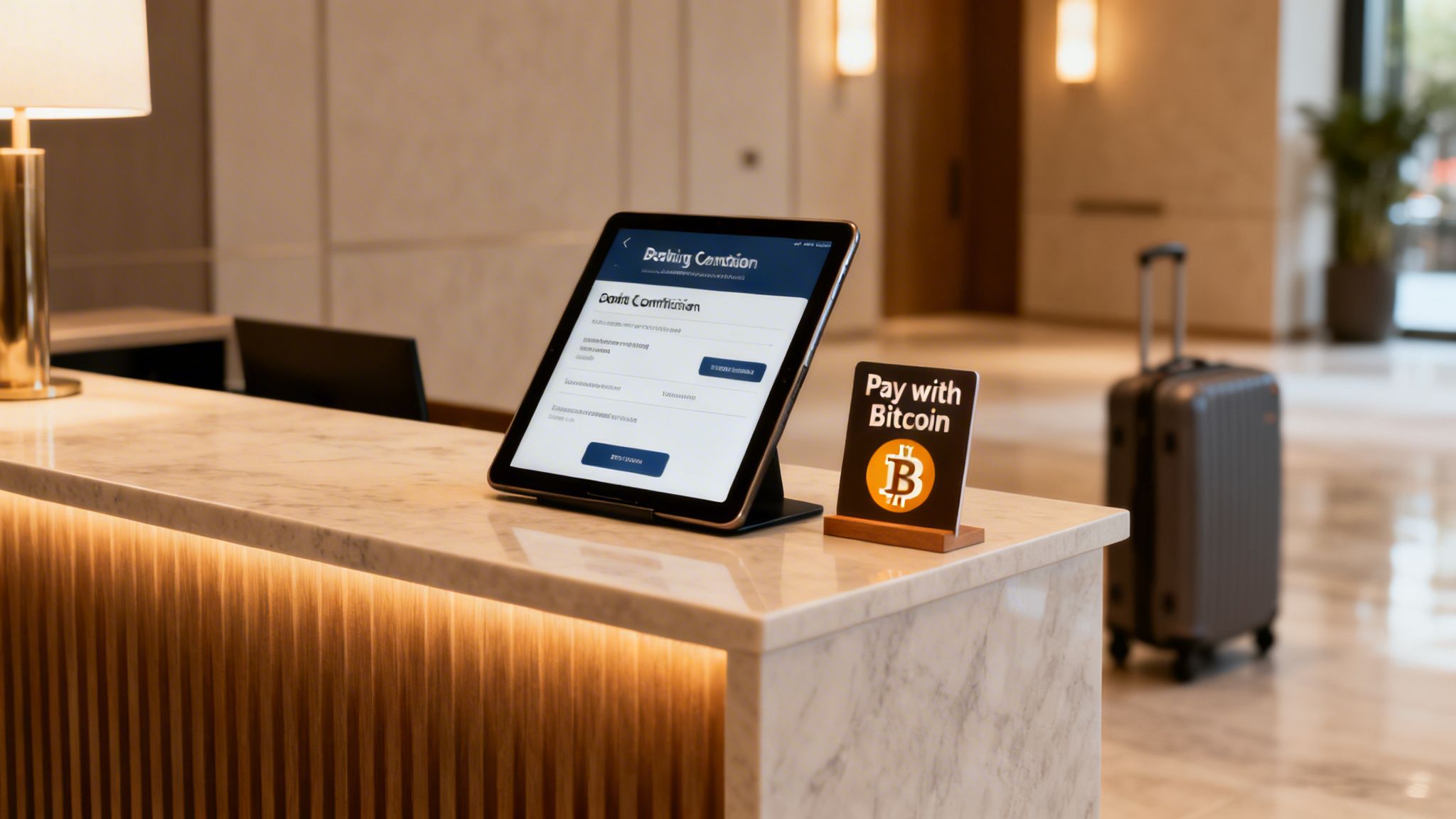
For businesses in this sector, integrating a Bitcoin payment option is a strategic move to attract a niche but valuable market segment. It signals that a brand is forward-thinking and understands the needs of a modern digital nomad or international tourist. With instant settlement, a hotel or tour operator can receive funds in minutes, rather than waiting days for traditional banking systems to clear an international wire transfer or credit card payment.
Strategic Implementation for Merchants
A successful Bitcoin integration in travel goes beyond a simple payment button; it involves thoughtful marketing and operational adjustments to enhance the guest experience. The key is to make the process seamless and appealing.
- Pioneering Example: The Dolder Grand in Zurich and certain Kessler Collection hotels in the U.S. began accepting Bitcoin, positioning themselves as luxury destinations for the Bitcoin-savvy traveler. This move generates significant media attention and attracts high-net-worth individuals looking for premium, privacy-respecting services.
- National Adoption Model: El Salvador's "Bitcoin Beach" project has transformed its tourism landscape. By promoting Bitcoin as legal tender, local businesses from small guesthouses to major tour operators can accept payments from international visitors frictionlessly, showcasing a real-world model for tourism-driven Bitcoin adoption.
- Booking Platform Integration: Some travel booking platforms and agencies are experimenting with Bitcoin. By integrating a Bitcoin payment processor, they can offer customers the option to pay for flights and hotels, locking in the fiat price at the time of booking to mitigate volatility for both the customer and the business.
Key Takeaway: For the travel and hospitality industry, accepting Bitcoin is a powerful differentiator. It lowers transaction costs, removes cross-border payment friction, and appeals to a modern, global clientele. By integrating with existing booking systems and marketing the benefit of zero currency conversion fees, businesses can create a compelling reason for travelers to choose them.
9. Online Education and Course Platforms
The digital transformation of education has created a massive market for online learning, and Bitcoin presents a unique opportunity for educators and platforms to serve a global audience. Accepting Bitcoin for course enrollments, certifications, and educational materials allows institutions to tap into a worldwide student base, bypassing traditional banking hurdles and high transaction fees. This approach is especially powerful for reaching learners in regions with limited access to conventional financial services.
For independent course creators and specialized training platforms, integrating a Bitcoin payment option can be a significant competitive advantage. It attracts a tech-forward demographic that is often keen on learning new skills and is already comfortable with digital currencies. Many online education and course platforms are beginning to accept Bitcoin for enrollment. For example, you can explore various options for online courses at platforms that are innovating in this space.
Strategic Implementation for Educators
Integrating Bitcoin payments should enhance the student experience by making enrollment more accessible and seamless. The goal is to remove friction, not add complexity, for a global student body.
- Pioneering Example: Several universities and coding bootcamps have started accepting Bitcoin for tuition and fees. This move not only simplifies payments for international students but also serves as a practical lesson in financial technology, aligning with modern curriculum goals.
- Direct-to-Creator Platforms: For instructors on platforms like Teachable or Thinkific, using a service like BTCPay Server allows them to receive payments directly. This eliminates intermediary fees, giving them full control over their revenue and reducing reliance on traditional payment gateways that may have regional restrictions.
- Global Access: An online educator specializing in blockchain development can accept Bitcoin from a student in Southeast Asia as easily as from one in Europe. The payment settles quickly and without the currency conversion complexities or delays common with bank transfers.
Key Takeaway: For the education sector, accepting Bitcoin is a strategic move to globalize access, lower administrative costs, and appeal to a modern, tech-savvy audience. It removes payment barriers, ensures instant settlement, and positions the educational provider at the forefront of financial innovation.
10. Donations, Crowdfunding, and Community Support
Bitcoin offers a transformative way for creators, non-profits, and open-source projects to receive financial support directly from a global audience. It serves as a censorship-resistant and low-cost alternative to traditional donation platforms, which often take a significant cut of contributions and impose geographical restrictions. This peer-to-peer system empowers individuals and organizations to crowdfund initiatives and build communities without relying on financial gatekeepers.
For a content creator, activist, or developer, integrating a Bitcoin donation option is as simple as generating a QR code. This opens up a direct channel for fans and supporters anywhere in the world to contribute instantly. The funds arrive directly in the recipient's wallet, maximizing the impact of each donation and fostering a direct connection between the creator and their community.
Strategic Implementation for Creators and Organizations
To effectively leverage Bitcoin for support, the key is to make the donation process transparent, simple, and engaging for your audience.
- Pioneering Example: The Human Rights Foundation's Bitcoin Development Fund showcases a powerful use case. It accepts Bitcoin donations to support software developers, educators, and activists working to enhance privacy and freedom, demonstrating how Bitcoin can directly fuel movements for positive change.
- Simple Integration: Podcasters and YouTubers can easily display a static Bitcoin QR code on their websites, in video descriptions, or even within the video content itself. This "tip jar" approach offers a low-friction way for listeners and viewers to show appreciation with a small amount of Bitcoin.
- Open-Source Solutions: Similar to e-commerce, BTCPay Server is an invaluable tool for non-profits and crowdfunding campaigns. It allows organizations to host their own donation page, manage contributions, and provide automatic receipts without paying processing fees to a third party.
Key Takeaway: Accepting Bitcoin for donations is a powerful statement of financial sovereignty and a practical tool to reduce operational costs. It enables you to connect with a global, tech-forward audience that values privacy and direct support, ensuring more of every contribution goes directly to your cause.
10 Bitcoin Use Cases Compared
| Use Case | 🔄 Implementation Complexity | ⚡ Resource Requirements | 📊 Expected Outcomes | 💡 Ideal Use Cases | ⭐ Key Advantages |
|---|---|---|---|---|---|
| E-commerce and Online Retail | Low — plug‑in widgets, no-code setup | Low — merchant wallet + widget | High — instant settlement, lower fees, global reach | Online storefronts, Shopify/Magento stores | Instant wallet‑to‑wallet payments; <1% fees; no chargebacks ⭐ |
| Brick-and-Mortar Retail and POS | Medium — POS app + staff training | Medium — smartphones/tablets, connectivity | Medium — faster checkout, lower card fees | Cafés, boutiques, restaurants with counter sales | Convert phones to POS; realtime tx; reduced hardware cost ⭐ |
| Digital Content and Media Sales | Medium–High — paywall & micropay integration | Medium — dev effort, paywall tooling | High — higher revenue retention, direct customer ties | Publishers, creators selling articles, media subscriptions | Creator keeps 80–100% revenue; censorship resistance ⭐ |
| SaaS and Subscription Services | High — billing, dunning, subscription logic | High — billing integration, invoicing systems | High — automated recurring revenue, global expansion | SaaS, cloud services, membership platforms | Automated subscriptions, instant settlement, lower processor fees ⭐ |
| Freelance Services and Gig Economy | Low — invoicing + wallet addresses | Low — wallet access, invoicing tools | Medium — instant cross‑border payments, lower remittance cost | Freelancers, consultants, remote contractors | Eliminates remittance fees; instant settlement; borderless income ⭐ |
| Non‑Profits, Charities & NGOs | Low–Medium — donation flows, wallet policies | Low — donation wallet, transparency tooling | High — wider donor base, transparent funds | Charities, disaster relief, international NGOs | 100% of donation to mission; transparent ledger; global donors ⭐ |
| Online Gaming & Esports Transactions | Medium — client integration, escrow | Medium — dev effort, secure wallets, escrow | Medium — instant payouts, reduced fraud in trades | Tournament platforms, in‑game purchases, P2P trading | Fast prize payouts; global eligibility; micropay support ⭐ |
| Travel, Hospitality & Tourism | Medium — PMS/booking integration, staff training | Medium — booking engine hooks, wallet setup | Medium — attract Bitcoin travelers, eliminate FX fees | Hotels, rentals, travel agencies, airlines | No currency conversion; instant booking settlement; differentiator ⭐ |
| Online Education & Course Platforms | Medium — enrollment automation, refunds | Medium — LMS integration, payment triggers | Medium — faster enrollment, global student access | Course marketplaces, bootcamps, educators | Instant access post‑payment; lower fees; broader reach ⭐ |
| Donations, Crowdfunding & Community Support | Low — QR codes, links, widgets | Low — donation wallet, simple UX | Medium — reduced fees, direct supporter ties | Creators, artists, grassroots campaigns | No platform fees; privacy for donors; simple UX ⭐ |
Putting Bitcoin to Work: Your Next Steps
The journey from a theoretical asset to a practical medium of exchange is a defining characteristic of Bitcoin's evolution. As we've detailed throughout this guide, the question of "where can you use Bitcoin" is no longer a niche inquiry but a strategic consideration for a growing number of businesses, creators, and organizations worldwide. The landscape of Bitcoin's utility is expanding rapidly, proving its value far beyond the realm of simple investment.
From the seamless integration into e-commerce checkouts and the innovative use of point-of-sale systems in brick-and-mortar stores, a clear pattern emerges. Bitcoin offers a direct, peer-to-peer financial rail that fundamentally streamlines commerce. It removes the friction and costs associated with traditional payment intermediaries, empowering merchants to retain more of their revenue and settle funds with finality.
From Theory to Action: Key Strategic Takeaways
The diverse use cases we've explored, from SaaS subscriptions and freelance payments to non-profit donations and travel bookings, all highlight several core strategic advantages. Mastering these concepts is not just about adopting new technology; it's about future-proofing your operations in an increasingly digital and globalized economy.
The most critical takeaways are:
- Financial Sovereignty and Control: By accepting Bitcoin directly, you eliminate reliance on third-party processors who can freeze funds, charge exorbitant fees, or impose restrictive policies. You hold the keys, and you control the funds from the moment of transaction.
- Global Accessibility: Bitcoin is borderless. This unlocks access to a global customer base without the complexities of currency conversions, international banking fees, or regional payment gateway restrictions. Whether you're a freelancer in one country or a merchant in another, you can transact with anyone, anywhere.
- Cost Efficiency: The reduction or elimination of chargeback fraud and the significantly lower transaction fees, especially when leveraging the Lightning Network, translate directly to a healthier bottom line. This saved capital can be reinvested into growth, innovation, or community support.
- Enhanced Privacy and Transparency: For customers, Bitcoin can offer a more private way to pay. For organizations like charities, it provides an immutable and public ledger, allowing for unprecedented transparency in how donations are received and managed.
Your Actionable Path Forward
Understanding where you can use Bitcoin is the first step; implementing it is the next. The practical application of this knowledge is what separates passive observation from active participation in this new financial paradigm. The key is to move from theoretical interest to tangible action.
To begin putting Bitcoin to work, consider these immediate steps:
- Identify Your Primary Use Case: Review the examples covered in this article. Does your business primarily operate online? Are you a freelancer seeking faster international payments? A non-profit aiming for greater donation transparency? Pinpoint the single most impactful application for your specific needs.
- Select the Right Tools: The barrier to entry for accepting Bitcoin has never been lower. Modern solutions are designed for ease of use and do not require deep technical expertise. Look for non-custodial tools that ensure you maintain full control over your funds from day one.
- Educate Your Audience: Your customers or donors may not be familiar with paying in Bitcoin. Create simple, clear instructions, a short FAQ, or even a brief video tutorial. Highlighting the benefits for them, such as enhanced privacy or supporting a forward-thinking business, can encourage adoption.
Ultimately, the power of Bitcoin lies in its ability to create a more efficient, equitable, and direct economic system. By integrating it into your operations, you are not just adding another payment option. You are embracing a fundamental shift in how value is exchanged, positioning yourself or your organization at the forefront of financial innovation and empowering your community in the process.
Ready to turn these insights into action? Flash provides a powerful, non-custodial suite of tools to help you accept Bitcoin directly, whether through a point-of-sale app, payment links, or e-commerce integrations. Start your journey into the Bitcoin economy and take control of your payments today by visiting Flash.